Gut Check
Trip Report: Catskill Mountains, NY; March 2026
All pictures are from this trip
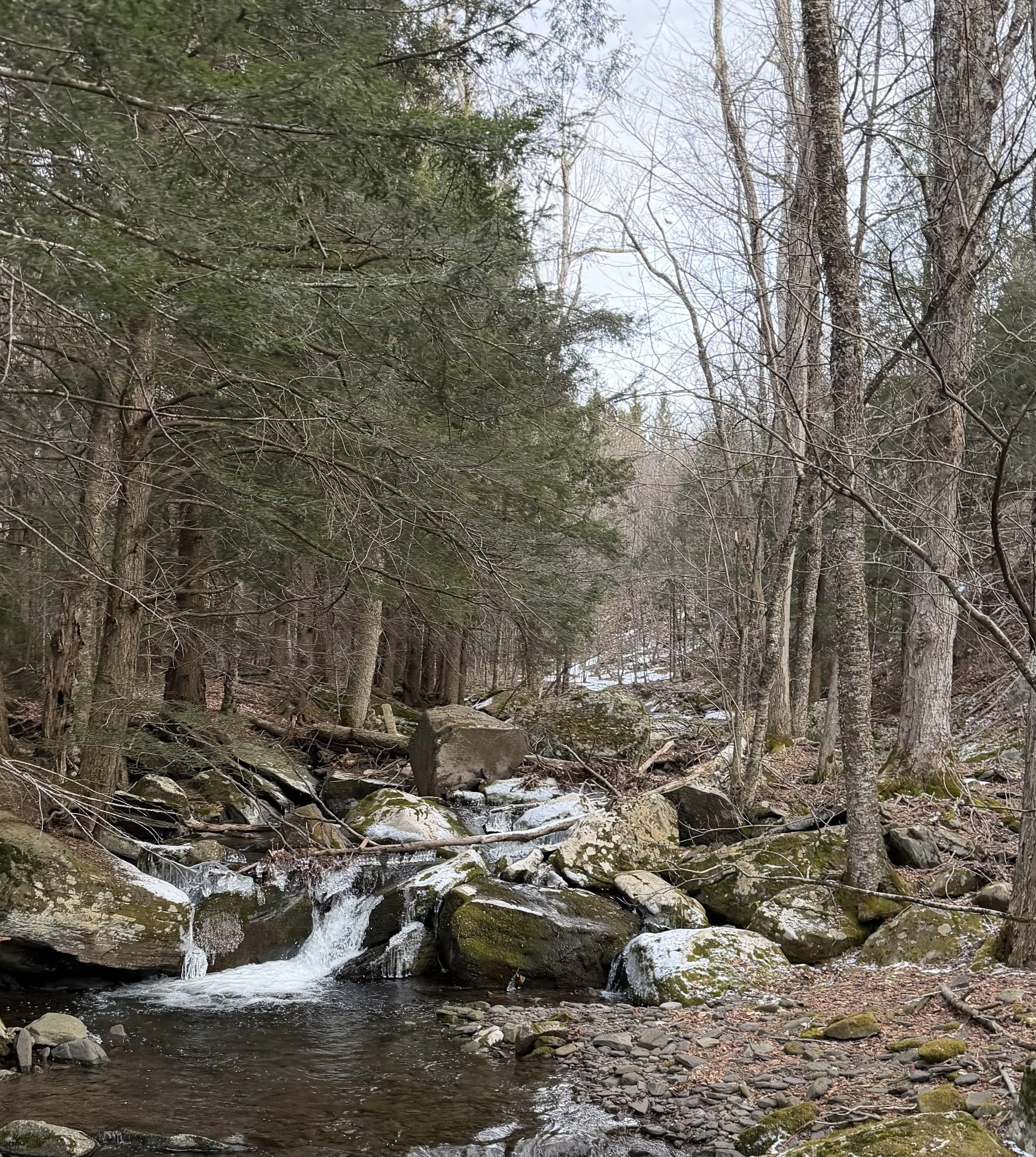
This past March I was in the Catskills Mountains in New York. I grew up in New York, not far from the Catskills and aside from the occasional scout trip as a teen, I have not I have not spent a lot of time in those mountains. The Catskills seem to be the overlooked sibling to the Adirondack Mountains. The mountains are not as tall, the park is not as big, and they are not as popular as the Adirondacks. For those reasons (and others) I felt that it would be nice to explore this new(ish) location for my March expedition. March can be a tricky time to go backpacking in the Northeast. Temperatures are not yet warm, snow is still a real possibility, and there can be a significant amount of rain. March is fully in “shoulder season.” I convinced one of my adult children to join me in the Catskills even though we anticipated less than ideal weather. When we arrived, the parking lot was a sheet of ice and there were hints of ice and snow on the trail. It was not raining, but rain was in the forecast for the evening and the next day. It was a less than ideal day and it was no surprise that we did not see anyone that day or the next.
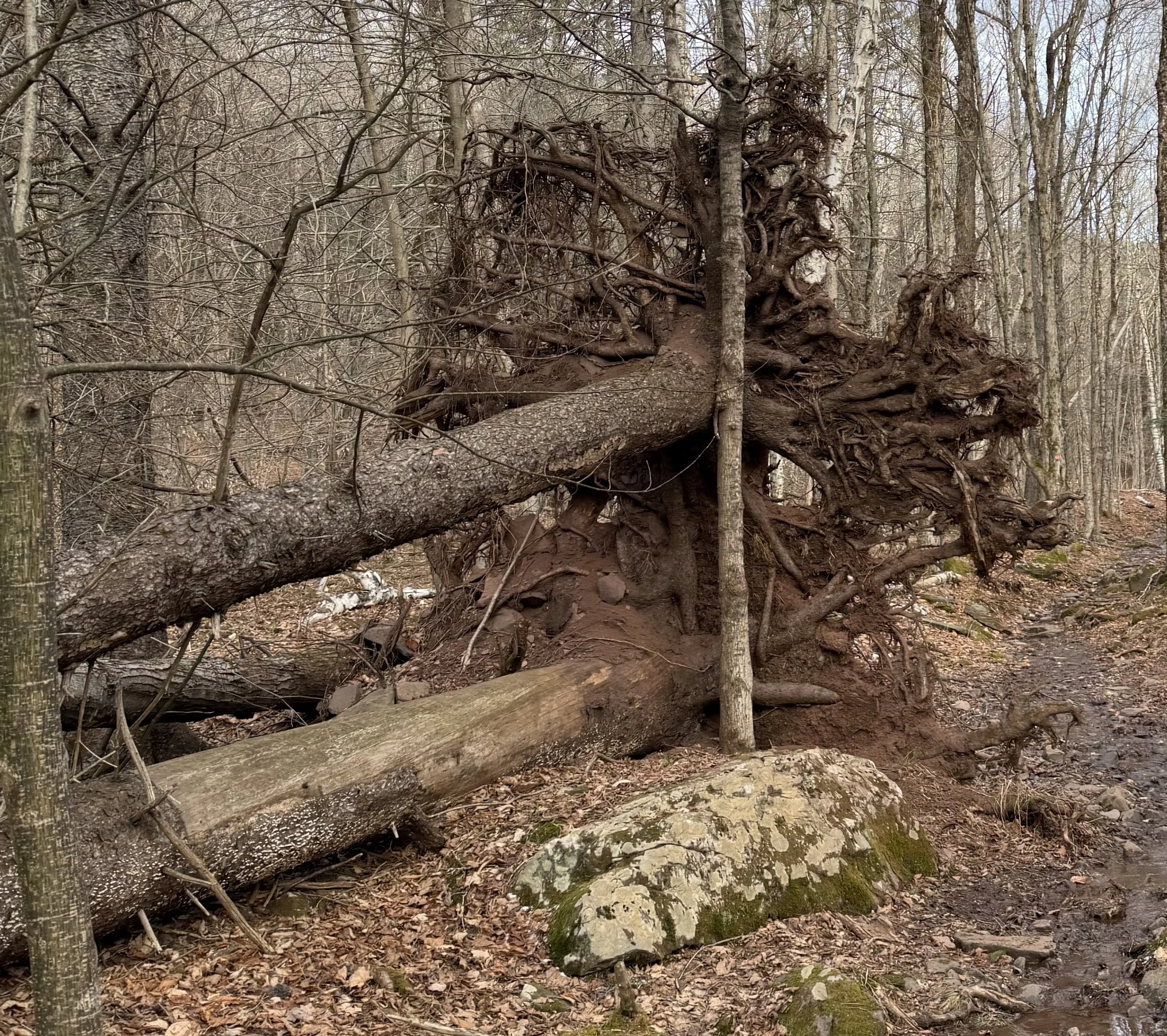
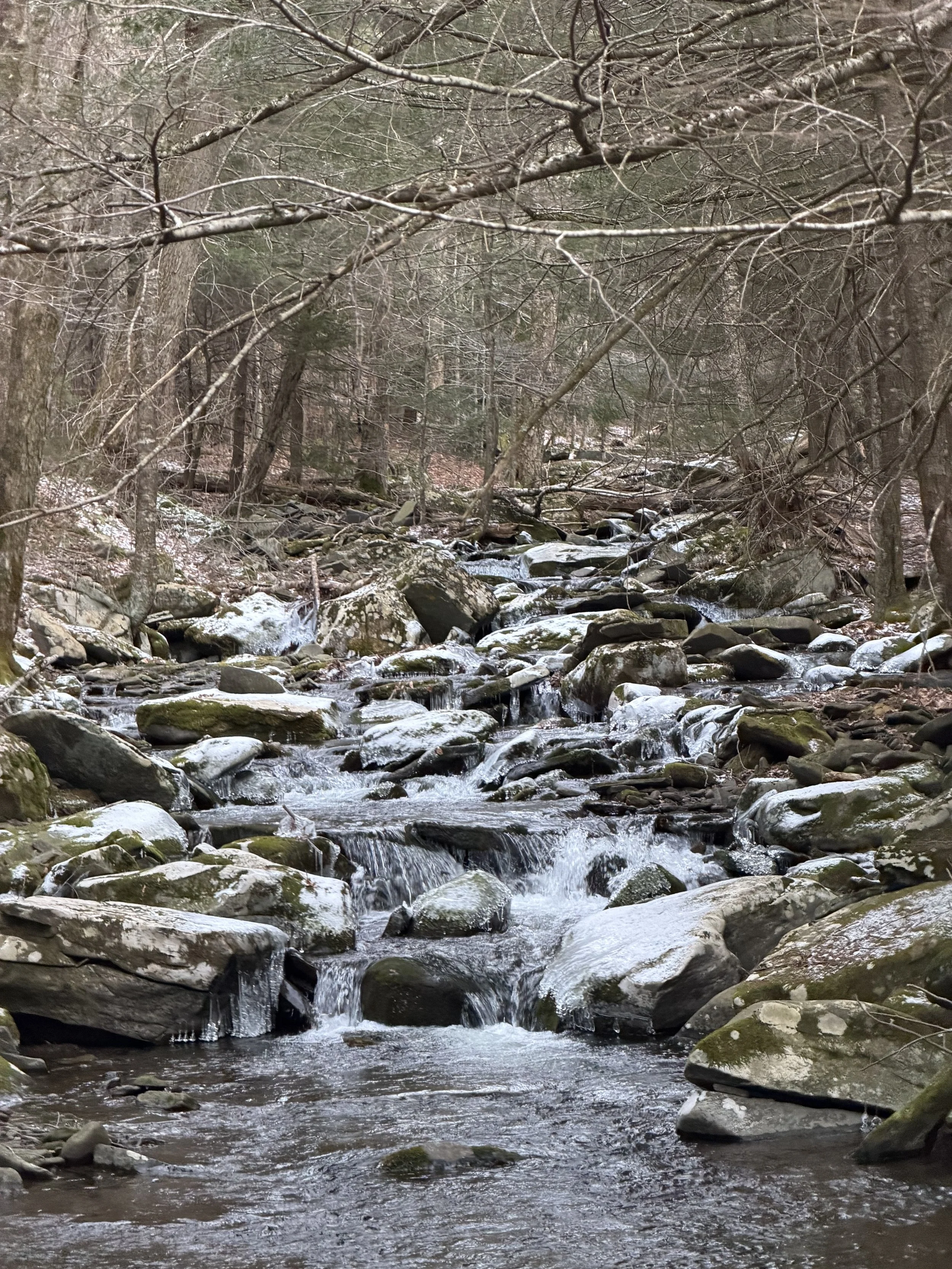
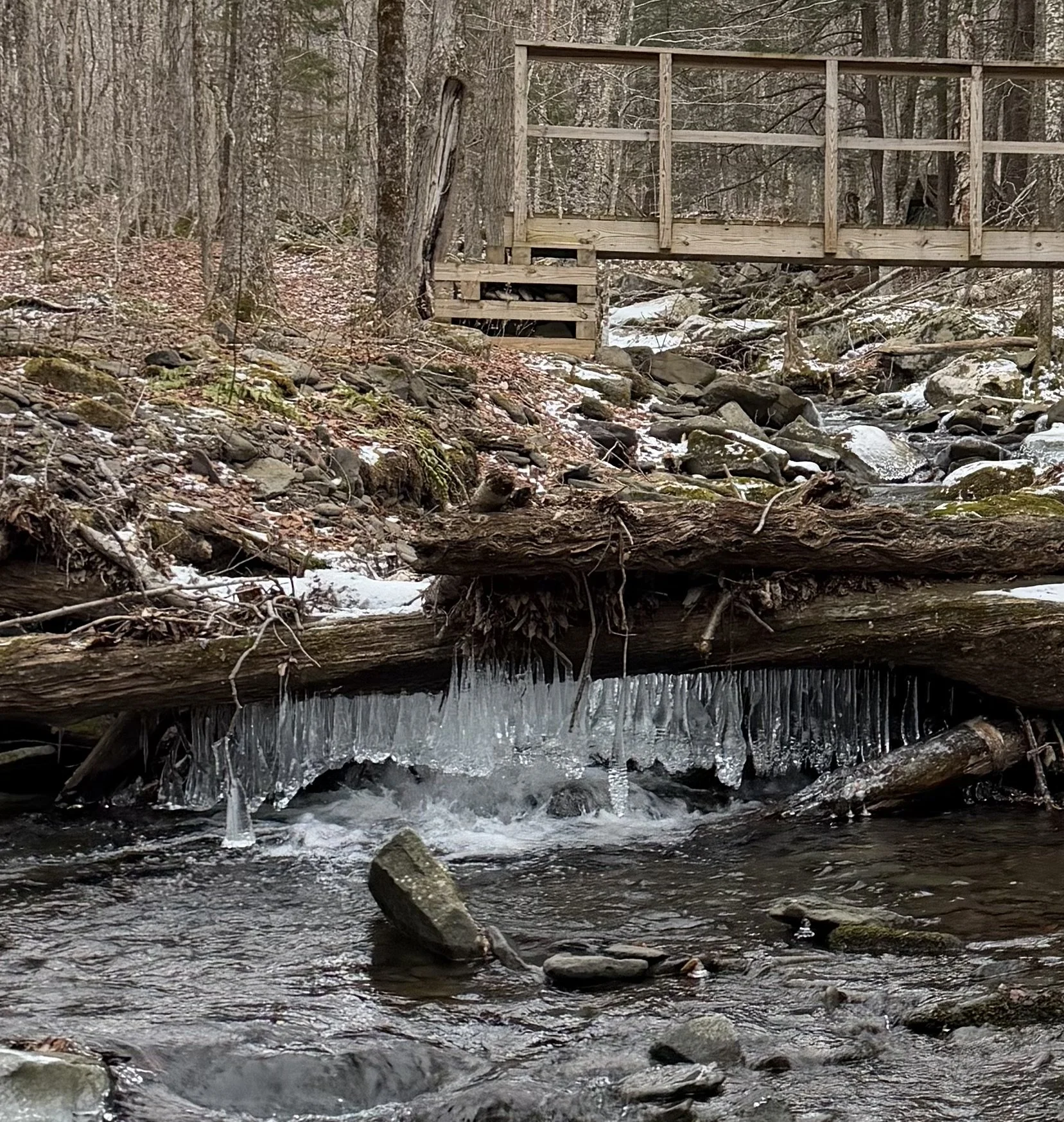
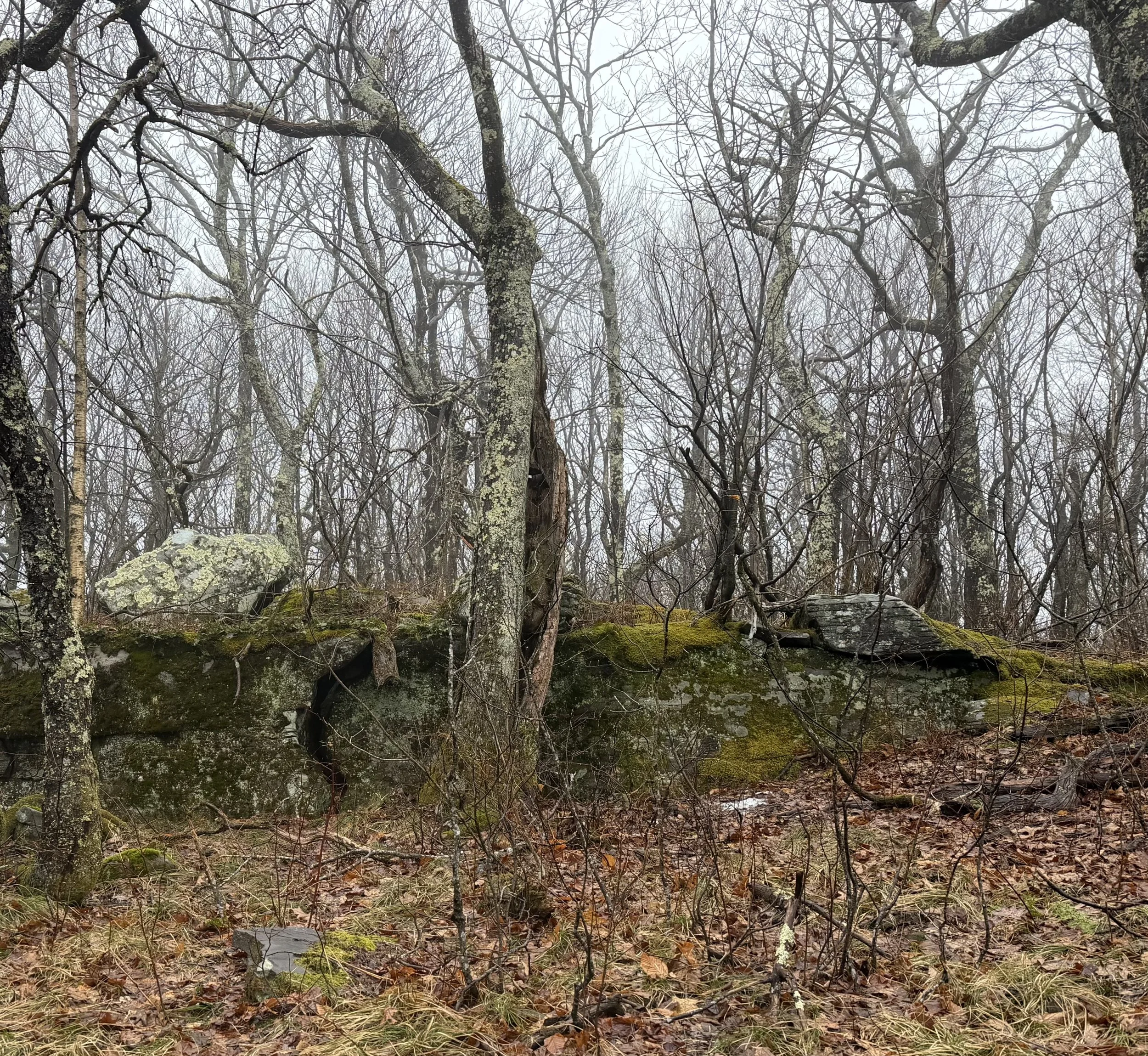
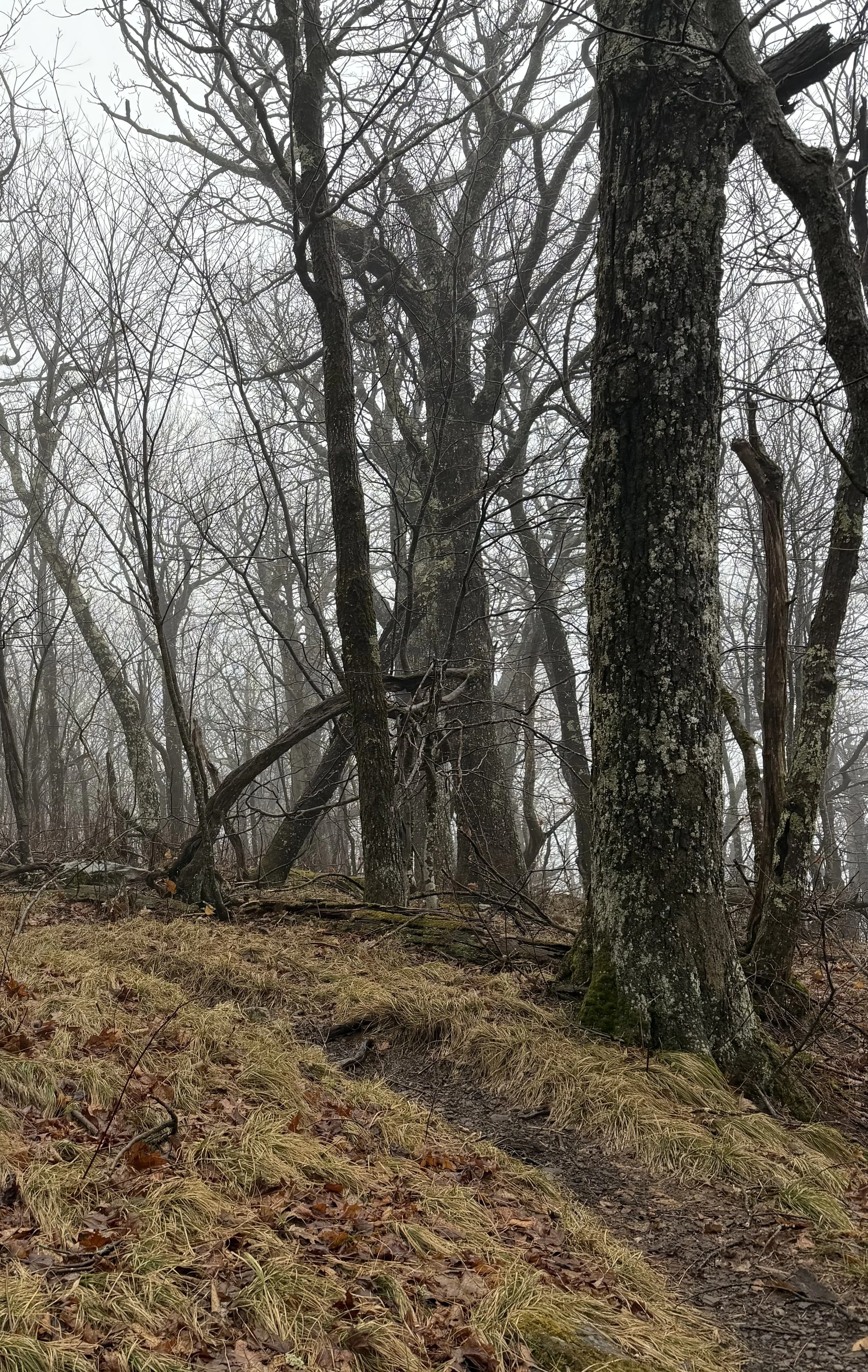
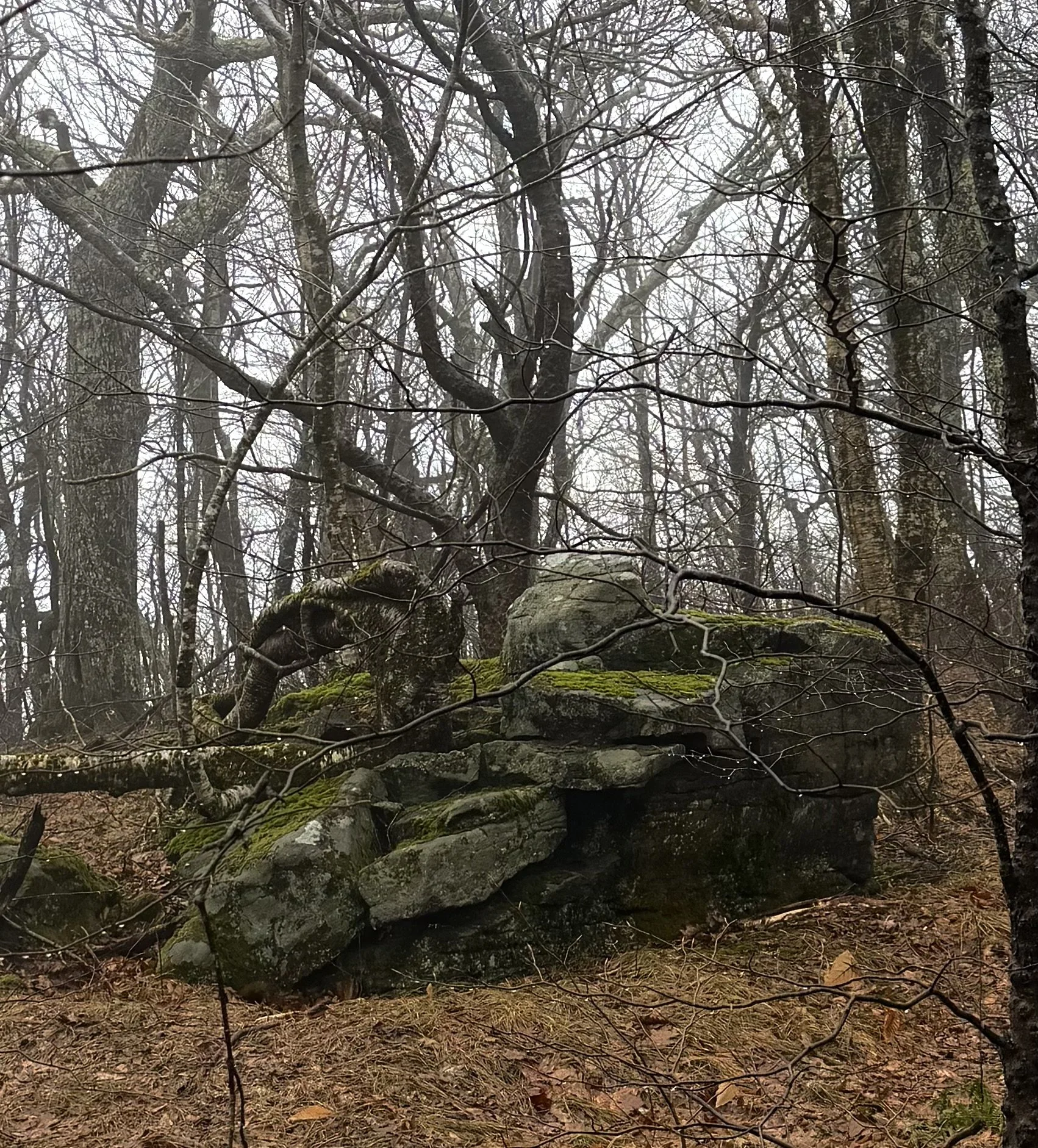
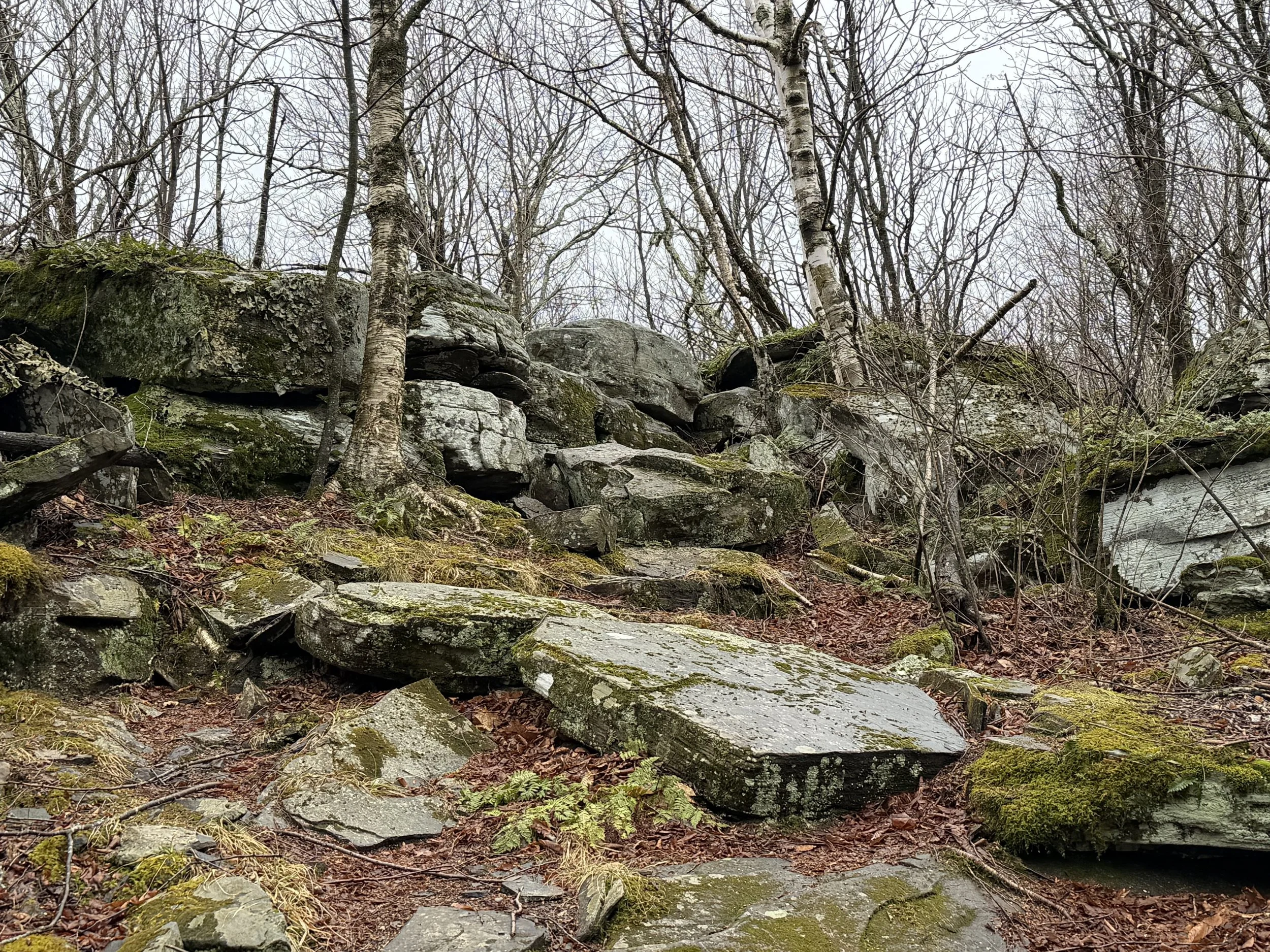
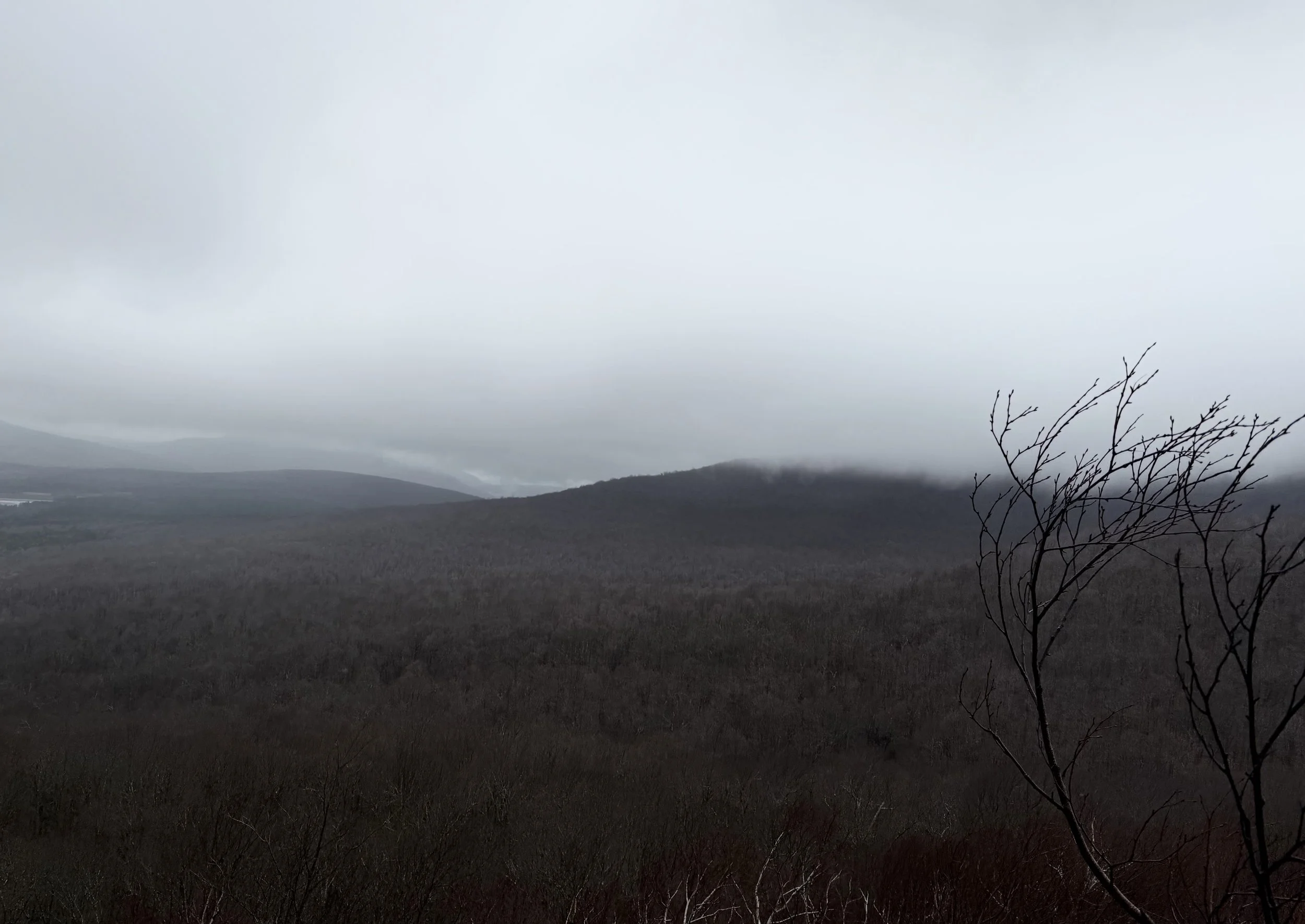
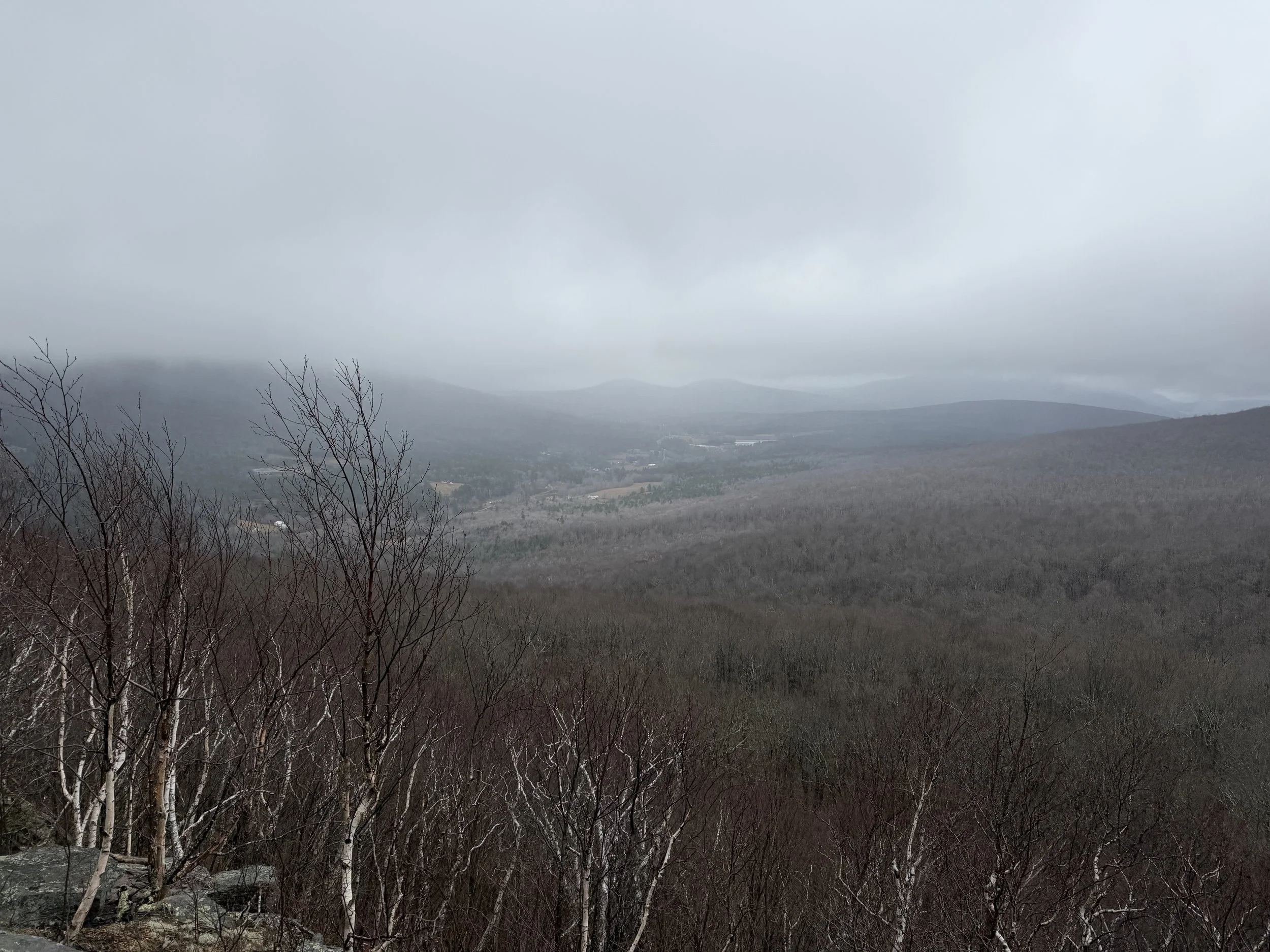
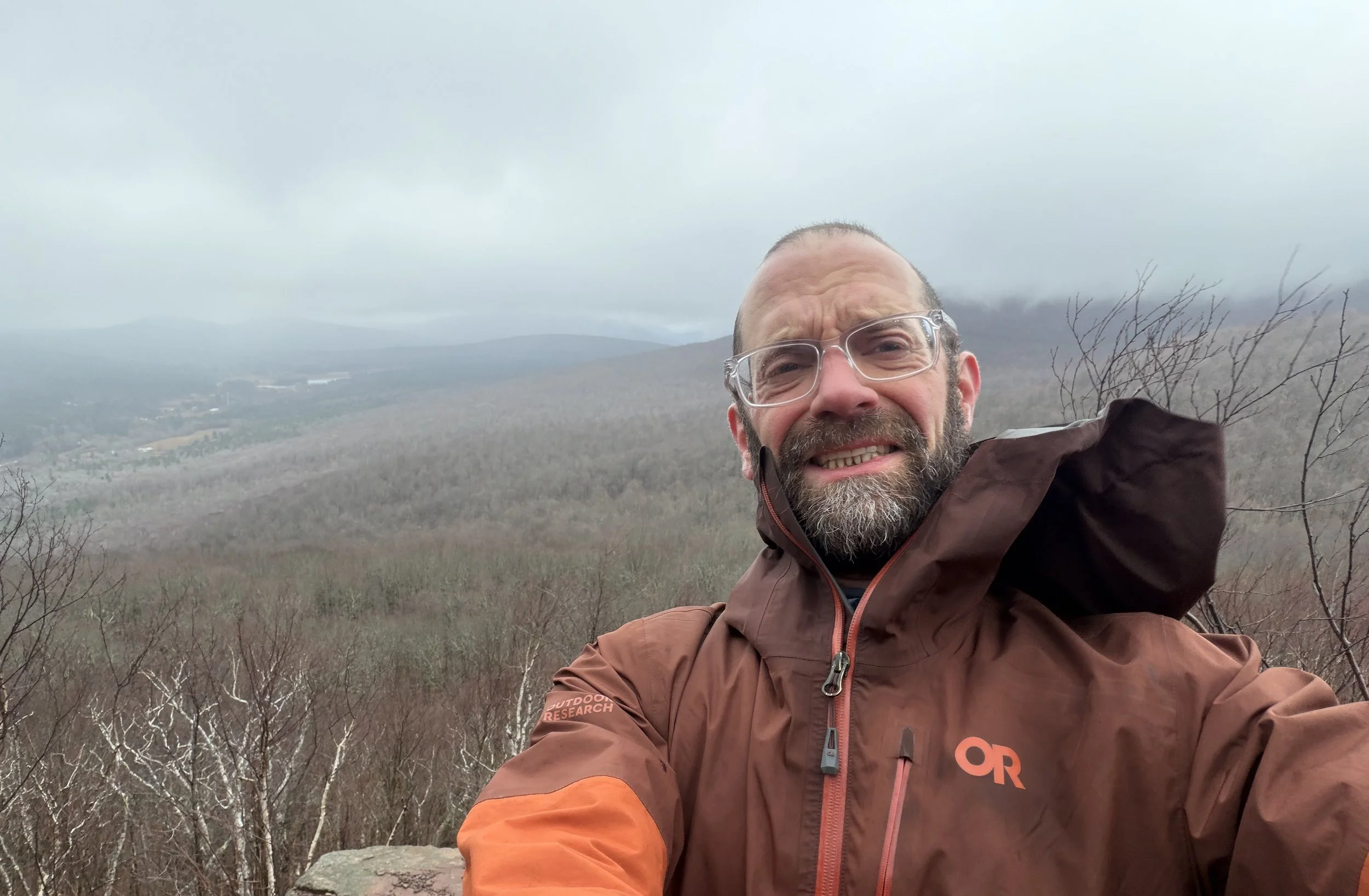
The next day of hiking was cold, windy, and wet. The views were mostly obscured by clouds with an occasional tease of the valley. The leaves had not yet started to emerge, the forest floor was mostly brown leaves and mud with a smattering of snow and ice. Yet it was still a good day of hiking as I admired the different rock formations, the different flora, and enjoyed good conversation. We finished our day of hiking early and relaxed in a lean-to shelter as the rain transitioned from a teasing drizzle to a heavy down-pour.
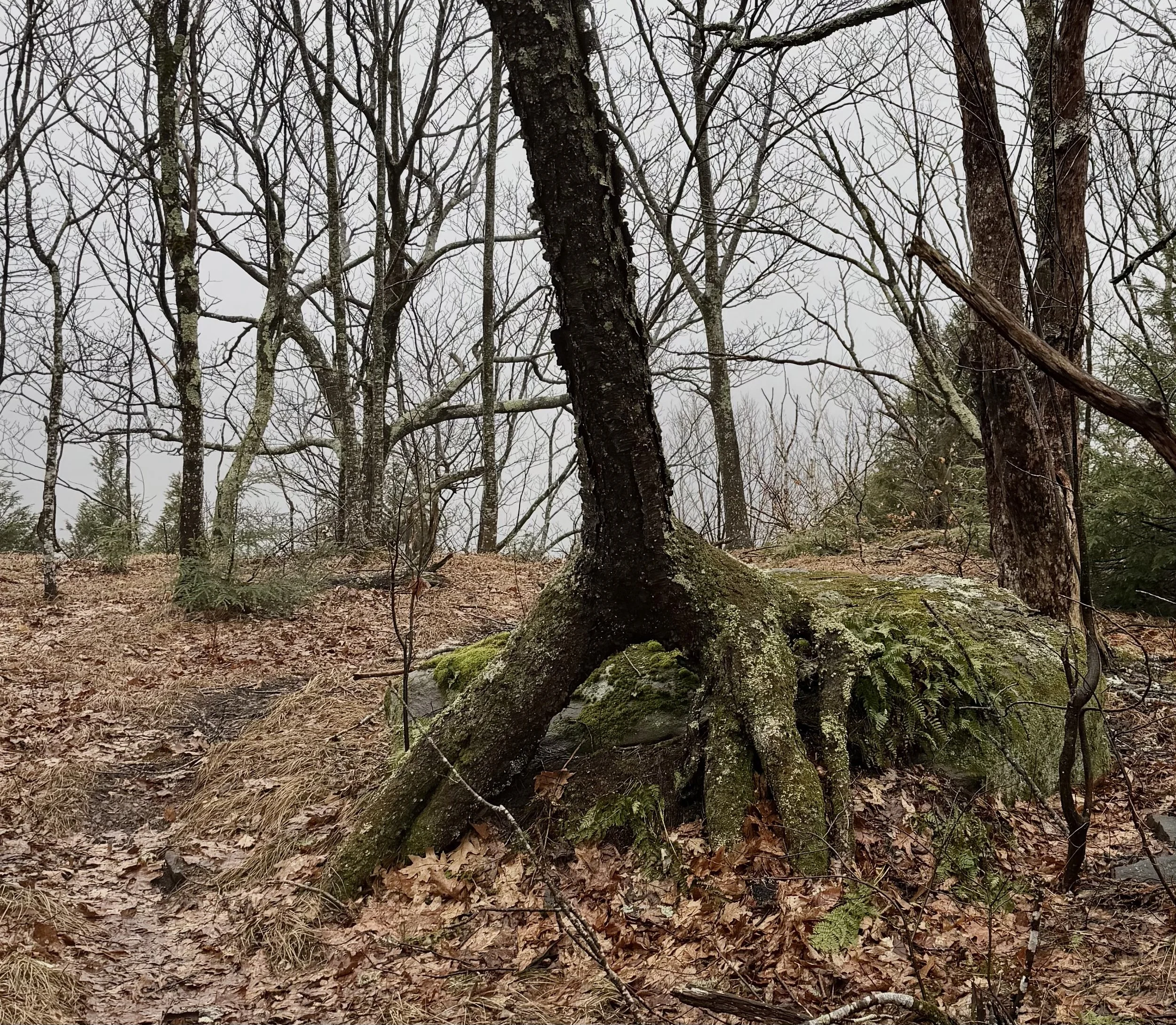
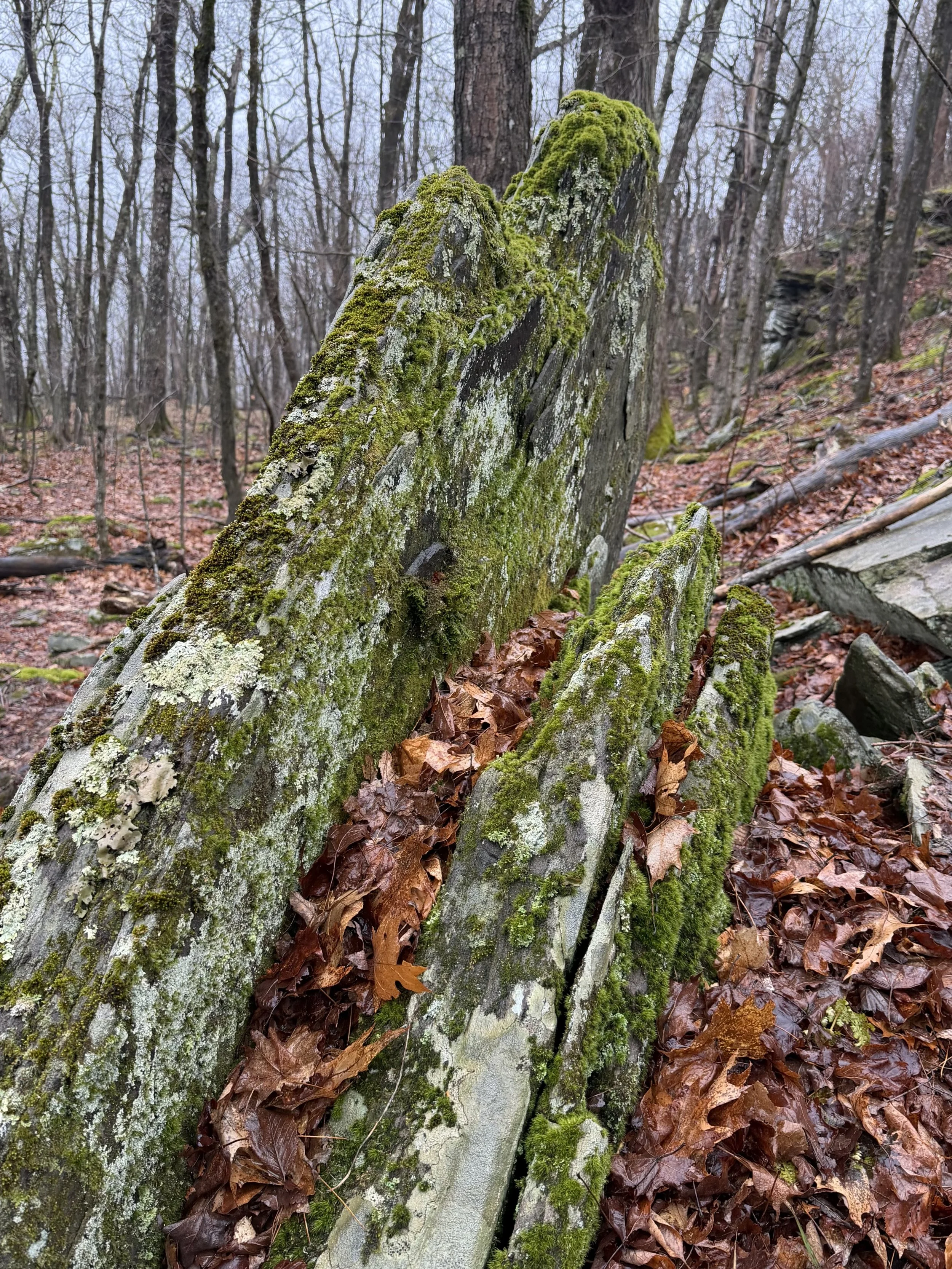
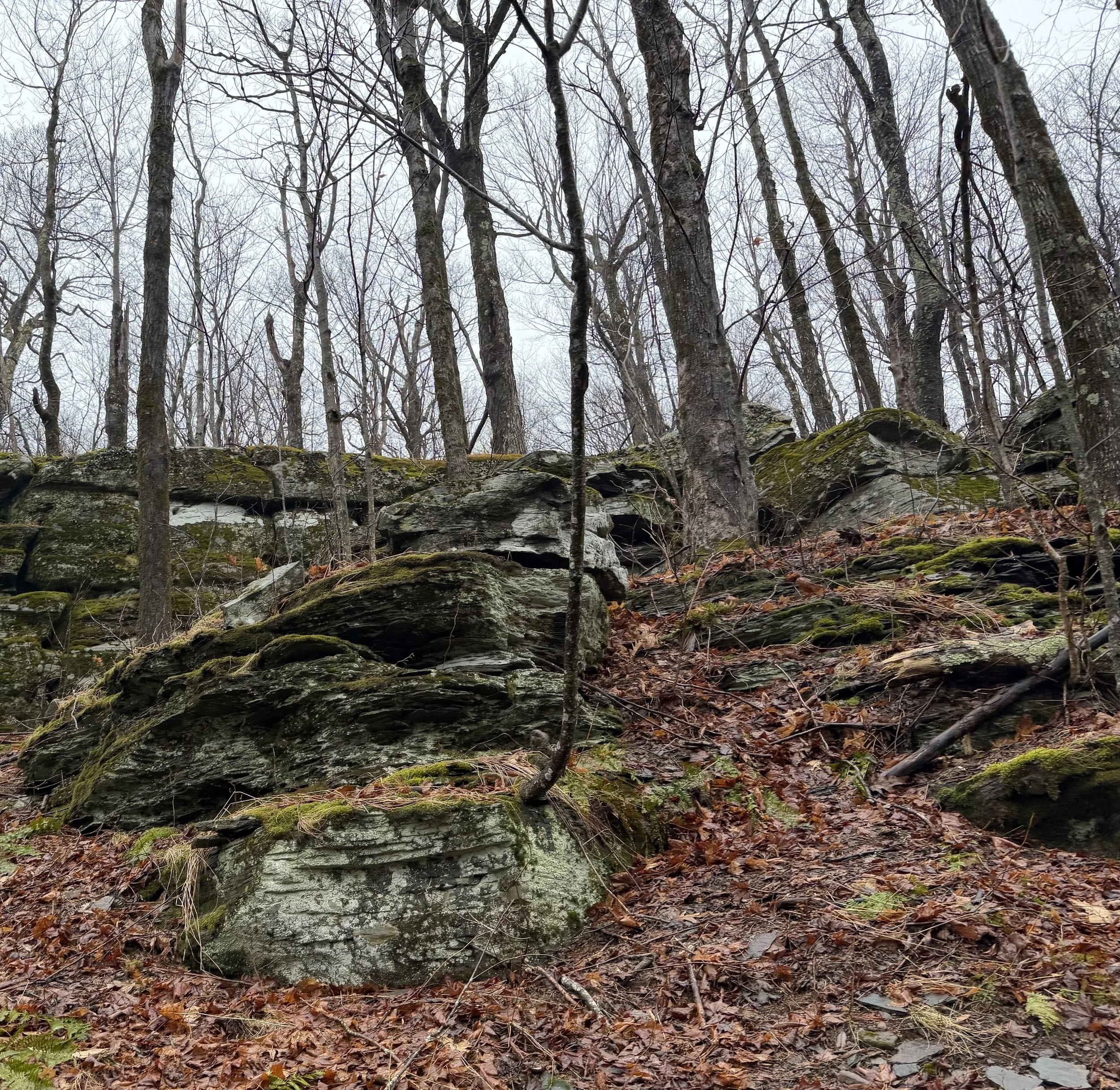
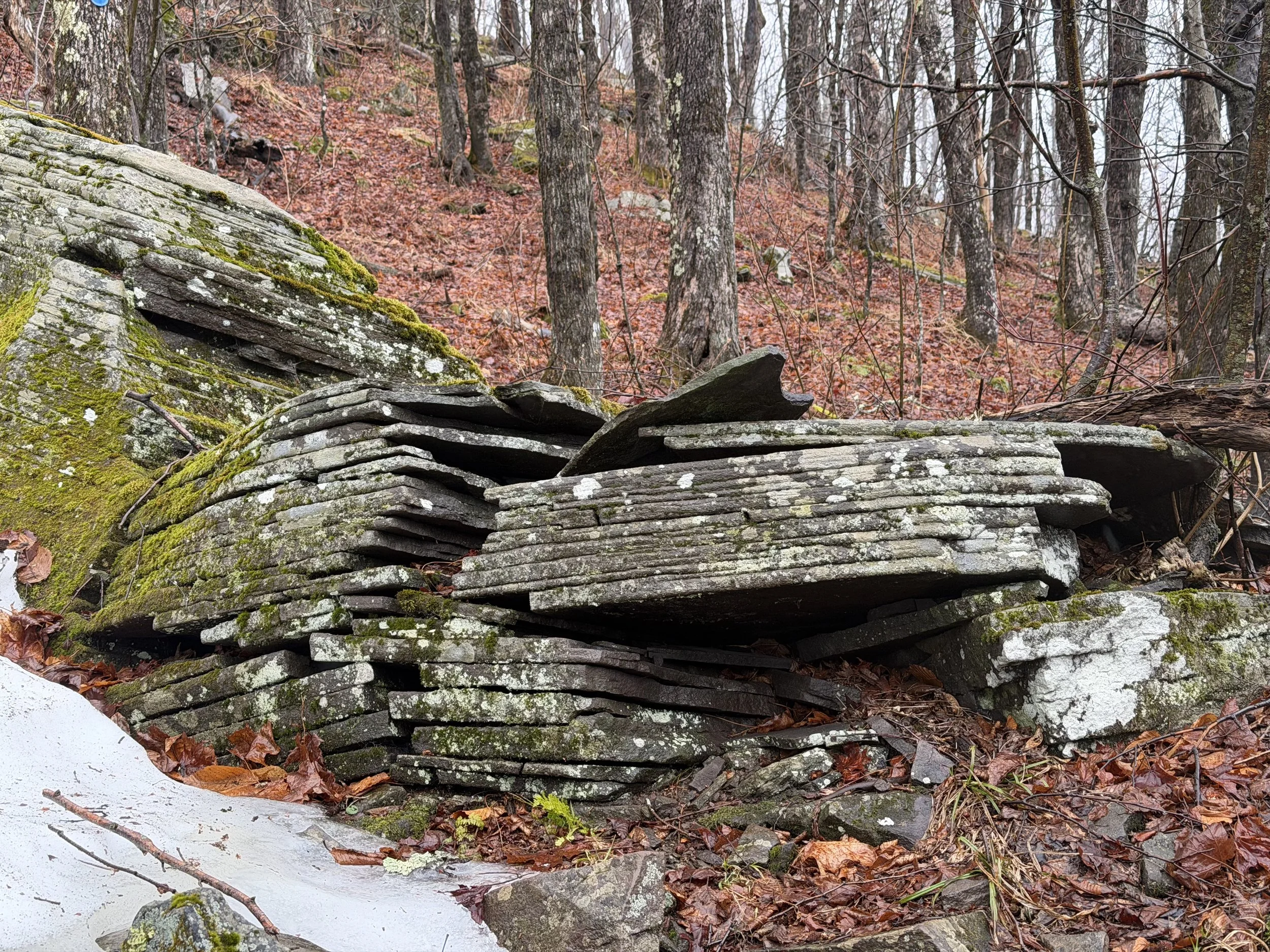
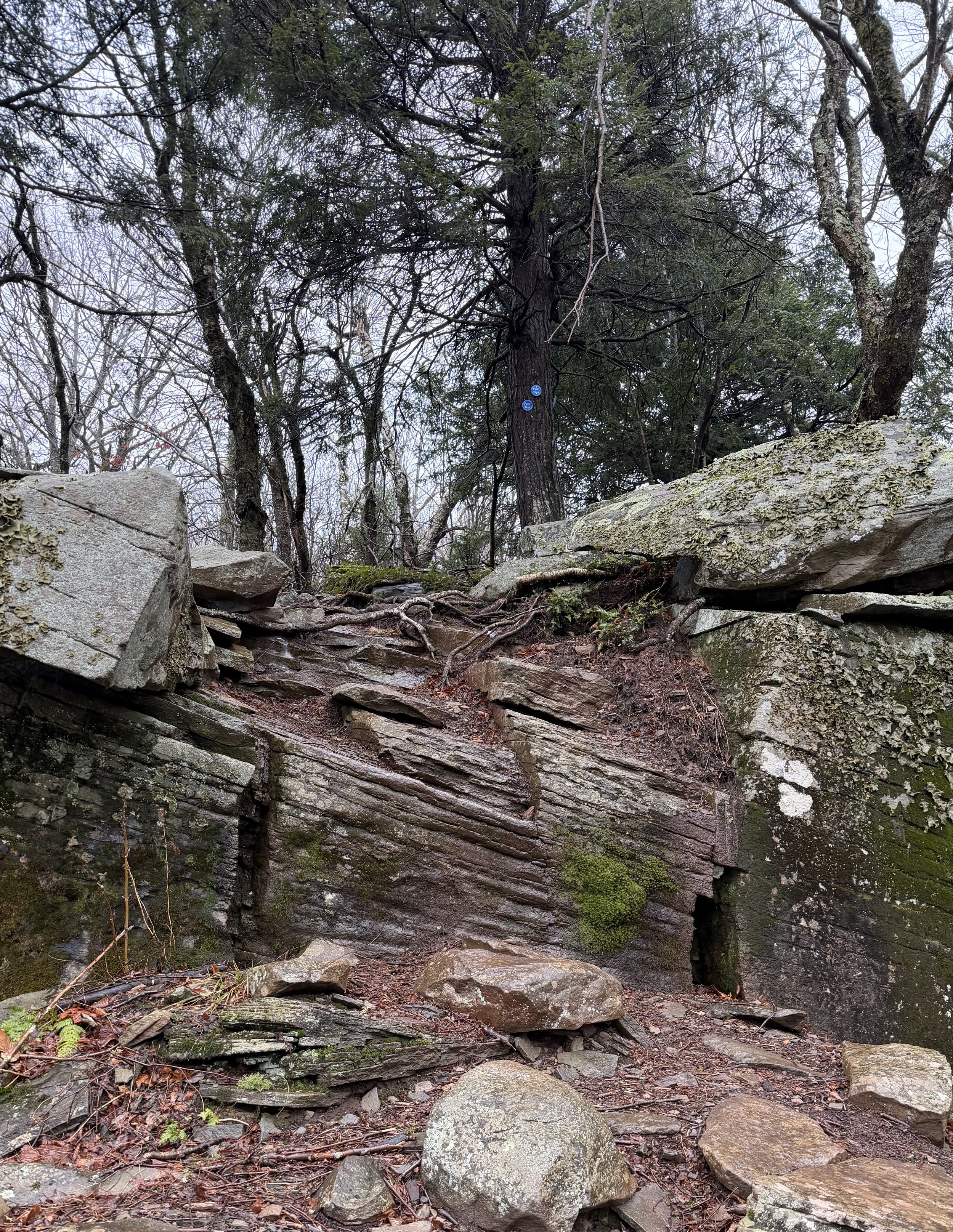
The rain continued through the night and we were glad to have a shelter over our heads.
The next morning, we awoke not to rain, but snow. The temperatures had dropped enough to freeze all the water and create a soft, white blanket over everything. All of the browns were now a white and reflecting the sunlight. It was a beautiful morning and we continued to be grateful for the shelter over our heads. Out plan was to climb one more mountain and then hike out. The clouds were parting, the sun was shining, and aside from the layer of ice on everything, it looked like it could be a very good day of hiking.
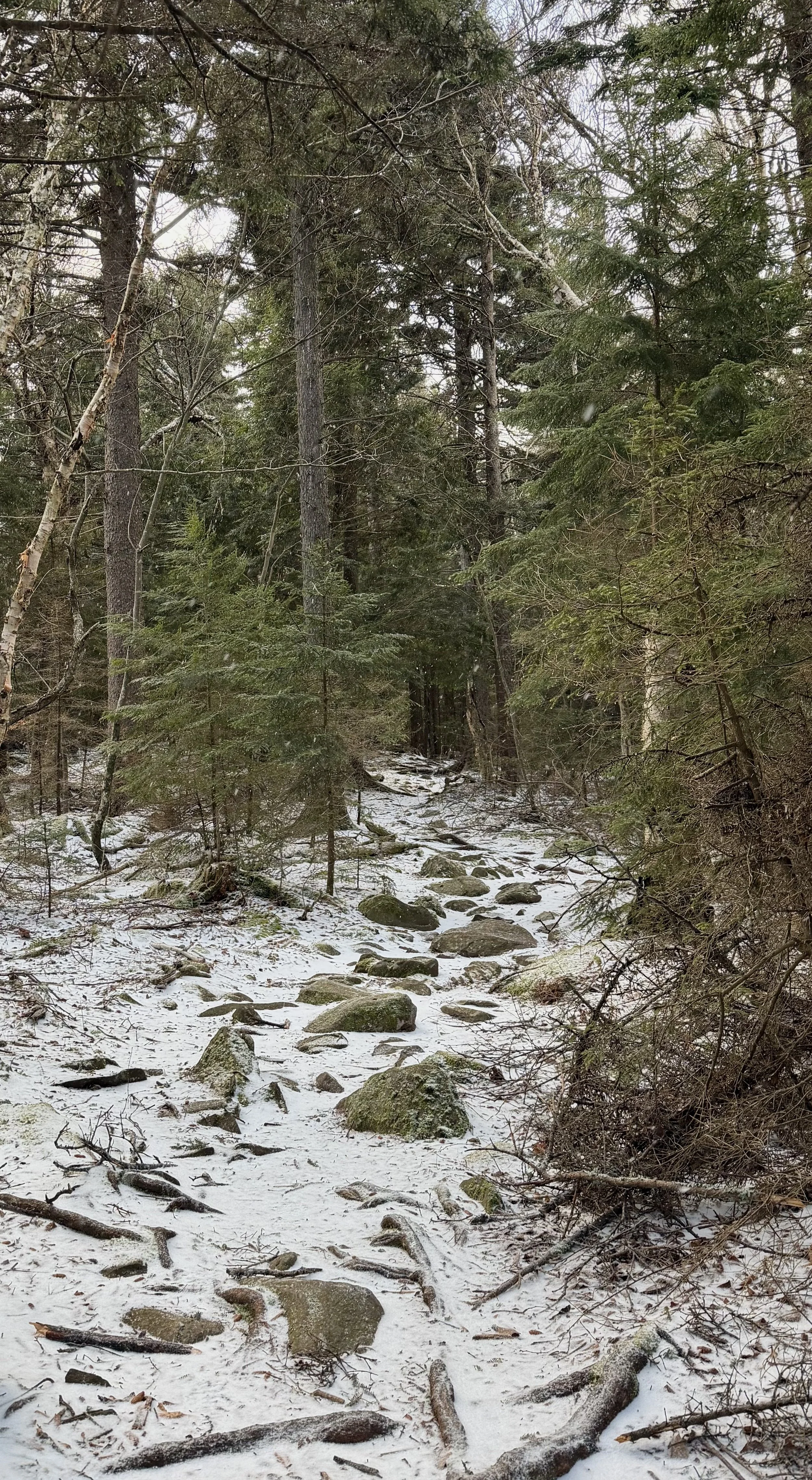
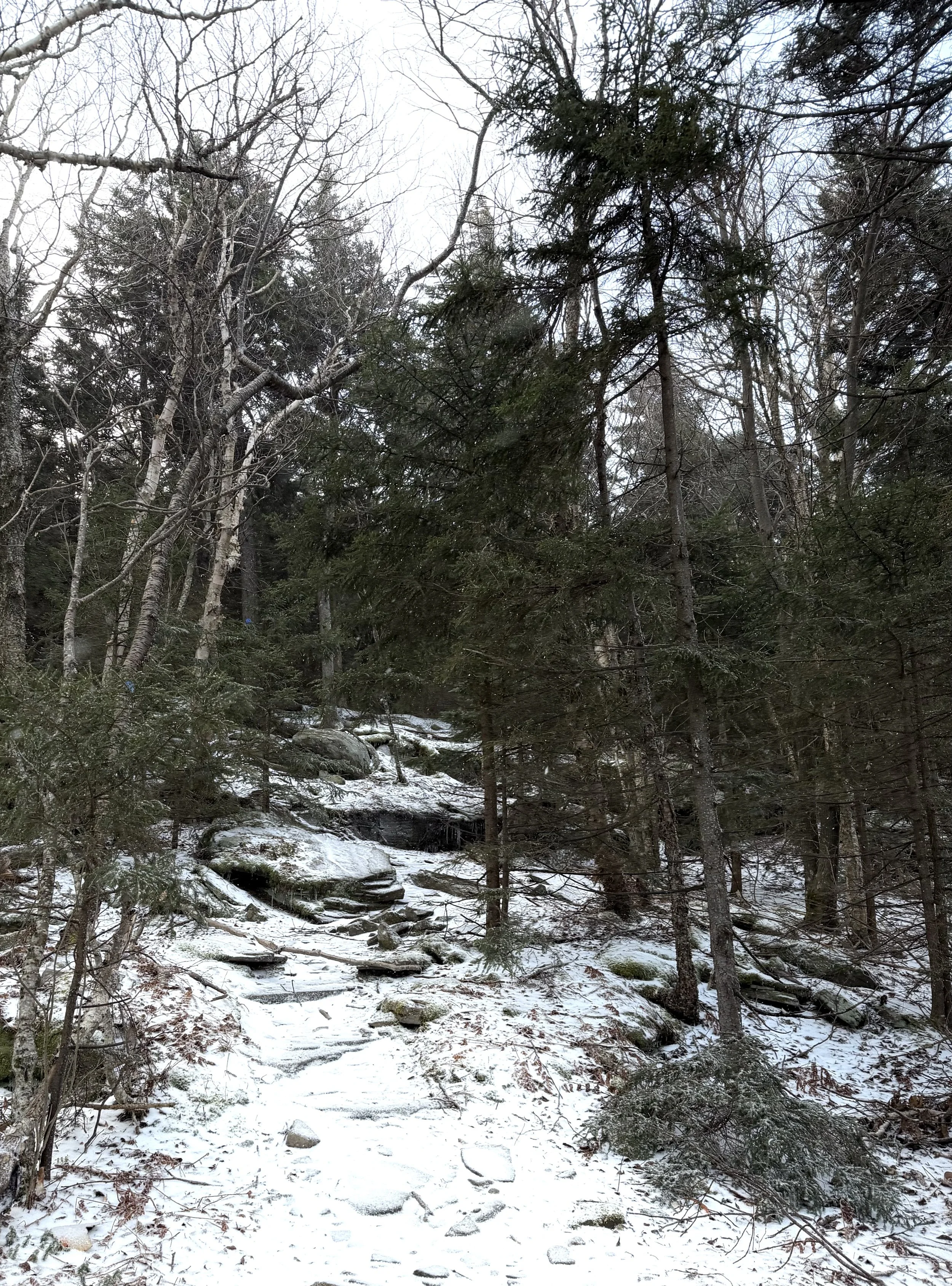
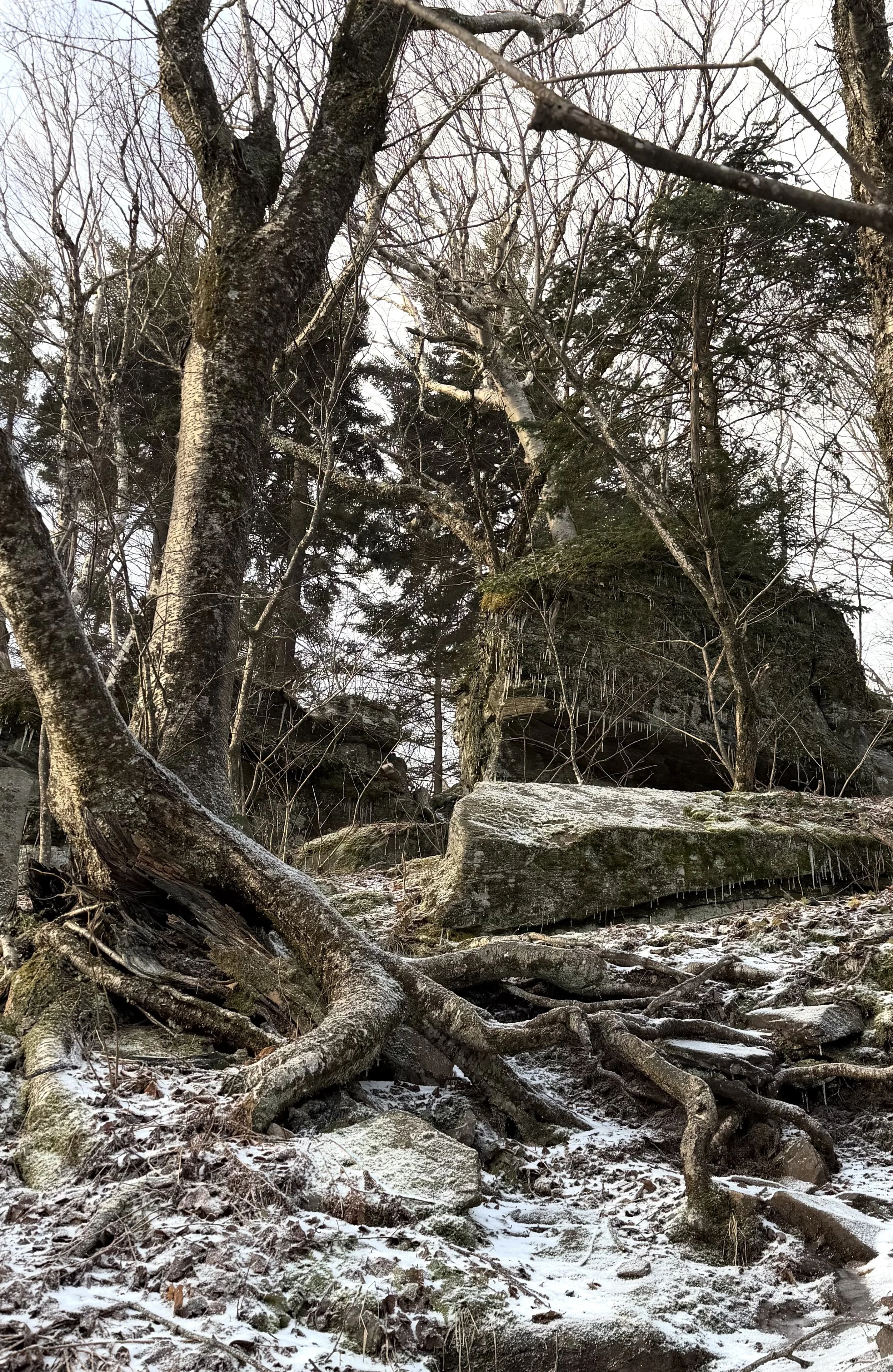
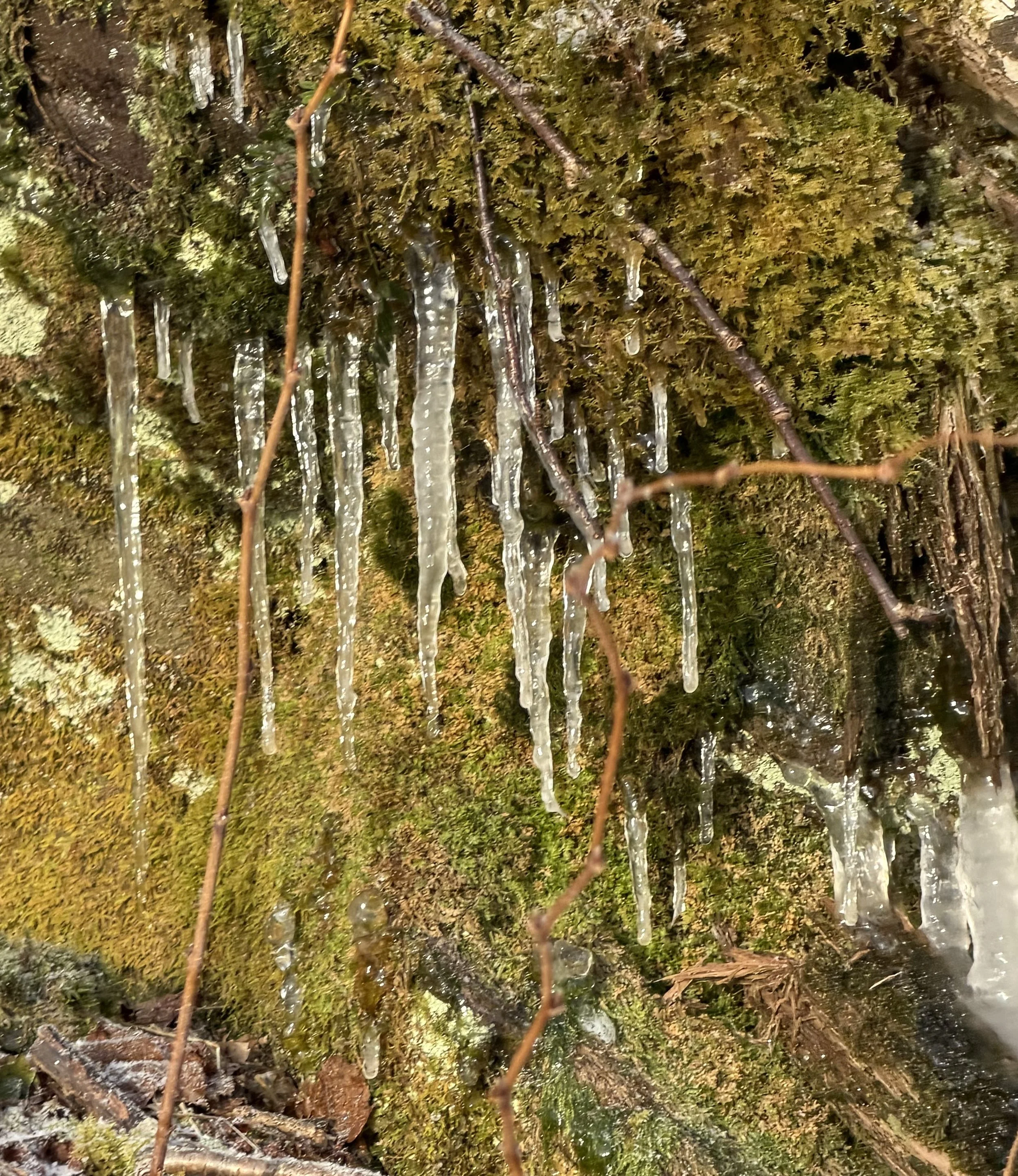
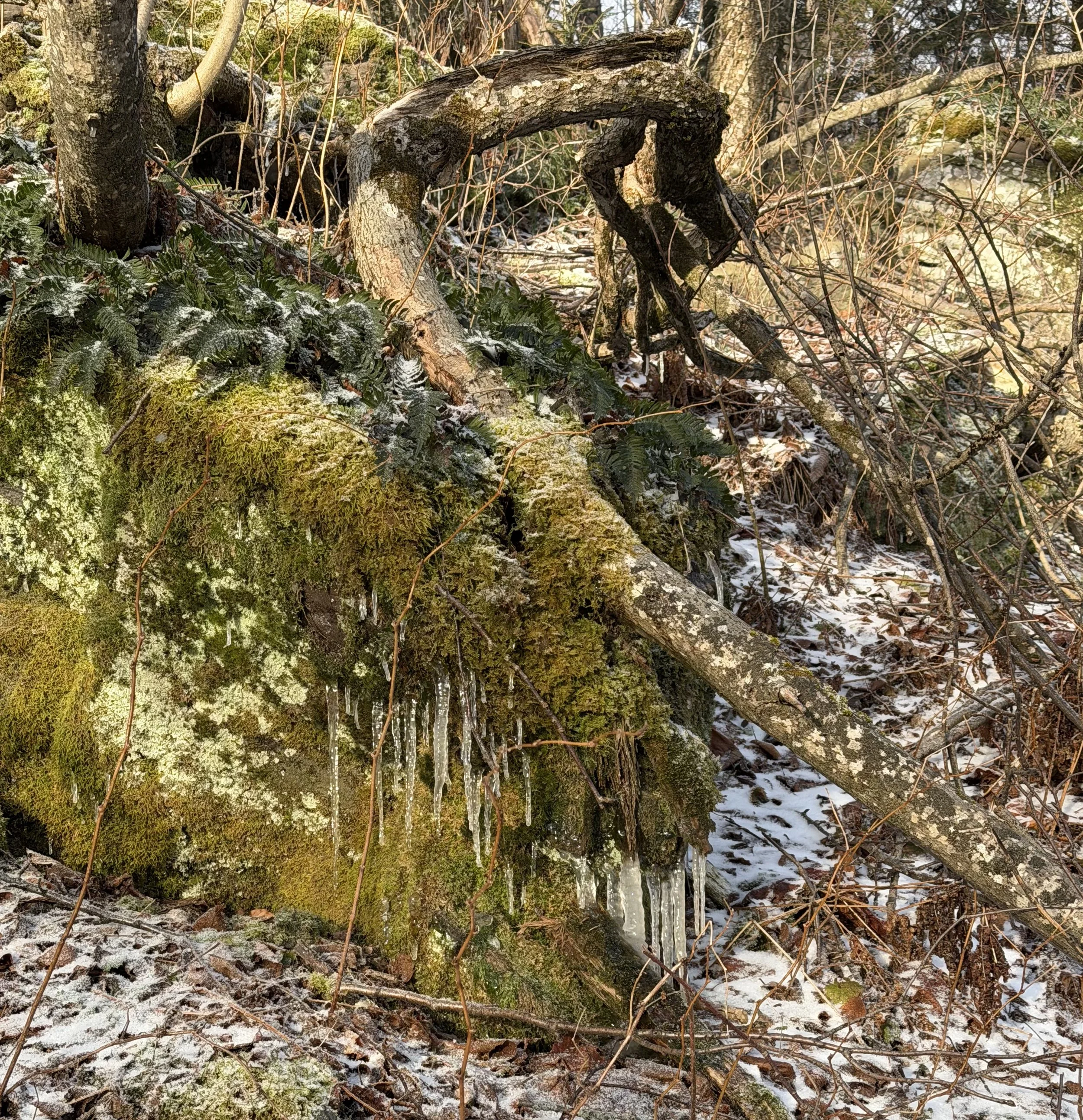
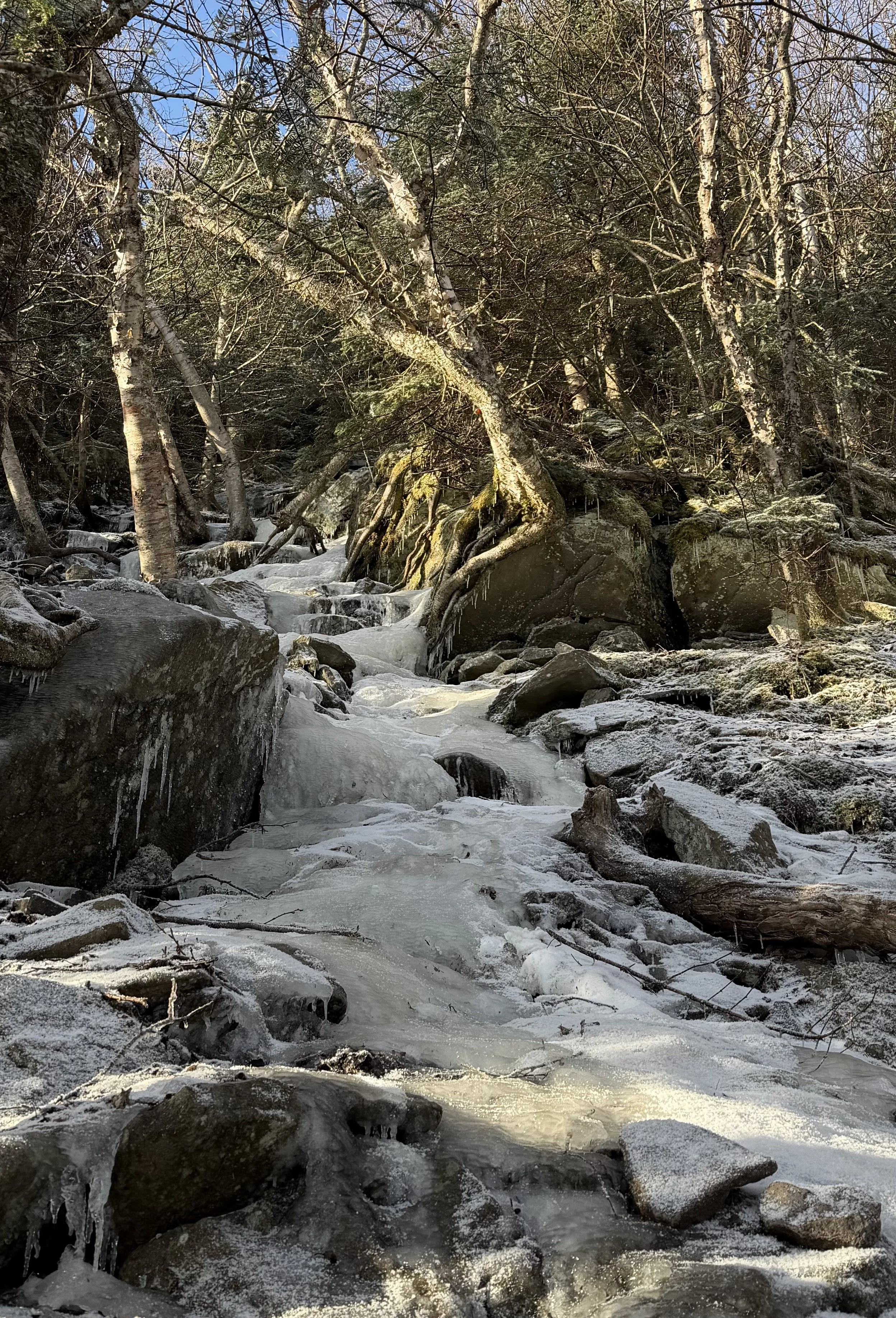
The trail started easily enough. The snow was only about an inch deep and did not impact our hiking. Soon, however, we were ascending up the mountain and the conditions changed drastically. It was still cold and all of the water that was flowing down the mountain had frozen and was covered with a light dusting of snow. Flowing ice on the trail was dusted with snow. It was a beautiful picture with the sunlight reflecting off the hues of green from the evergreen and white on the mountain. It was a dangerous hike as each step now threatened a quick and dangerous fall down the side of the mountain because of the mixture of ice and snow.
Have you had that moment when you wondered if maybe you shouldn’t be doing what you are doing? It is that sinking feeling in your stomach, or that feeling in the back of your neck that what you are doing is probably not wise. How do you know if it is safe or smart to keep going forward and to challenge yourself? How do you know when is the right time to turn around? This is a “soft skill” that can be difficult to teach because each situation and each hiker is different. There are not a set of metrics or a check-list that one can use to determine if and when to turn around. There are definite times when turning around is the right decision and times when it is not necessary. Knowing the difference can be tricky. Being aware of those moments can be life-saving, but is not always easy to discern. This is where at least an awareness of the Dunning-Kruger effect can be helpful. The Dunning-Kruger effect occurs when someone who lacks meta-cognition acts as if they know what they are doing. In other words, it is when a hiker who does not have experience makes decisions based on the assumption that they know what they are doing (even when they do not). When deciding to turn around, when trying to weigh unknown variables, a lack of experience plays a part in patterns of decision making. Many rescues and injuries in the back-country occur because hikers feel like they know more than they do and make decisions based upon assumed knowledge. This is the Dunning-Kruger effect. A group of people go to hike up Mt. Washington when it is 70 degrees at the base and assume that it will be the same temperature and weather at the summit. It almost always is not. Someone looks to climb an Adirondack peak in the fall thinking that sneakers and a day-pack will be enough and more gear is not necessary and end up facing ice, snow, and find themselves hiking in the dark (these are real stories/events). People get lost in the wilderness because they assumed their phone would work and provide the necessary navigation but don’t think about losing service. We assume that we know all we need to and get into trouble when we find out that we don’t. This is partly explained by the Dunning-Kruger effect.
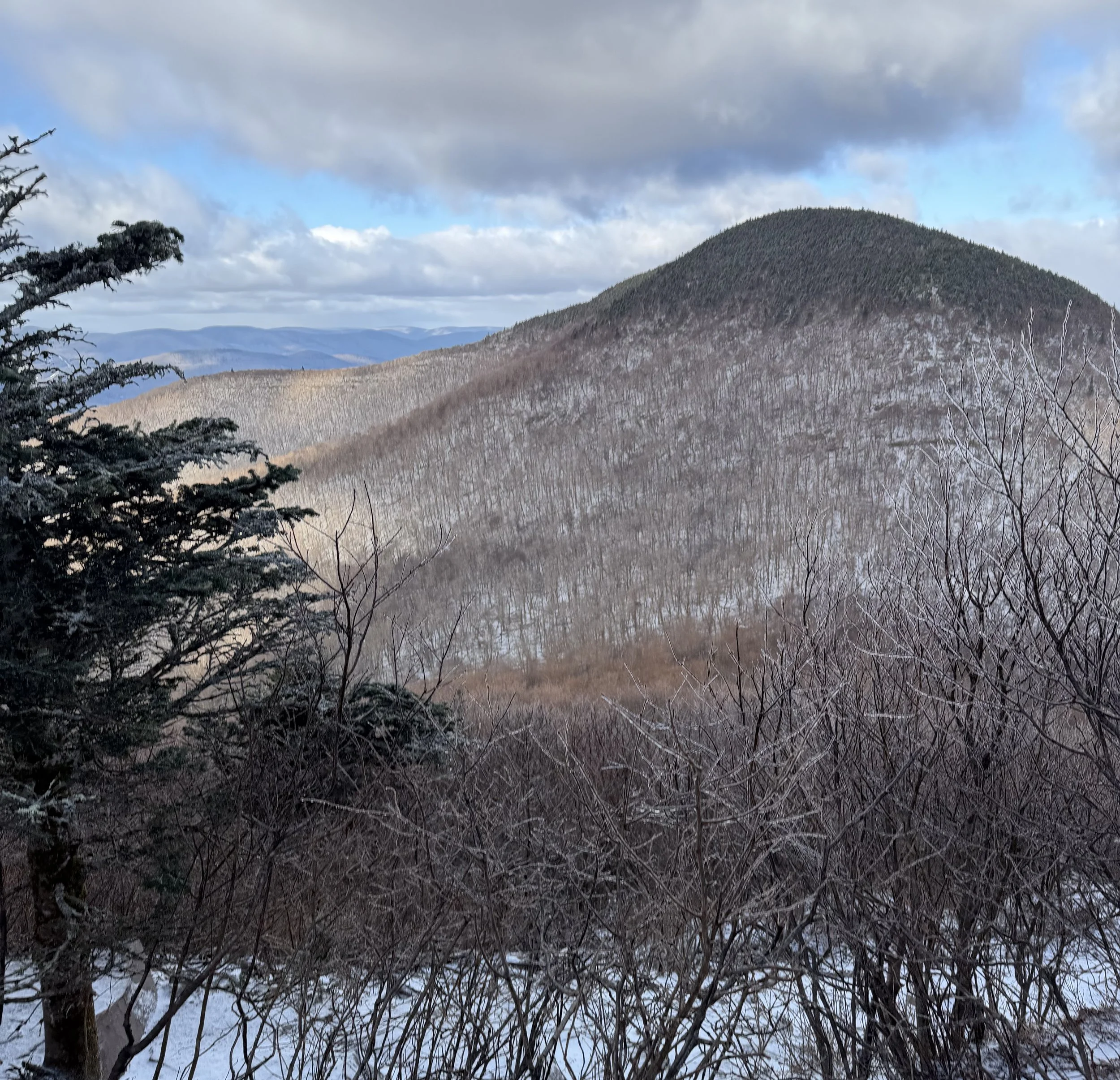
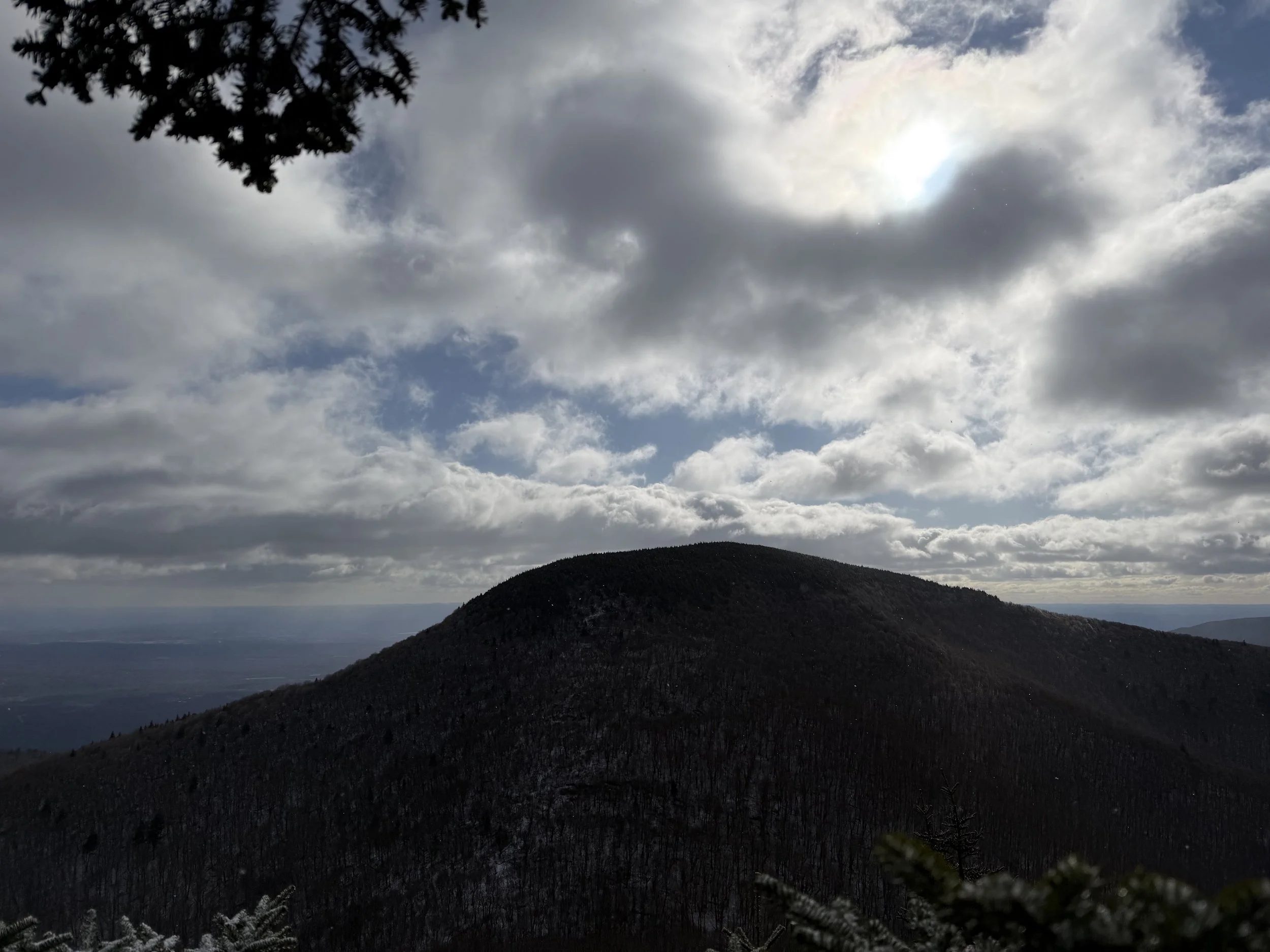
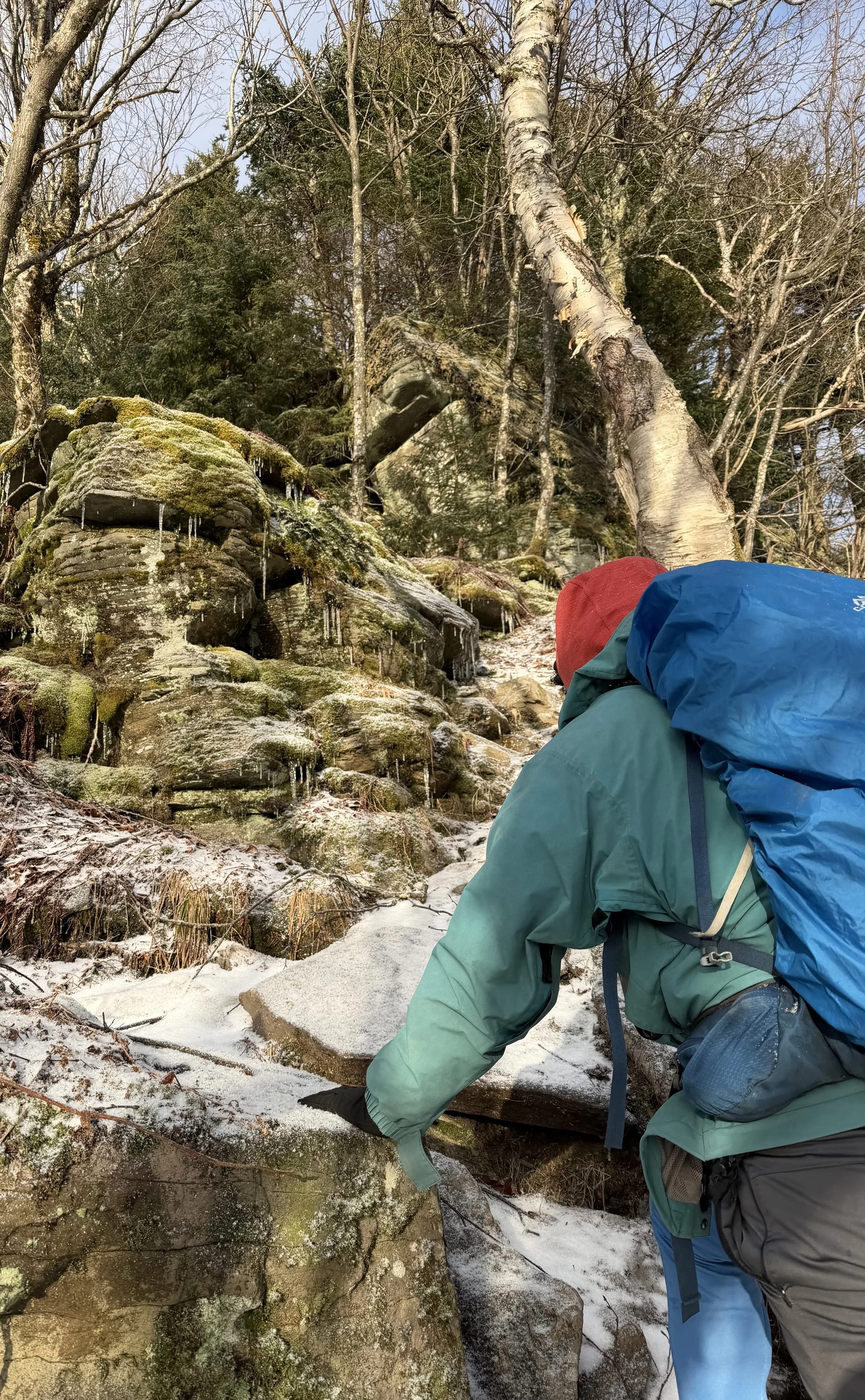
I try to be aware. When I’m in the backcountry I try to be aware of what I know and what I do not know, of what the limits of my abilities are, and when it is an important time to turn around. I rely on research that I have done beforehand and on experience I have had with other trips. On that cold morning in the Catskills, with the ice and the snow covering a fairly steep and exposed trail, I was beginning to wonder if we should turn around. I was wondering if we would find ourselves at the limits of our abilities and if we were risking something that could be considered unsafe.
It was not going up that I was worried about. We had micro-spikes which would be enough for the kind of ice that we were encountering. I had some rope as well if we needed to fashion something to help us up a difficult section of the mountain. It was going down the mountain that I feared. The majority of accidents occur when descending a mountain. Gravity is not forgiving. I was looking at the trail that we were ascending and did not feel good about the descent.
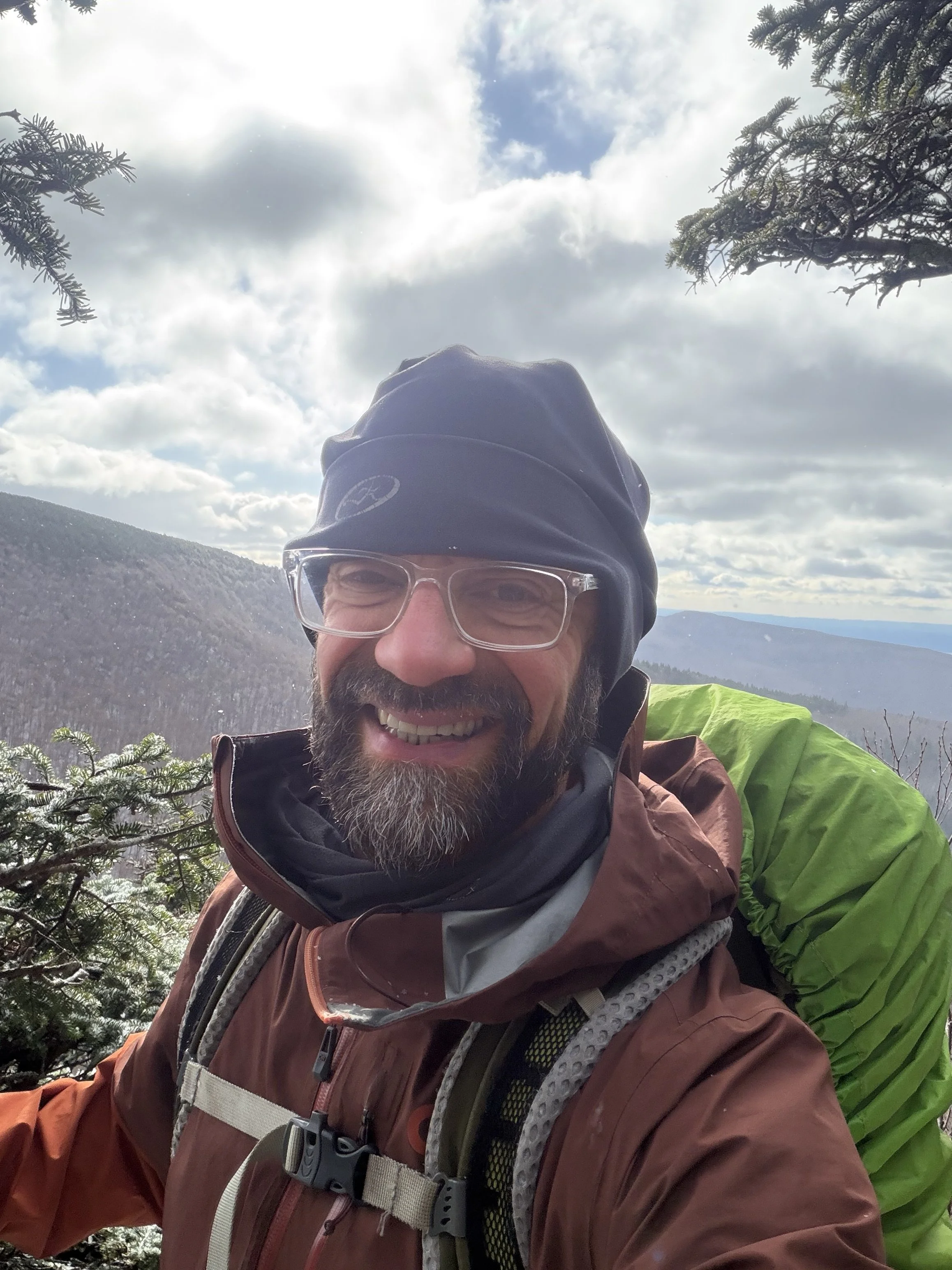
This was one of the times that I was glad to be hiking with someone else. When I am hiking by myself I’ll give voice to my worries and anxieties, but it is often only to the trees. It can be good to voice your fears and anxieties to another person. It can be helpful to think through a problem with someone else, especially if that other person is competent. My son and I have done a lot of trips together, have faced a number of challenges, so I would like to think that my son is competent.
We decided to pause and take a look at the map to see what the rest of the day might hold. We both agreed that going down the way we were going up would be dangerous and should be avoided. On the map we saw that the trail down the other side of the mountain (which we planned on taking) was not as steep and should offer a safe way down. We also saw that there was a side trail that went between two mountains that looked like a gradual descent. There were options before us so we decided to keep on going.
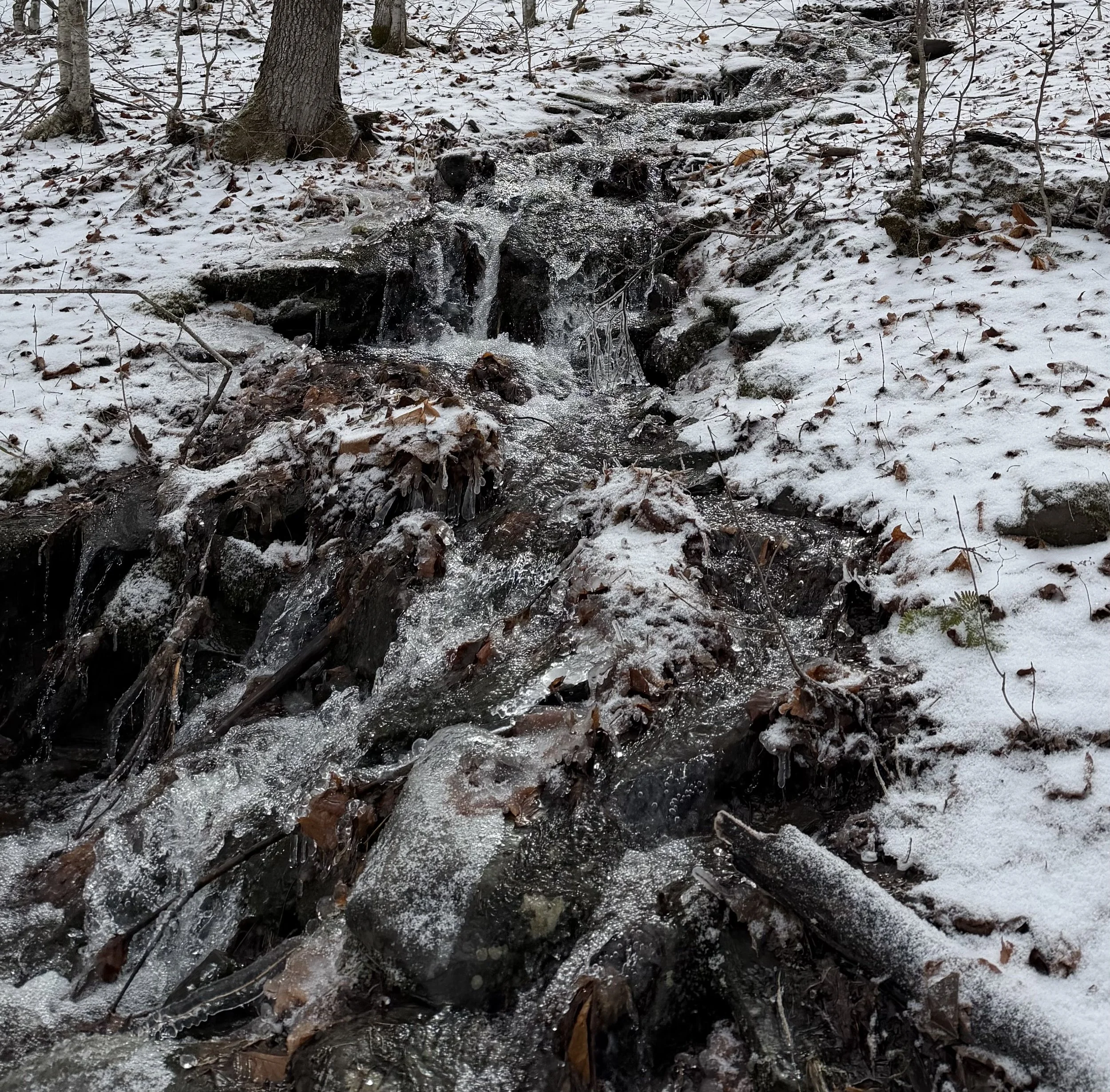
It turns out that our map-reading was right. The trail was much more gradual on the other side of the mountain. The ice was much more forgiving, and we made it back safely. I was glad that we kept going and that I had someone to confer with about my worries. If I were alone I don’t know if I would have stopped and looked at the map. I don’t know if I would have just turned around. I don’t know if I would have just kept on going up in a stubborn way. I enjoy hiking by myself. It gives me an opportunity to experience the wilderness in a way that I do not when I am leading others. I also see the great value in hiking with others especially when faced with important decisions about safety. I suppose this could be a lesson for life – we need people, community, partners, etc. in those difficult and challenging times. I’ll leave it to the reader to draw whatever kind of life lessons they might. Perhaps the lesson I will take away is the importance of speaking up when things do not feel great, or as my life-partner might say, “feel your feelings.” This would be if I am alone or with others. To say that I am not comfortable, to voice that I am unsure, and to say when something is good and meaningful. Even if I am alone, I am taking steps to give voice to what I am feeling which can be the vital first move to doing something about it. Maybe the trees are urging me to take a look at the map. Hopefully, I’ll listen.