Discoveries Small and Careful
Last winter I was able to lead a trip through Joshua Tree National Park. We went along the 40-mile hiking and riding trail, traversing a variety of terrain and through a diversity of ecosystems. I was glad to have the opportunity to experience the park in that way – spending time in a large portion of the park, experiencing a decent section of it. This is how I tend to experience a good amount of nature: hiking through it. Granted, when traveling on foot one does not get to see as much of the space as I could if I was biking or driving, but I am moving through the space. I am witnessing the changing environment as I move through it. I am moving through the space, traversing biomes, and experiencing a variety of geographic locations. I’m a backpacker. I put everything on my back and move from location to location. The joy and excitement of such an approach is that I will find something different every day. One day I may be camping on a high ridge with a great overlook and the next I might be sleeping by a stream listening to the gurgling of the water. Each day is different and I enjoy this nomadic, transitory way of being in the wilderness.
This past April I was able to go to the Red River Gorge in Kentucky. For three full days, I went rock climbing. And I saw very little of the landscape.
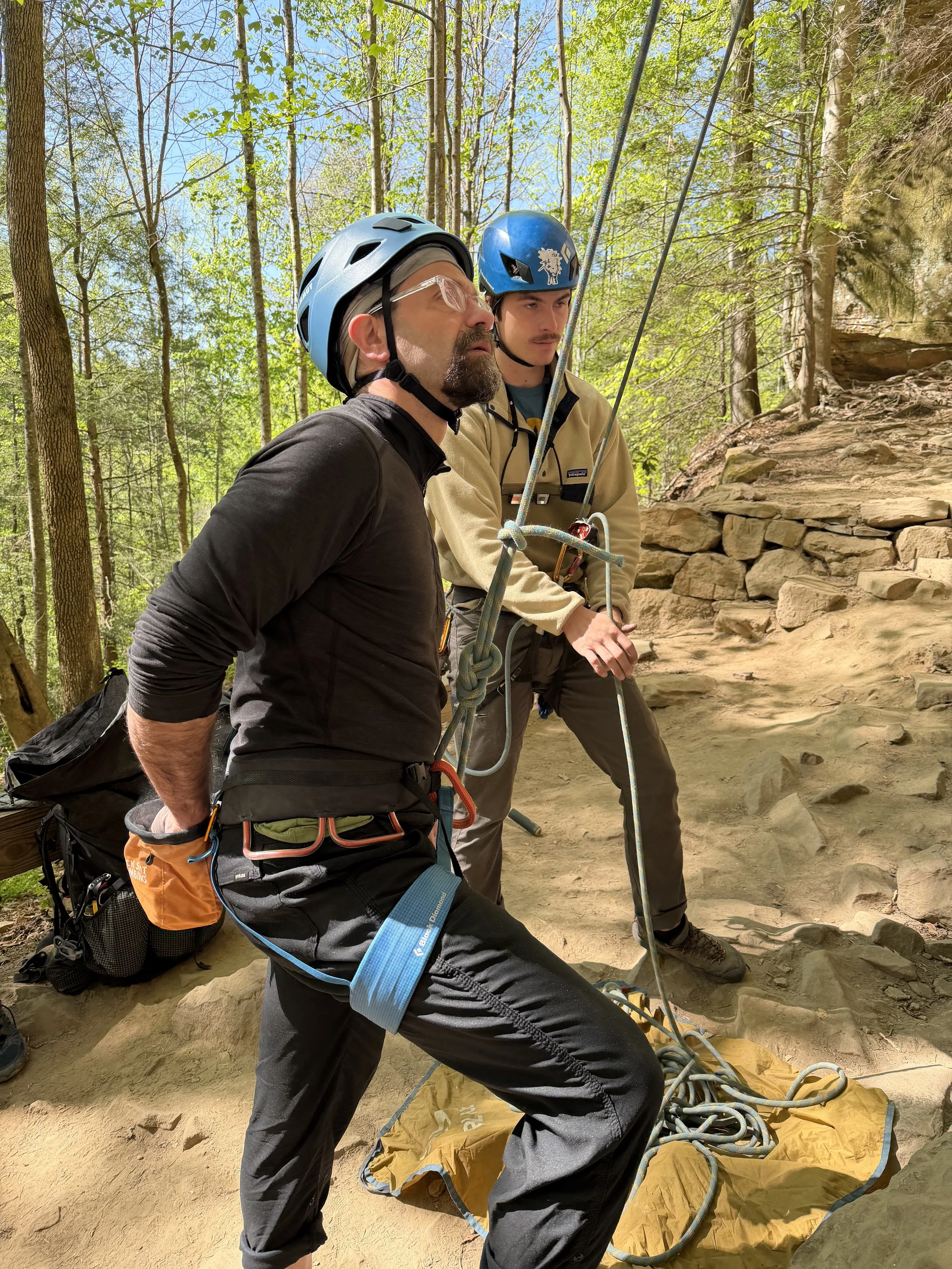
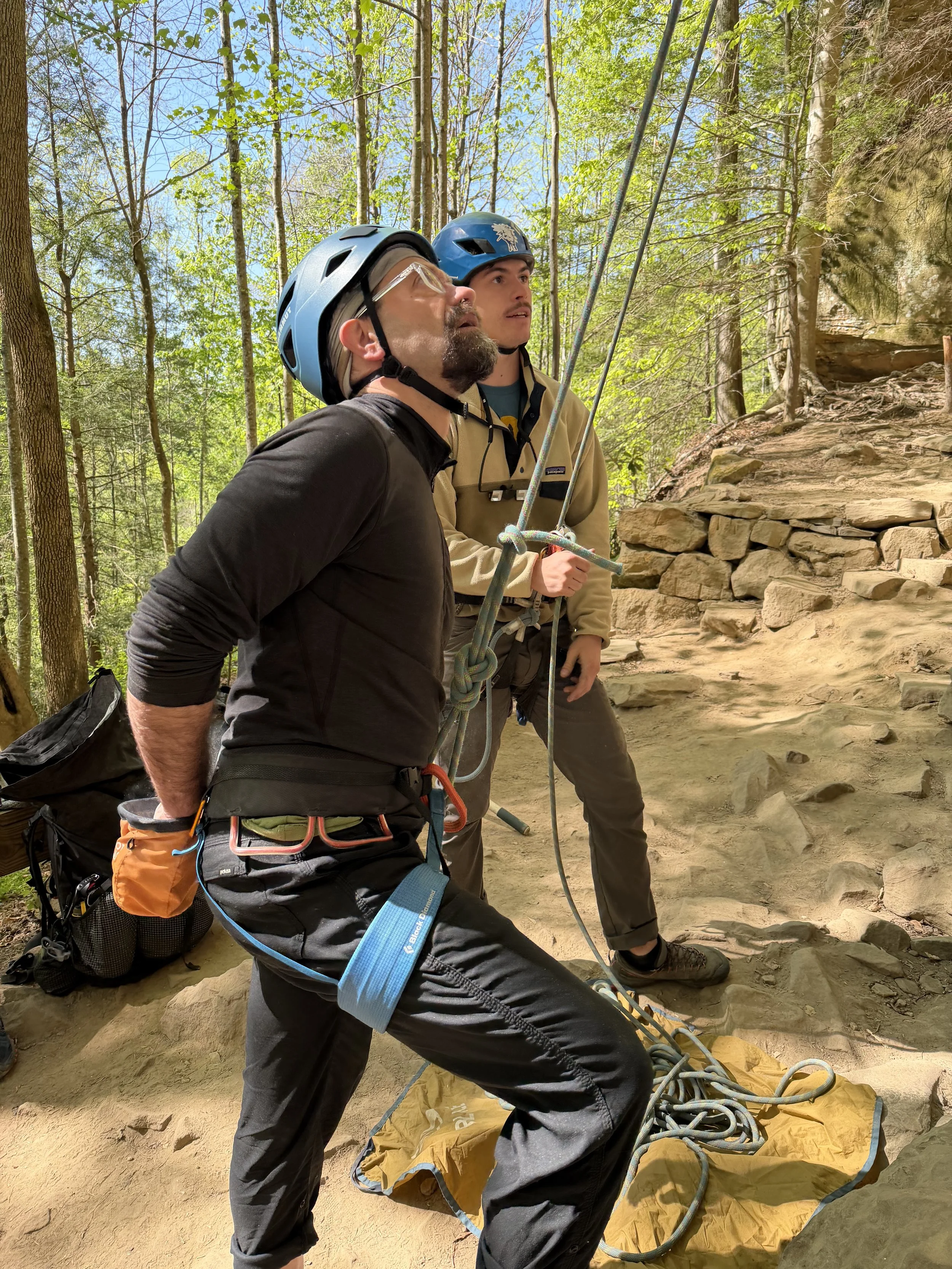
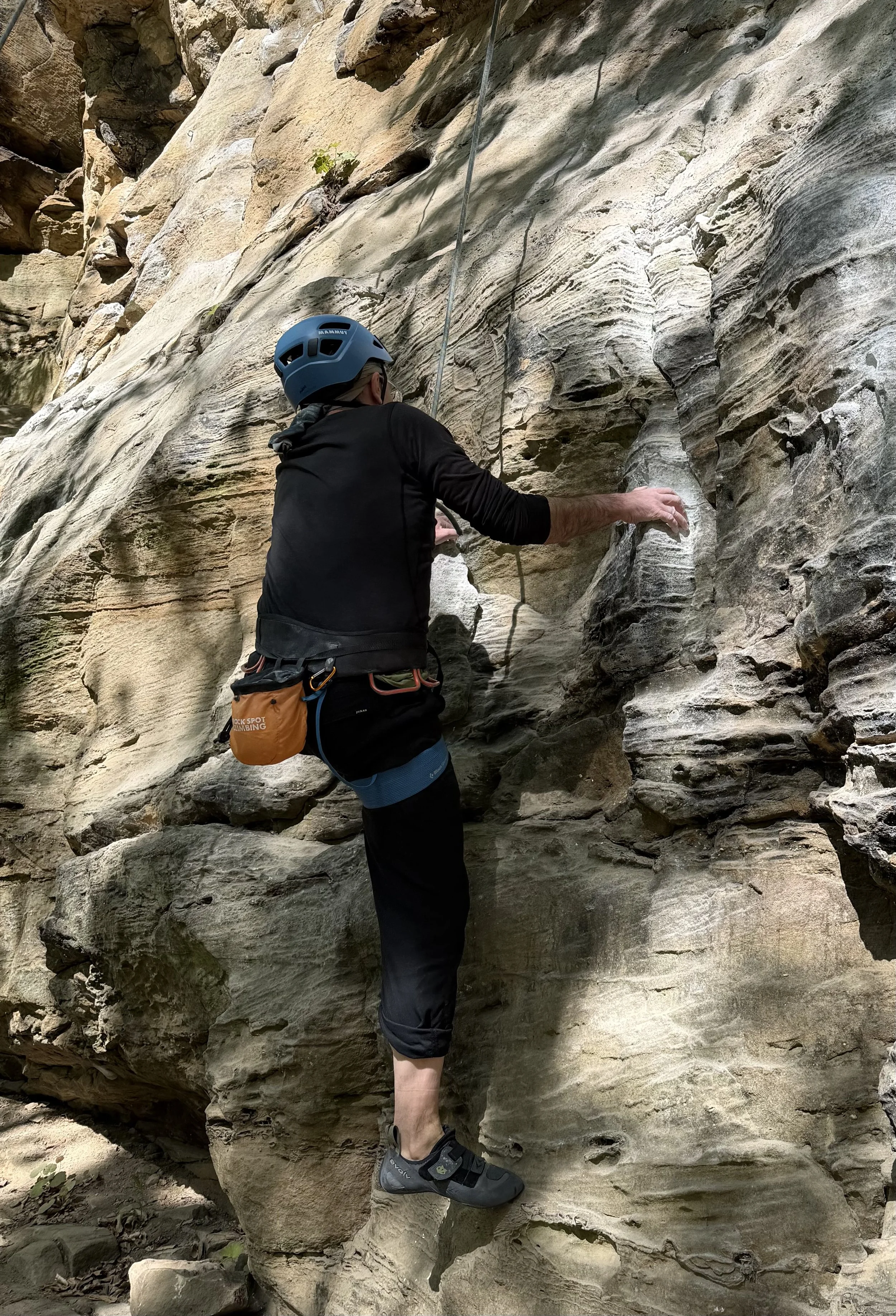
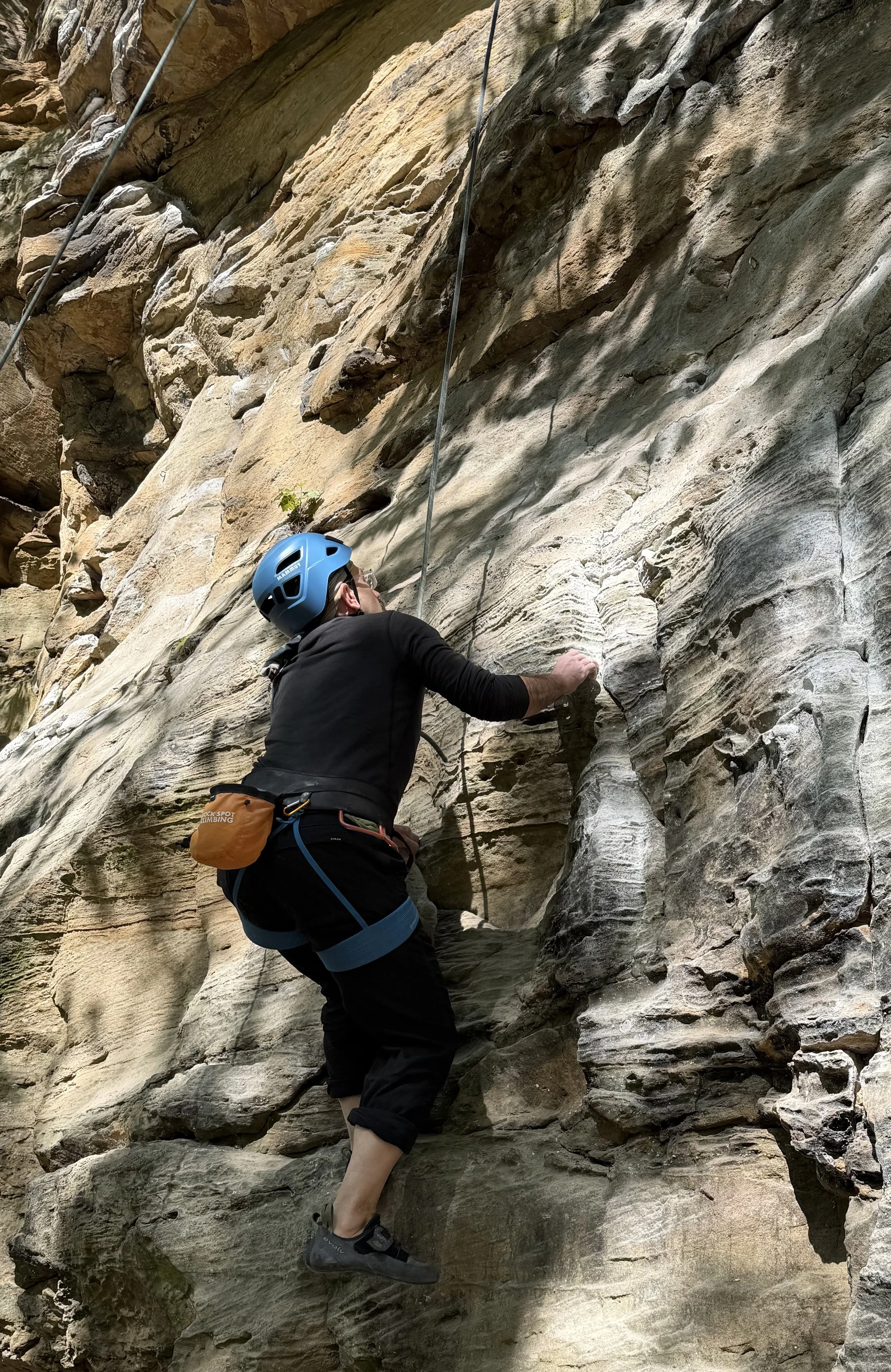
I’m not a professional, expert climber. I had been climbing for about three years, but only at indoor gyms. I started because I needed to find something to do that would help me decompress after leading trips and working with groups. I love being with people in the wilderness, but when I’m in charge I’m constantly “on,” I have to consider how everyone is doing, and I need to be aware and responsible for group dynamics. And, no matter how annoying someone might be, I still need to smile, strive to be understanding, and have lots and lots of patience. This is part of the work and I don’t mind it. Yet after leading a trip, after being “on” for an extended amount of time, I needed to find a way to decompress that didn’t run the risk of substance abuse. Hence rock climbing. I have found that spending a couple of hours climbing (both top-rope and bouldering), focusing only on the wall, is an effective way to decompress. When I’m climbing, the problems before me are all about what route to attempt, which holds to try, and how much I can push myself. It is just me and the wall. Sometimes I will climb with my children or with friends which does bring in a social aspect. Even then, when I’m climbing, it is about me and the wall. I never had any aspirations to do more, to consider any other types of climbing aside from top-rope or bouldering, and never to do outdoor climbing.
And then a friend of mine invited me to go climbing with him. He had been climbing for about the same amount of time as me. He was at a similar skill level but had some outdoor experience. And he had gear and time and needed a climbing partner. Why not.
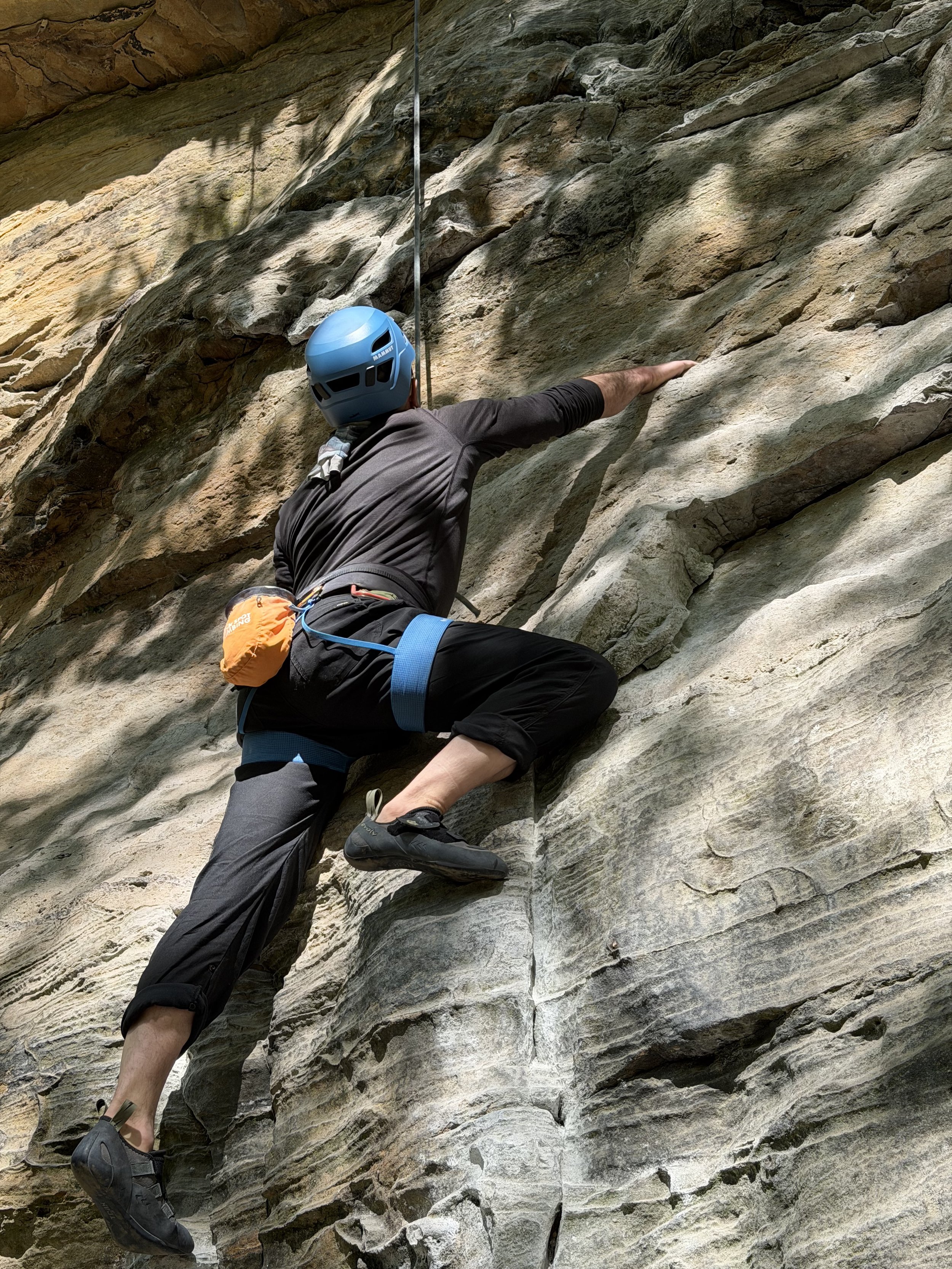
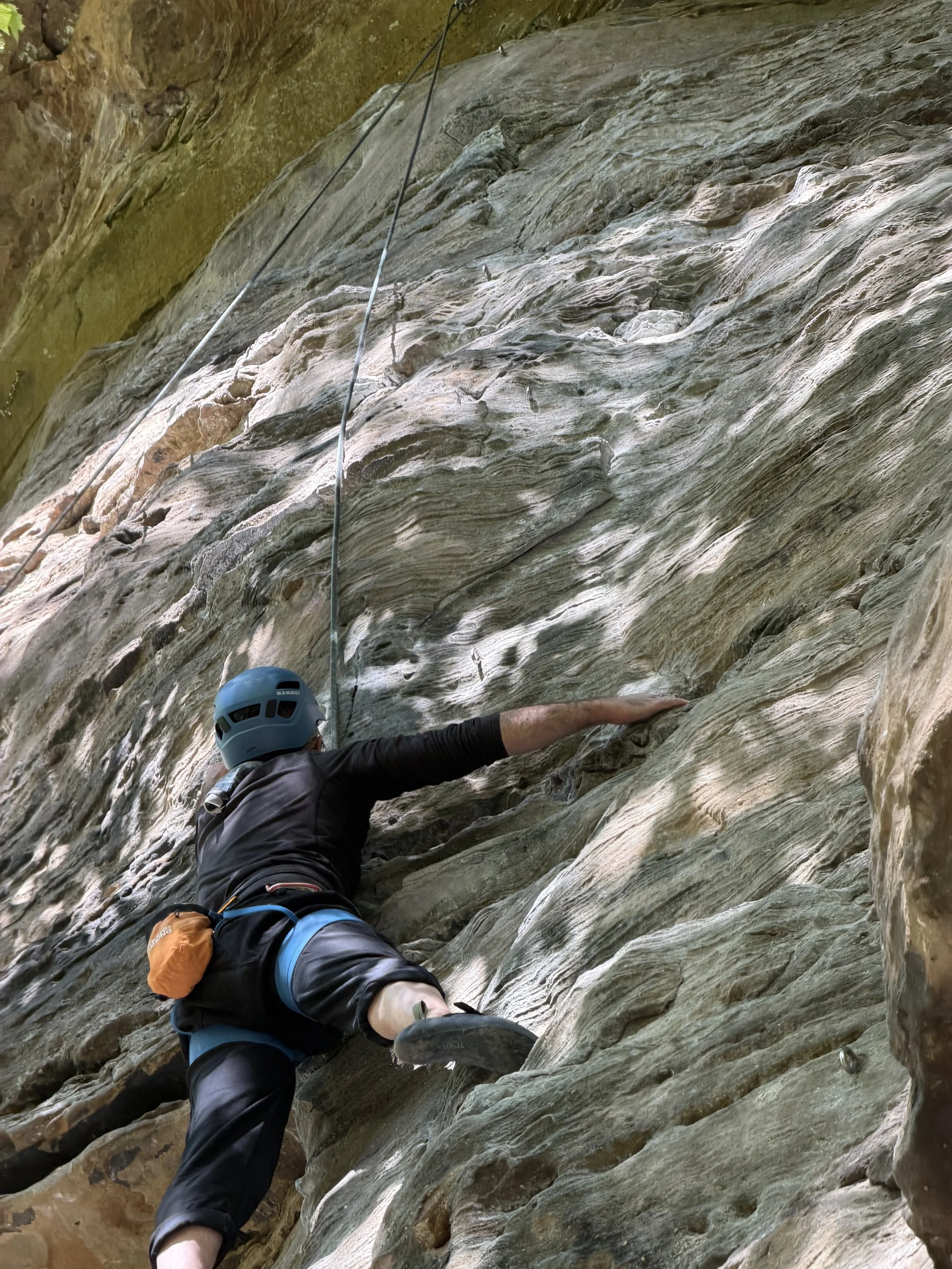
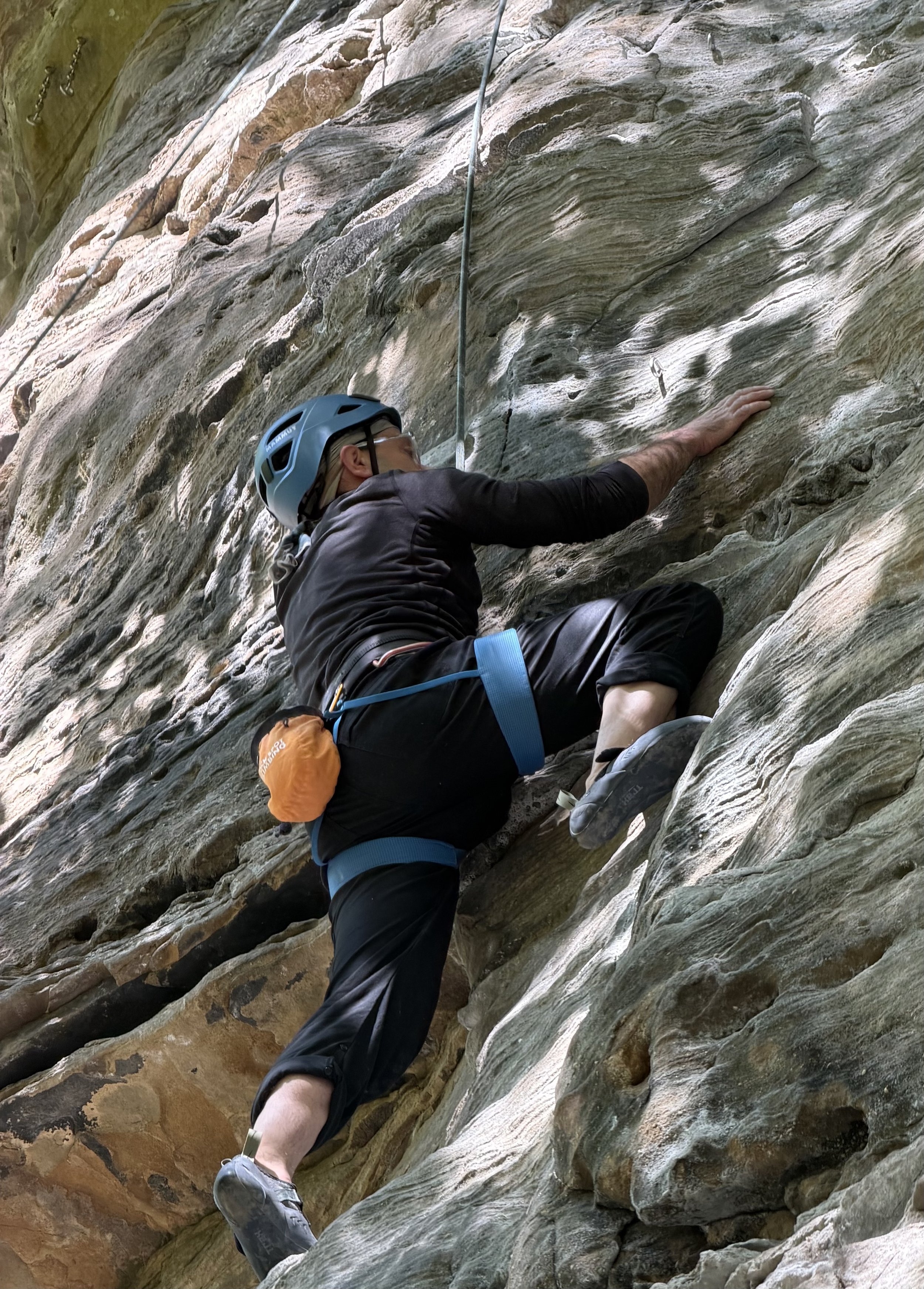
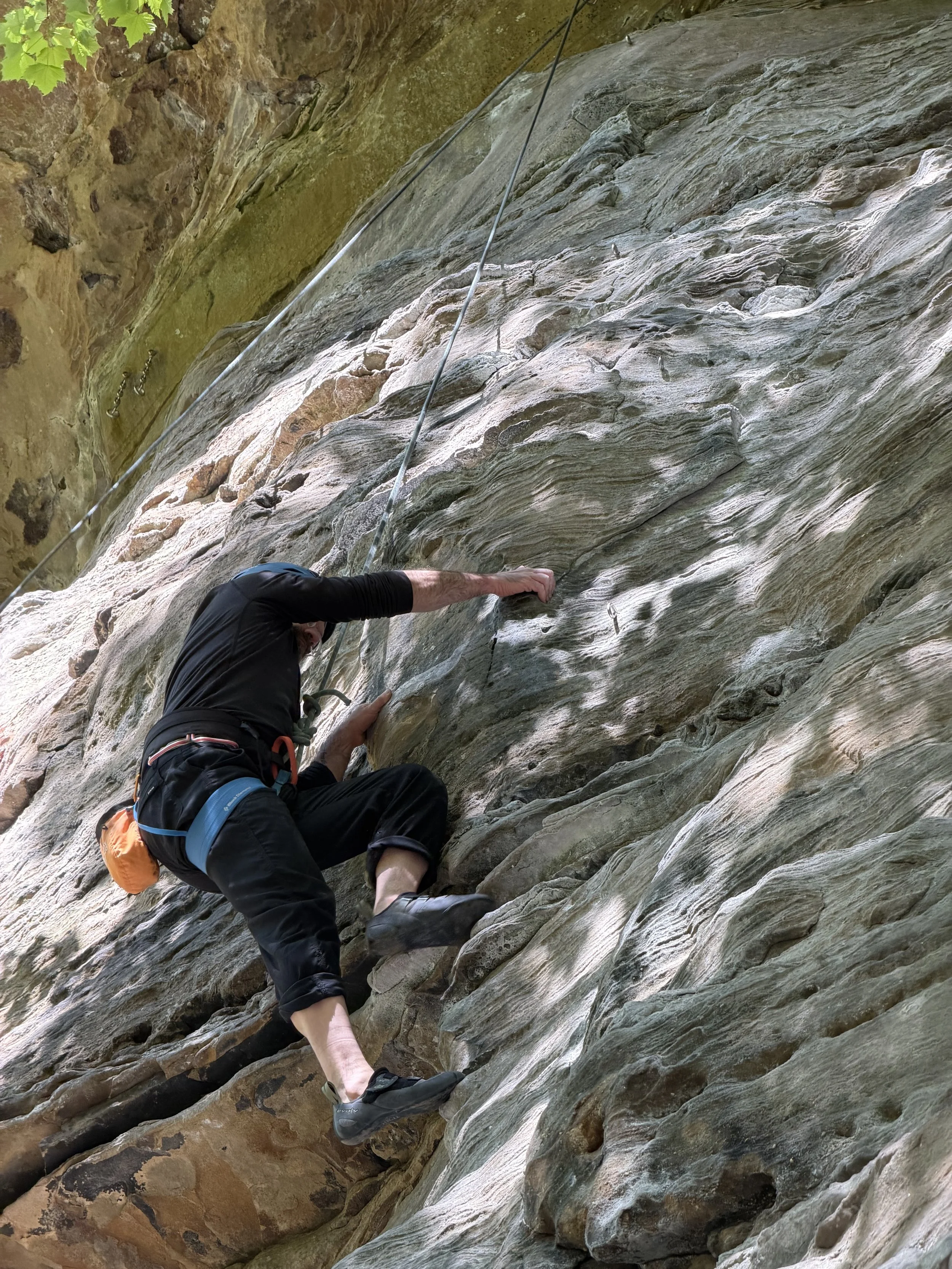
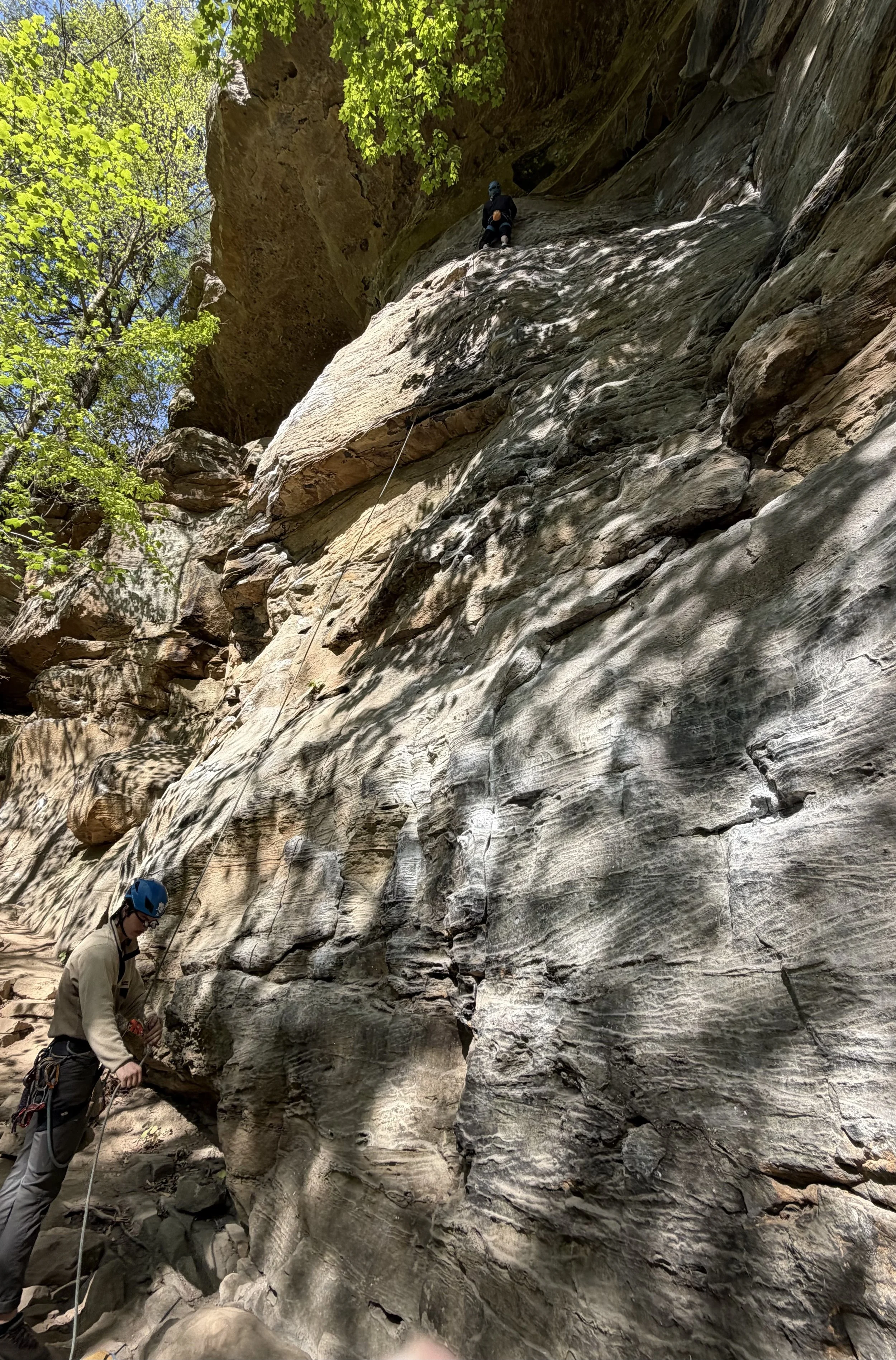
I had to learn another type of climbing – sport/lead climbing. All I was doing was based on the rope already set up from the top. I would just clip in and someone would catch me with the rope if I fell. Lead climbing meant that I would be climbing with the rope attached to me, but from below. I would be leading the rope up, clipping it into certain spots while climbing, and knowing that a fall would be more dynamic than if the rope was above me. This was a very different type of climbing that was scary and exciting. There were many more possibilities of what kind of climbing that I could do, many more routes I could try, and a greater risk when falling.
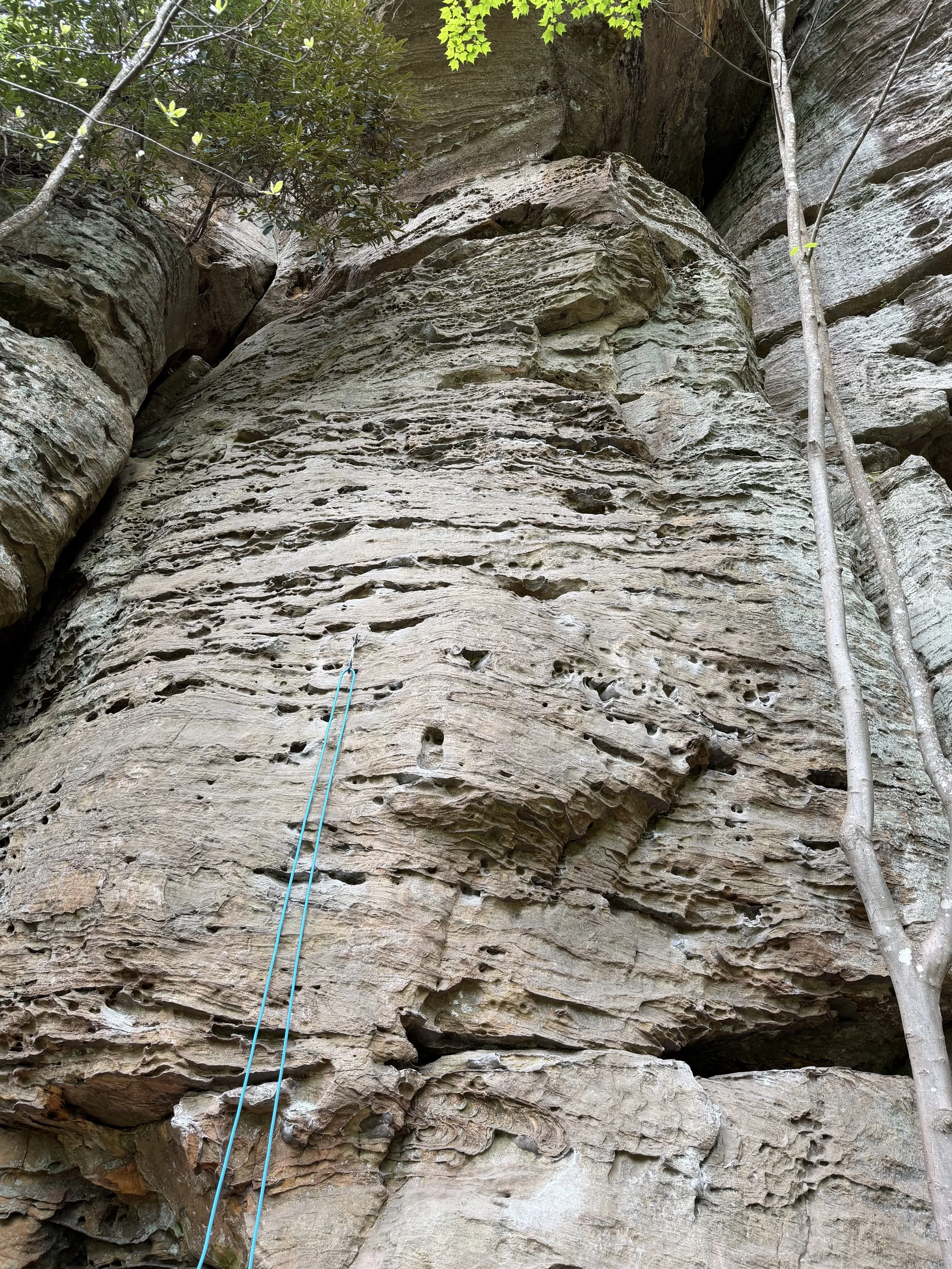
With a little experience in this new type of climbing I headed to the Red River Gorge to have my first experience climbing outdoors. The Red River Gorge is one of the climbing meccas in the United States and certainly one of the best on the East Coast. There are over 6,000 different climbing routes in the area. Many will spend weeks camping, dirtbagging, climbing, and getting in the most ascents that they could each day. It is a beautiful space of high rock walls, verdant hardwood forests, and flowing streams. For three full days we drove from our campsite to a climbing area and we would spend the day climbing. One of us would lead climb a wall and set up the top-rope bely. The other would climb via top-rope. And then the first would top-rope. And finally, the second person would lead-climb to “clean” (retrieve) all of the gear and we would then move onto the next wall. It was a routine that offered at least four climbs for a wall and then maybe we would move as little as twenty feet or as much as half a mile to find a new wall. At the end of the day we returned to our campsite where our tents and stoves were waiting. It was not a trip of hiking big miles, of seeing the landscape change day after day. It was a trip of feet and inches.
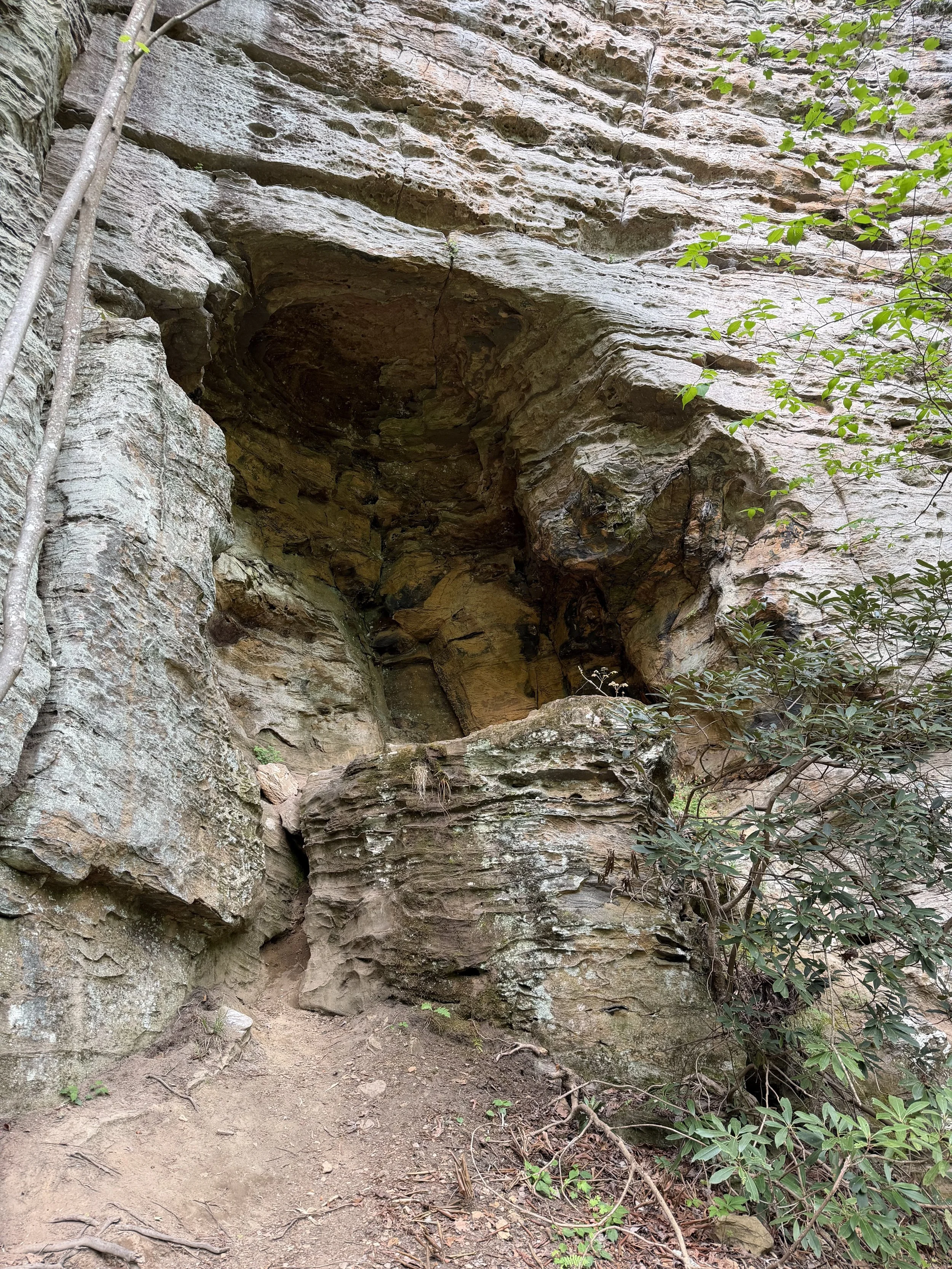
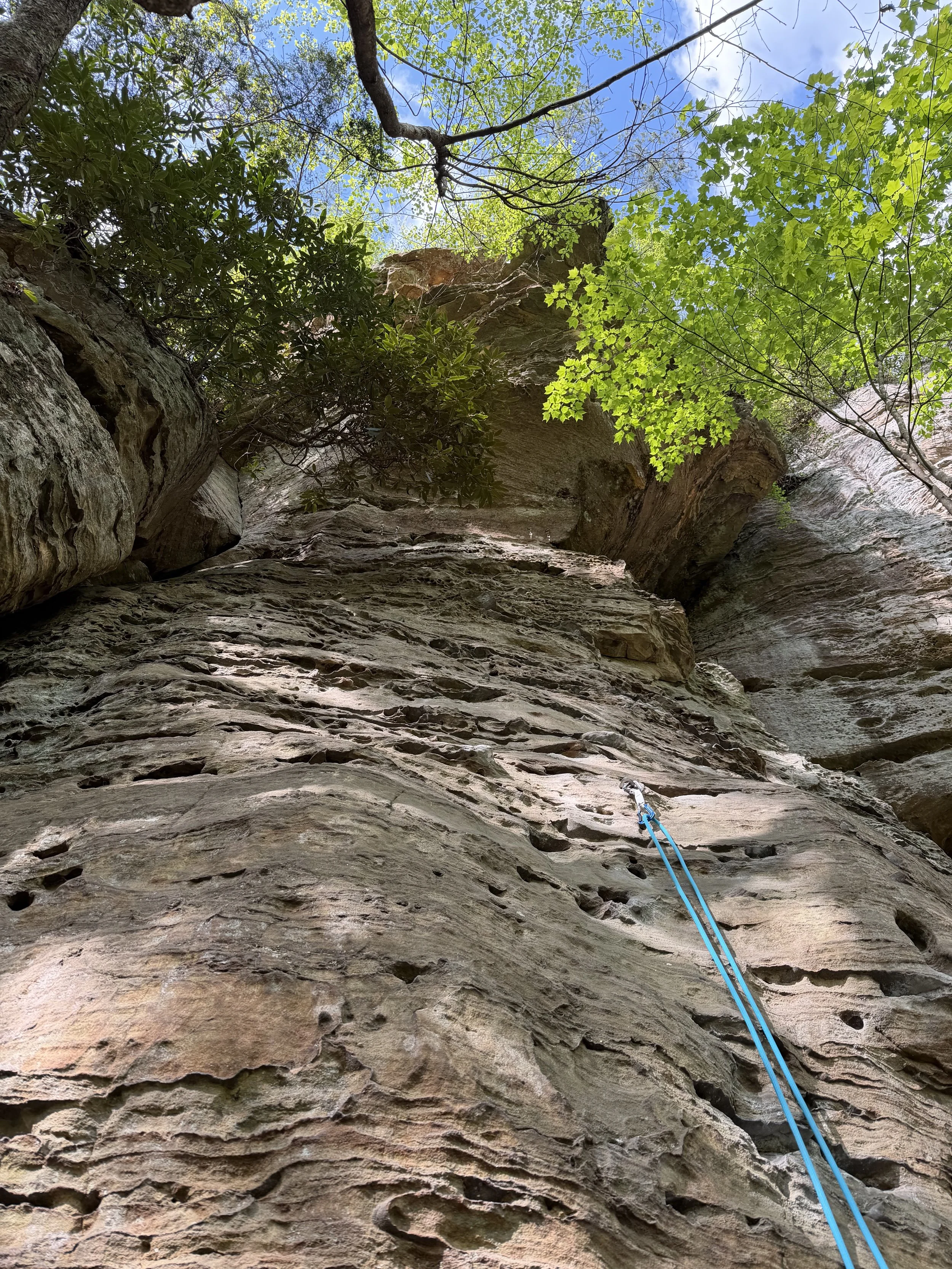
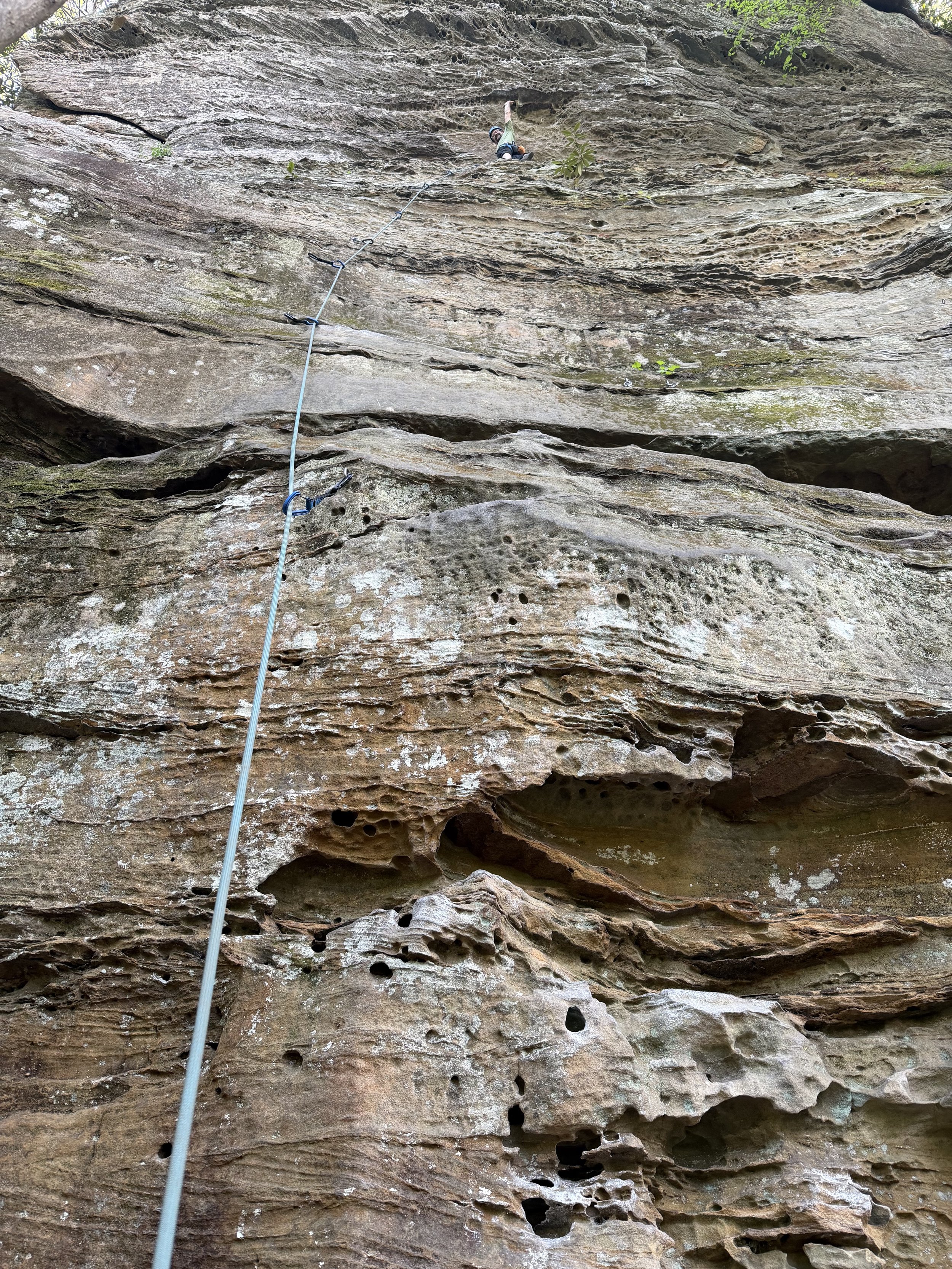
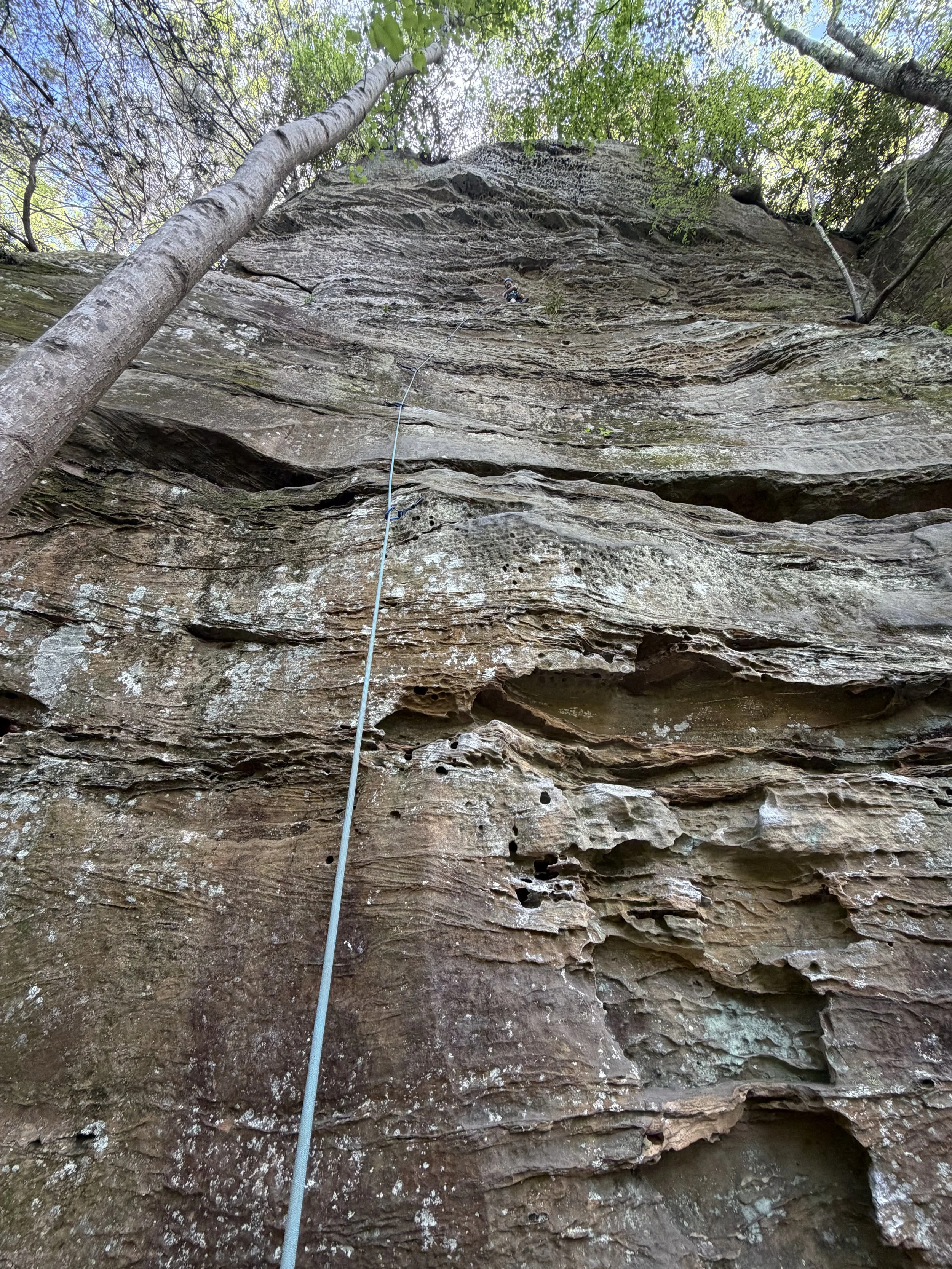
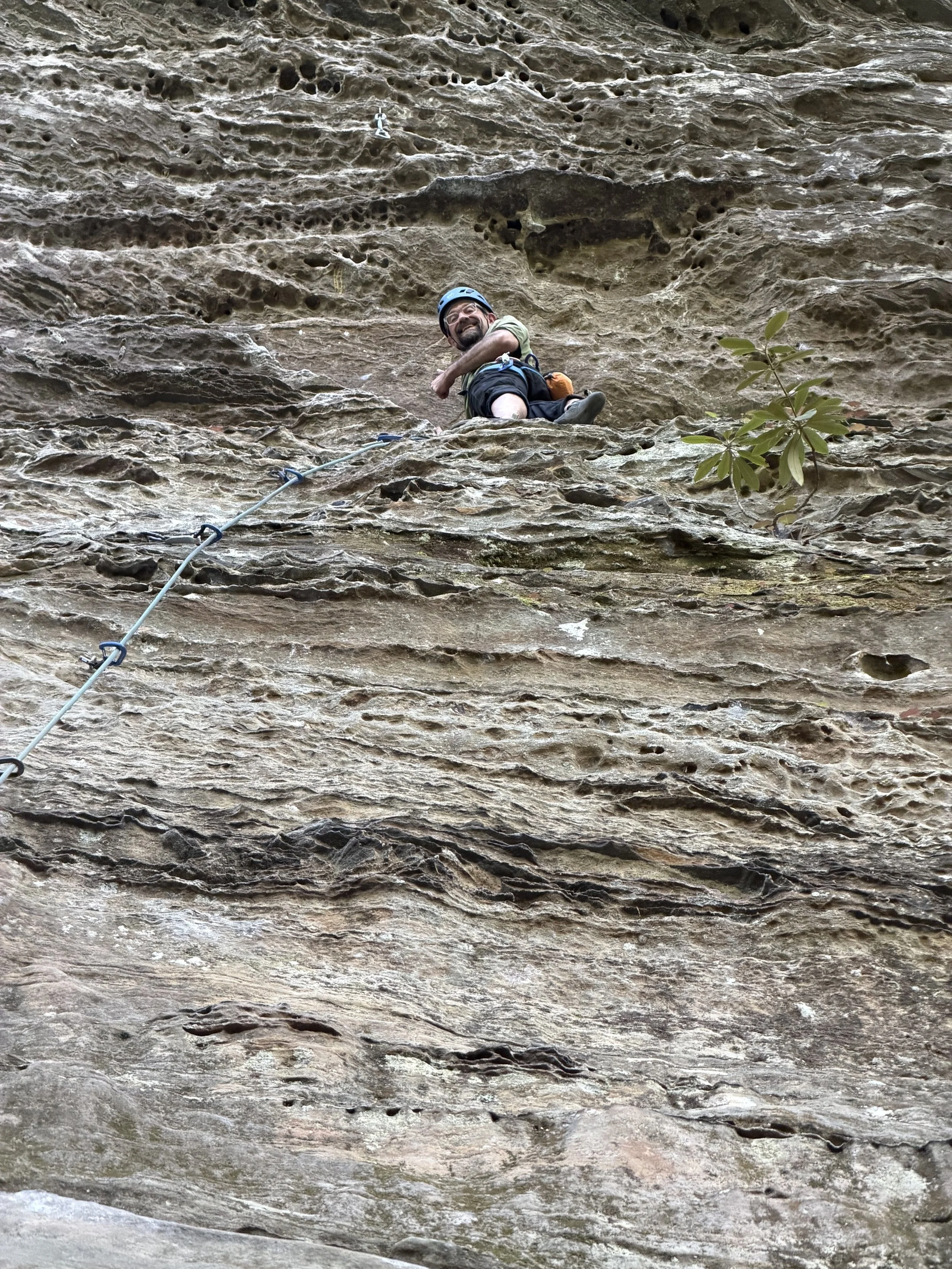
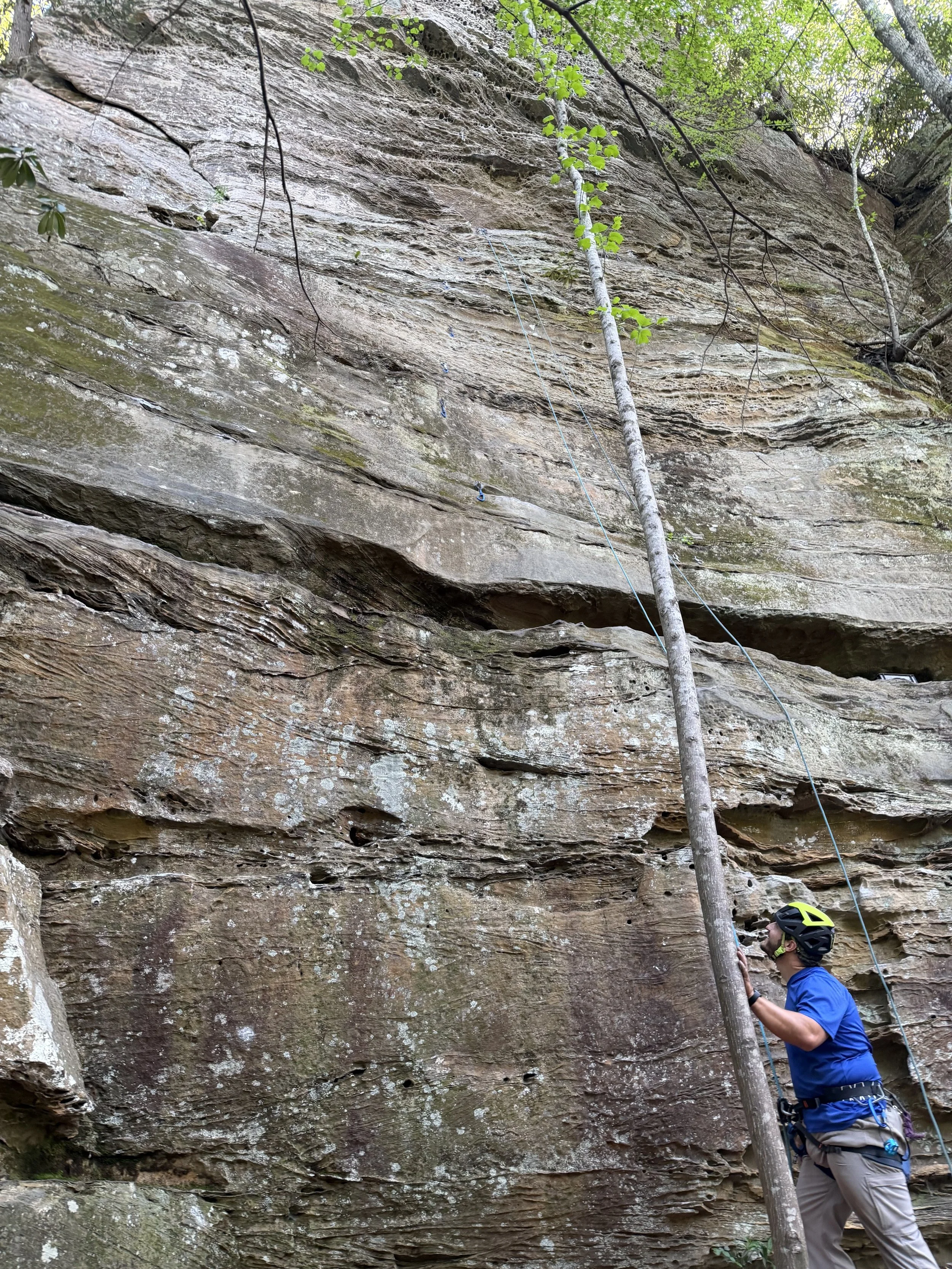
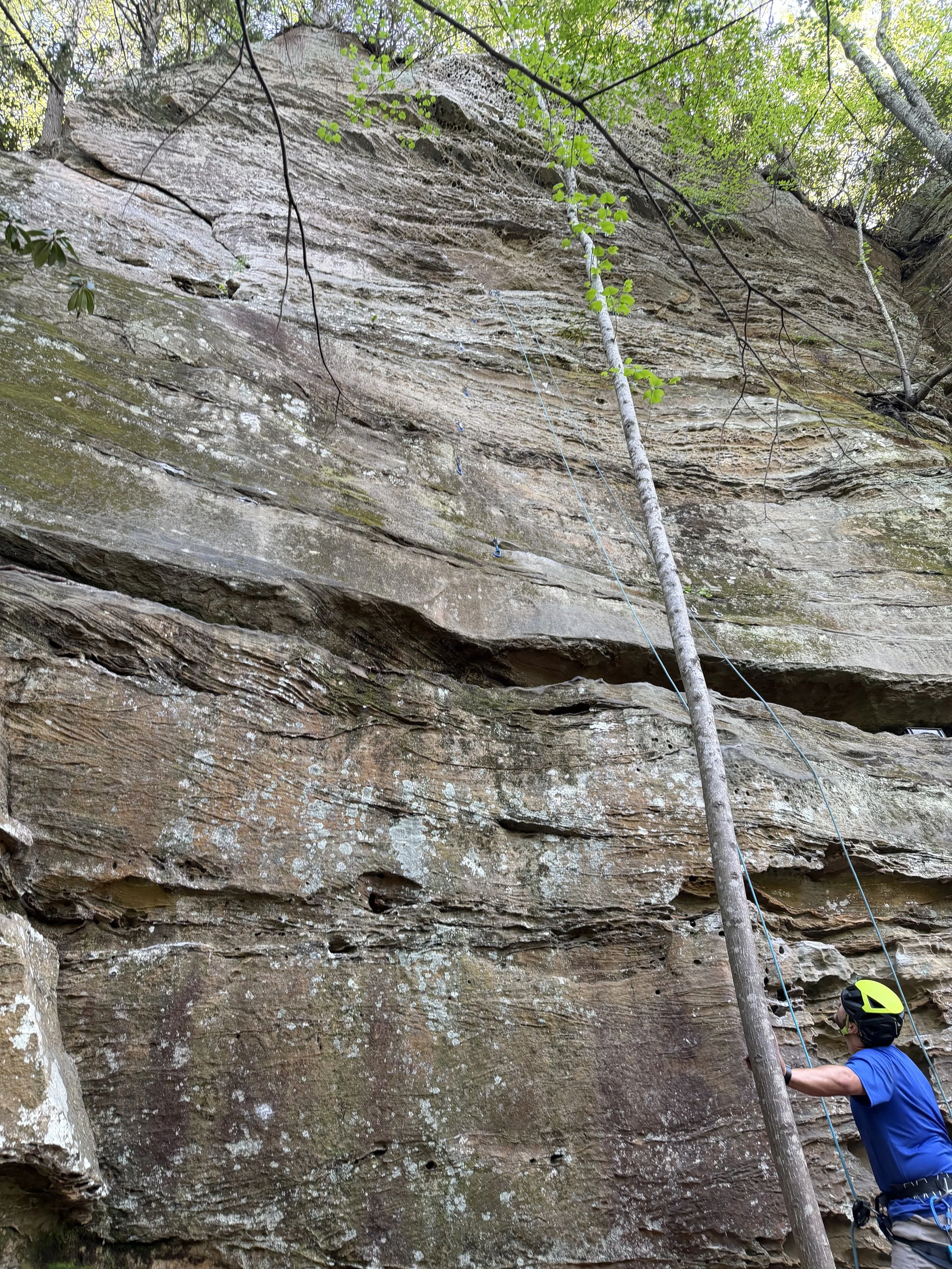
The Forest Unseen by David Haskell describes a square of land each day for a year and tells the story of that square. This is a careful observation of one space. The author watches, is careful and stays in one area. I was thinking about that book while resting in-between climbs. This was a very different experience of the wilderness from what I was used to. I was staying in one space, the same location, for hours. And it was not just one location, but one slab, one rock wall, that we were studying, considering, and climbing. This was a very different way to engage the wilderness. I had known the wall, the trees that were growing out of it, the dust and dirt that was on a particular shelf, the ways that the rock felt, and dampness of some sections of a cliff as well as the dryness of others. By the time we were done climbing one wall I knew where the roots and trees were around me, I had become accustomed with some of the birds that would fly about. I had come to know the land in a very different way.
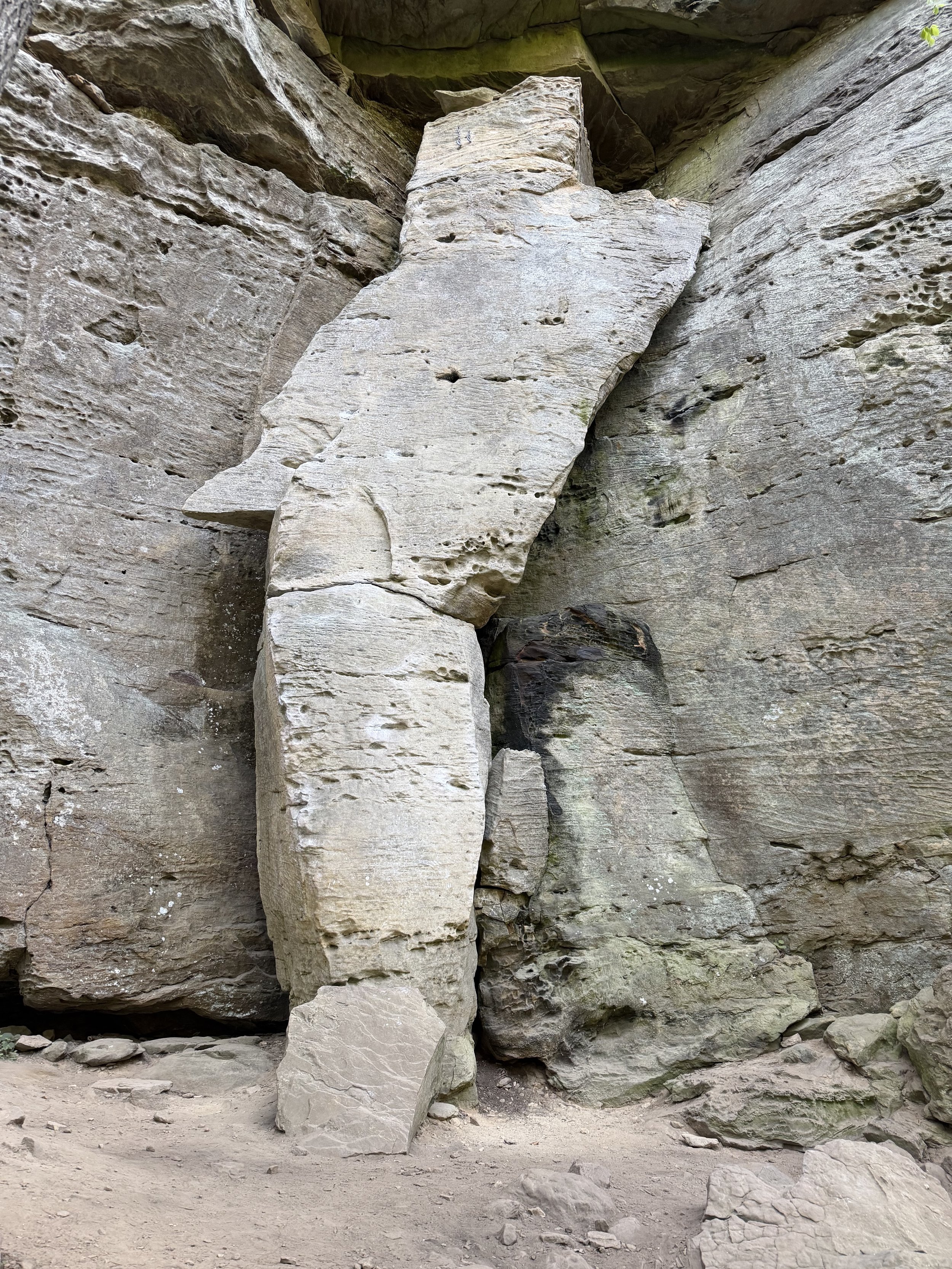
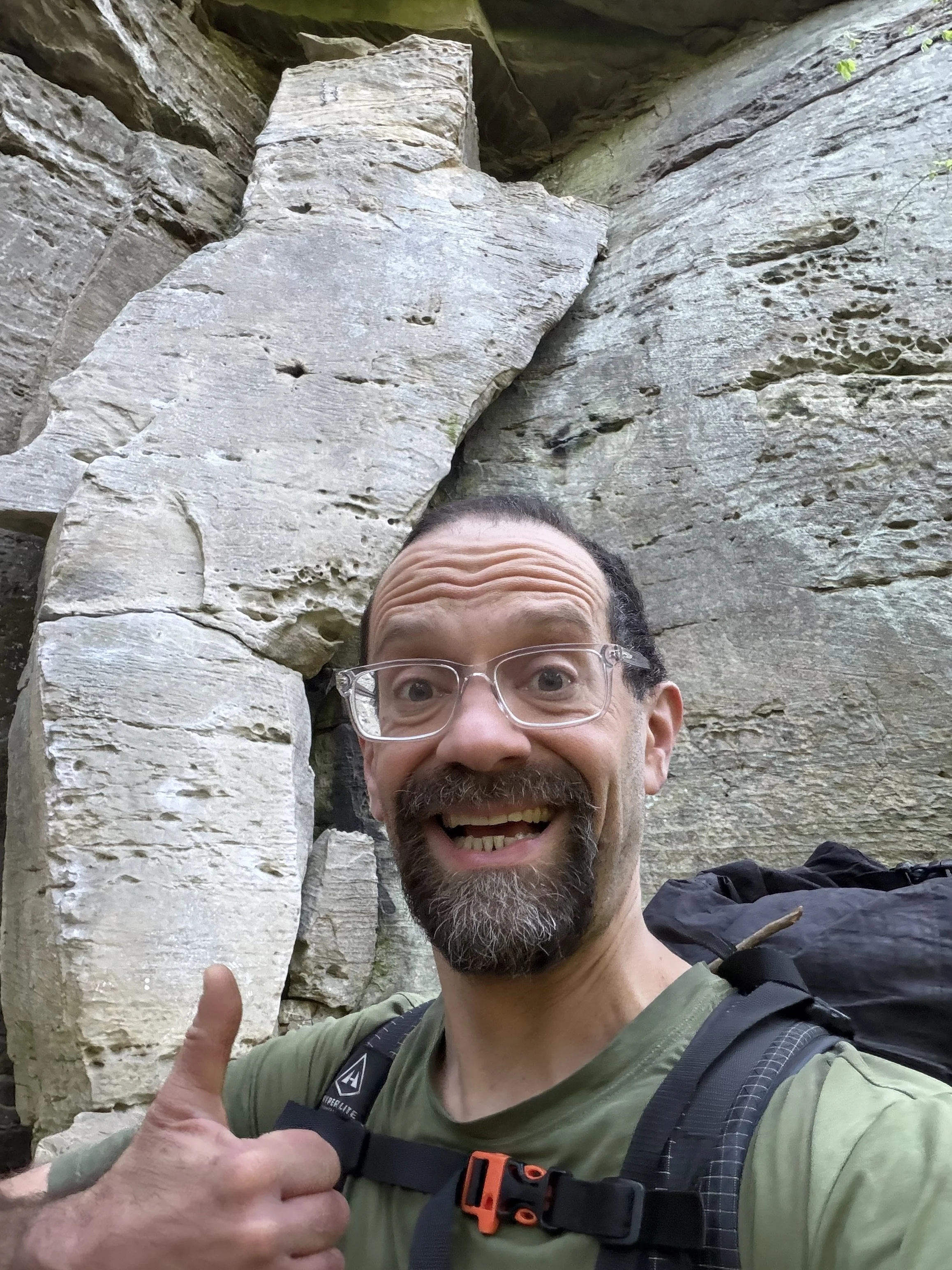
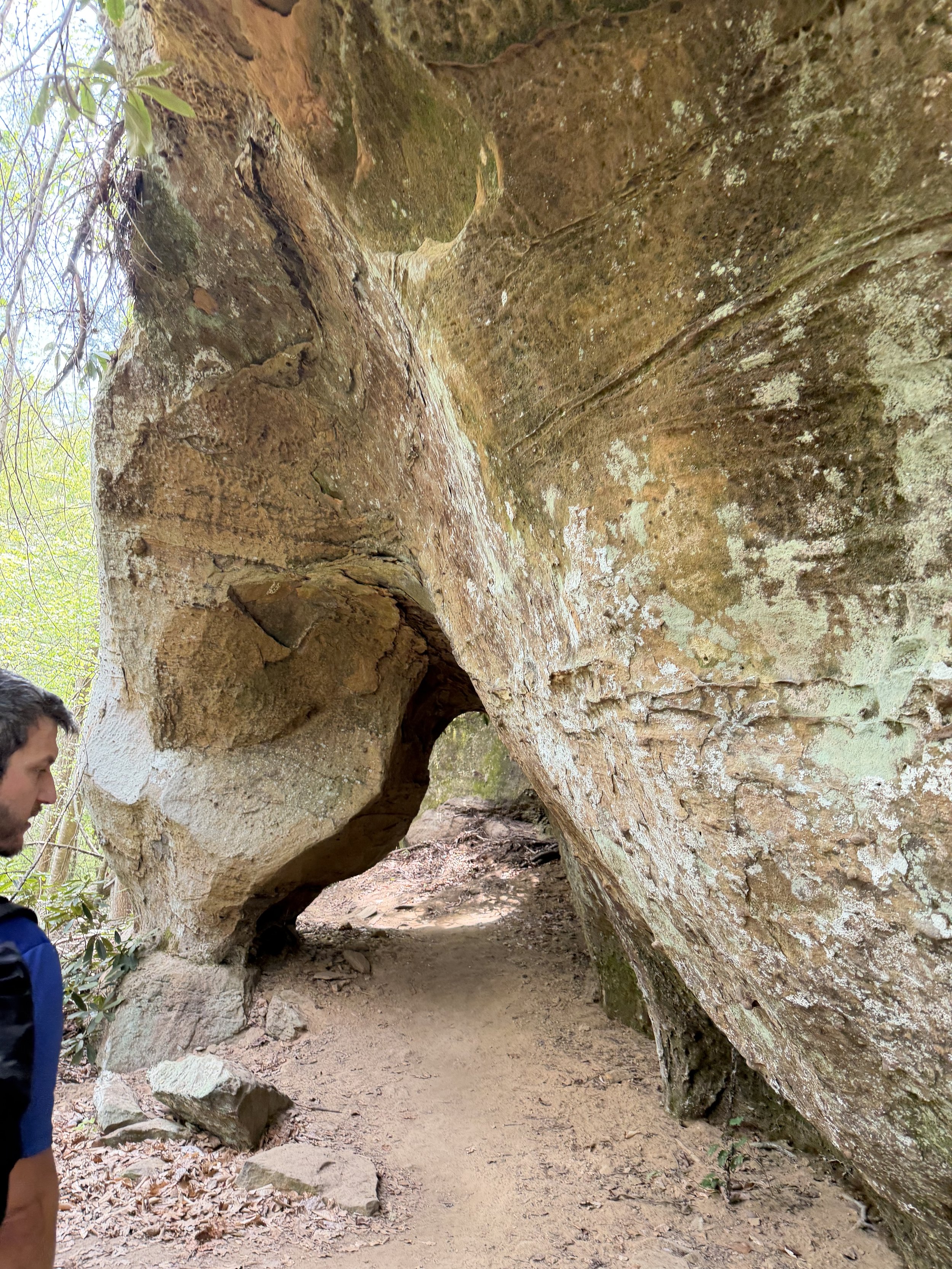
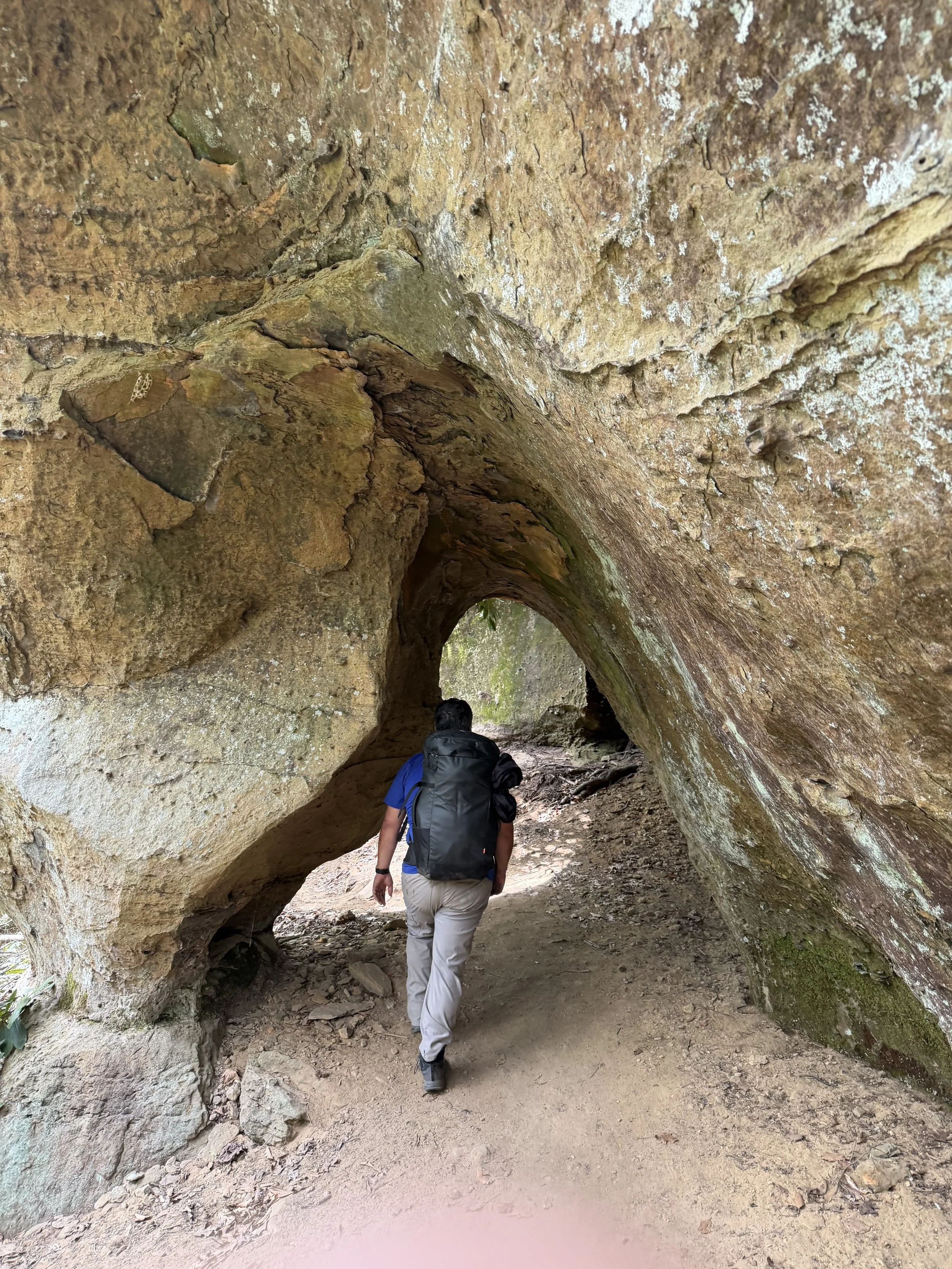
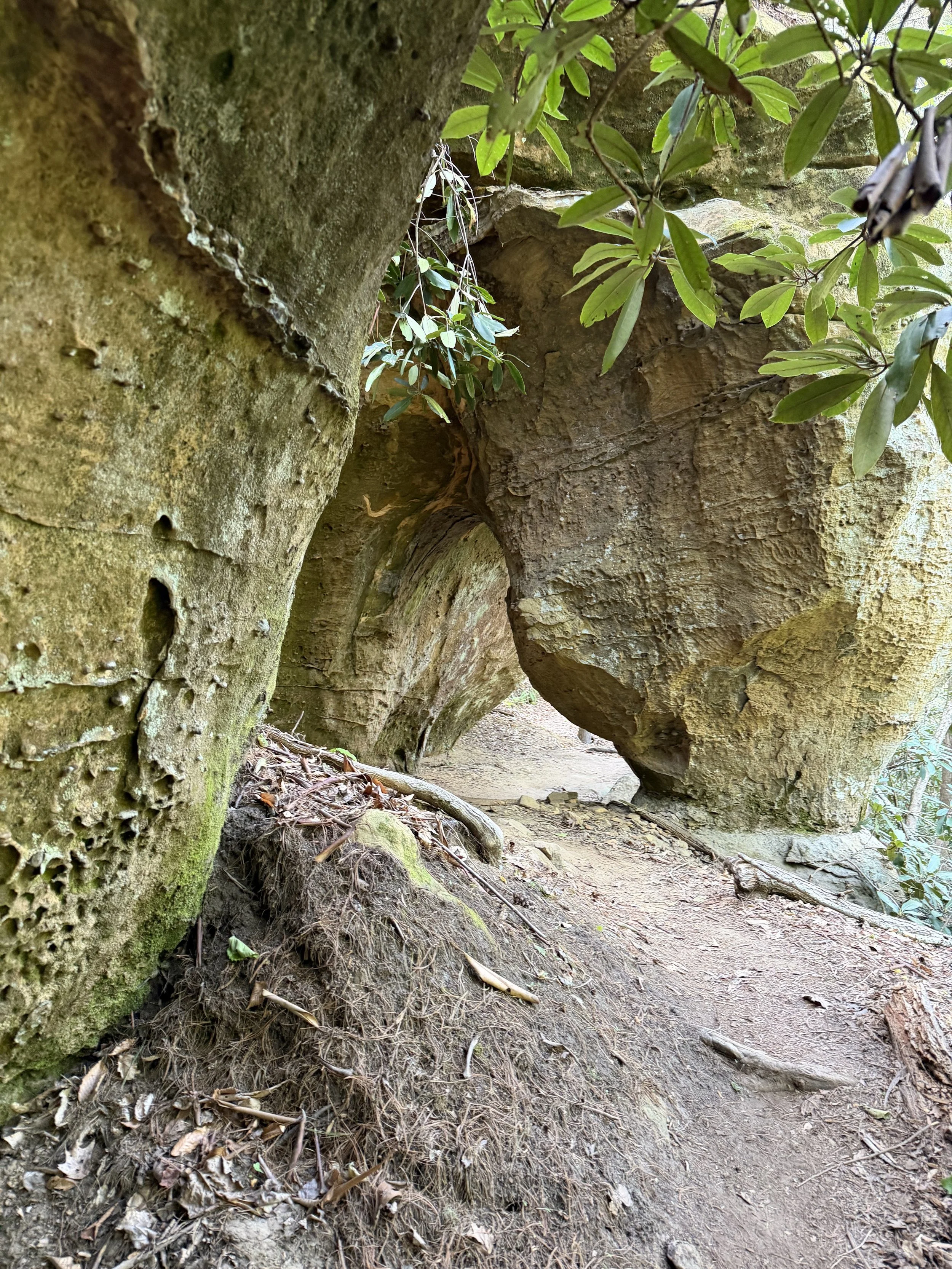
In-between climbs, when I was not trying to find a way up the rock wall or belaying my partner I reflected on what we were doing. Yes, we were problem-solving and we were pushing ourselves. All of the learning and experiences that I enjoyed with indoor climbing translated to the outdoor experience and it was exhilarating. I was also very aware of how much I was coming to know the space. I was coming to know a space through challenge and breakthrough. I was engaging the space and gaining different vantages with each climb. I’m not good a sitting still. I’m not good at being still in one location and taking everything in. That is part of why I like hiking and backpacking so much. I enjoy discovering something new again and again. On this trip I was discovering something new, but at a very different scale. I was going deep and not broad. This was a very different experience of the wilderness.
The biggest challenge for me was to move from a conquering mentality to one of co-existing. I did not want to see myself as someone who was just conquering a wall, conquering the climb, or looking to be victorious in the face of a challenge. Yes, I felt the pride of success when I made it to the top of a climb, but I did not want to step into a me-vs-nature kind of approach. Just as when I am backpacking, I wanted to consider that I was stepping into a space that was not mine. I was interjecting myself into the lives of the flora and the fauna and I needed to be sensitive of that reality (especially when there was a note about owls nesting near one of the climbs). Each climb was a gift. It was a gift because I was able to be present in the woods in a way that could not be when backpacking. It was a gift because I was able to take my time and become aware of all the space around me from a variety of vantage points. It was a gift to be able to pause and take in the trees, not from below but from near the top.
I left the trip in Kentucky sore from the multiple days of climbing. I also left that trip with a sense of gratitude to find a way to be present in the backcountry that was deliberate and incremental. A way that took time. I wondered if there is a way for me to be present in the front-country in a similar way. Can I go slow, notice the small things, the minute parts of the landscape, and be aware of how I interact?