
Knowing the Land We Walk
A Trip Report from Joshua Tree National Park, January 2026
I recently finished reading Norman Wirzba’s Agrarian Spirit: Cultivating Faith, Community, and the Land. It is an excellent work considering eco-theology from a Christian perspective. At the same time, I have been working through a collection of Wendell Berry’s essays from The World-Ending Fire (edited by Paul Kingsnorth). Berry is one of the emanate voices for sustainable farming, ecological spirituality (he is not writing from an overtly Christian context), and a luddite response to technology that is refreshing. Both Berry and Wirzba (who is influenced by Berry) stress how important it is to know the land that one dwells upon. Both are speaking from an agricultural lens; to know the land is to know the growing patterns, the seasons, the native plants, etc. This idea of knowing the land lifts up a way of being present in the land that is relational in a positive way. It is also a challenge for the kind of work that I do.
I go for hikes and backpacking trips. Some of my trips are in areas that I have been to before. With each return trip I am experiencing the land a little differently and learning the land more and more (see my previous post about going back). I enjoy returning to trails that I have hiked before to experience them a little differently and to come to know them a little more.
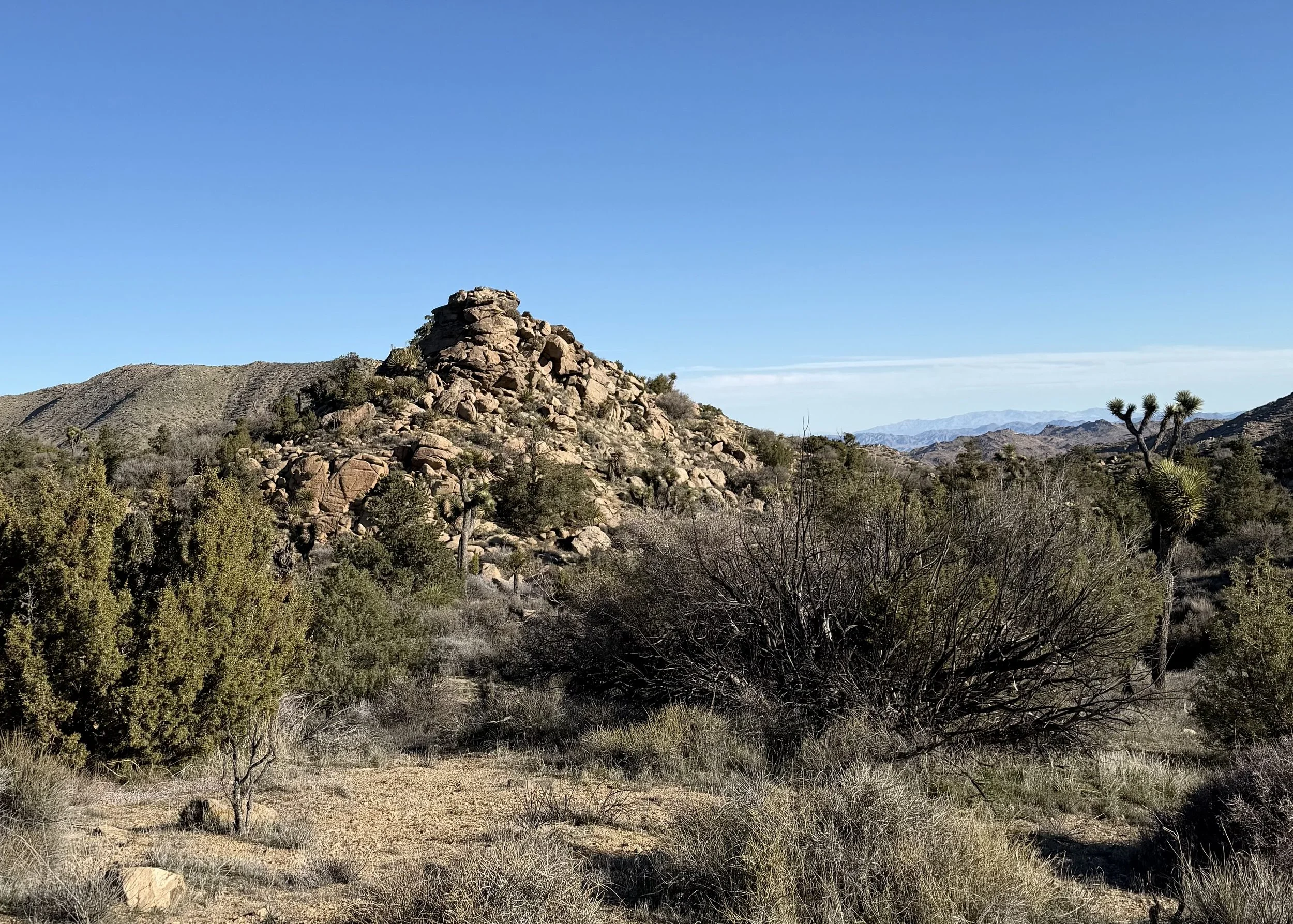
Other trips that I lead or experience may be to a place that I have never been to before or that I have only visited once or twice before. I have been leading more and more excursions in Washington state, learning the various wilderness areas, but there is so much land to experience and I am only getting a little at a time. The challenge that I face with Washington and other places is how I can know the land when I am only there for a short amount of time and I have never been to the location before. I want my experience of the flora and fauna to be more than one of a speed-date. I want to know the land.
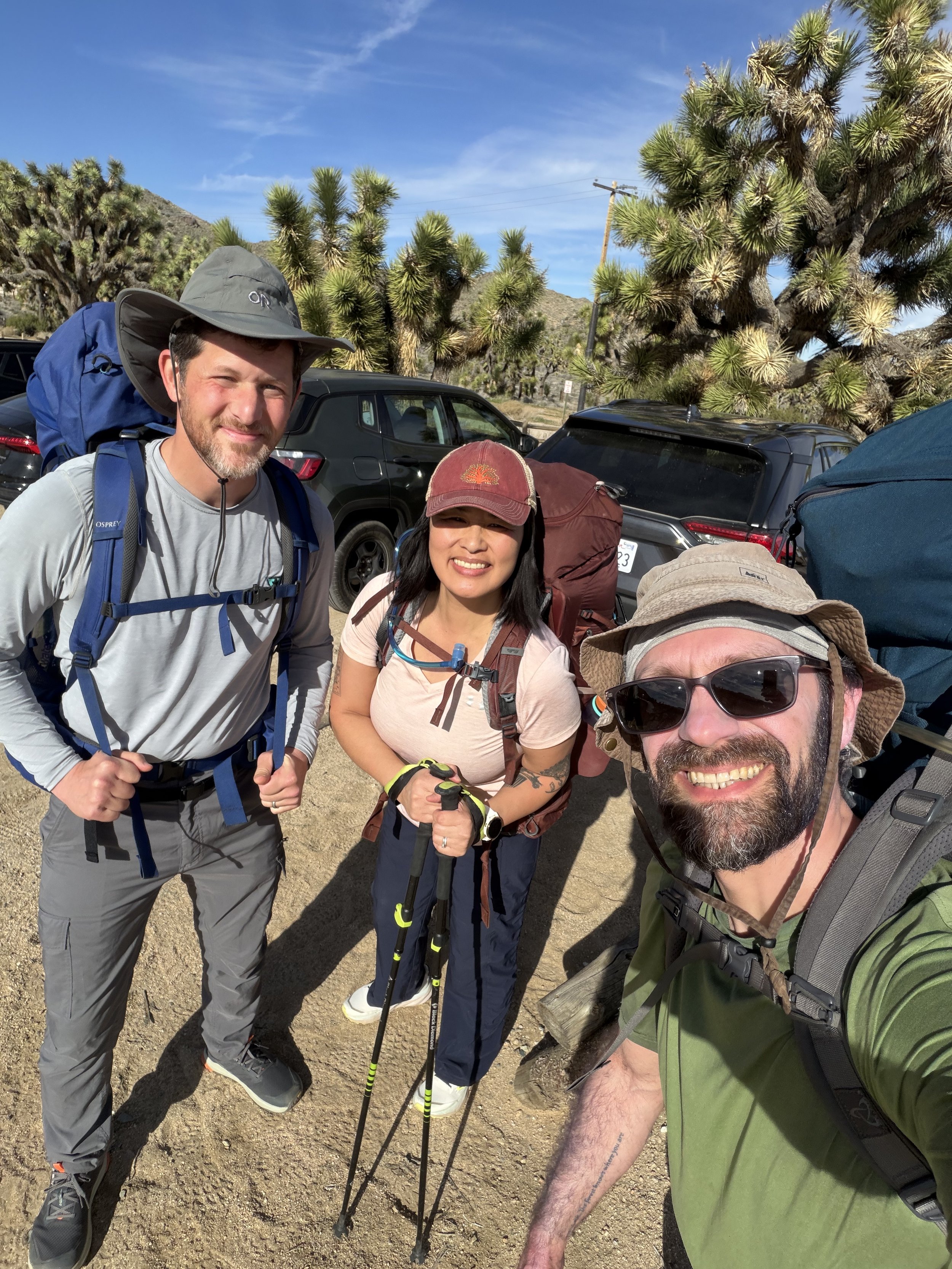
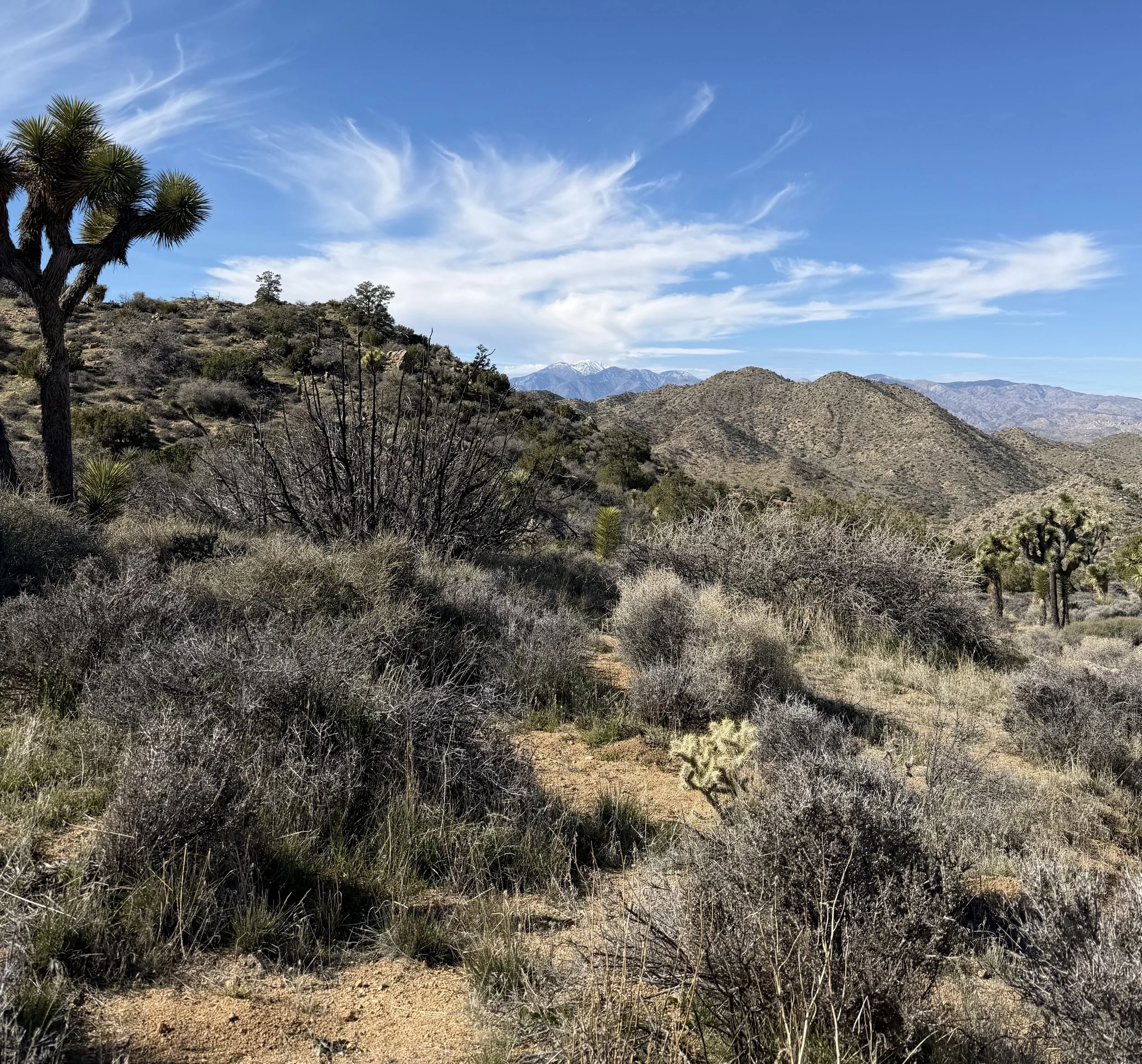
In January I was able to spend some time in Joshua Tree National Park. I was leading a trip on the Hiking and Riding Trail: 40 miles through some of the more remote sections of the park.
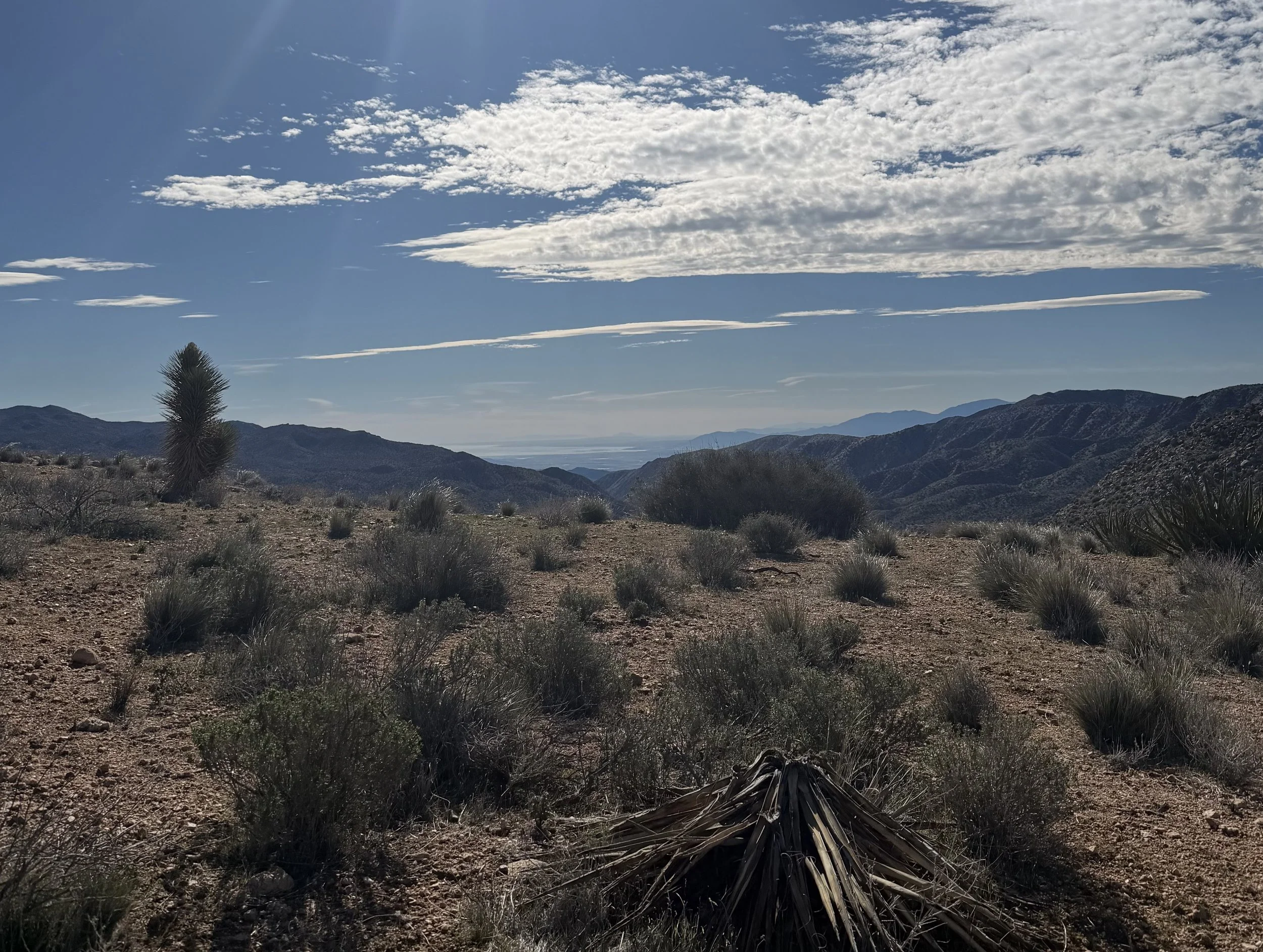
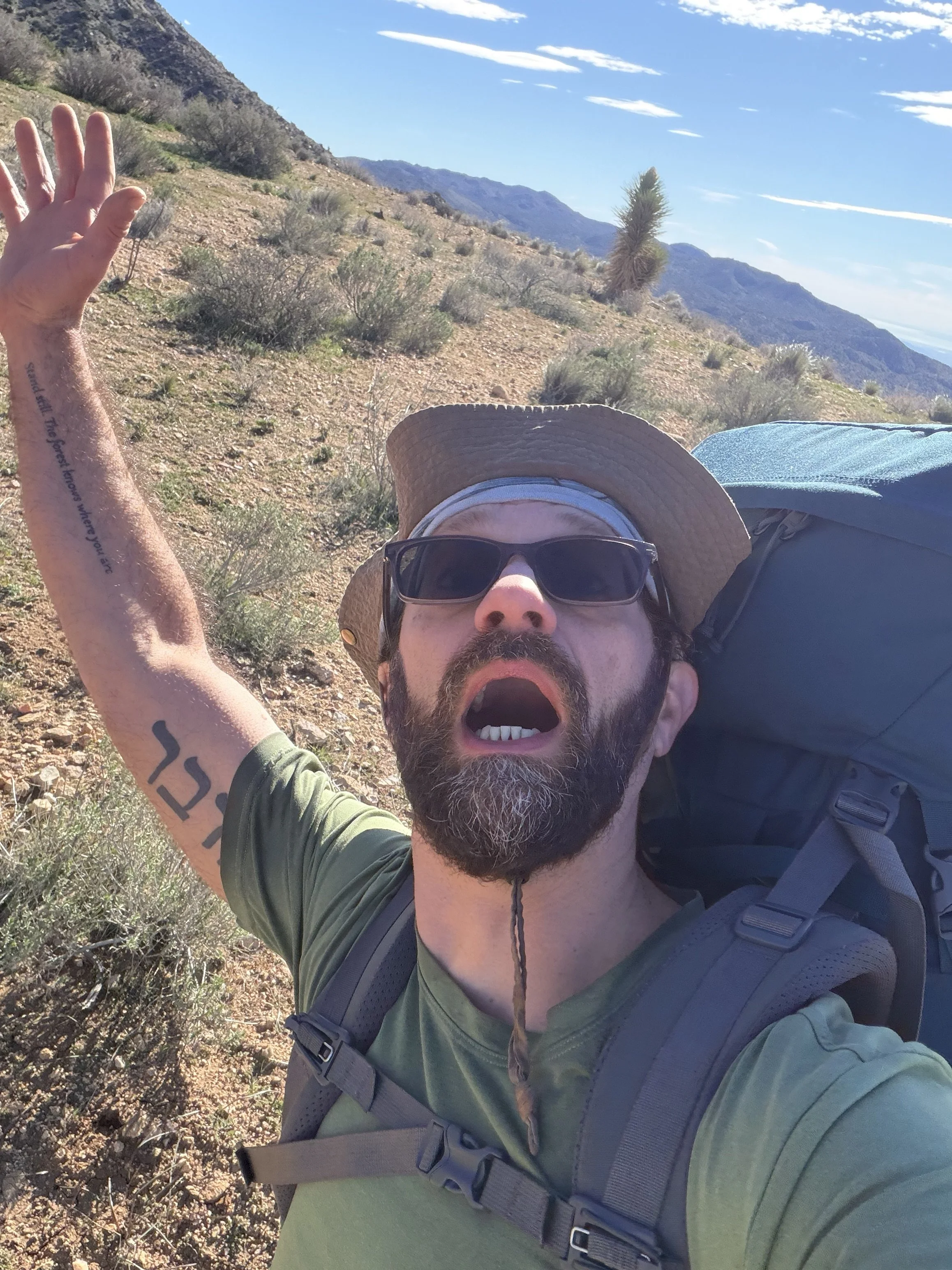
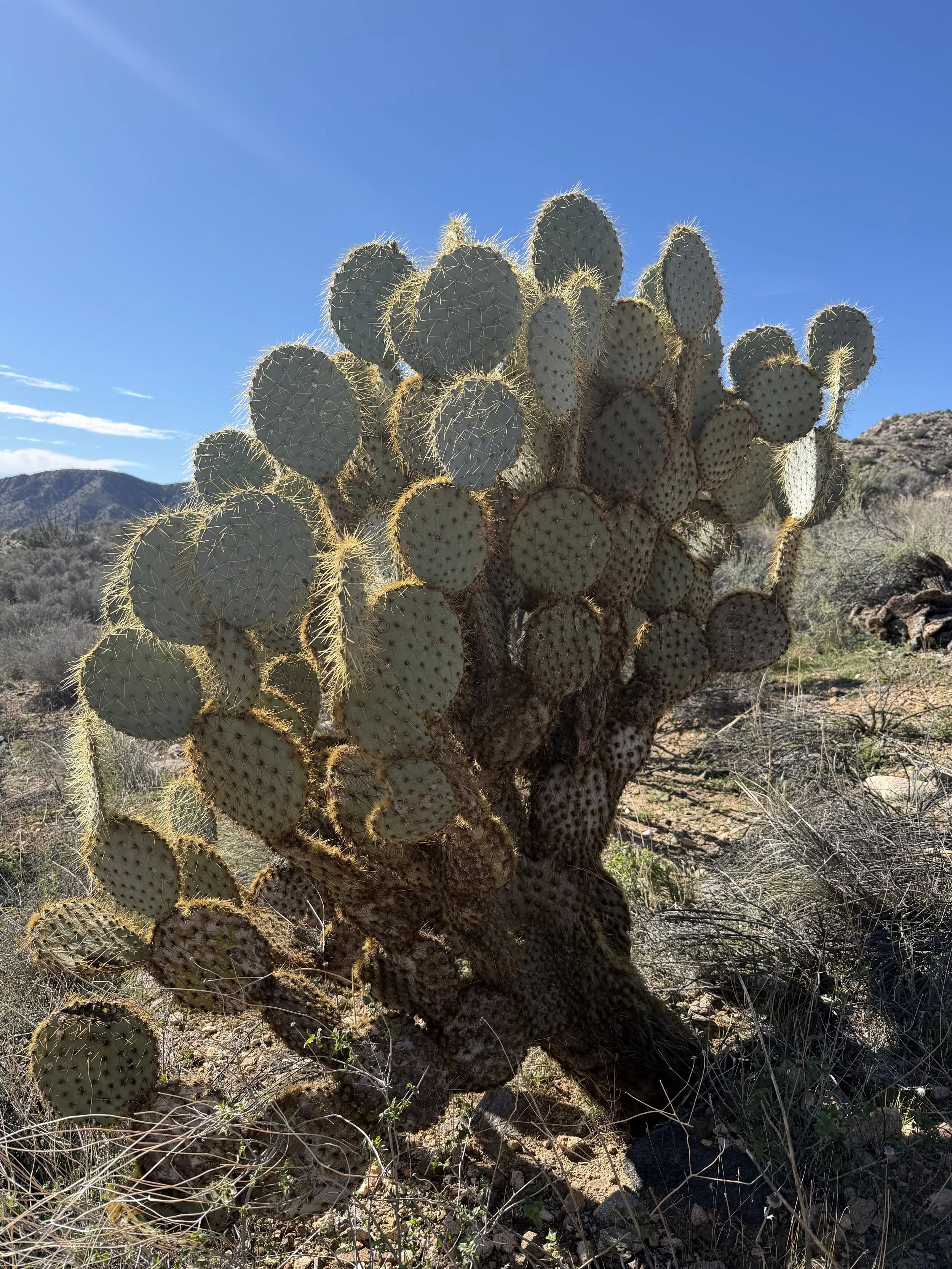
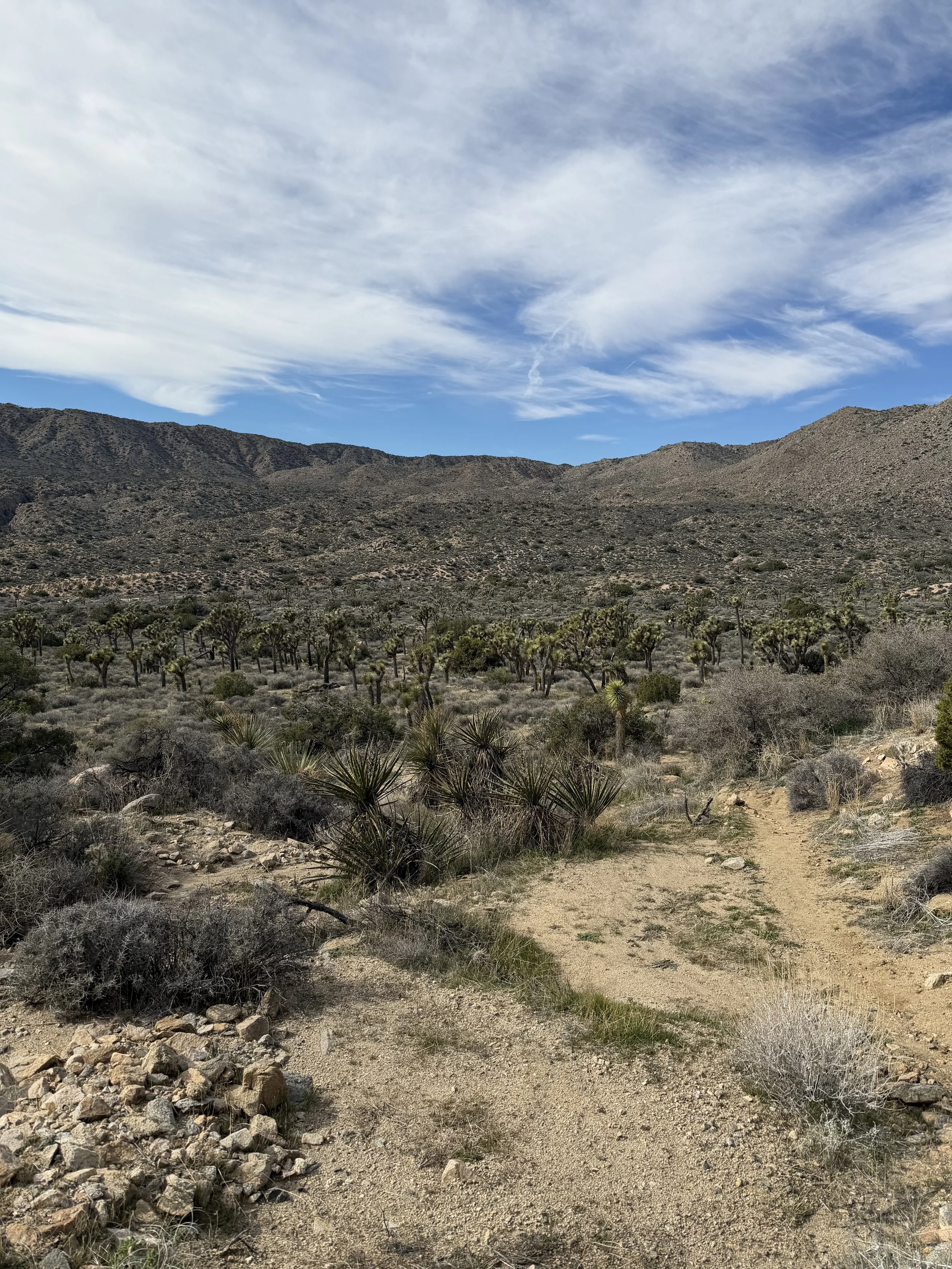
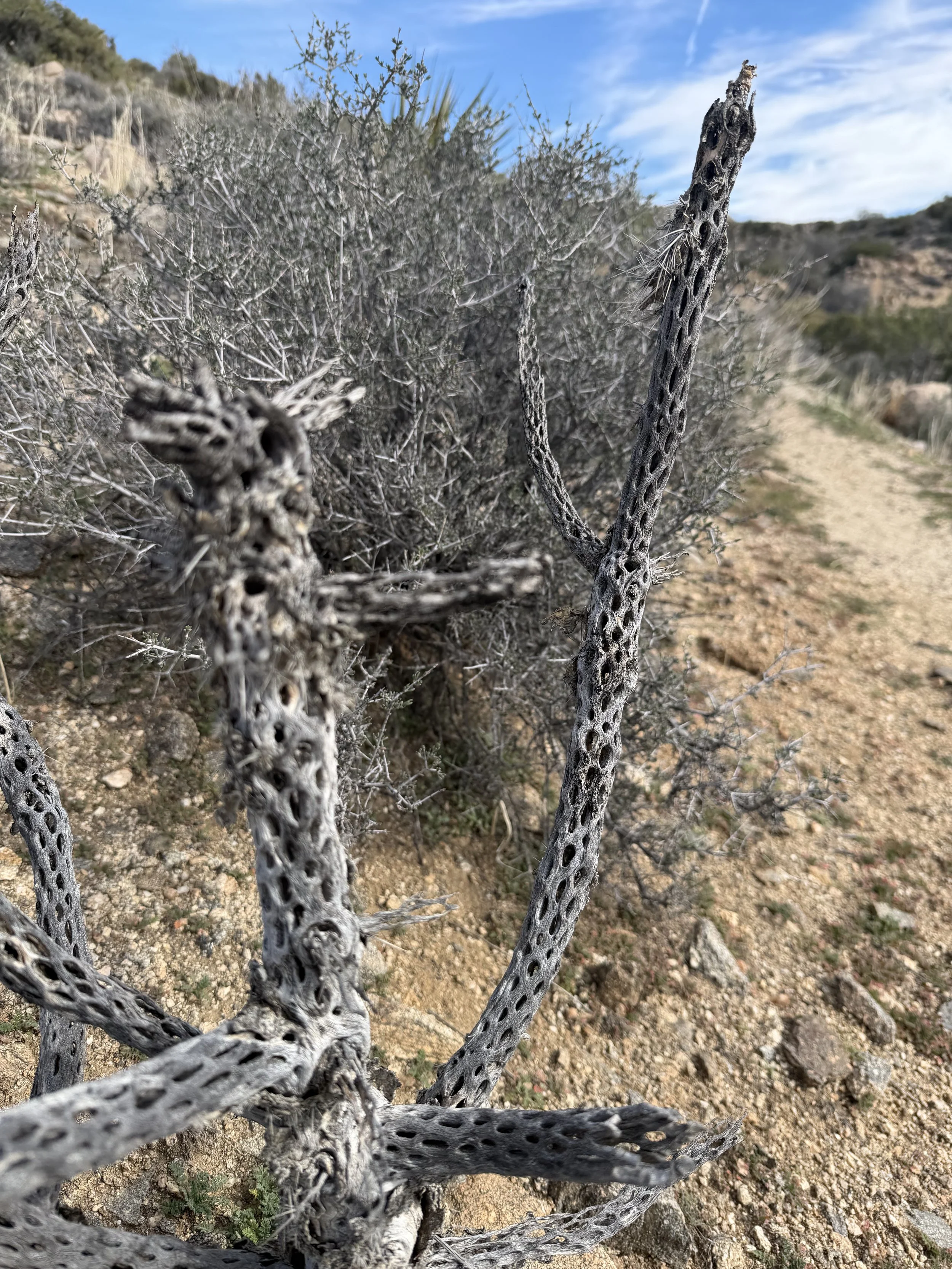
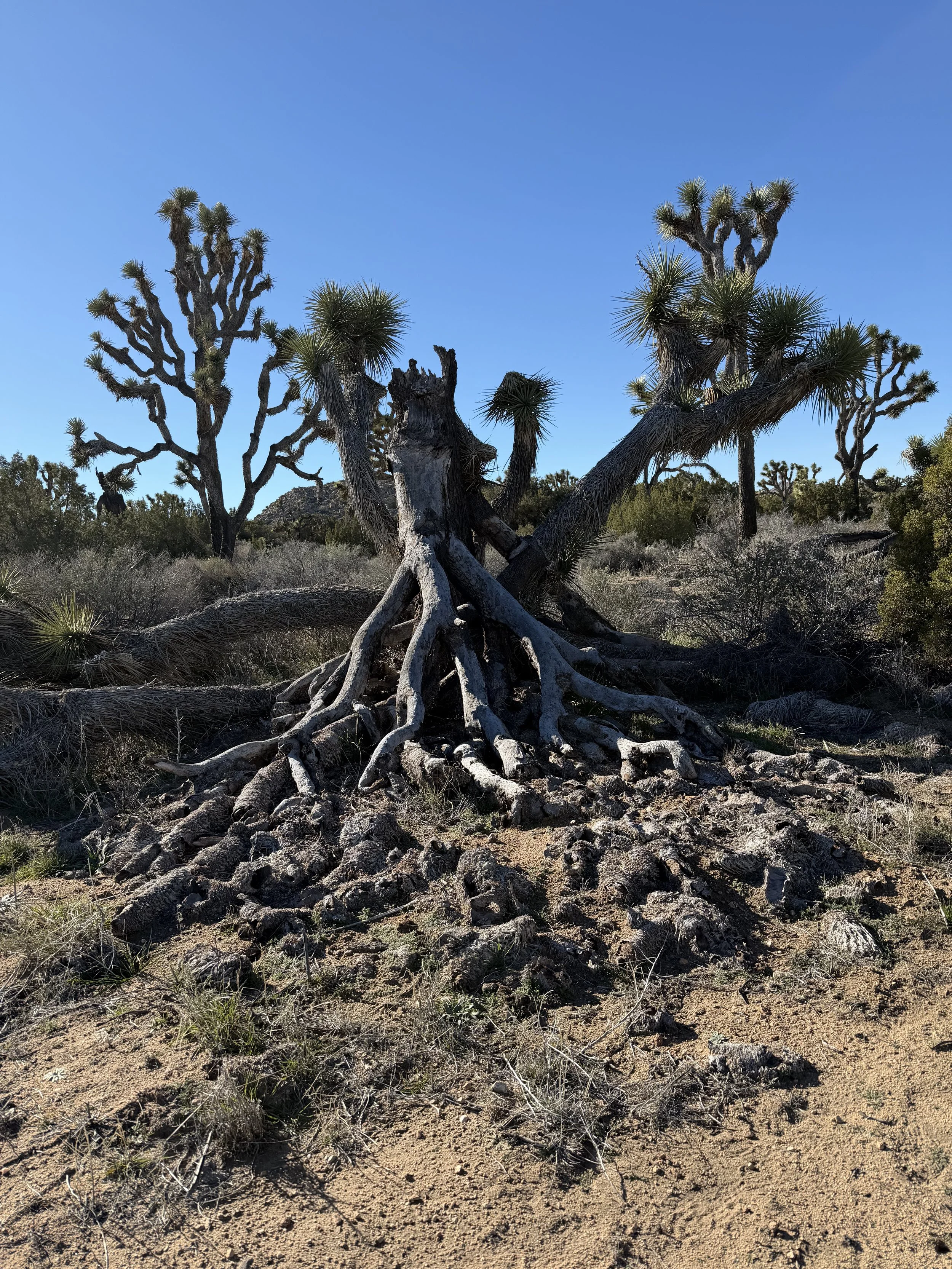
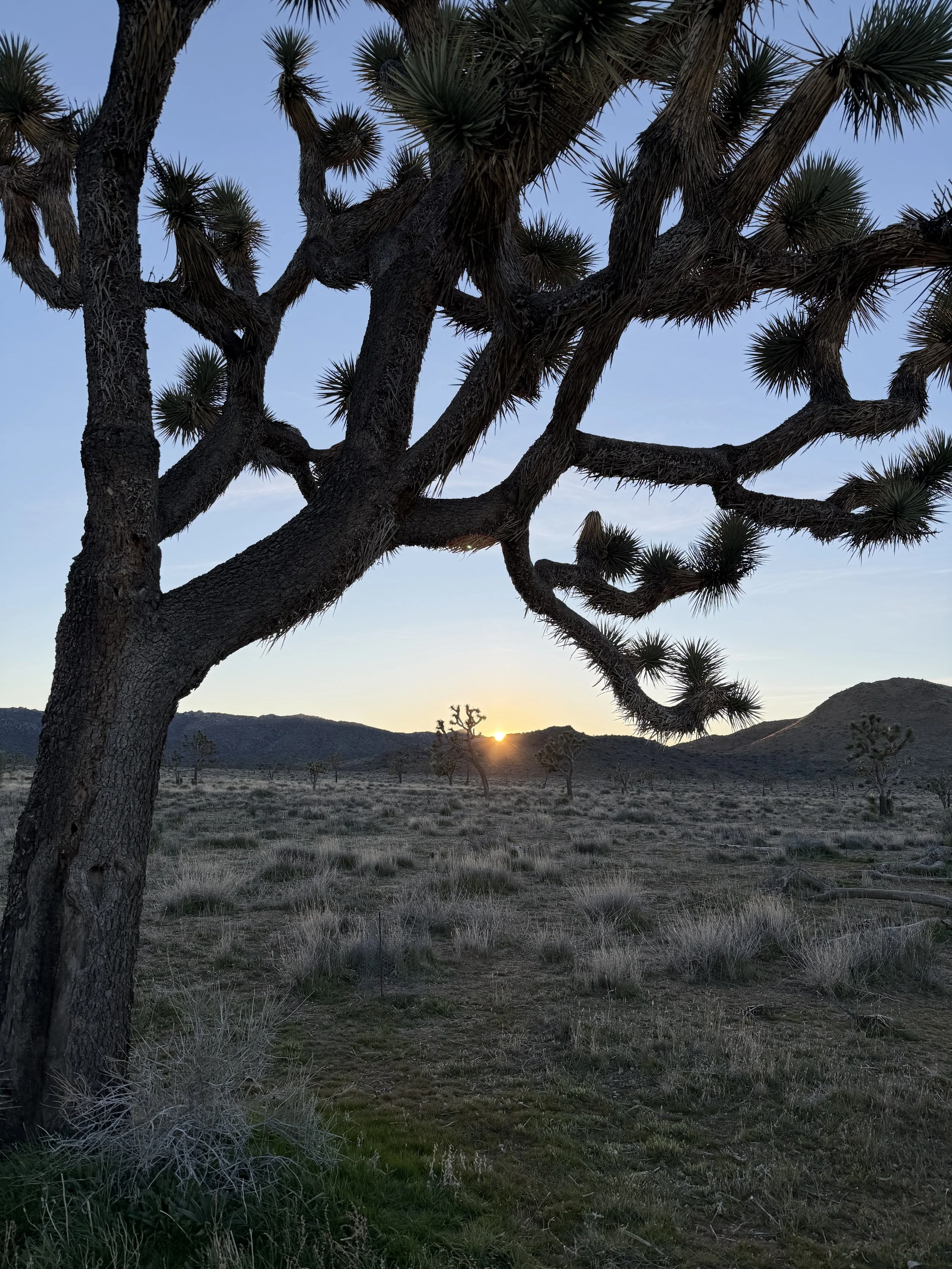
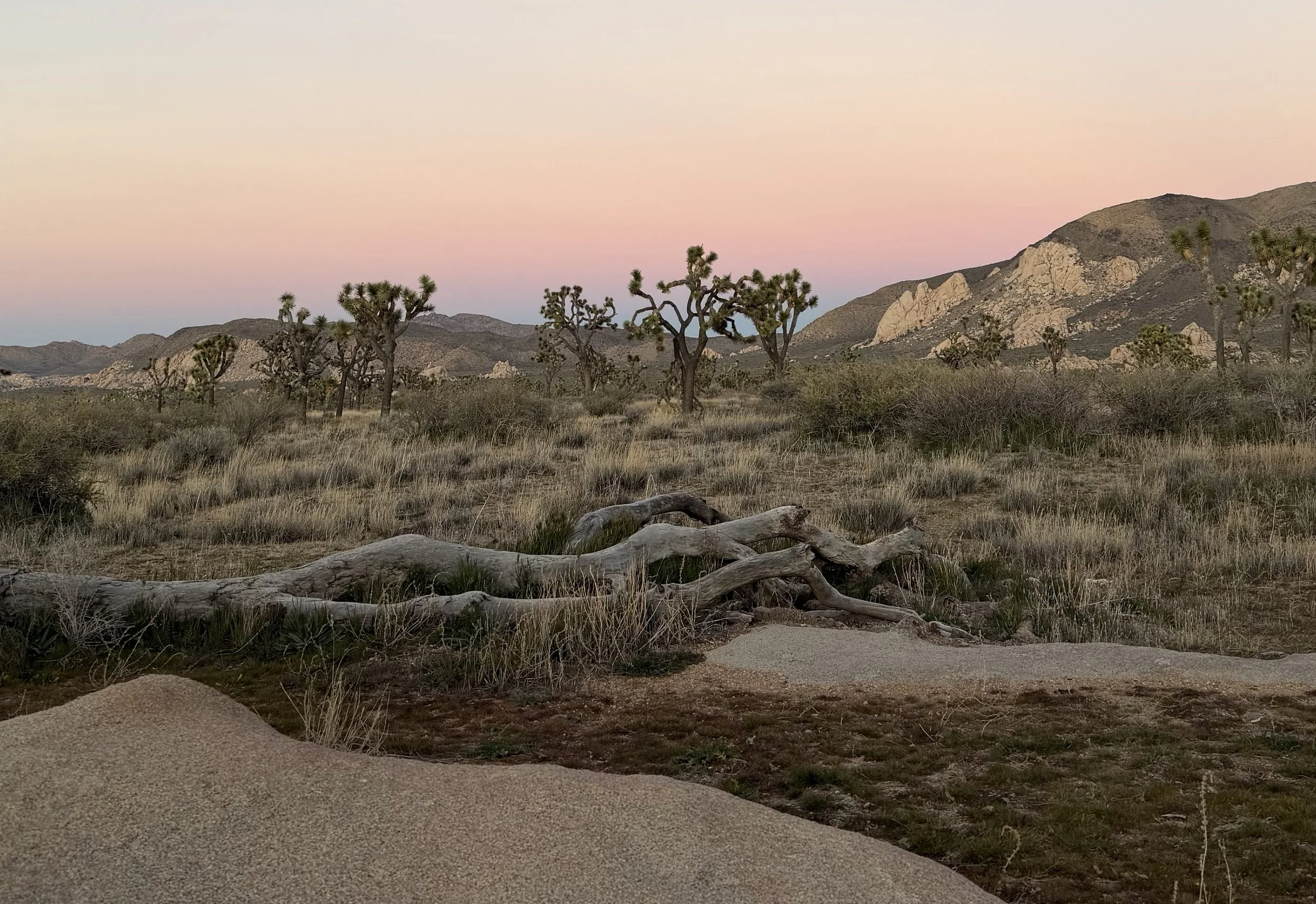
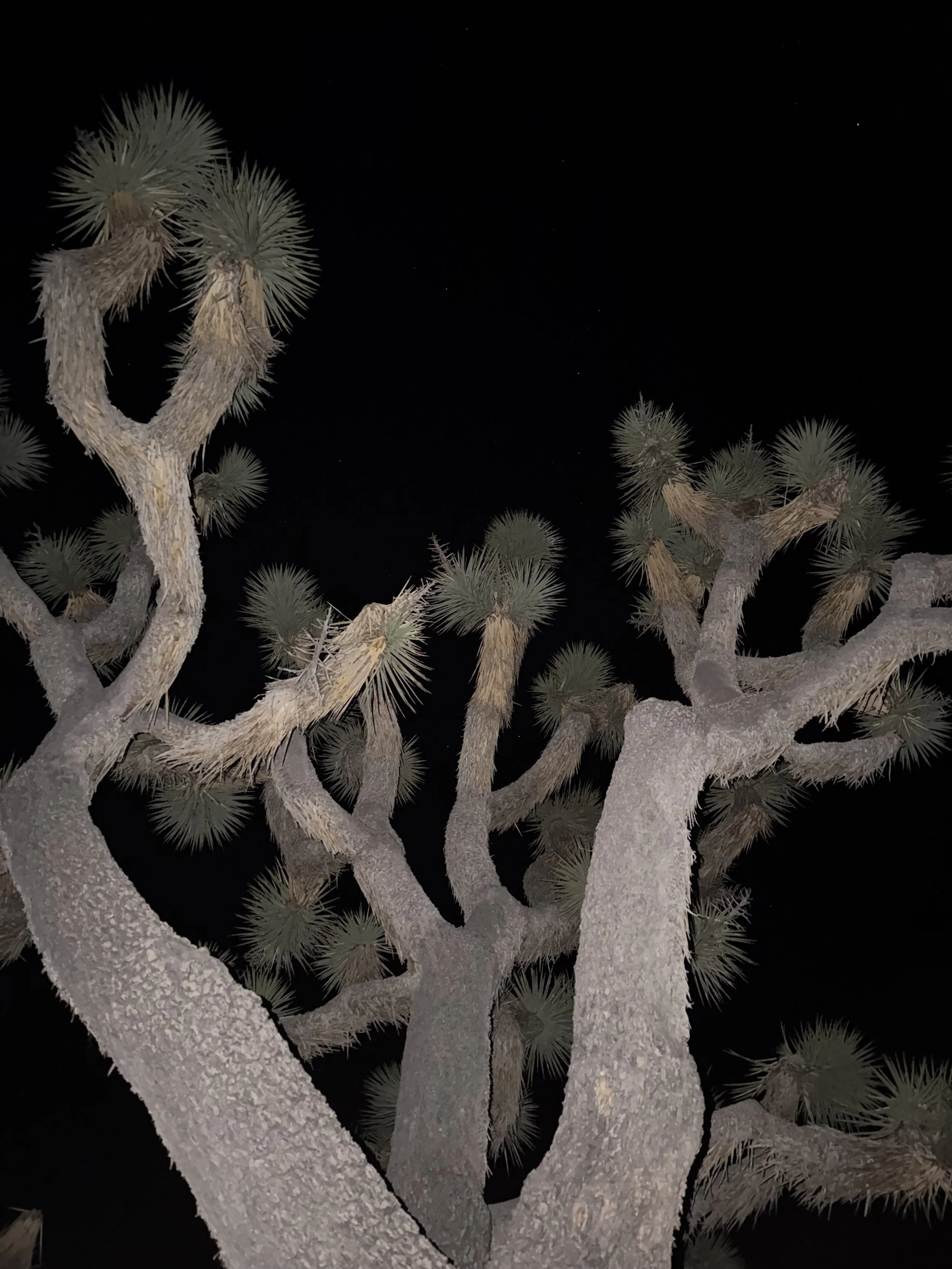
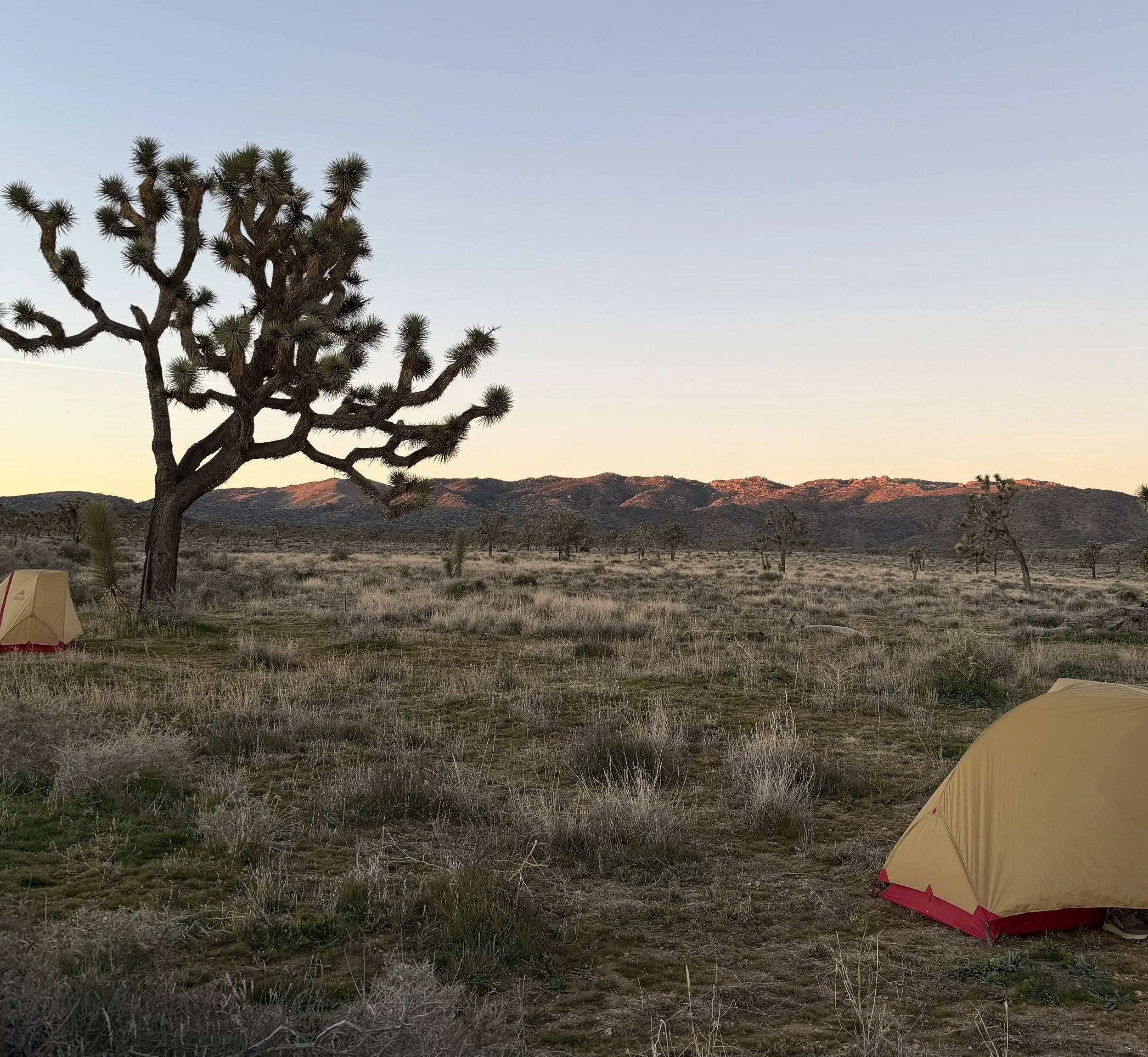
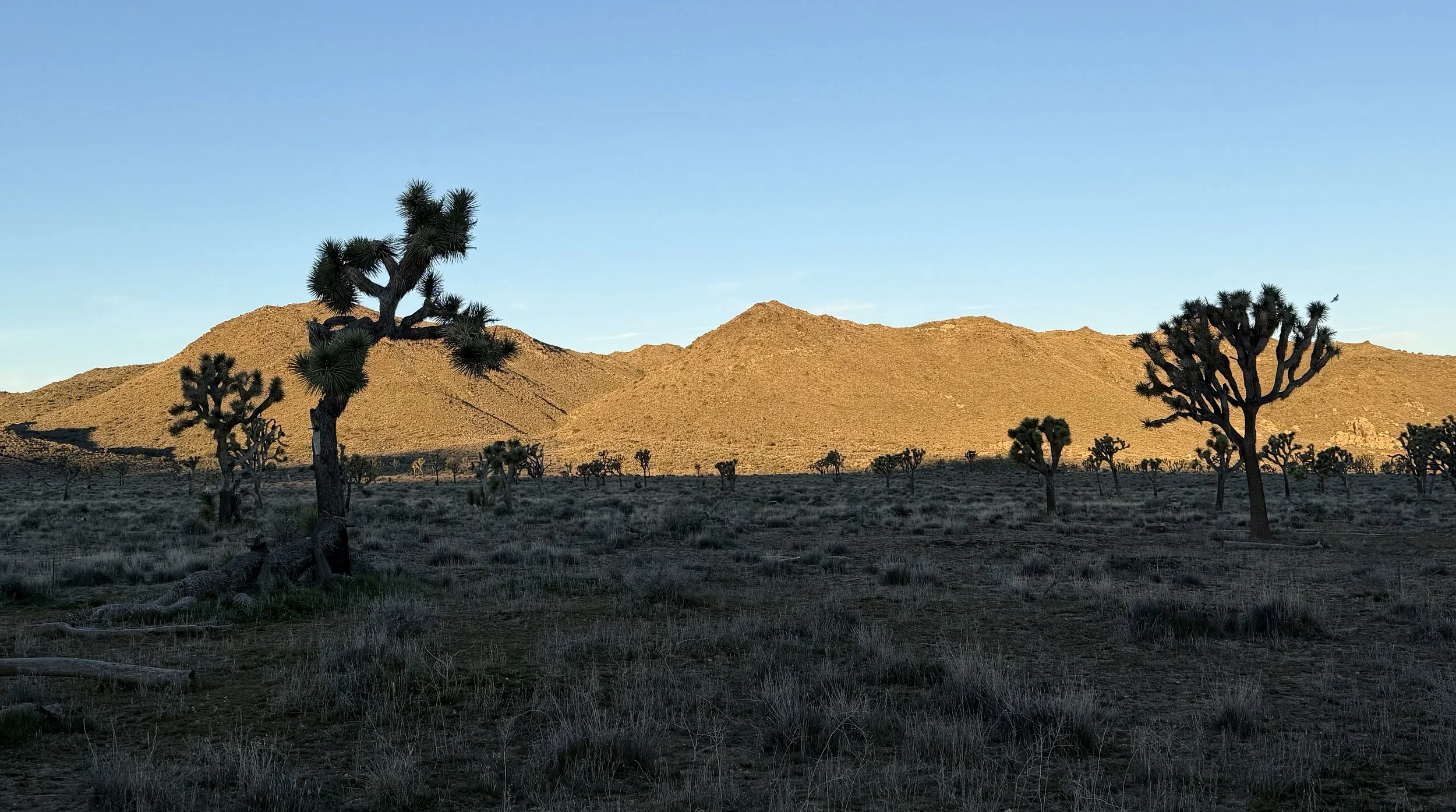
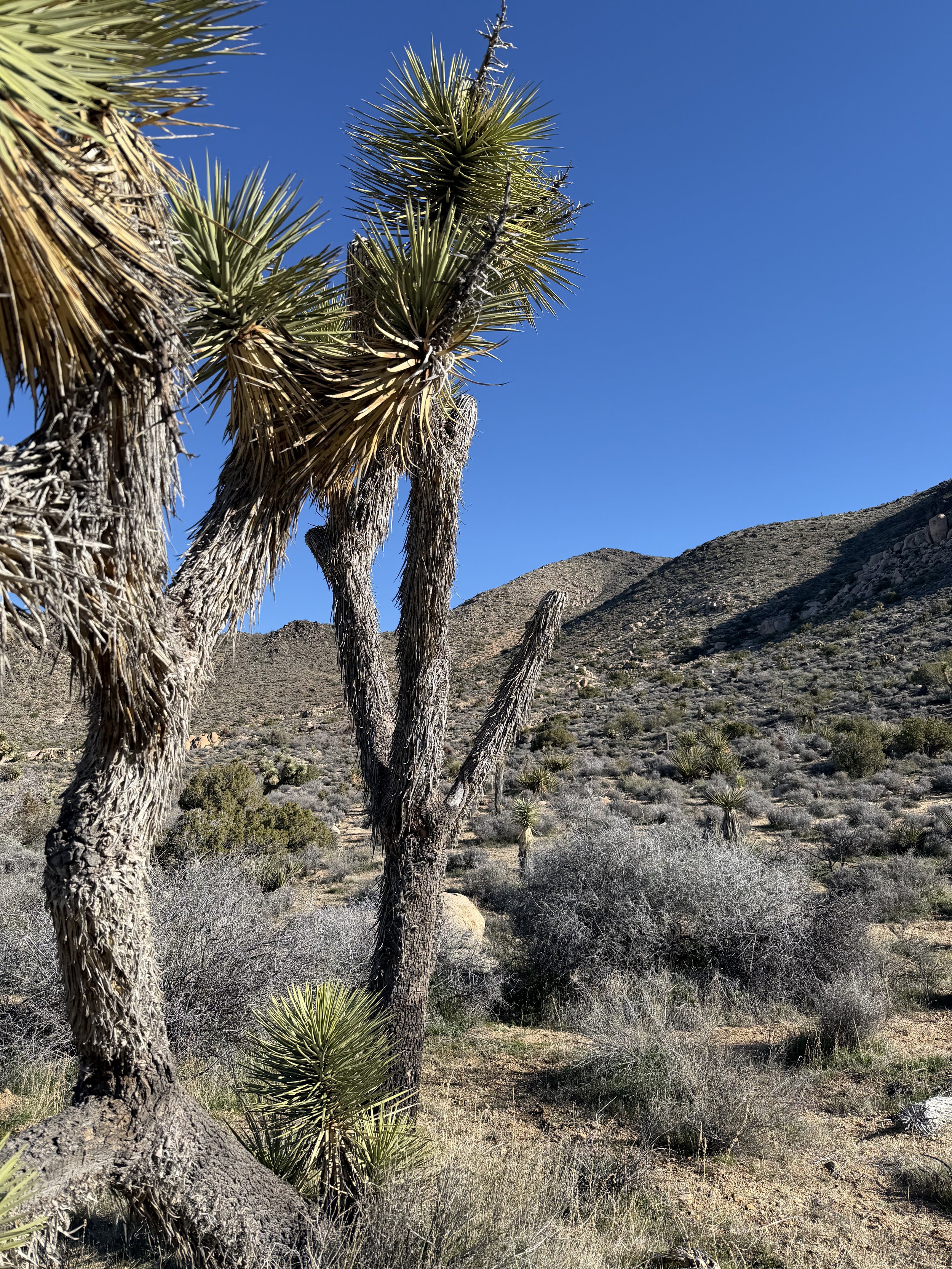
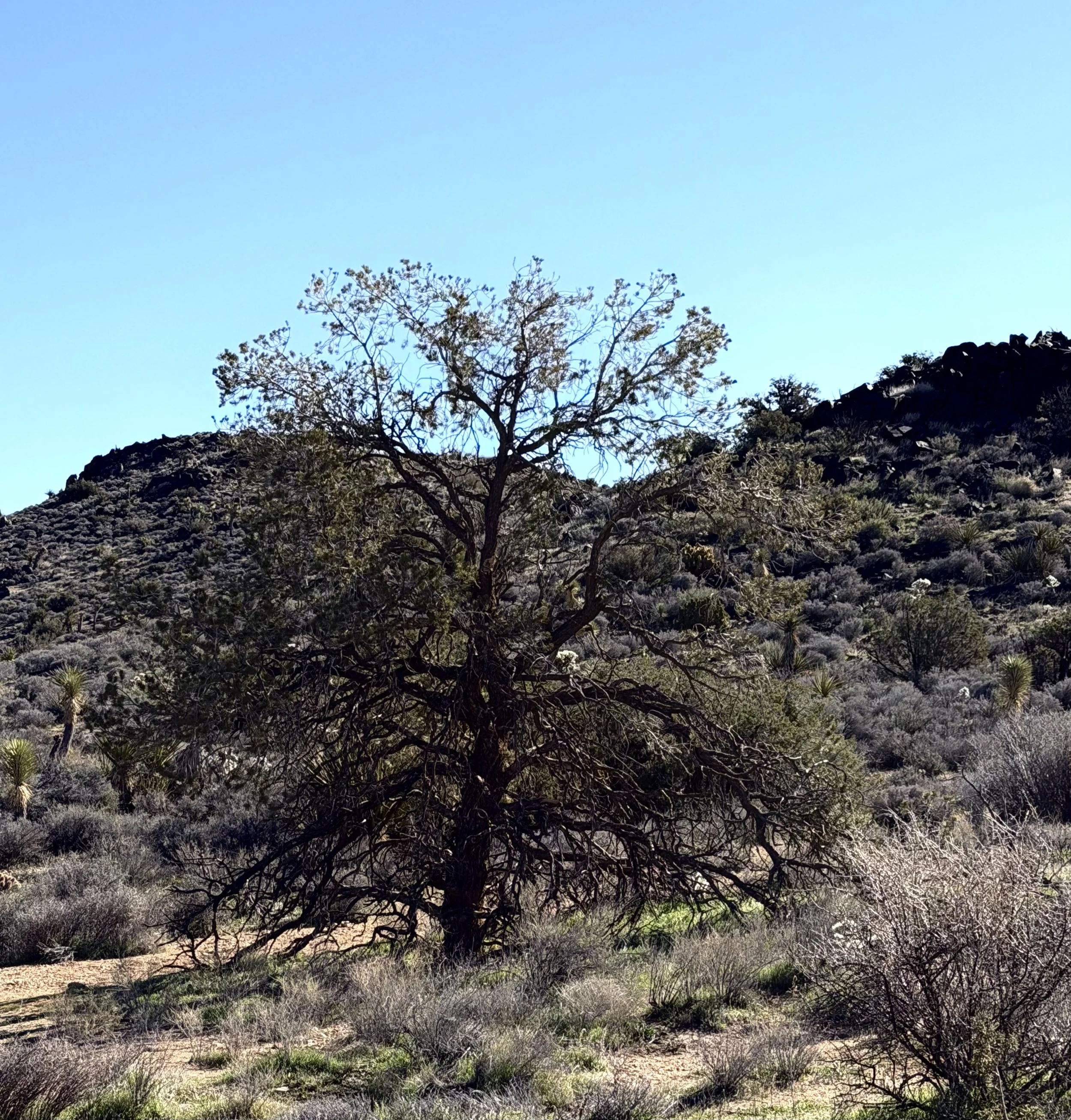
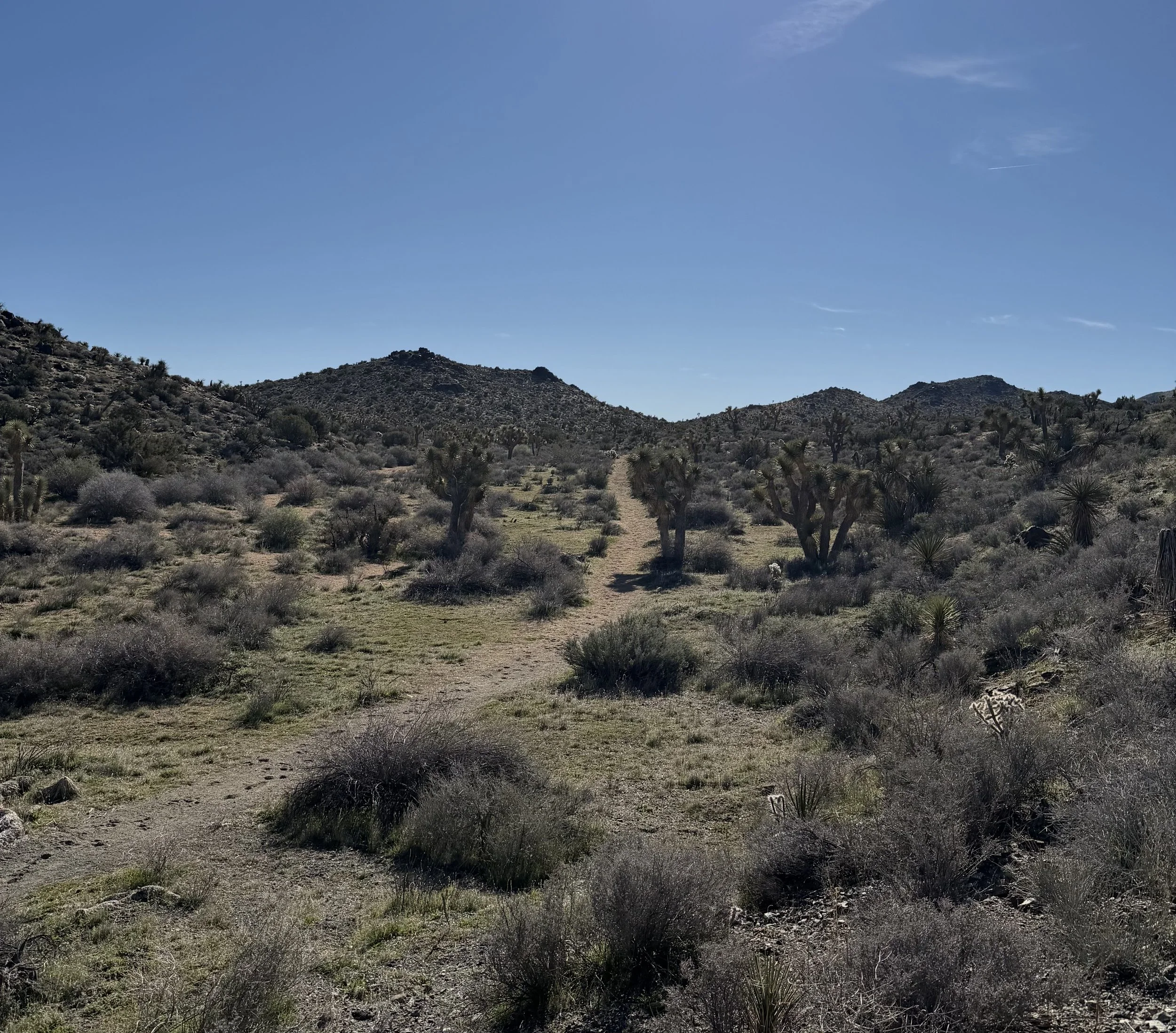
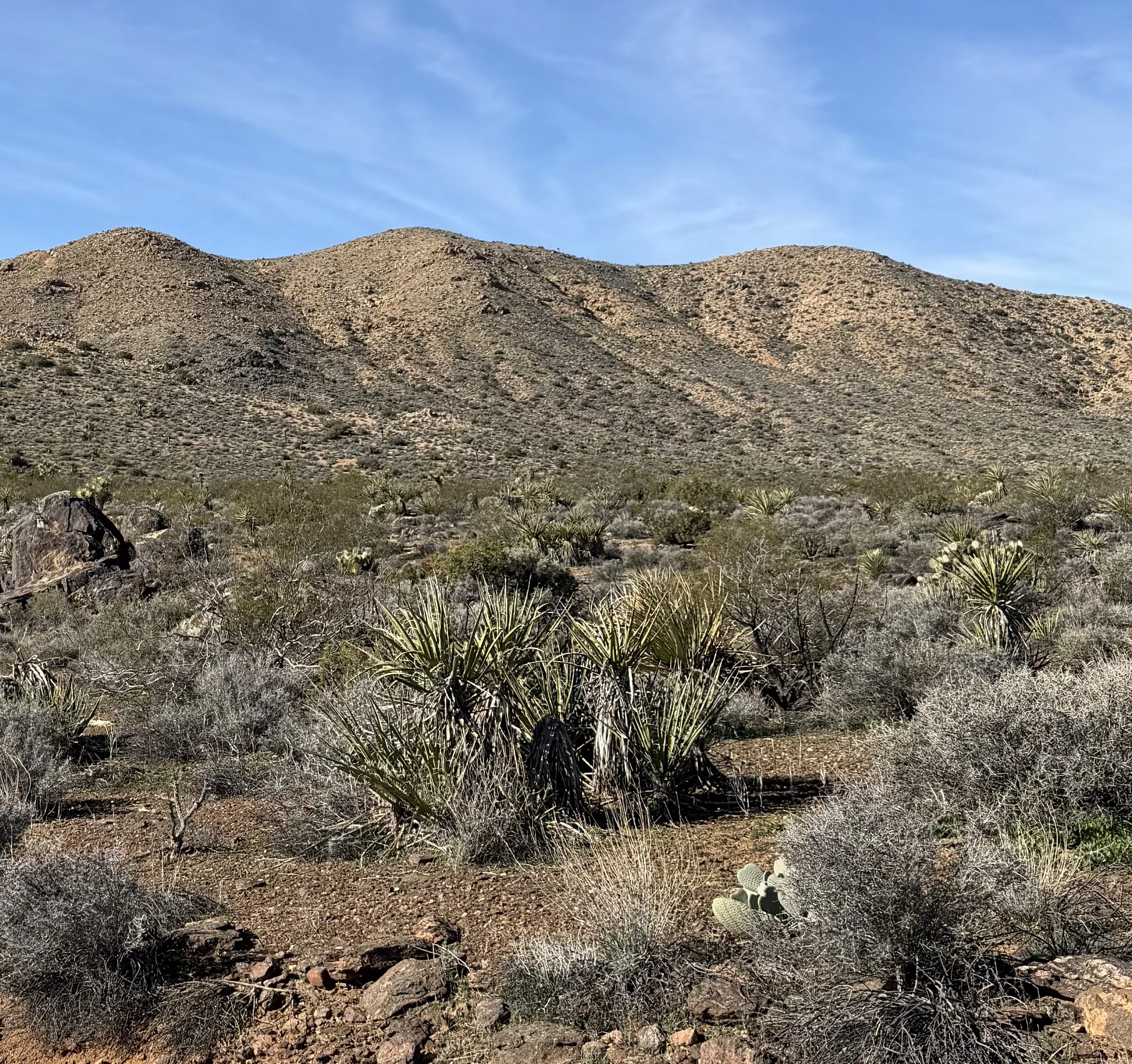
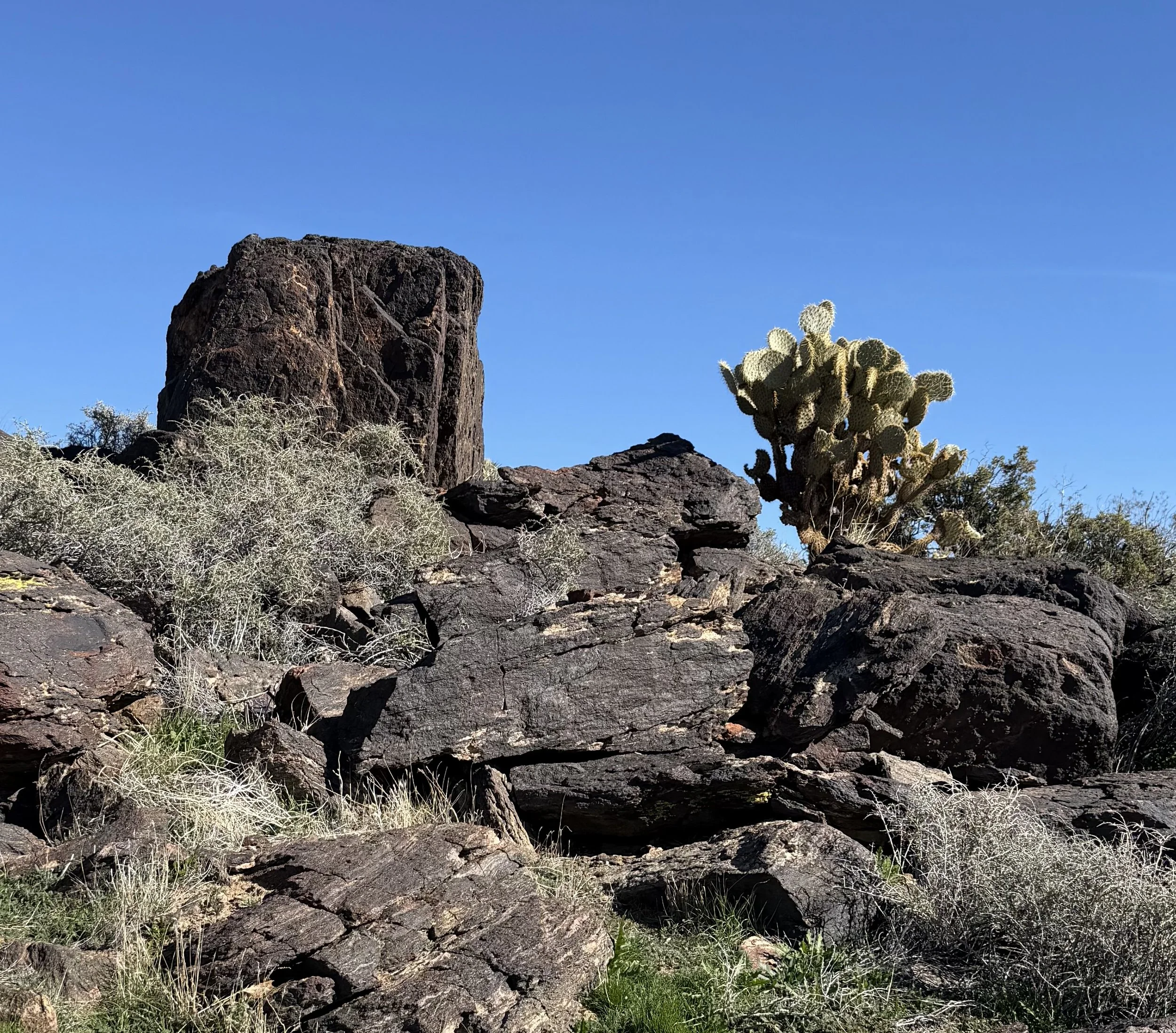
I have never been to the park before. I had experience with desert hiking, but not surrounded by such trees and other-worldly landscape that one finds in Joshua Tree. I remember the first time I had gone backpacking in Georgia. While it was the furthest south that I had ever been, I had spent enough time in the hardwood and deciduous forests in the Northeast that the forests of Georgia did not feel completely foreign. I marveled at the abundance of rhododendron, but did not feel like a stranger in a strange land. I have been with these plants and forest terrain before, just in a climate farther north. This was not the case in Joshua Tree. With the wisdom of Berry and Wirzba on my mind, one of my struggles was to come to know the land that I had never been to before.
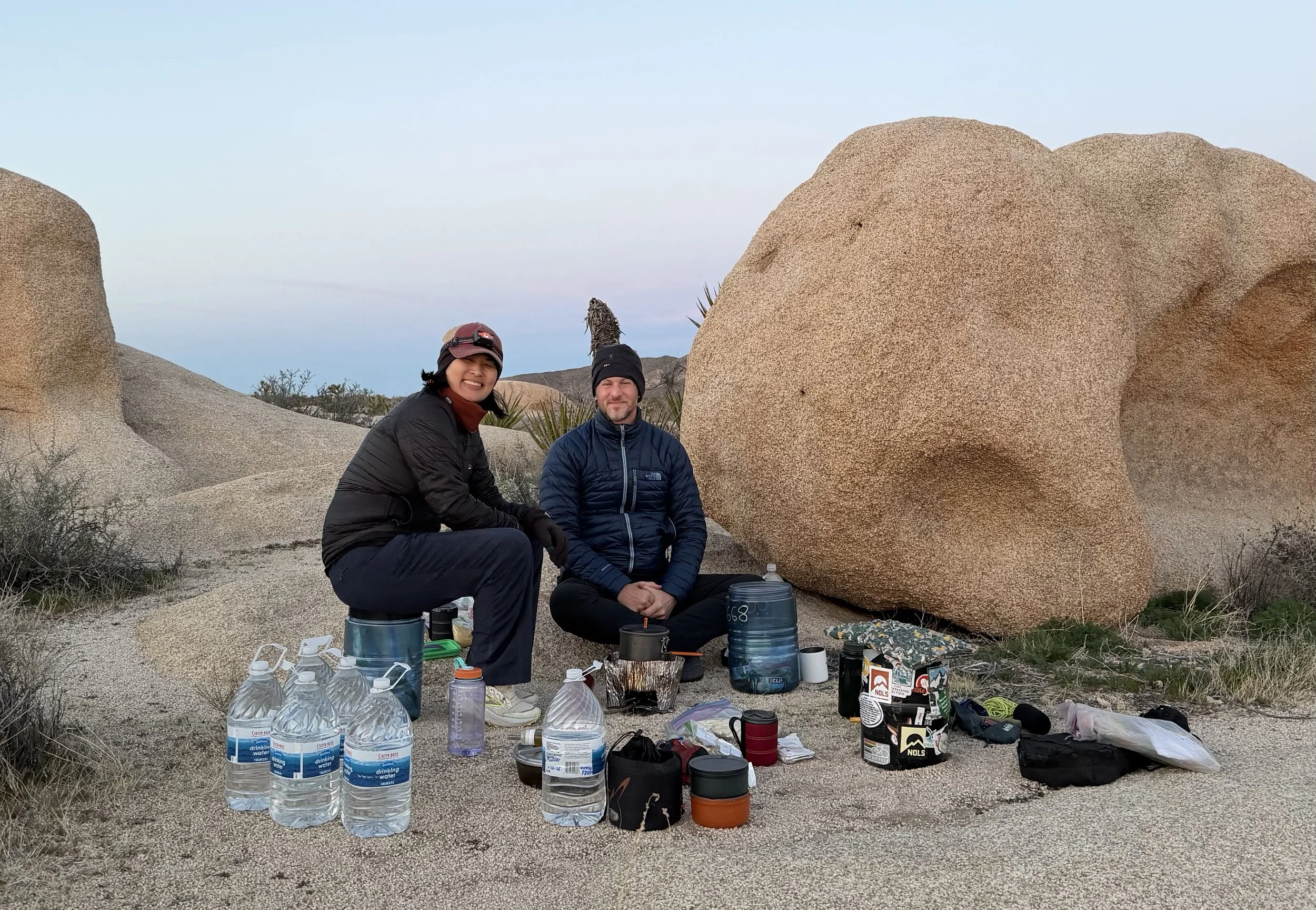
The day before our hike started we drove to different locations to cache water. It is a desert hike and the lack of water is one of the biggest challenges of the trail. I marveled at the rocks and the trees as we jumped out of the car, stashed our water in hidden spots and then ran back to the car. It was a quick and impersonal experience of the wilderness. I wonder if that is the experience of many people who visit the park. You drive to a spot. You get out and walk. Maybe you walk for ten minutes and maybe you walk all day, but eventually you will get back into your car and drive to the next place. How can one come to know the land when visits are broken up and punctuated by time in one’s car?
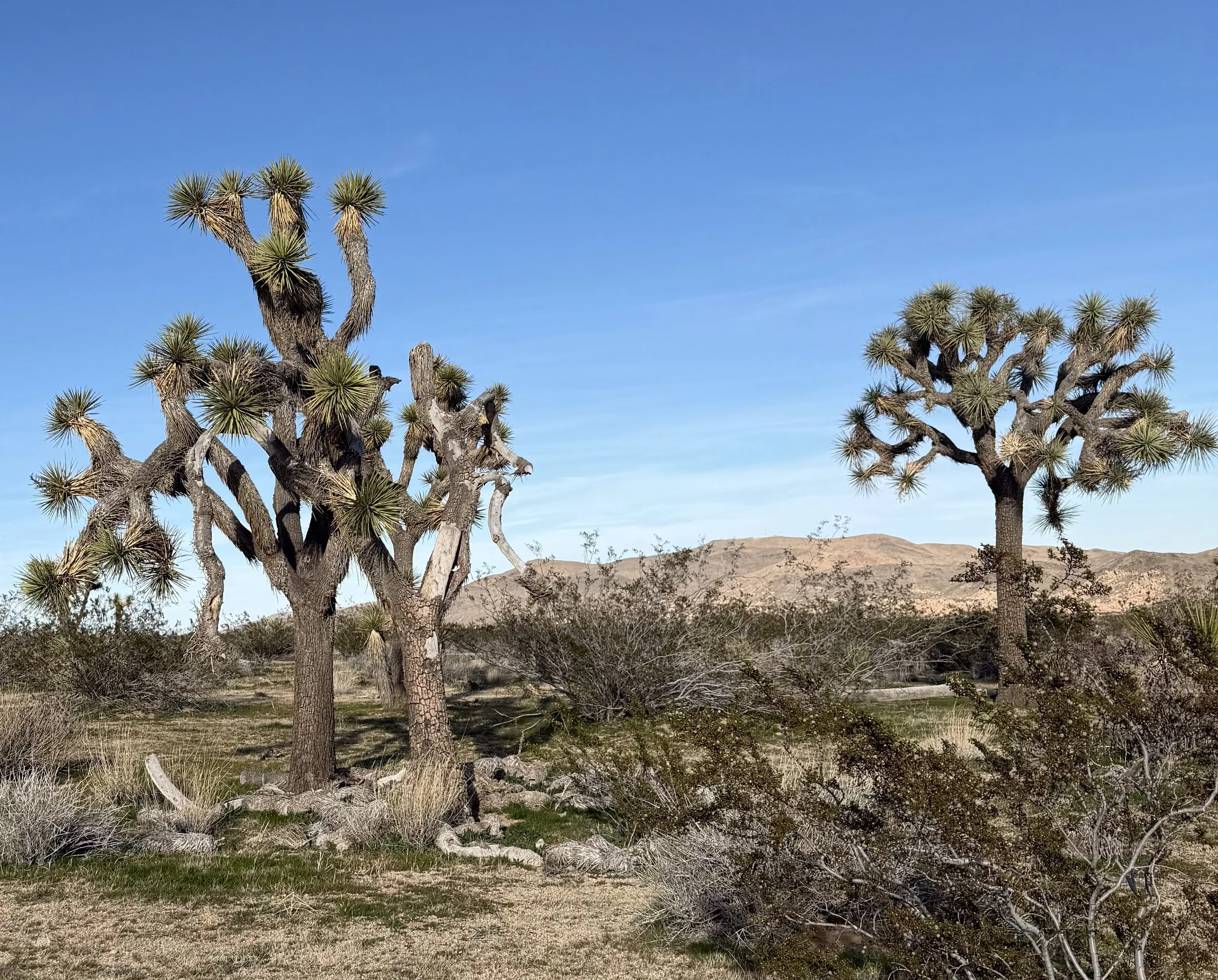
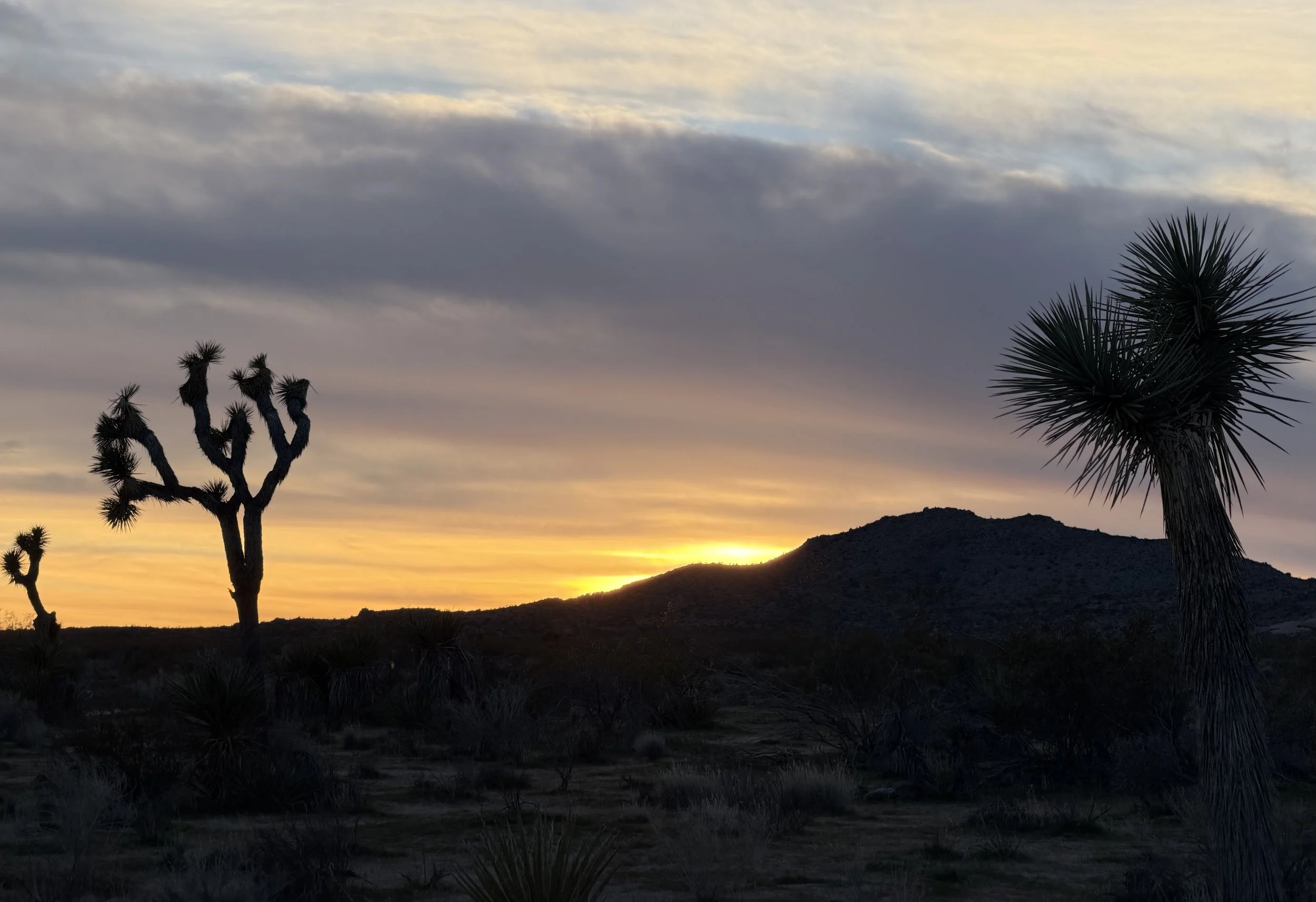
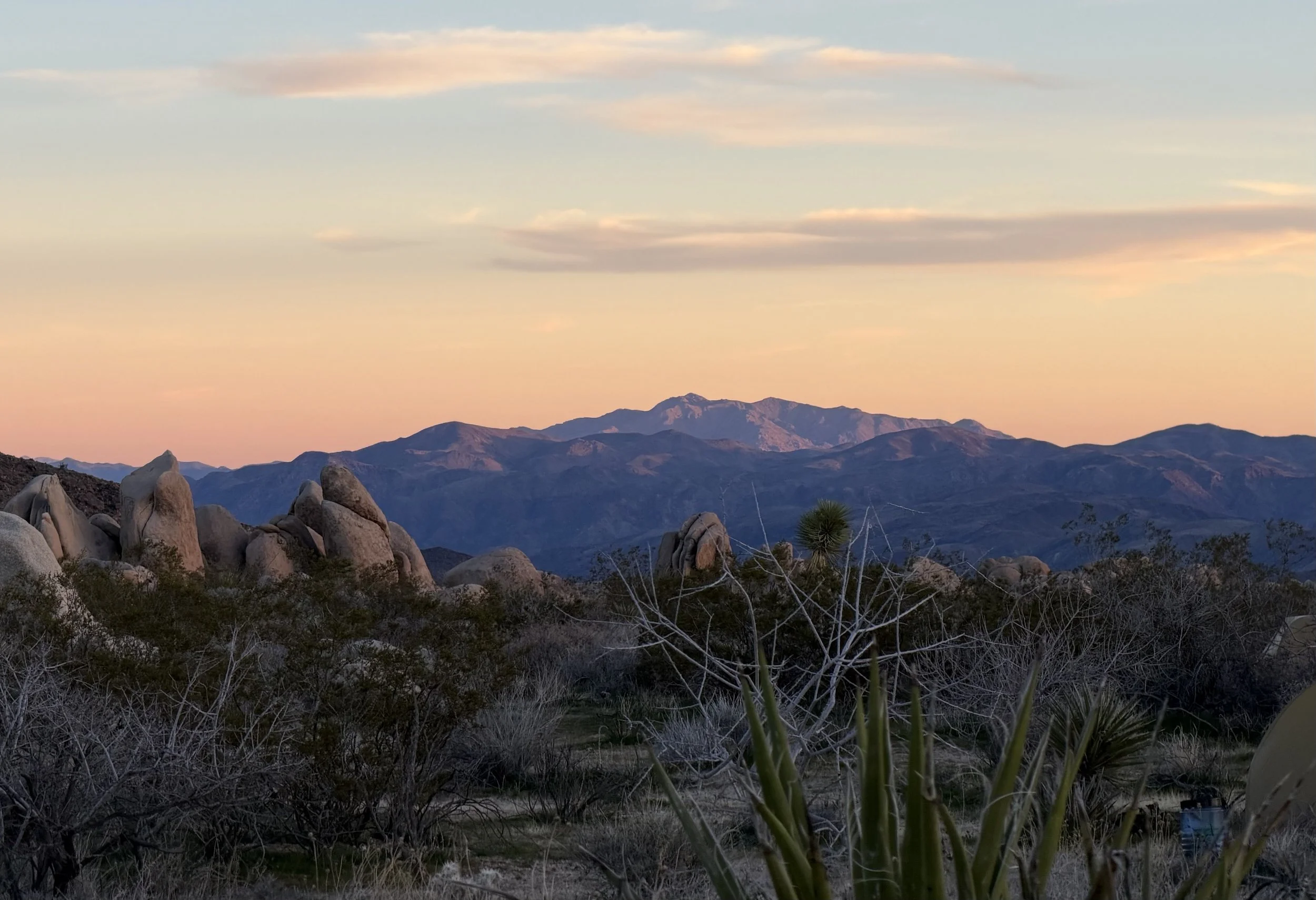
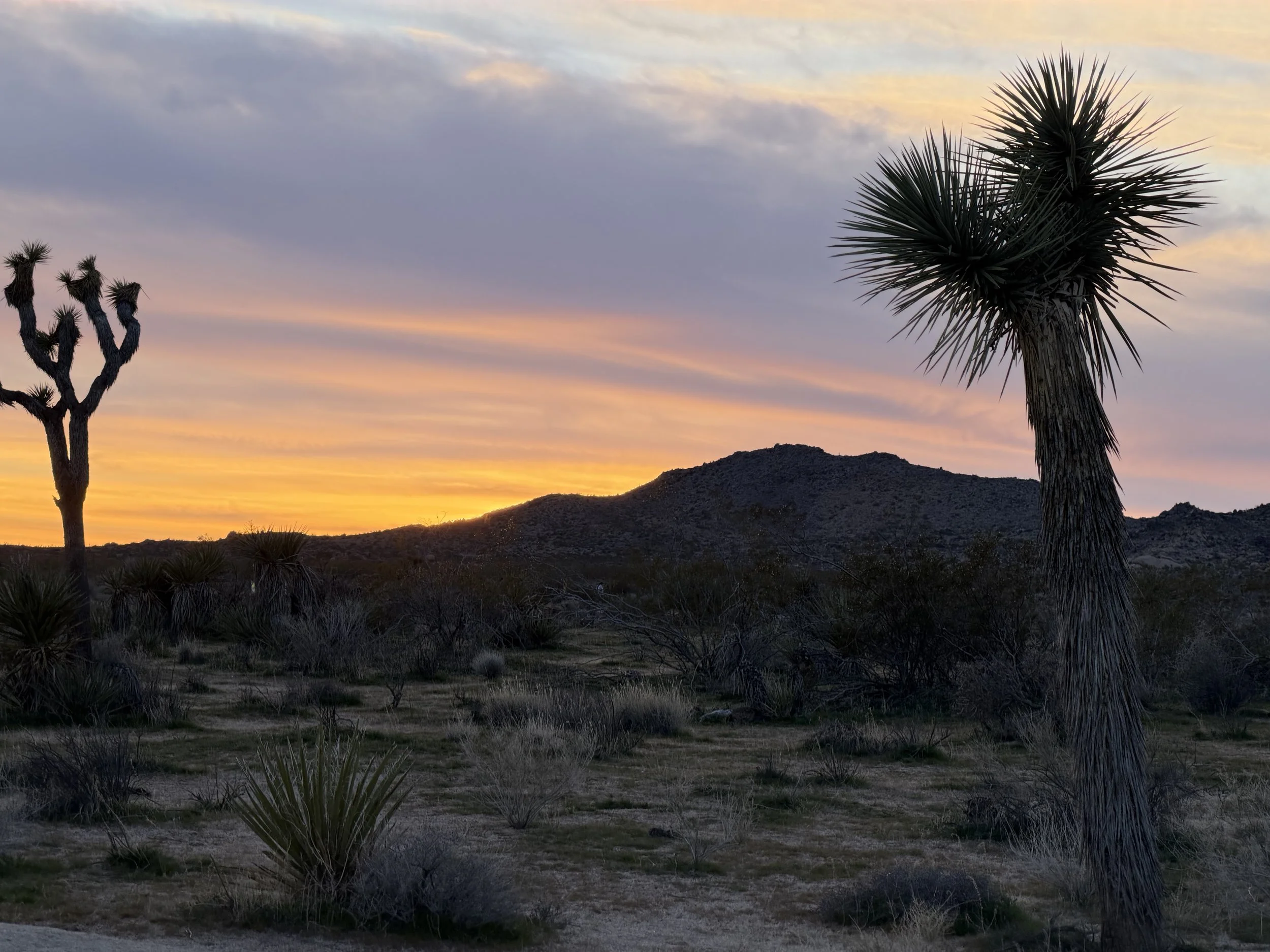
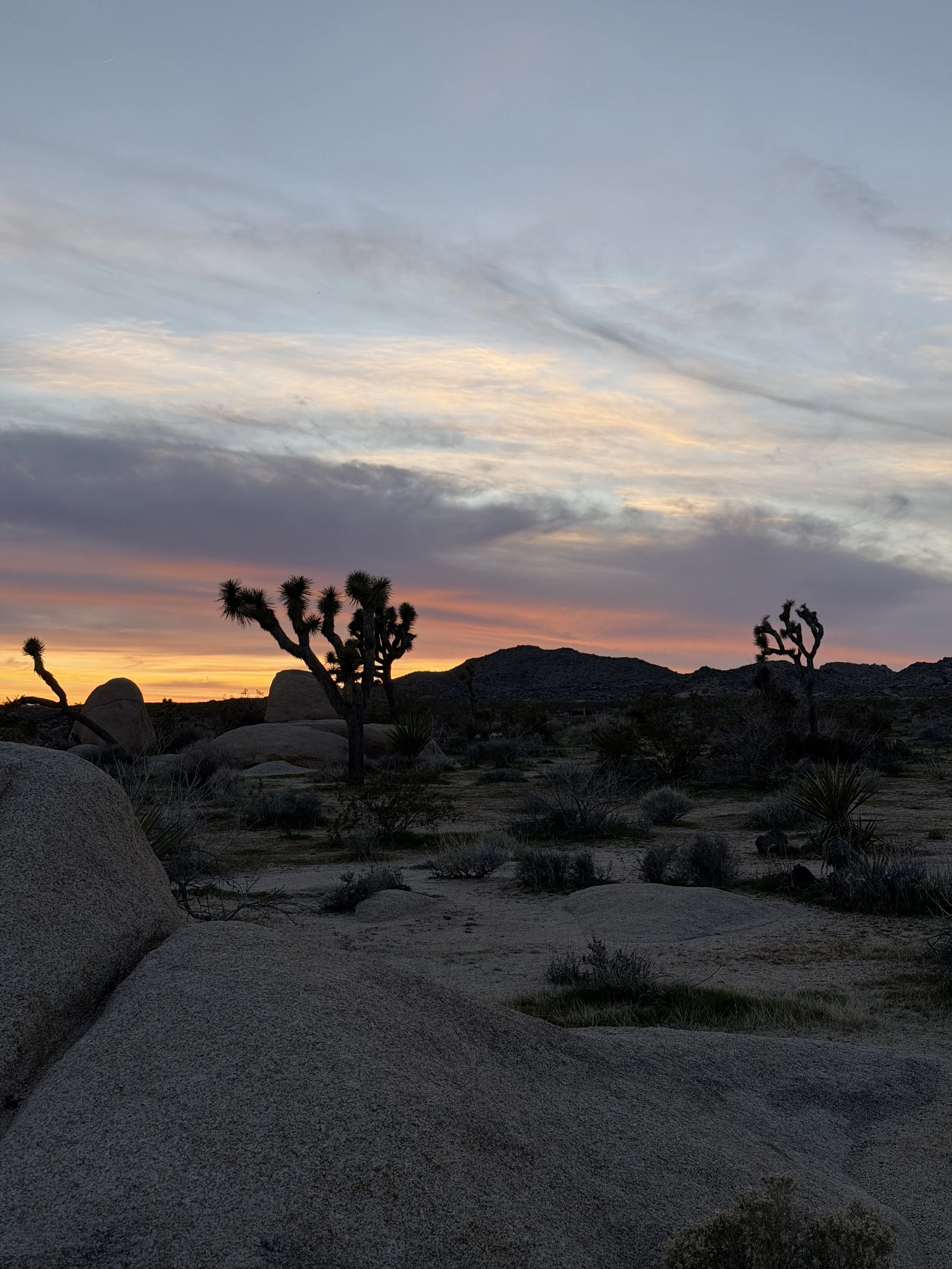
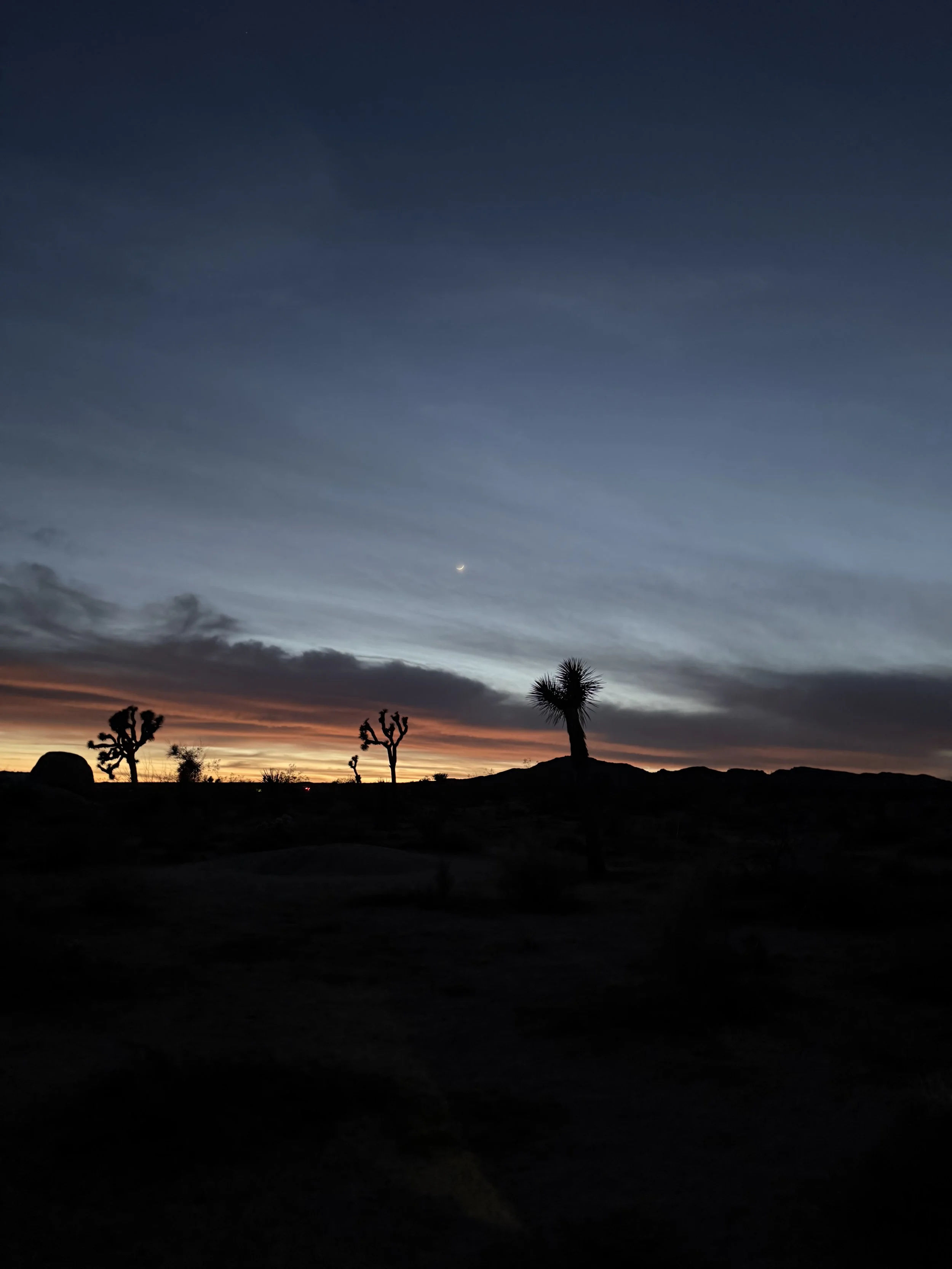
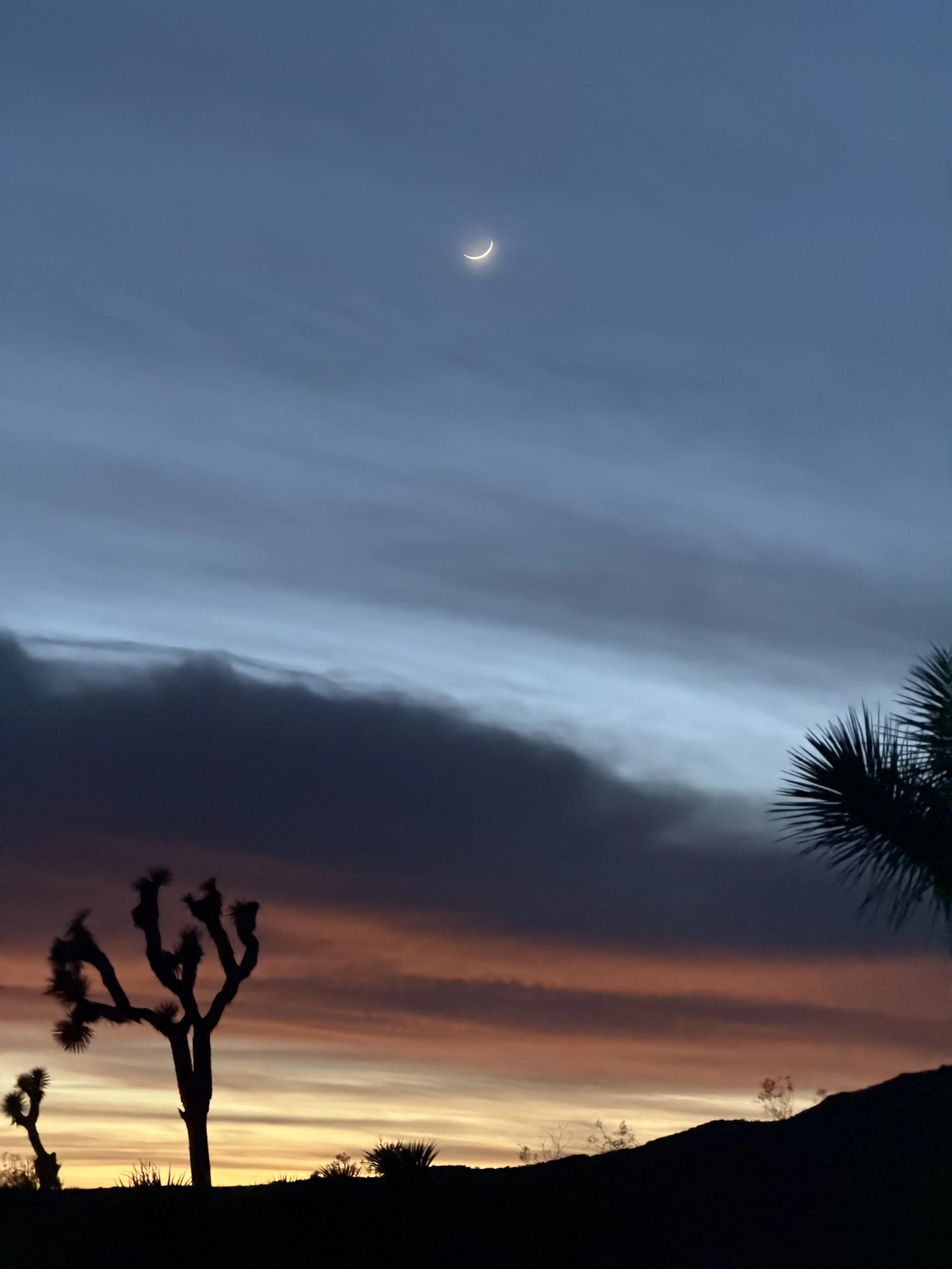
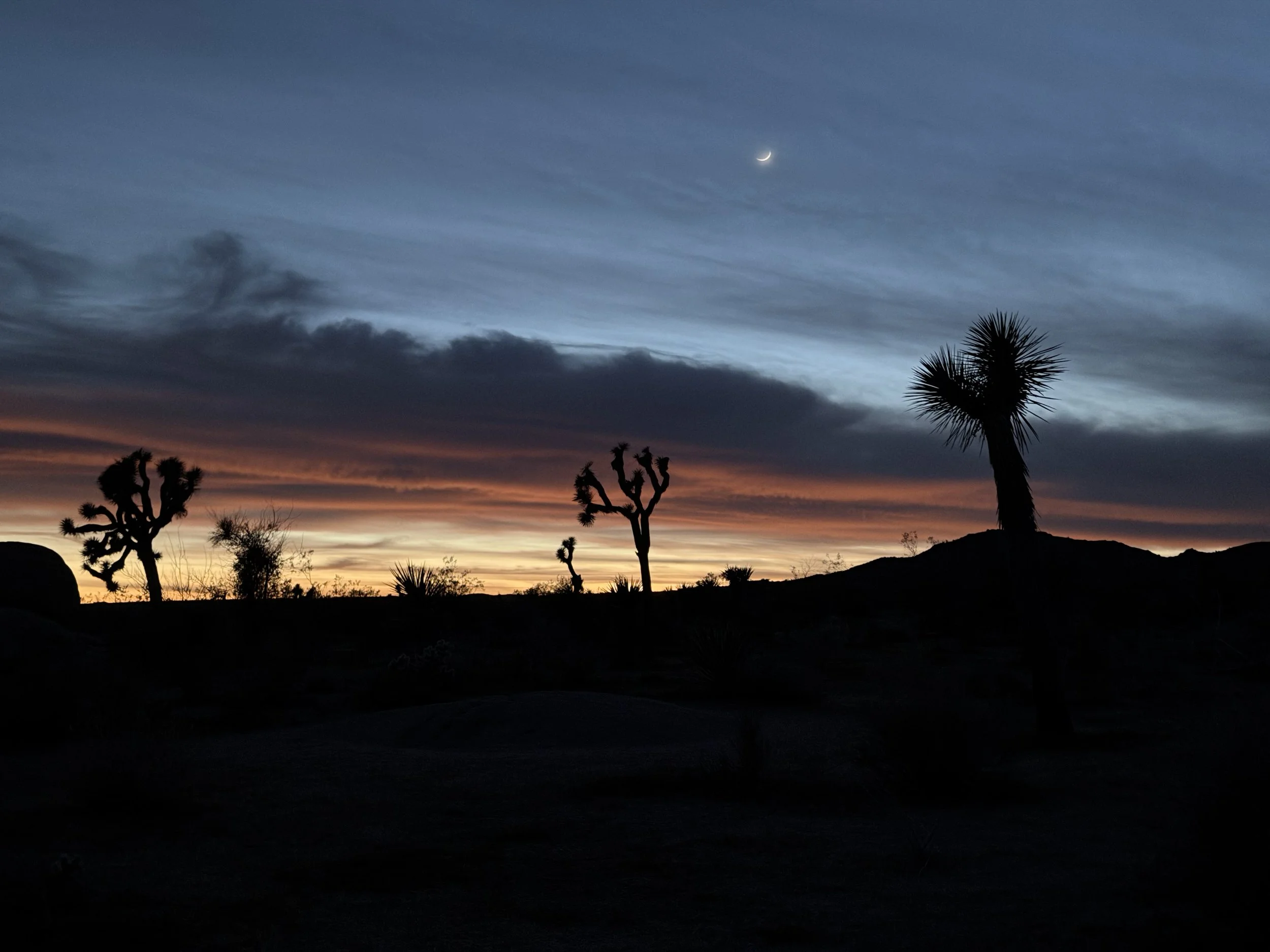
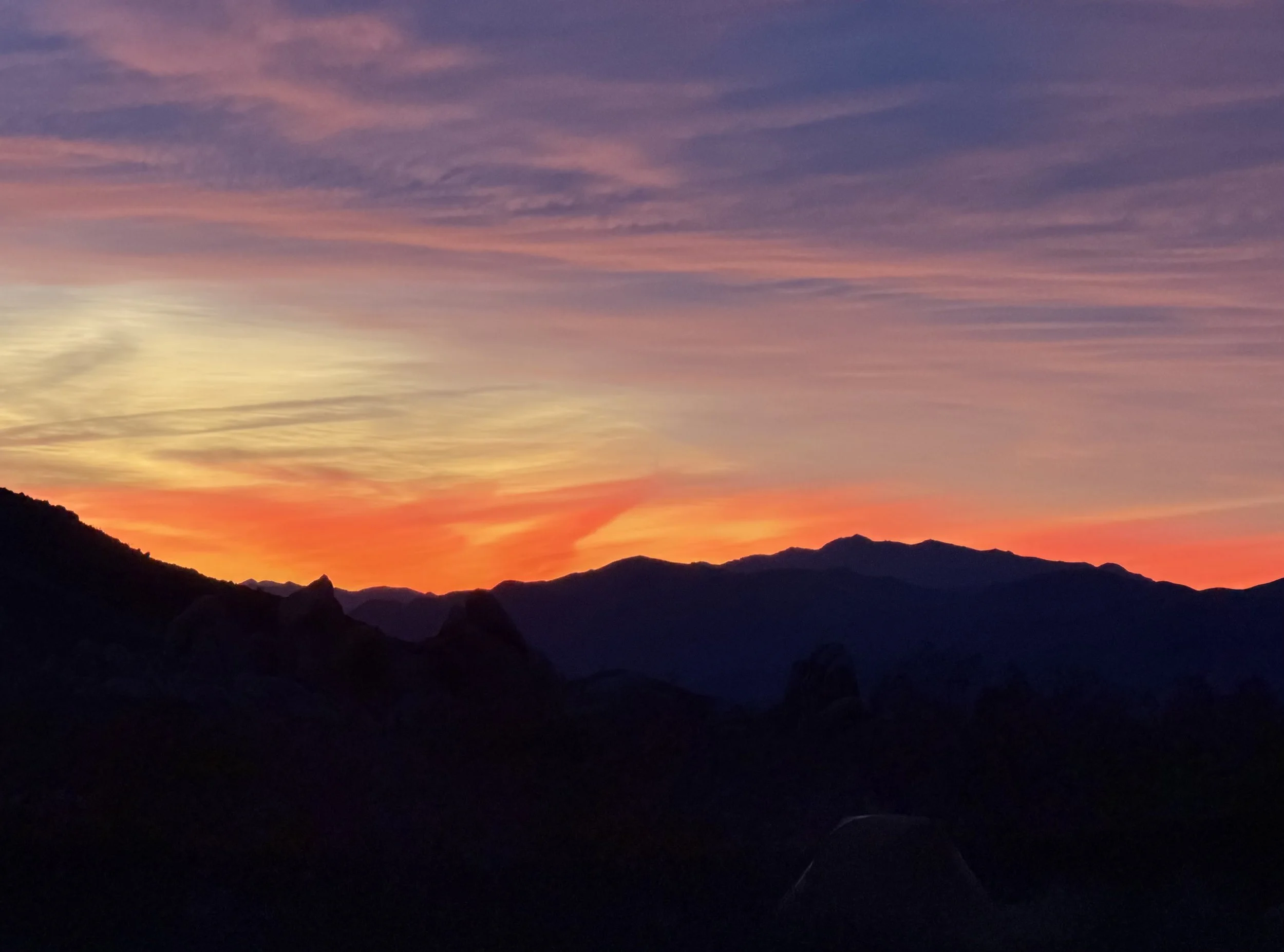
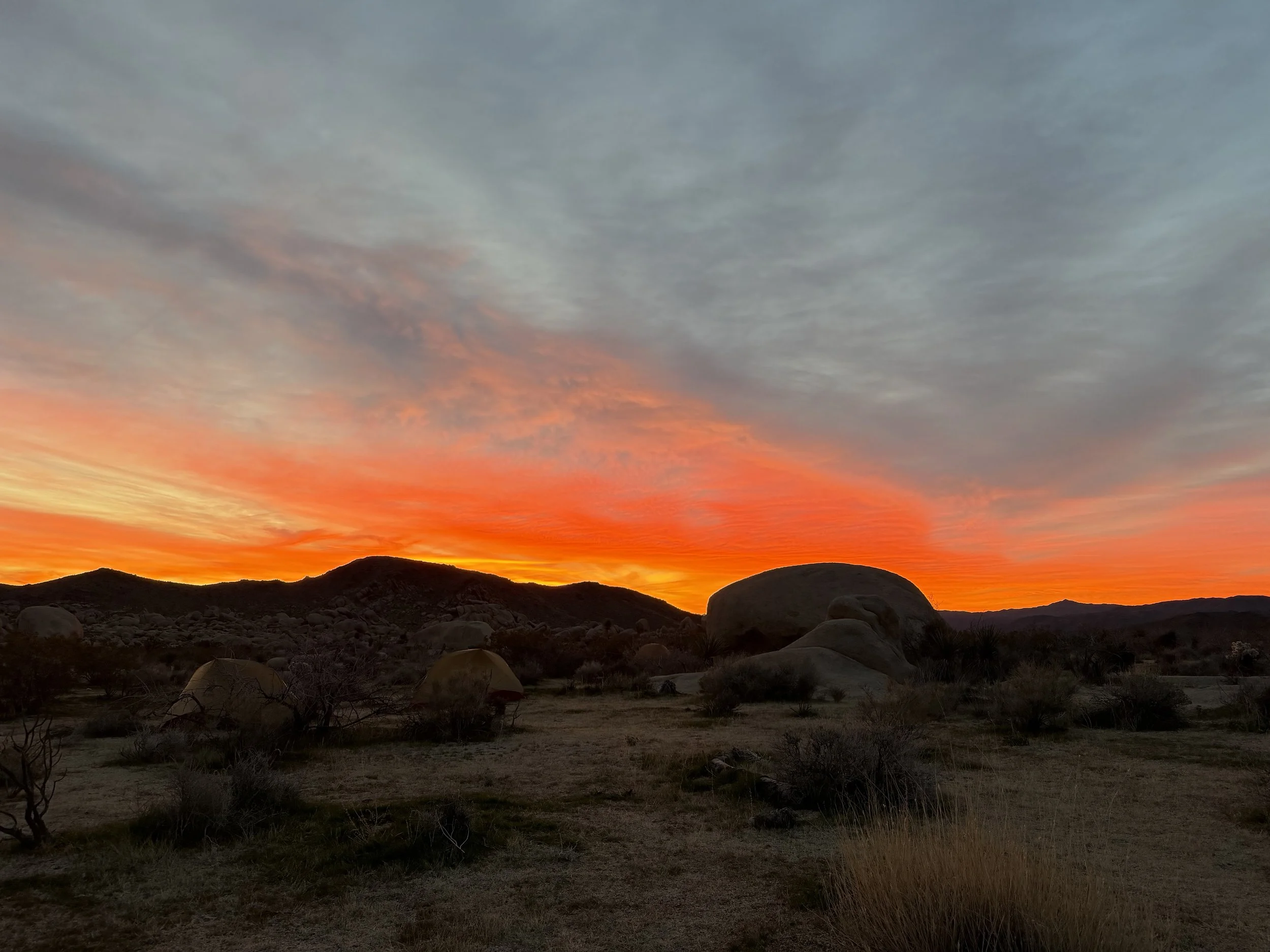
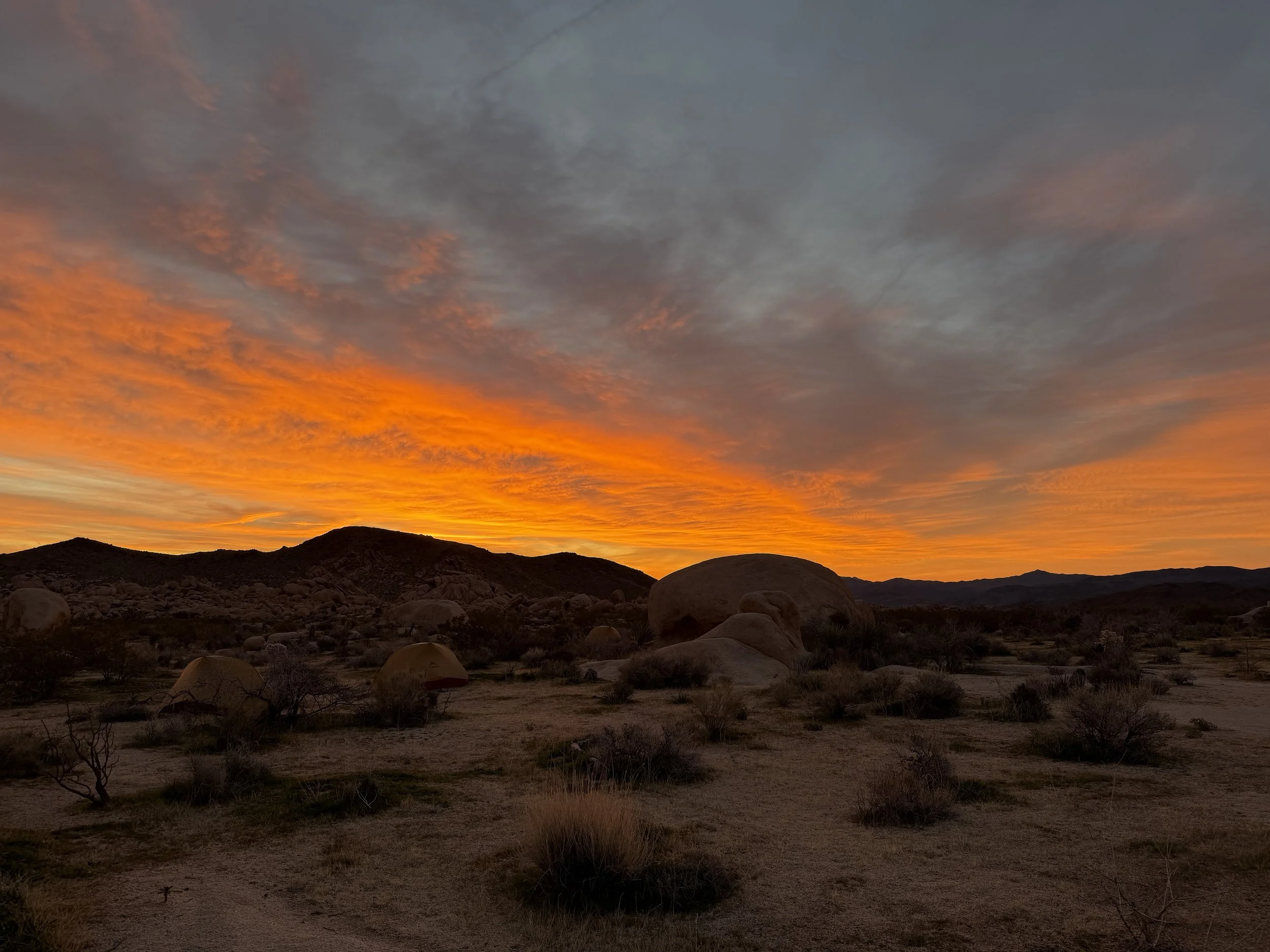
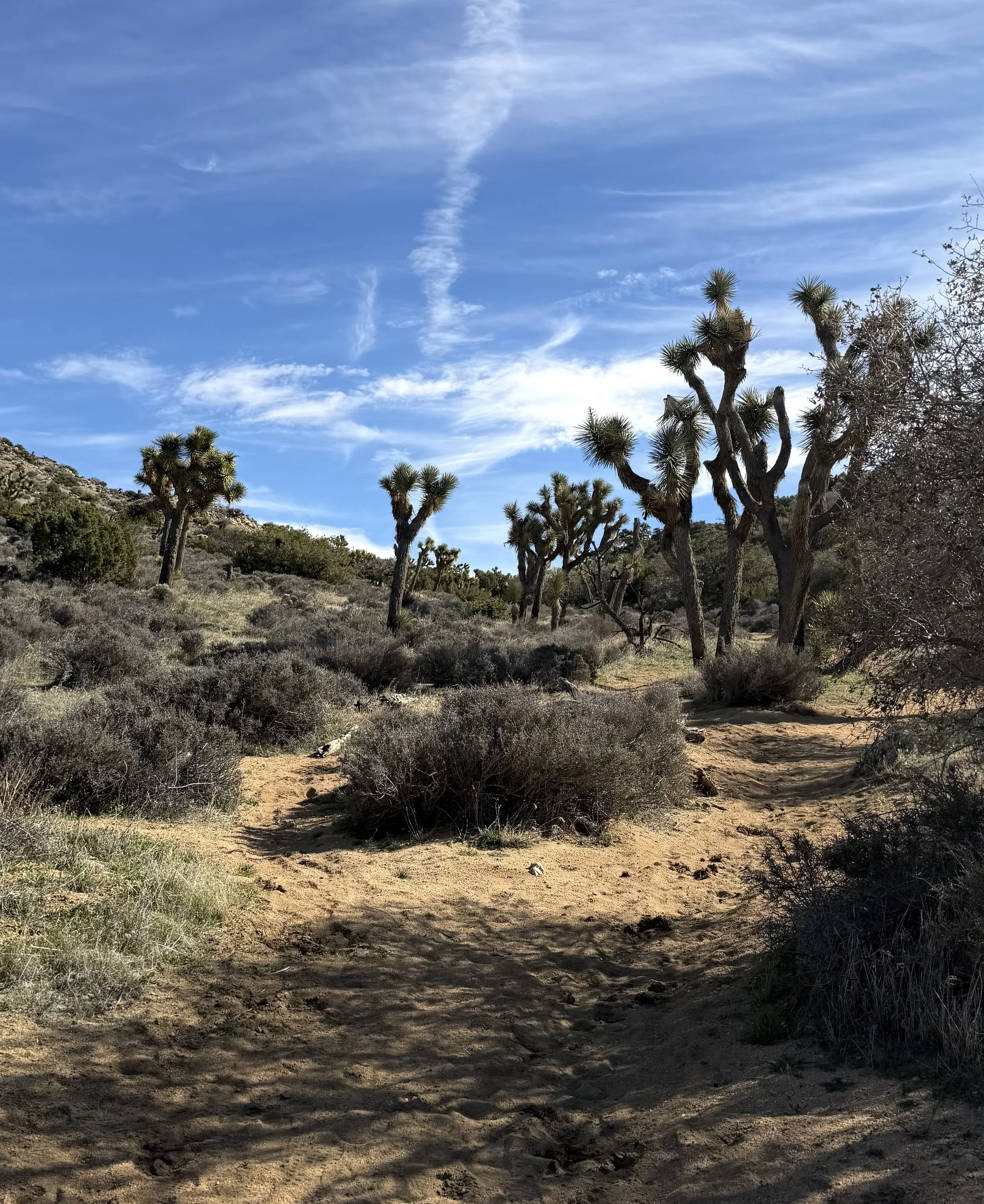
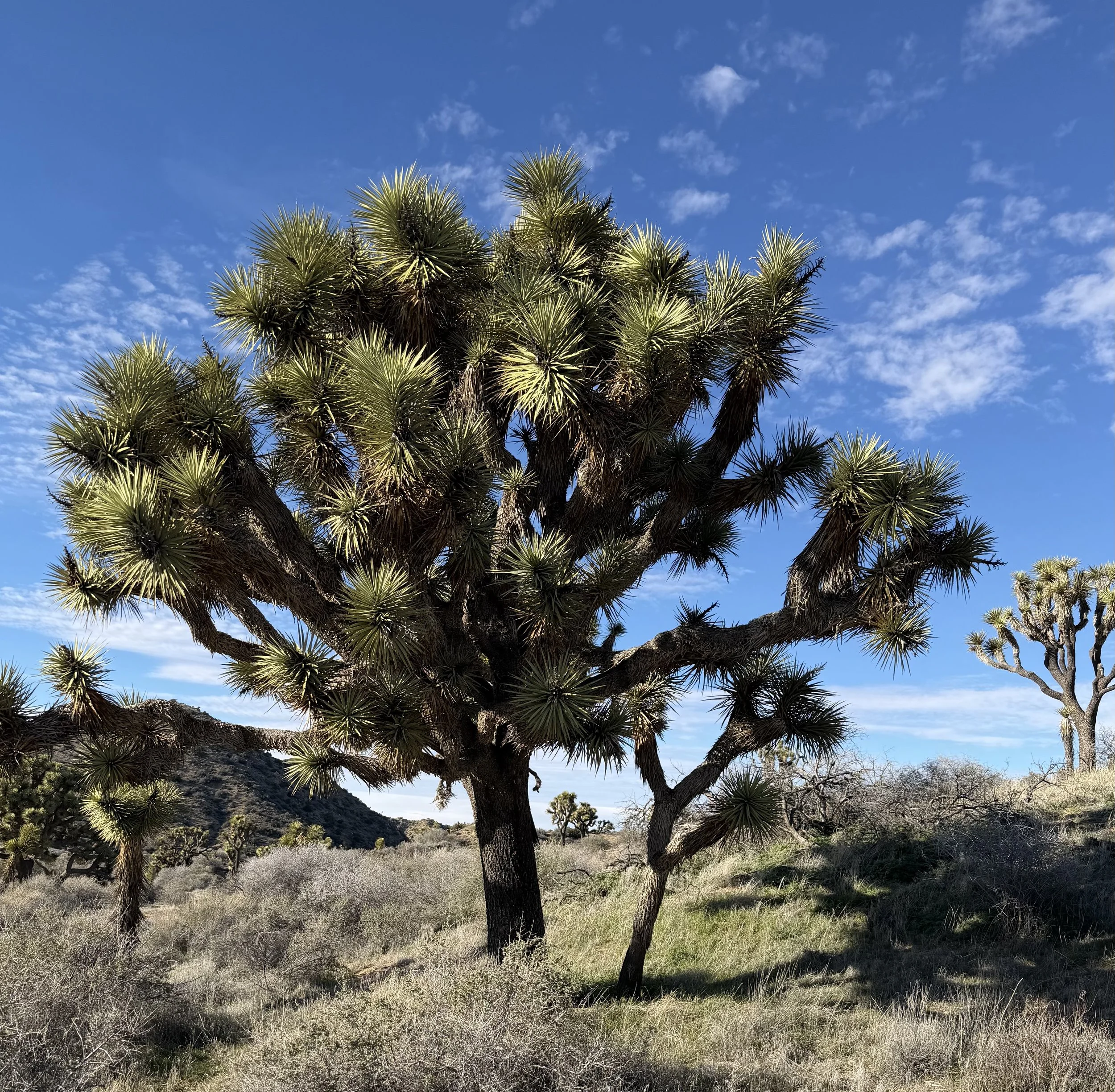
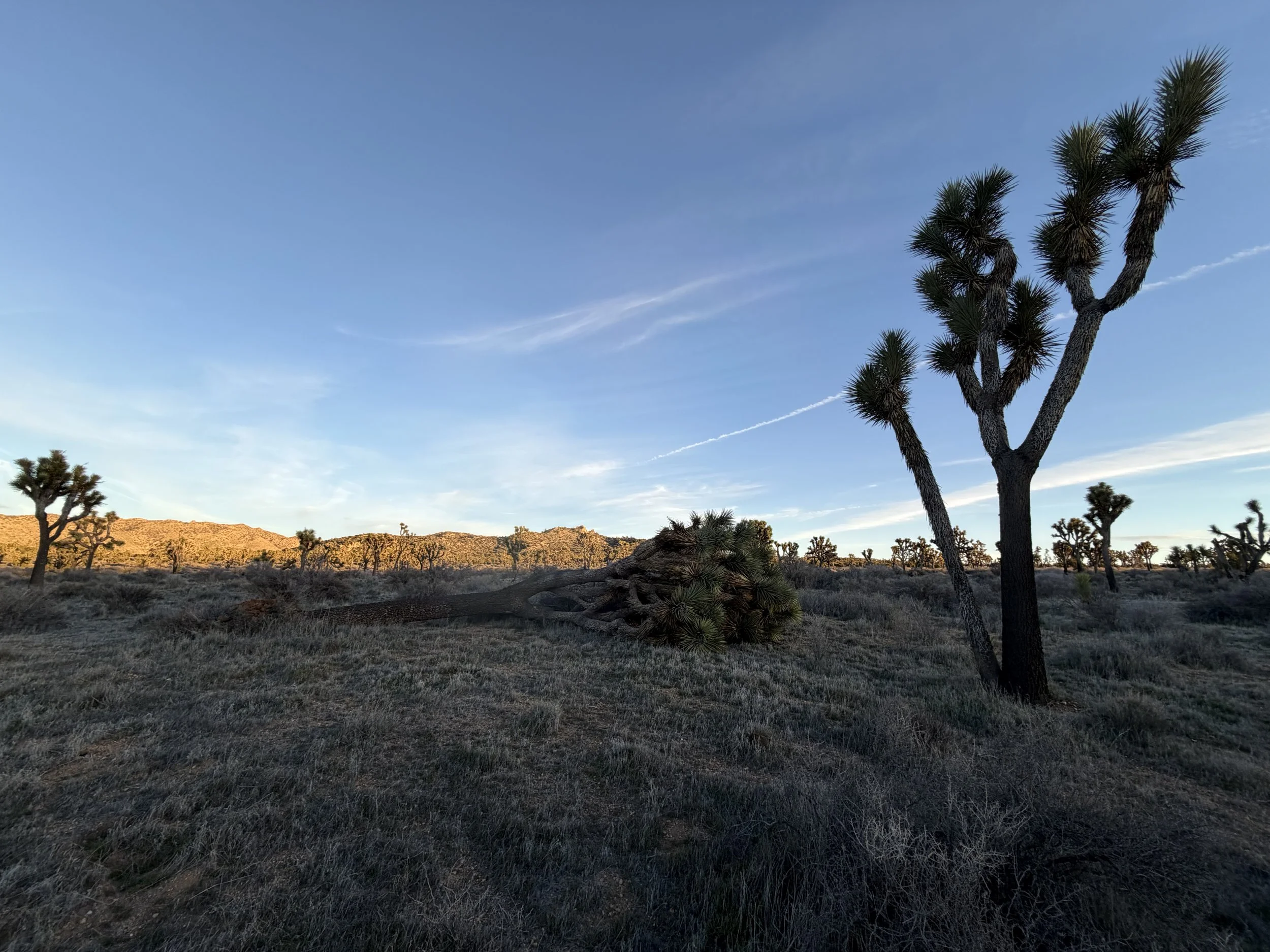
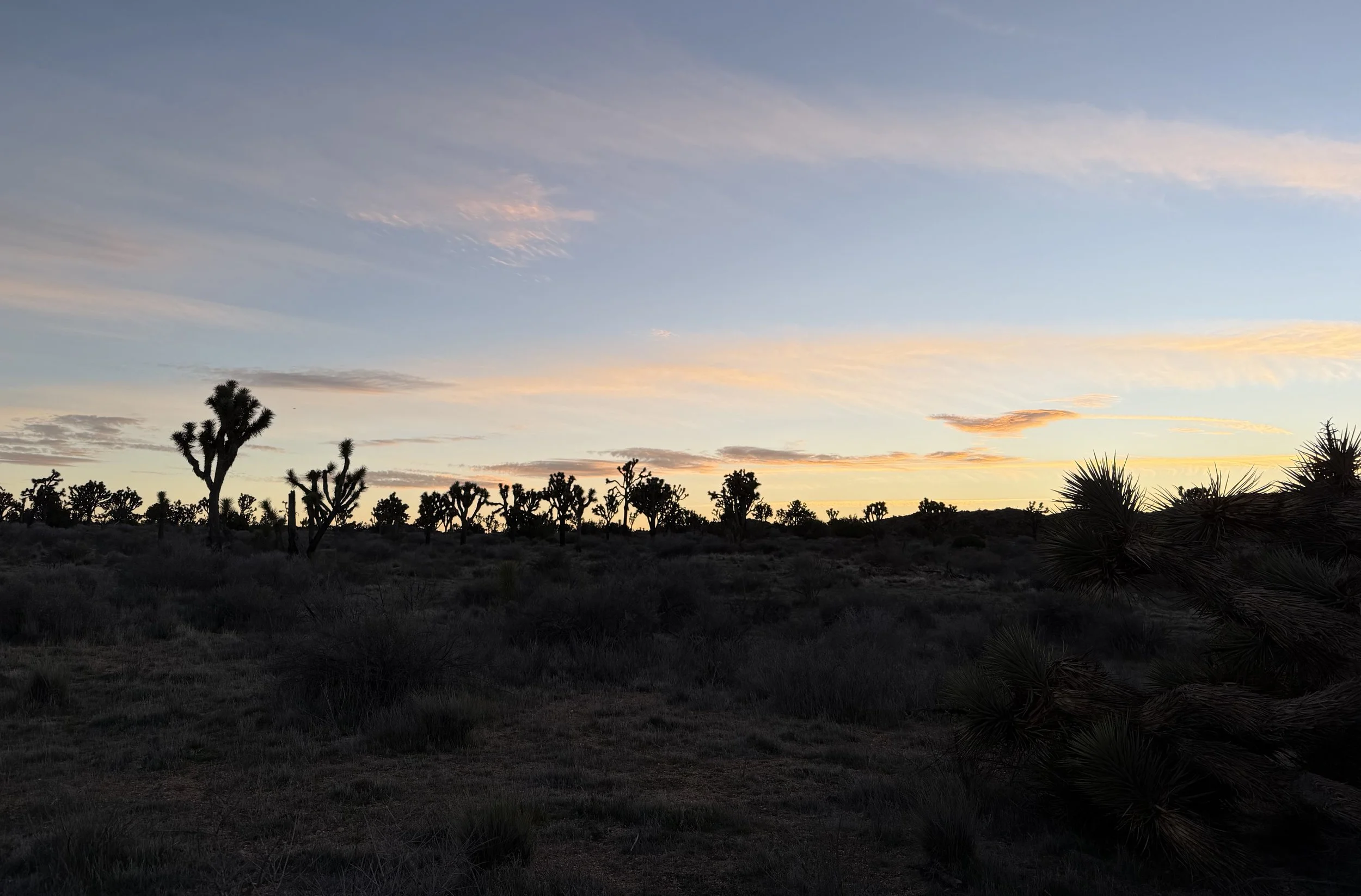
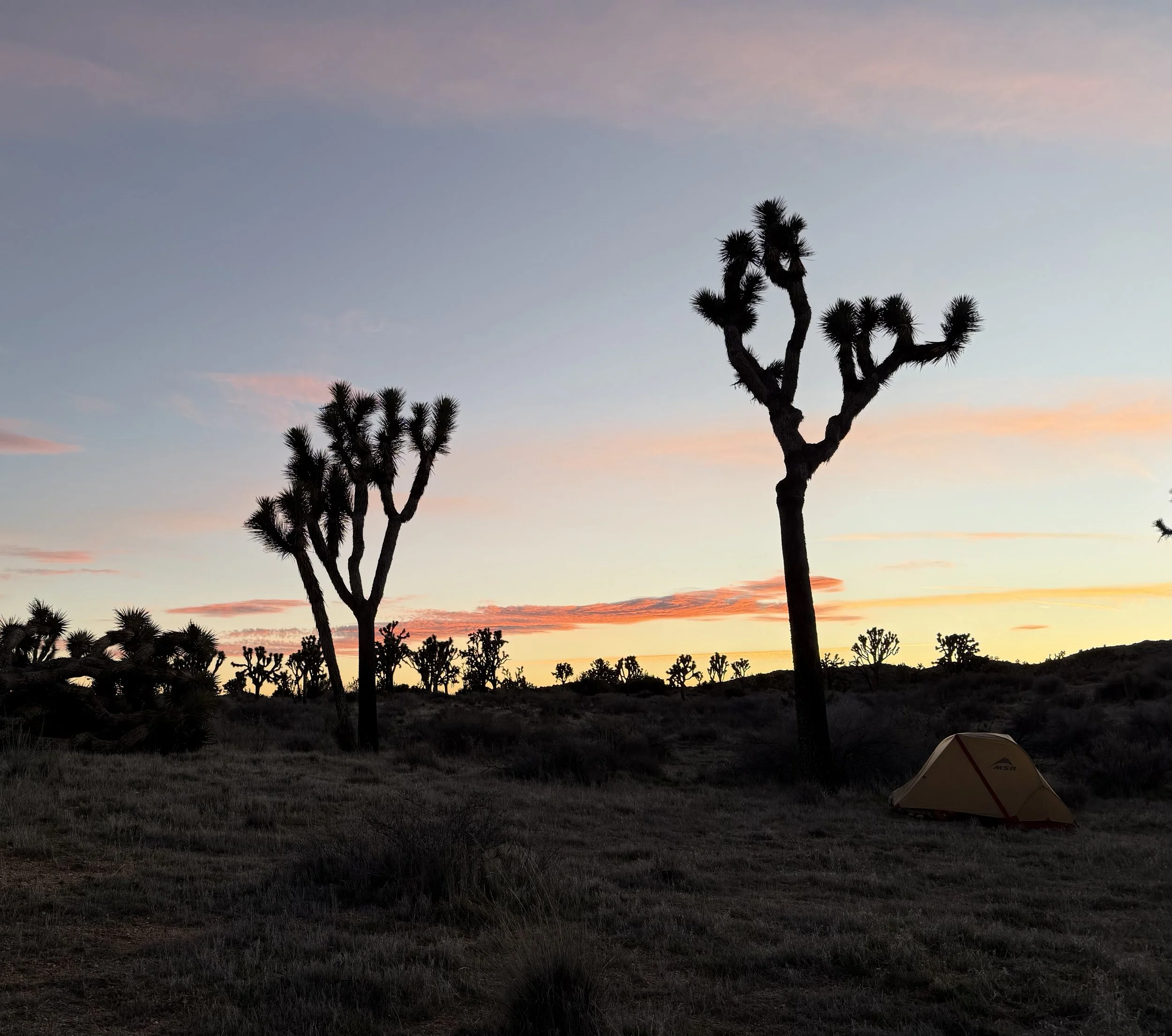
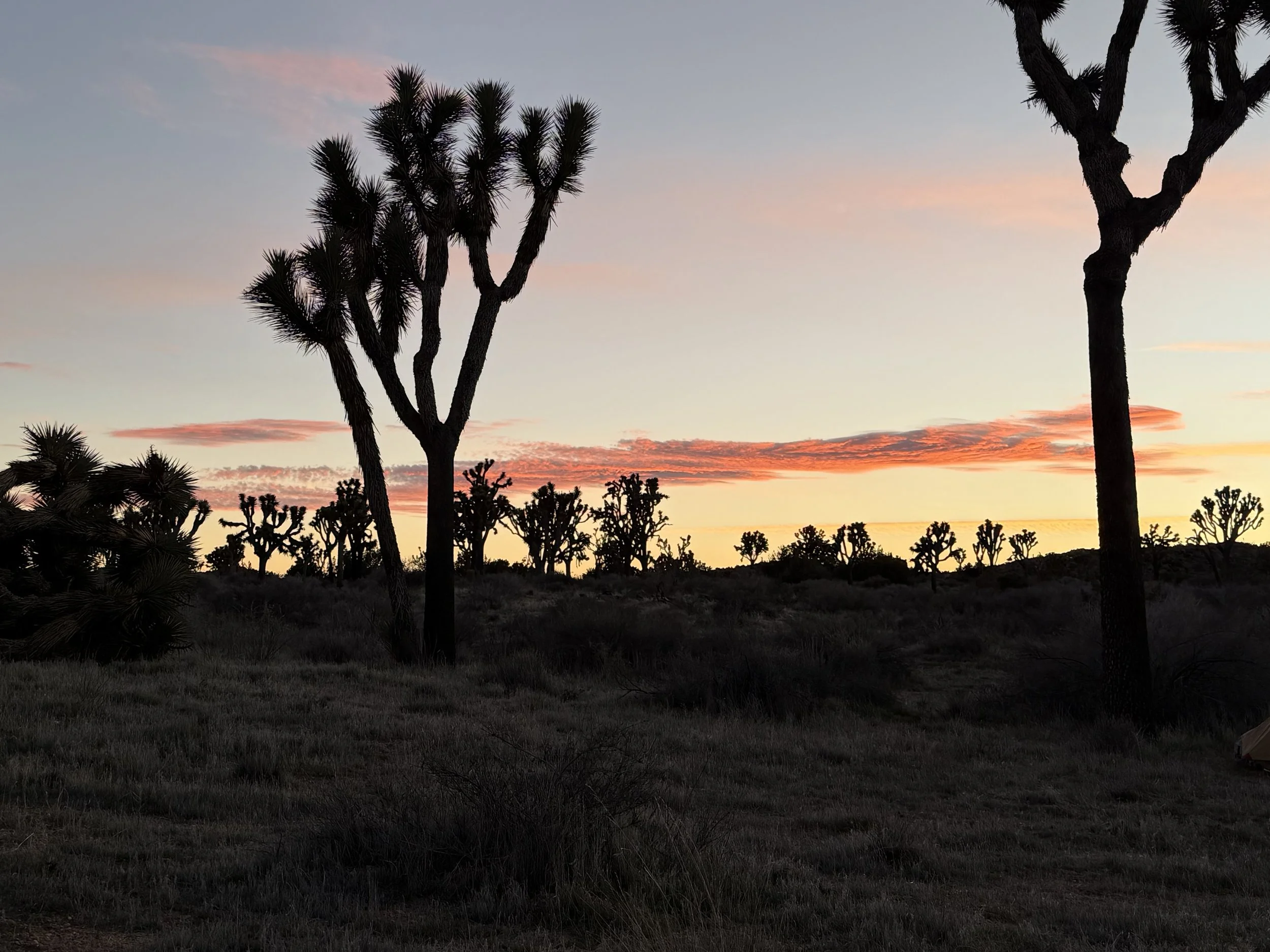
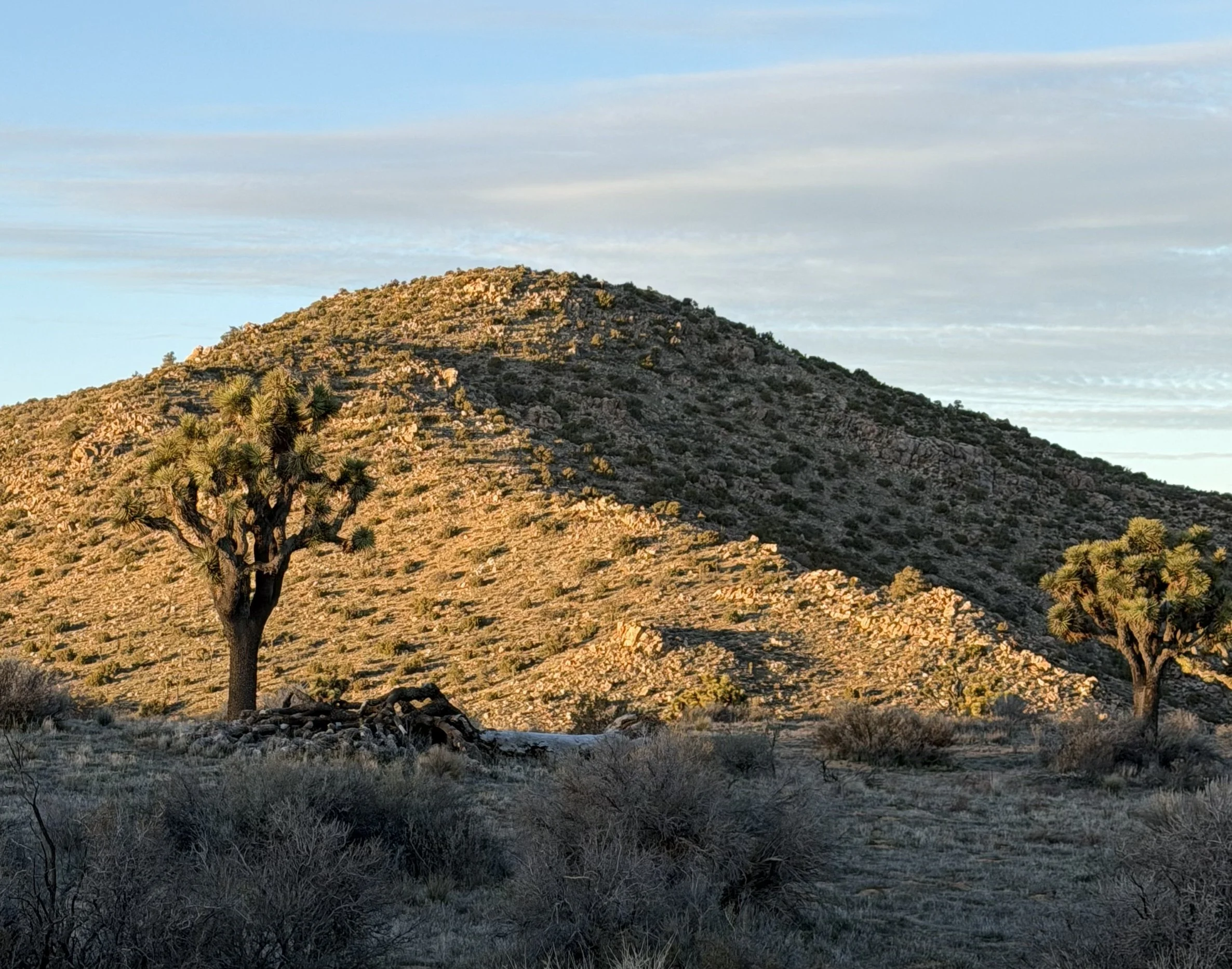
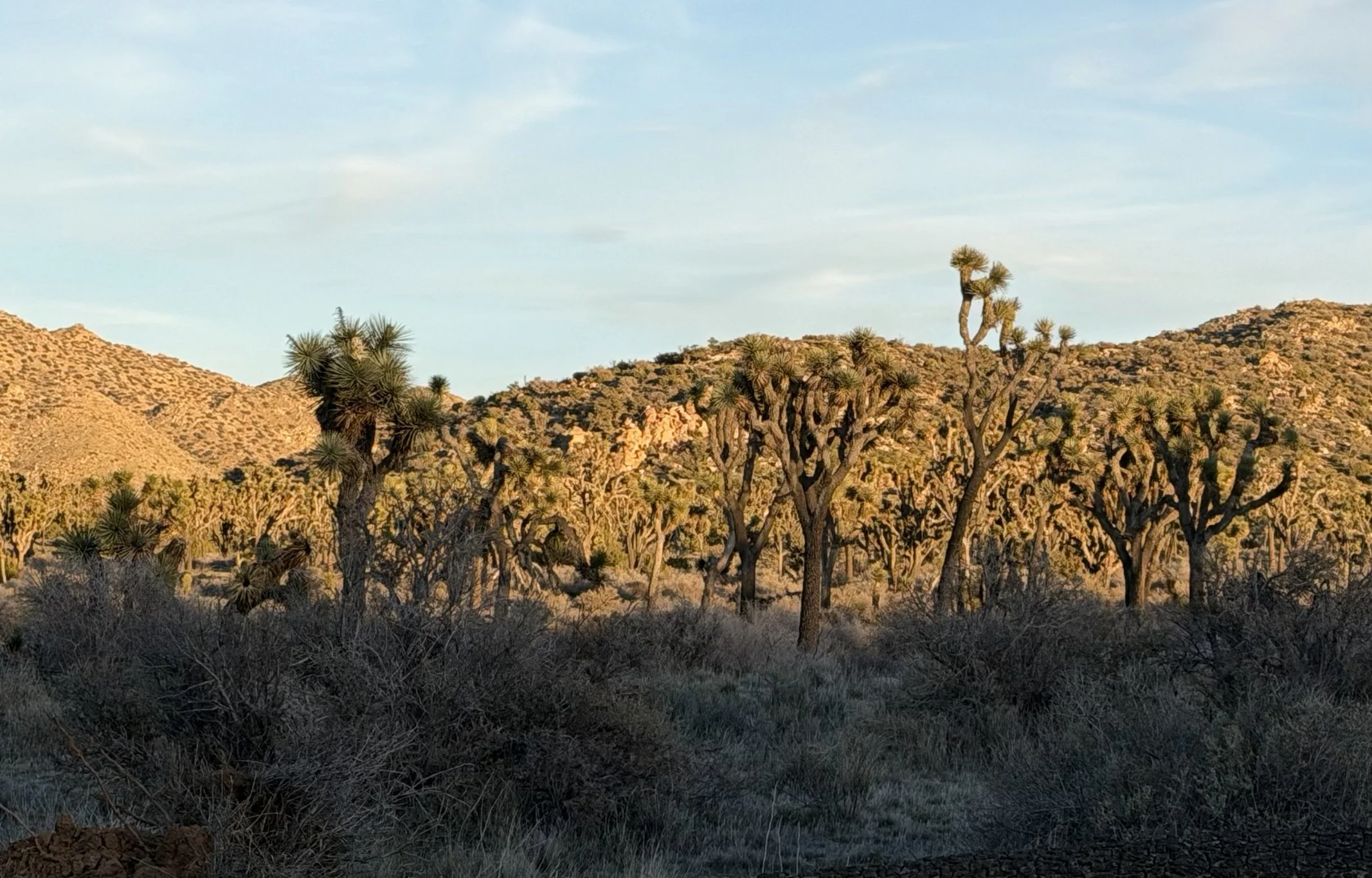
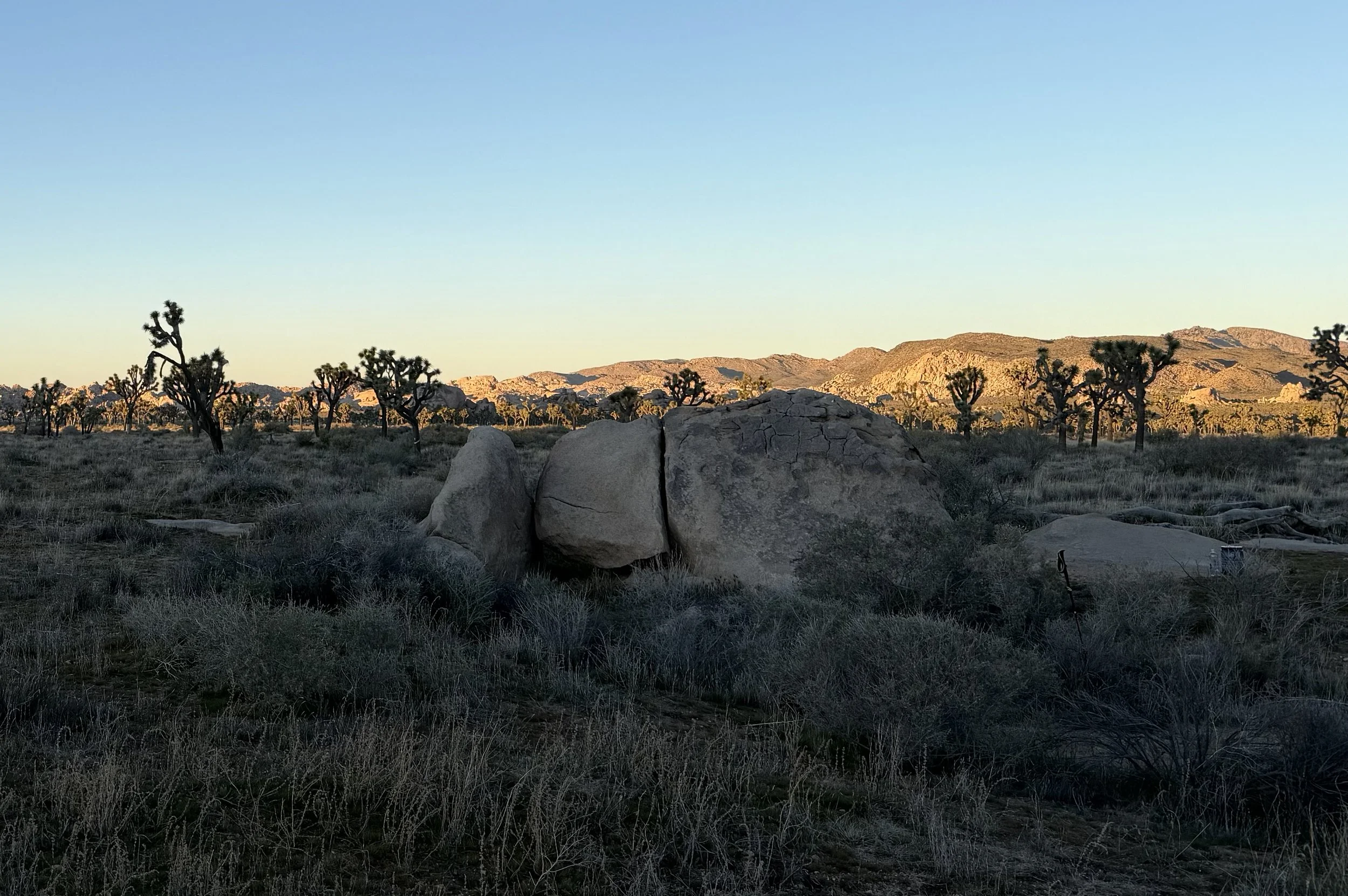
I have seen pictures of Joshua Trees, and maybe noticed them landscaped in the front of homes in California, but had never been in the place where they are native. I had never seen a “forest” of Joshua trees, and the first day being amongst the trees felt other-worldly.
One of my favorite poems by Mary Oliver is “When I am Among the Trees.” She writes about how the trees save her and daily through their presence and stoic witness. She writes about experiencing wisdom through the ways that light “flows through their branches.” There have been times that I have found myself hiking through the Northeast forests on a sunny day and witnessed the light shining through the branches of the trees, dancing as the wind would move and shake them. I have experienced the dense forests of elms and beech and oaks and how the various stands of trees were a true community. This is not what I found that first day and evening in Joshua Tree. The trees were sparse, spread apart. The branches were piney and stiff. There were not the soft leaves that I was accustomed to. I did not know how I would find myself amongst this forest and what kind of wisdom I would gain from these trees. I felt separate, foreign, a stranger in a strange land.
The next day I shared with the other participants what I had learned about the indigenous peoples who had lived on that land. I learned about the Yuhaaviatam/Maarenga’yam (Serrano) nations who were previously called the San Manuel Band of Mission Indians. They were known as the people of the pines. I shared the history decimation by European diseases and military, of conscription into the San Gabriel Mission to provide slave labor, and of the California State government attack and massacre on the people in Big Bear Valley. We paused and carefully held onto the trauma of this history that is a part of the story of the land.
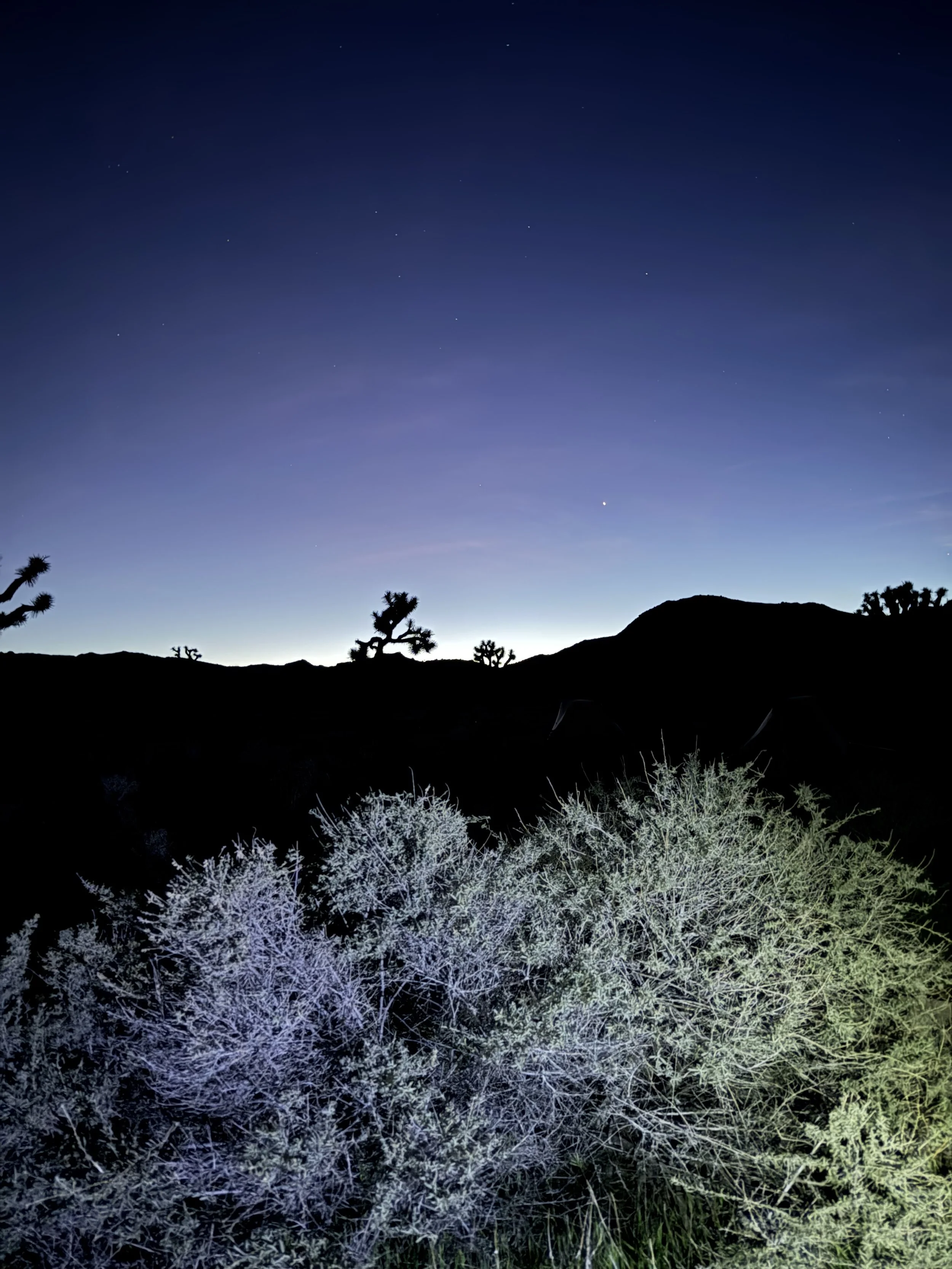
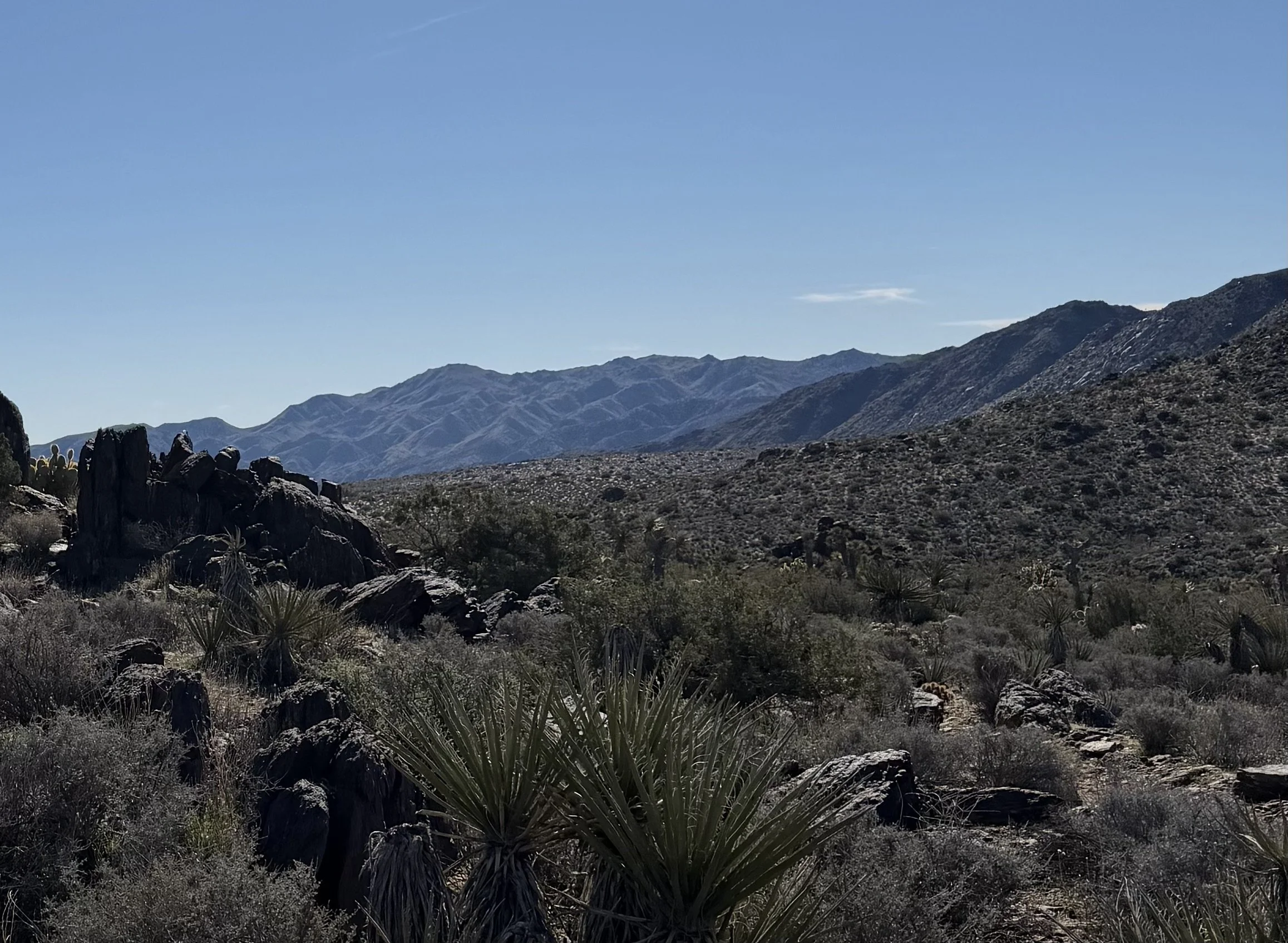
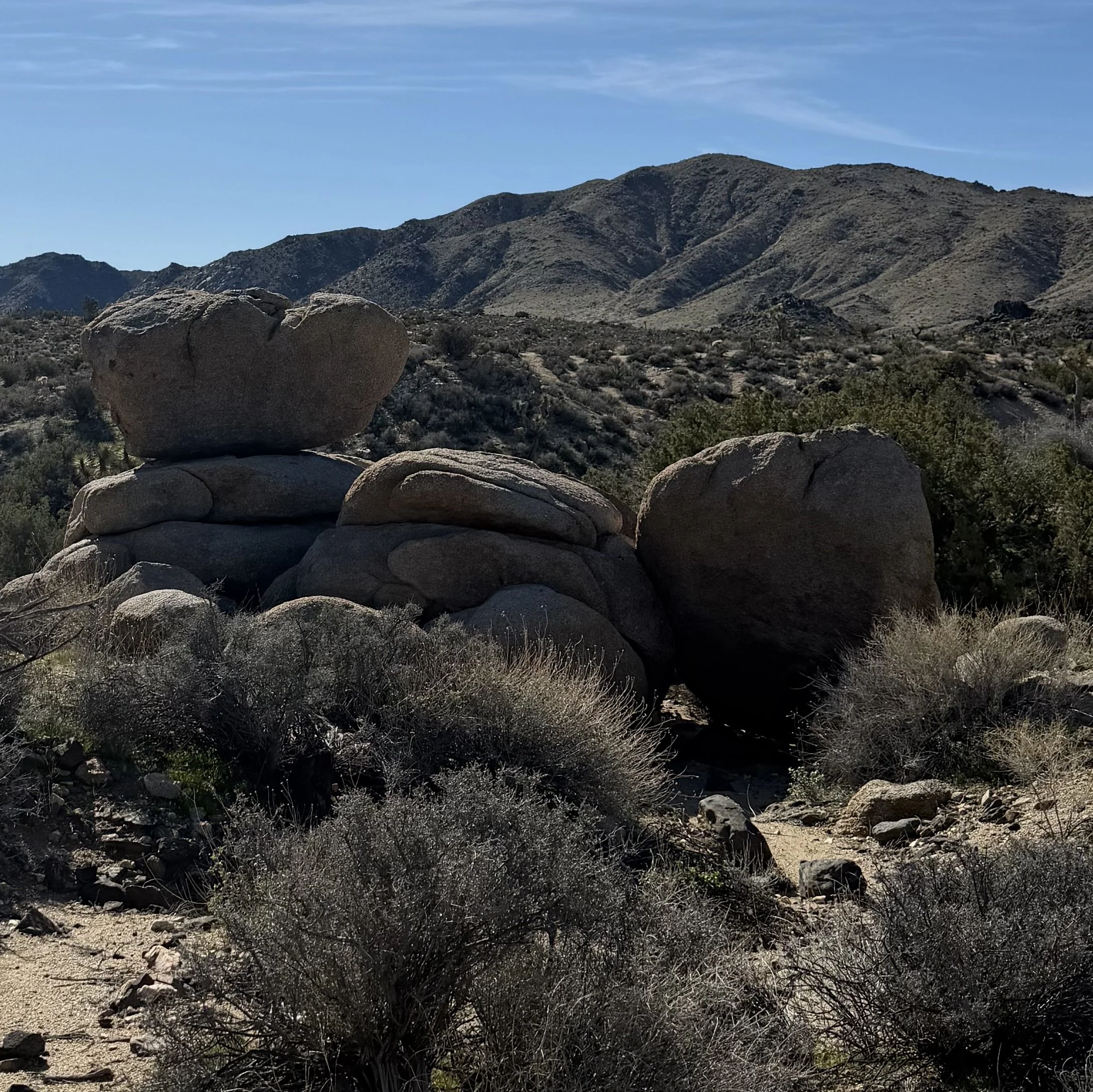
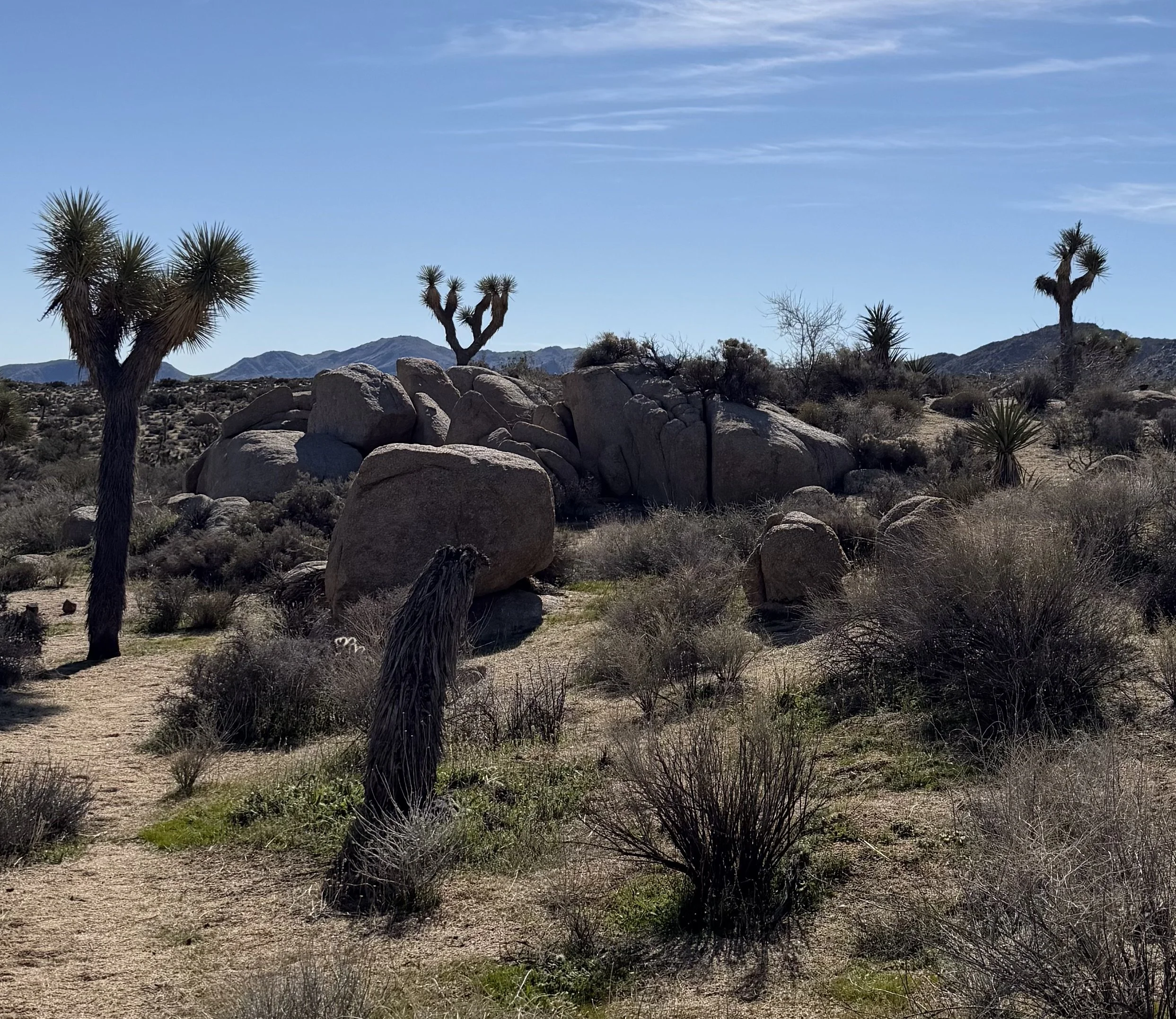
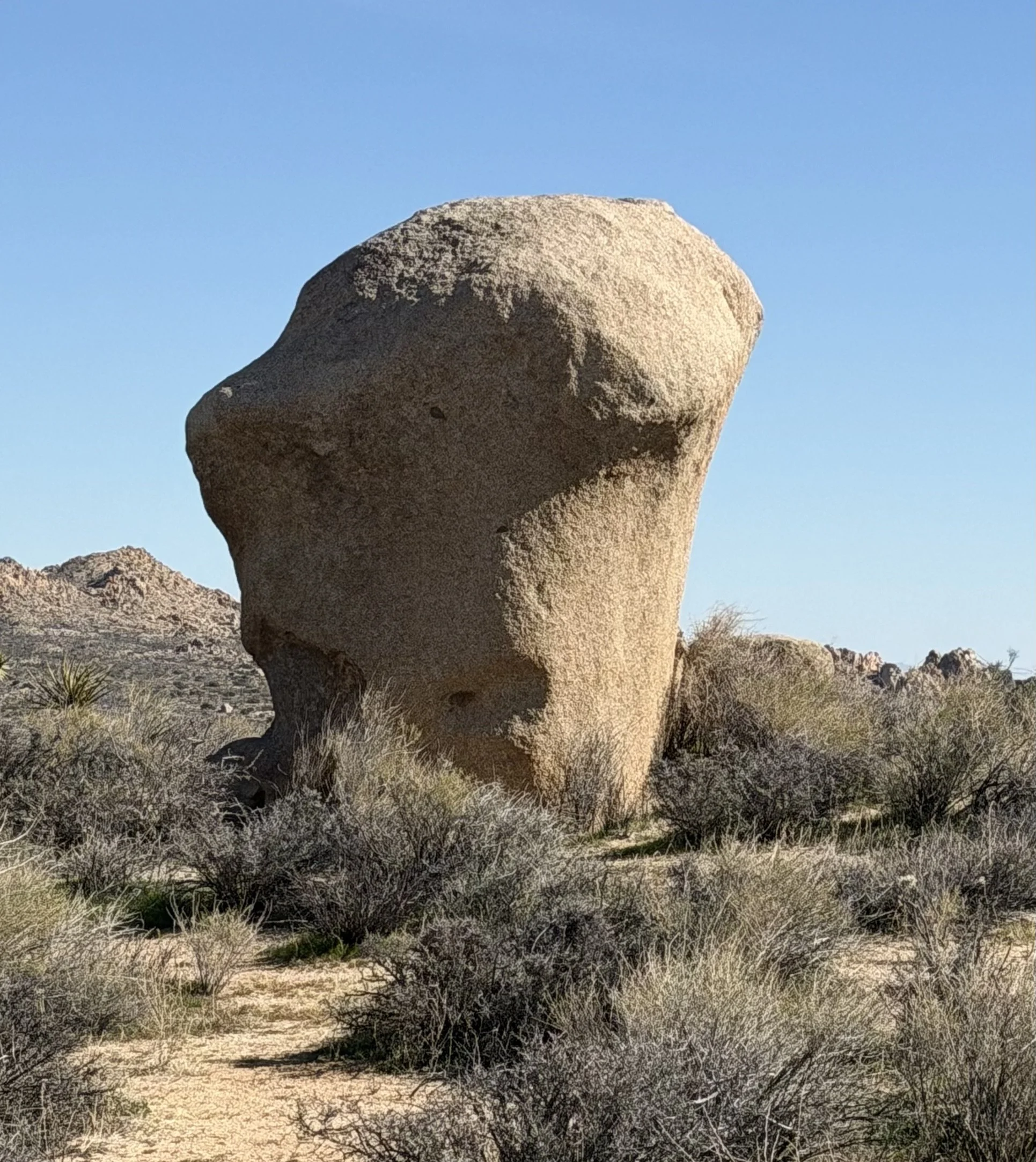
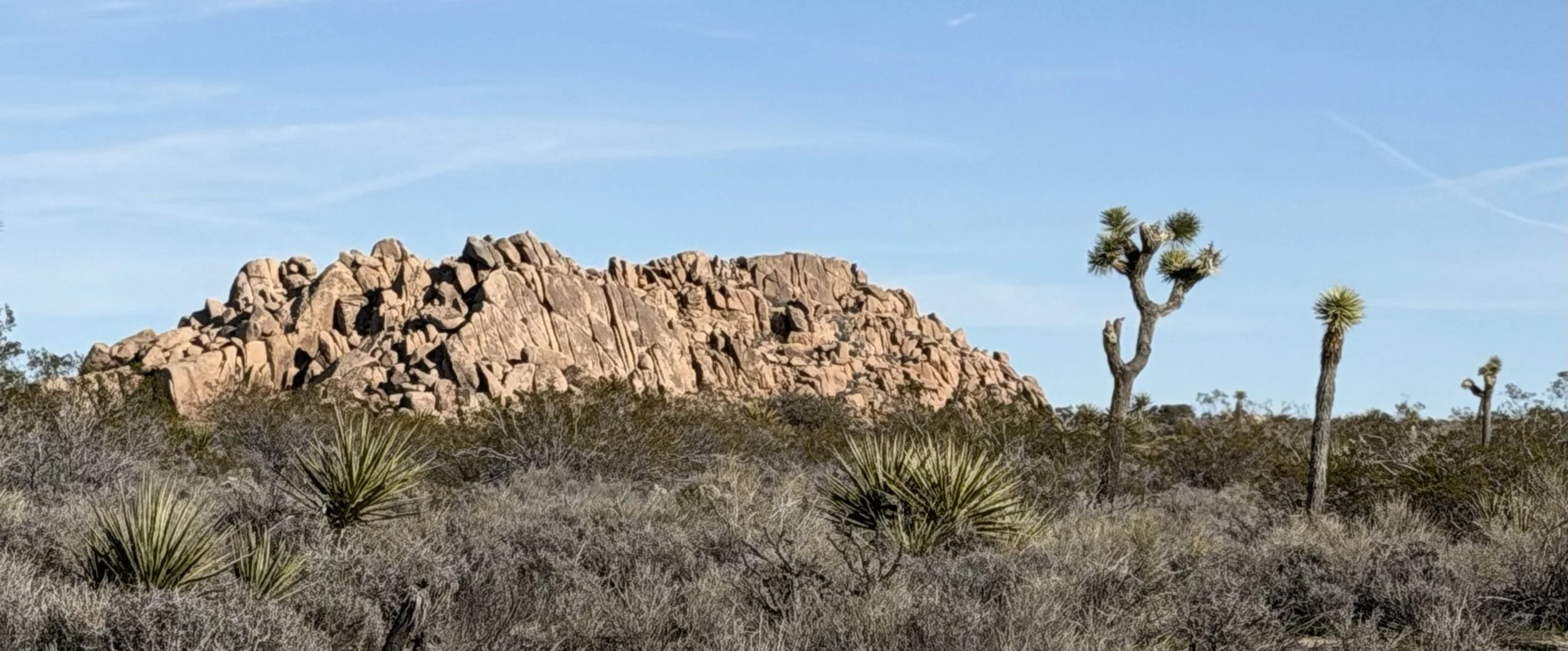
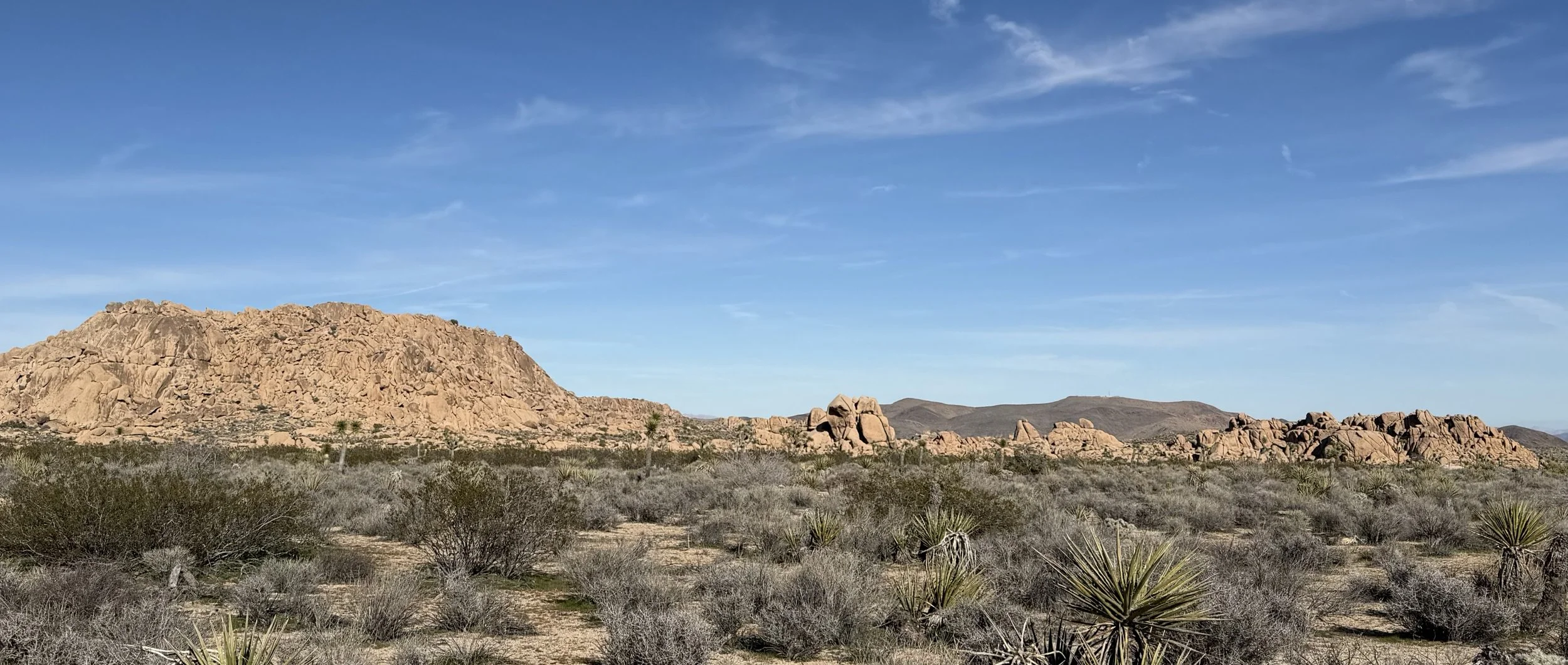
I then shared about the Yuhaaviatam/Maarenga’yam creation story where Kuktac, the creator lay dying and the people mourned. The people expressed their grief for their creator, and that grief turned into pine trees. The grief of the people enriched the land with vegetation that offered habitat for the animals and life in the dry land. We paused and held onto this creation story of hope out of grief.
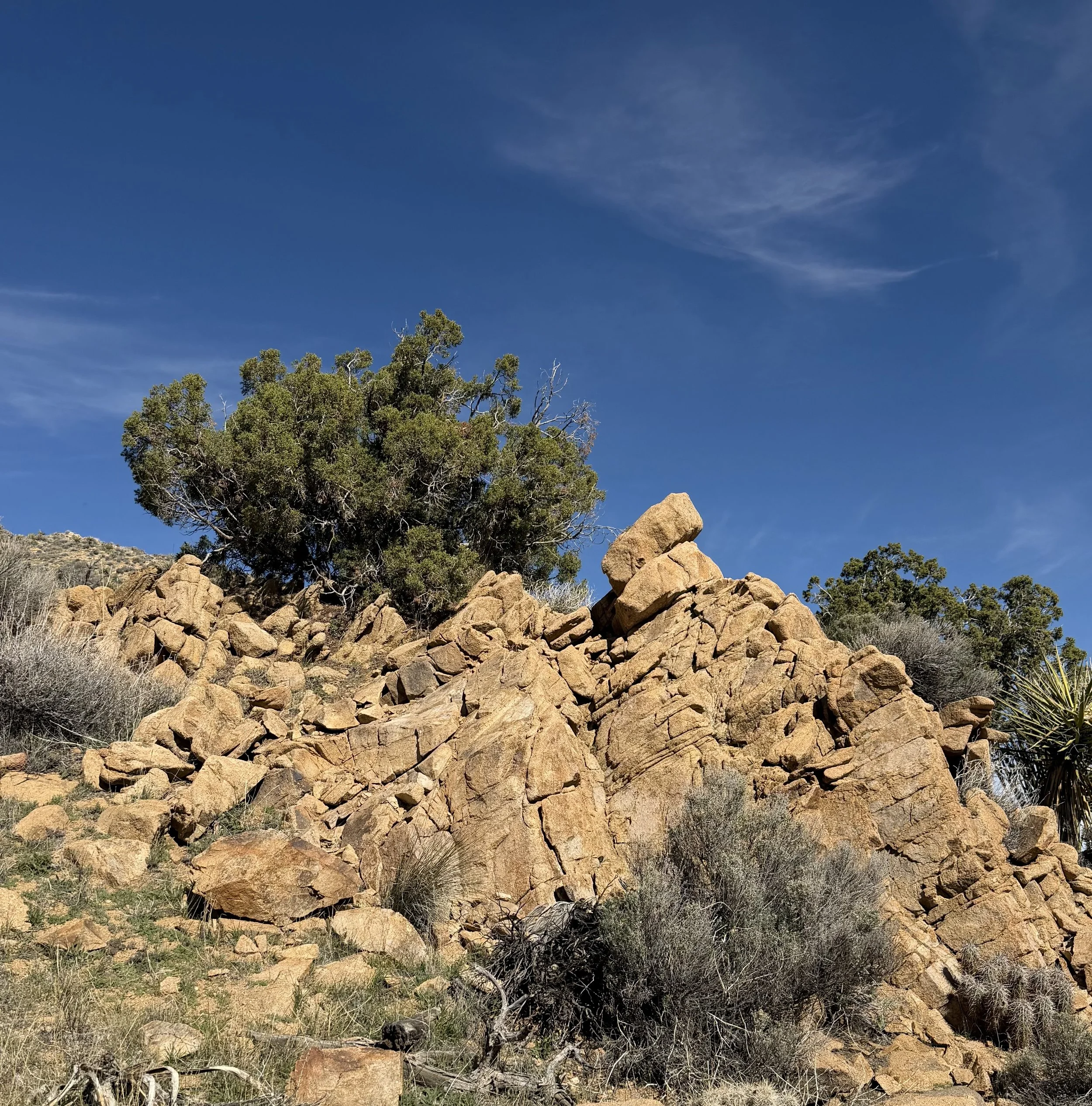
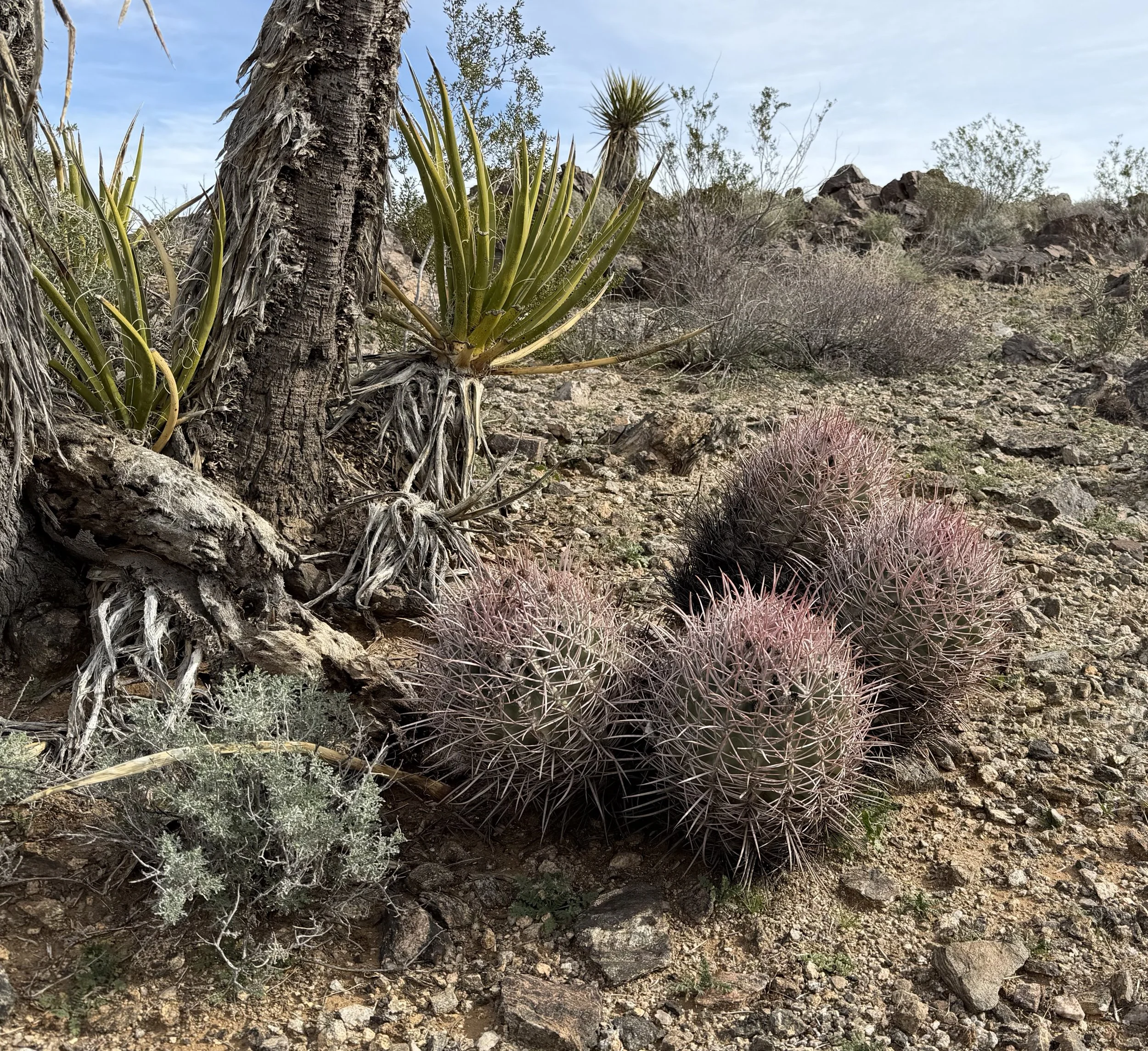
There were some pinyon pines as well as juniper bushes around us, and their presence compelled made me reflect more on that grief. I wanted to take inspiration from this creation story. For the second day of our trek, I decided that when I noticed a Joshua Tree I would name a grief that I carried. I would name that grief, hold onto it, and then I would consider the life, the fruit, the hope that emerged from the loss.
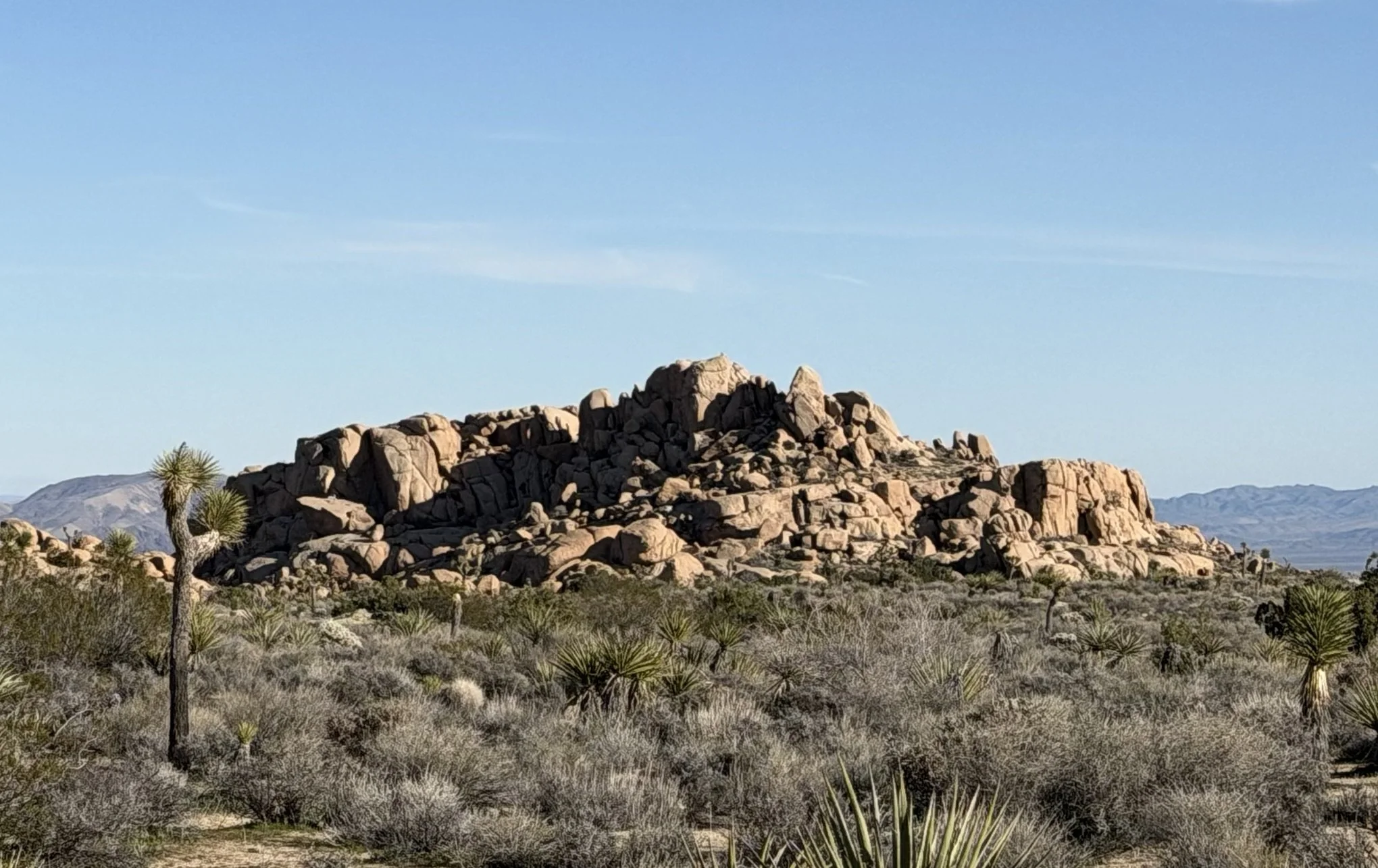
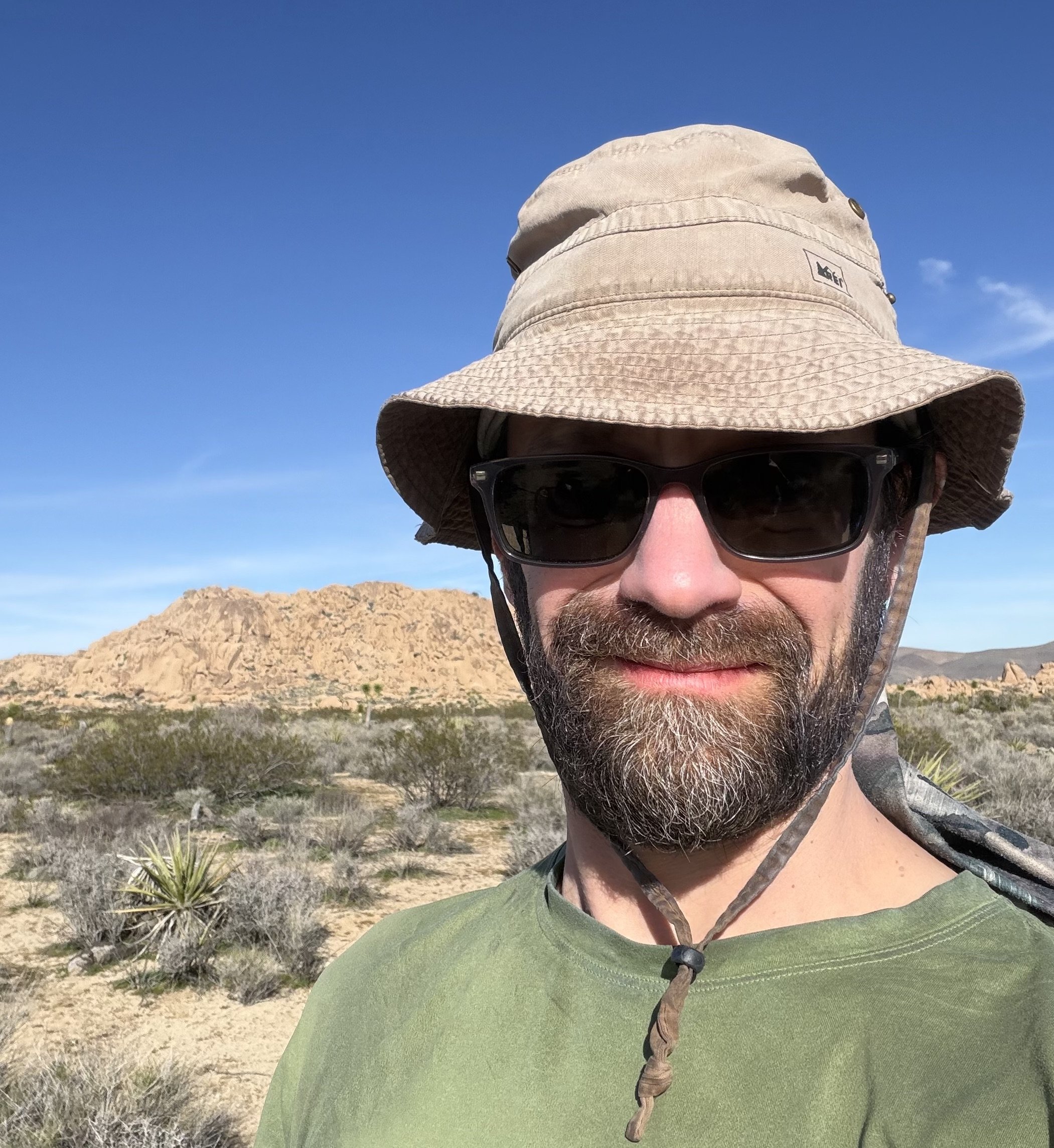
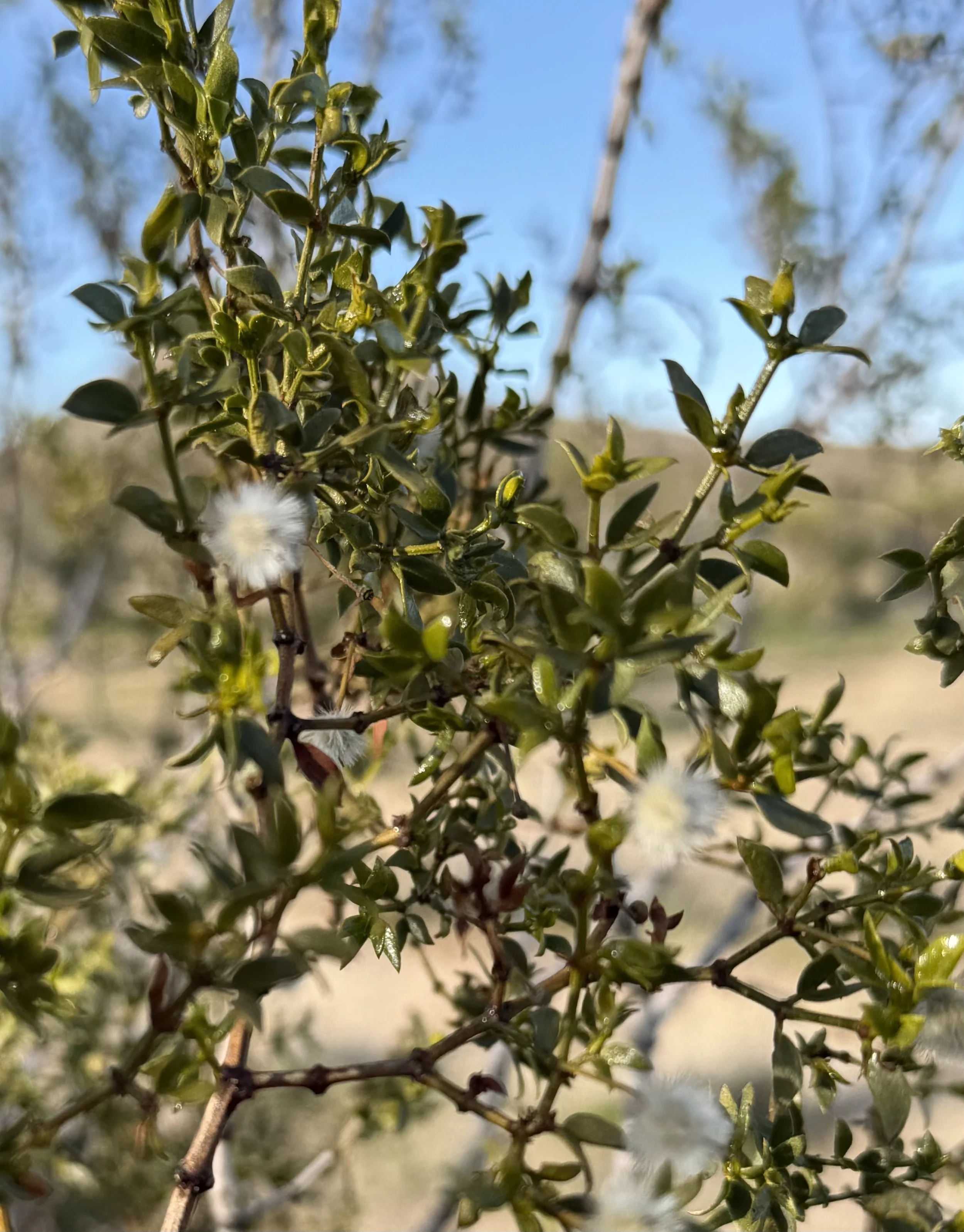
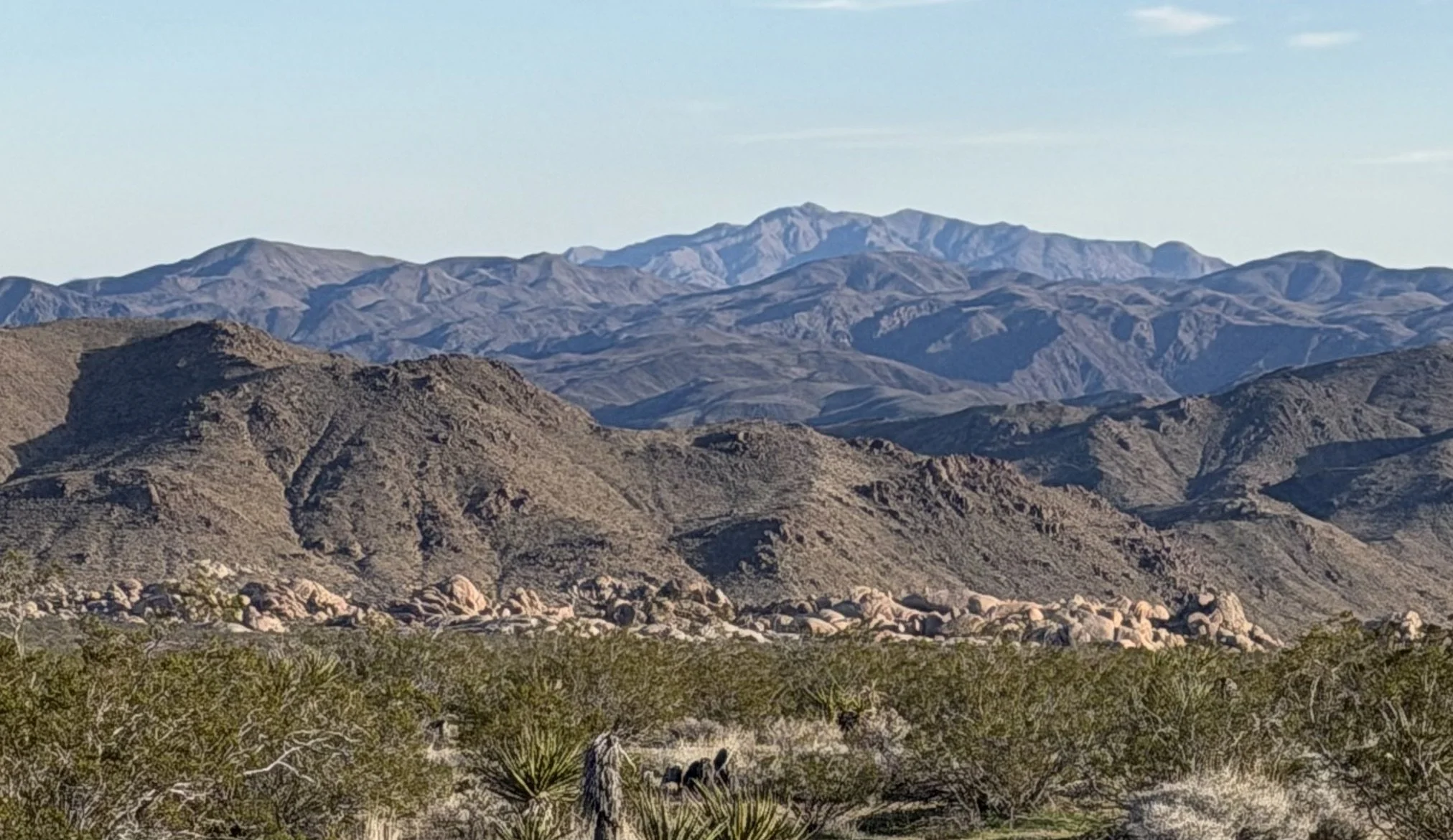
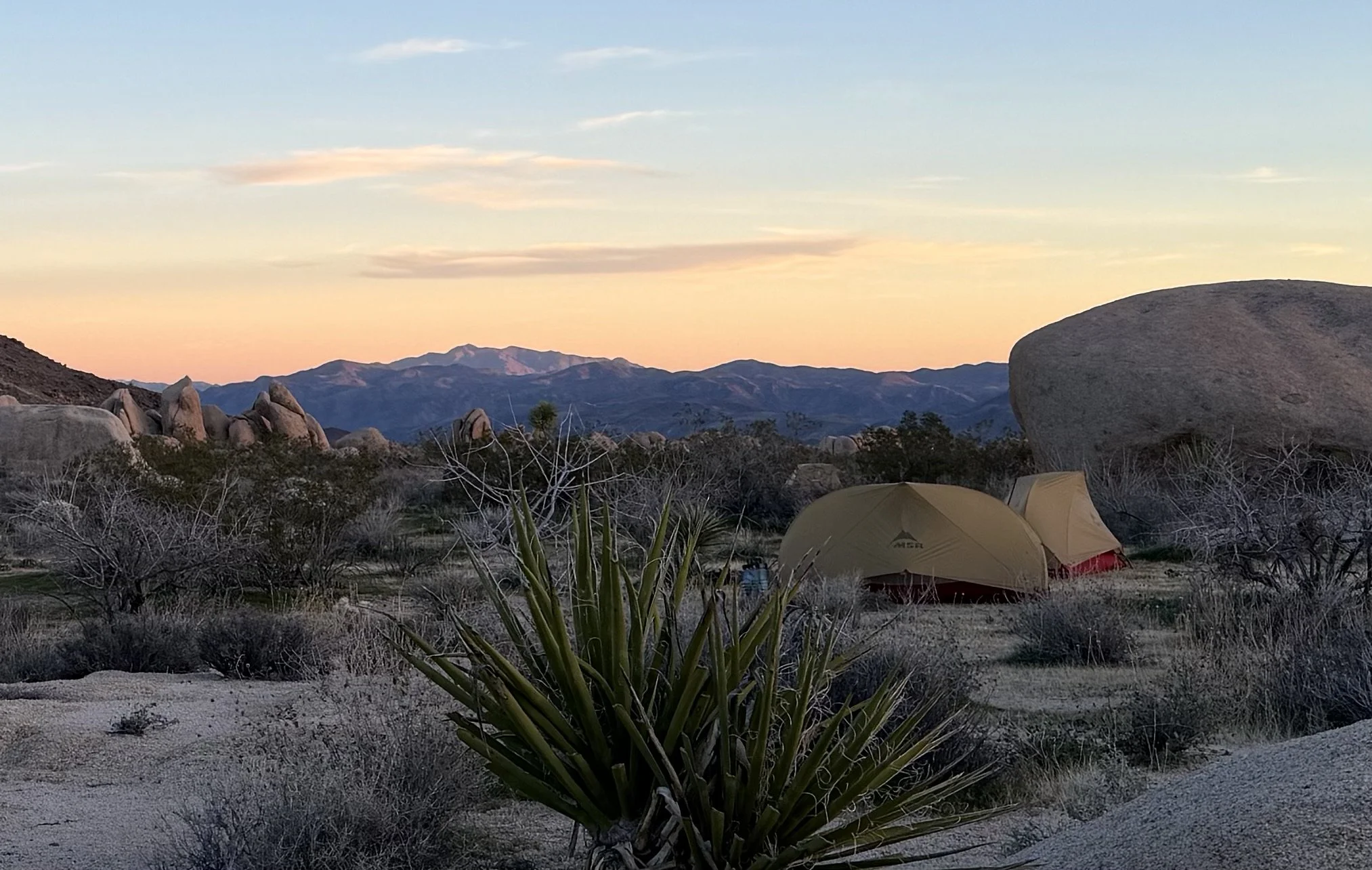
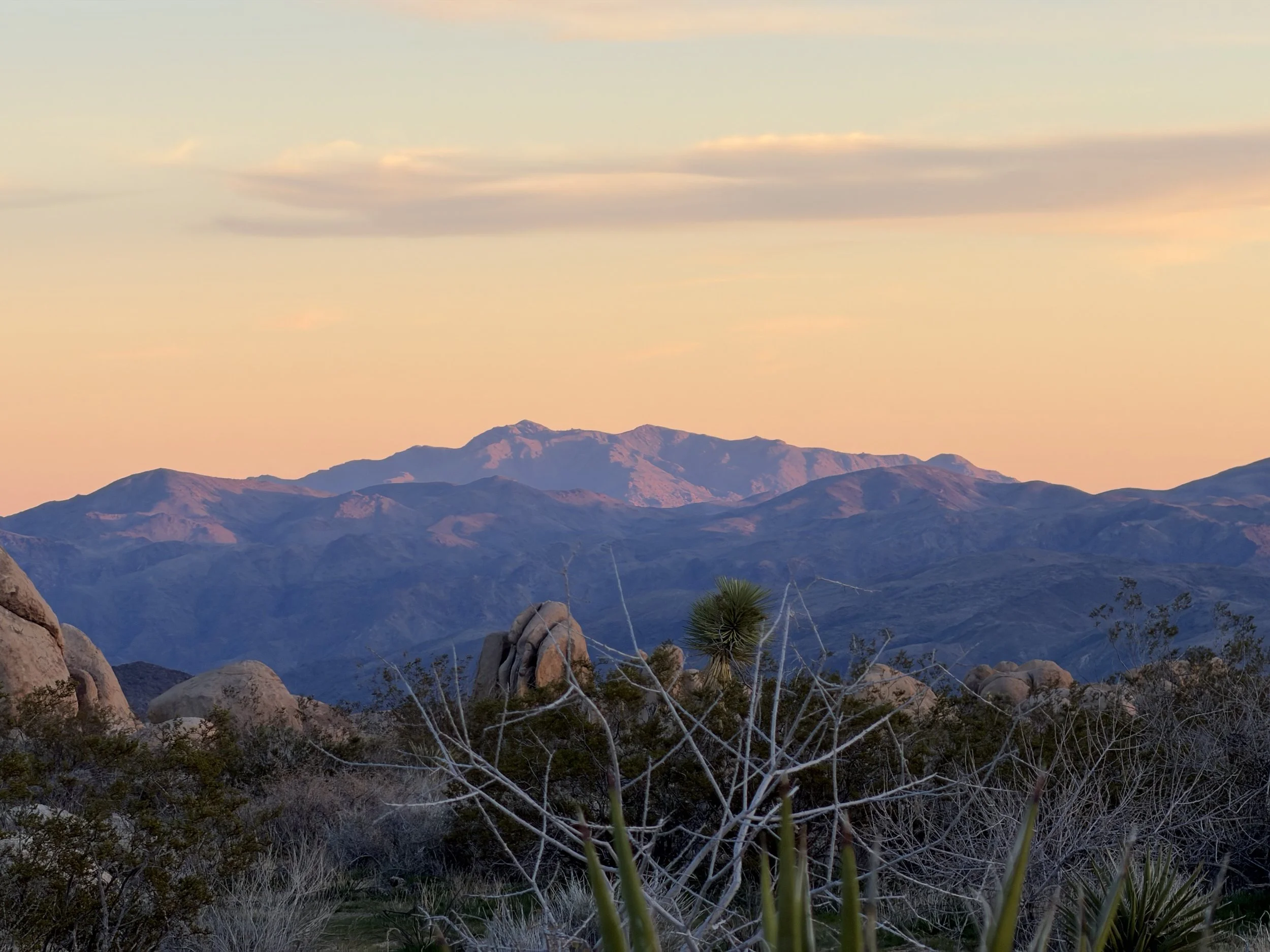
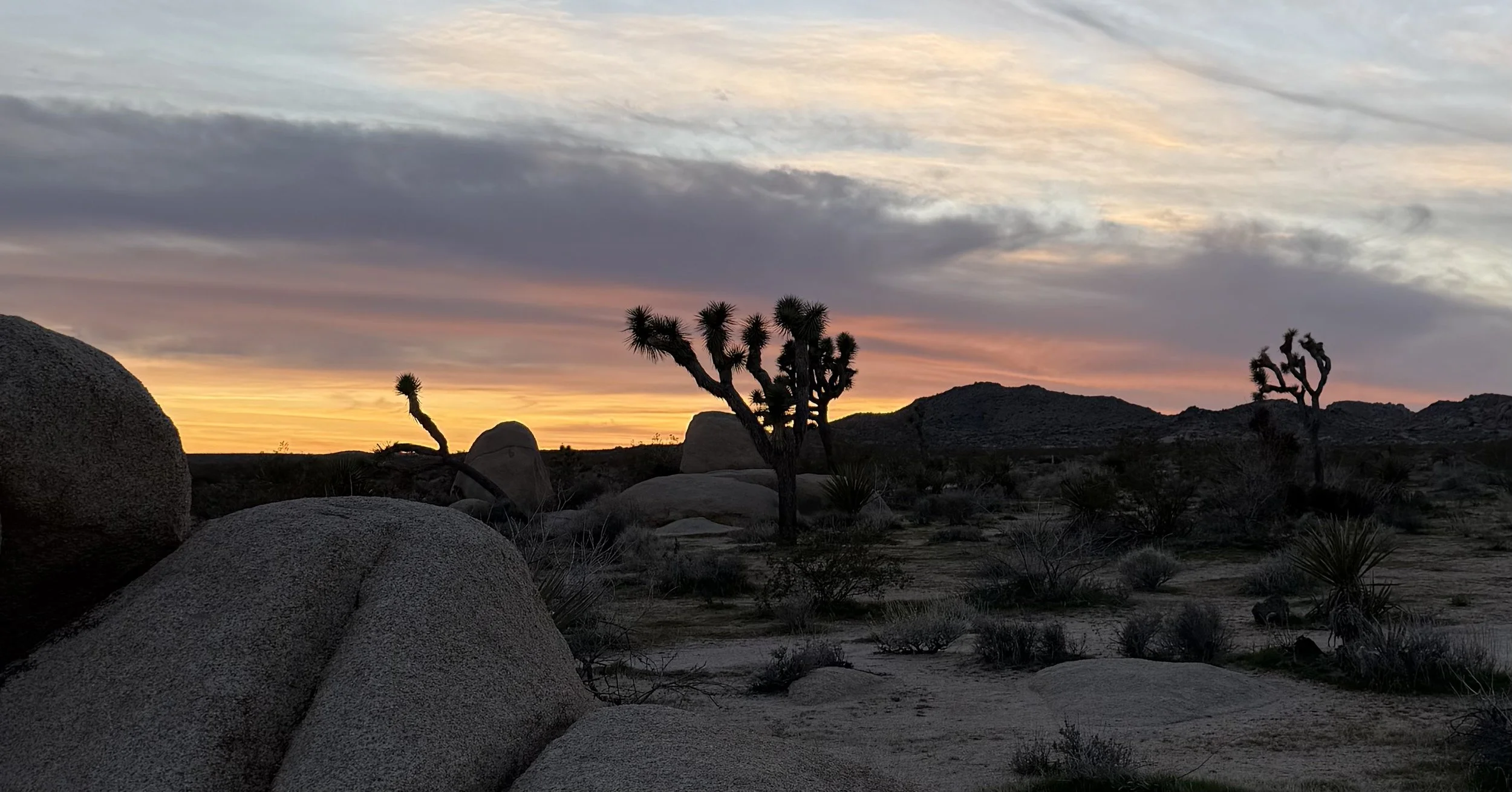
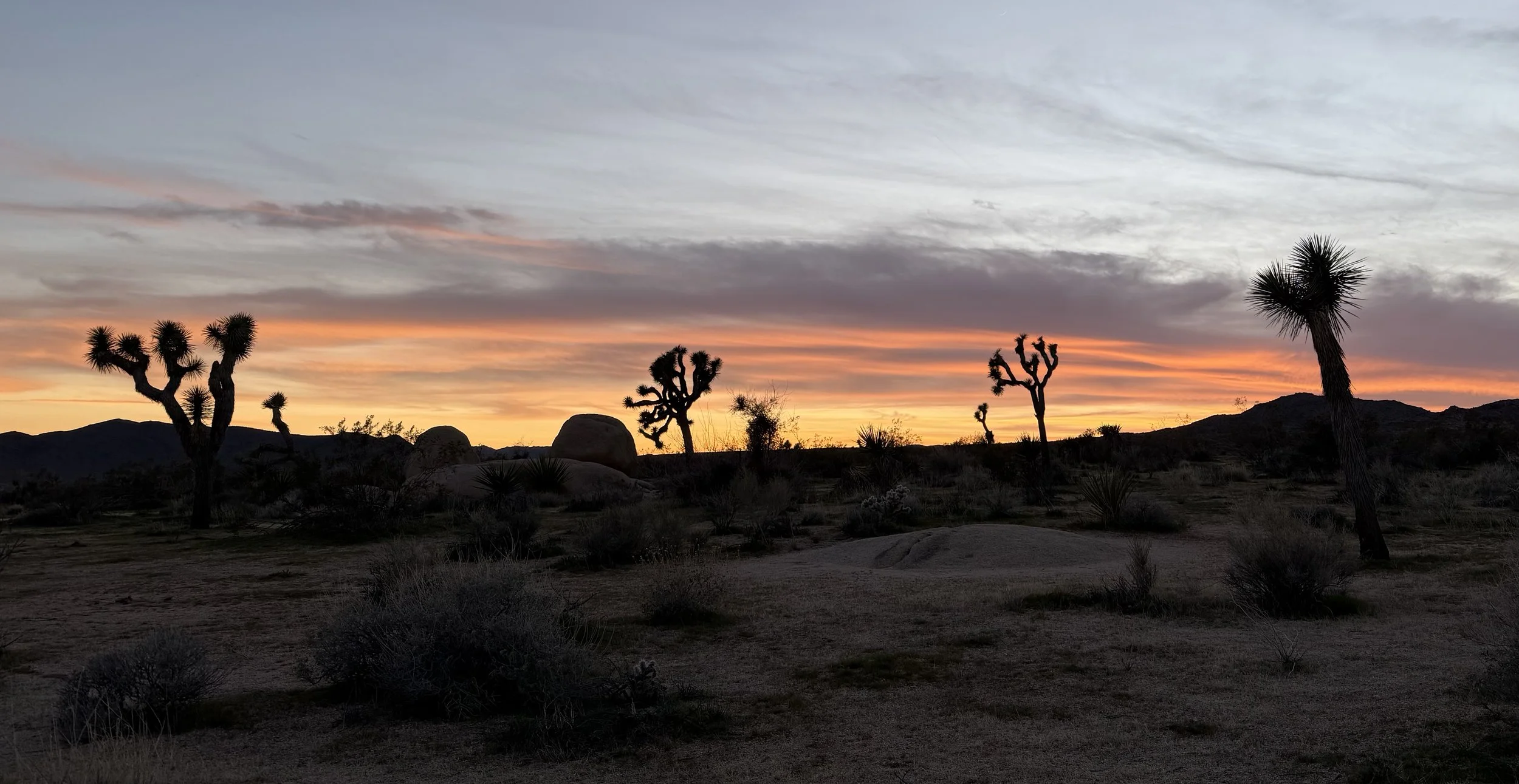
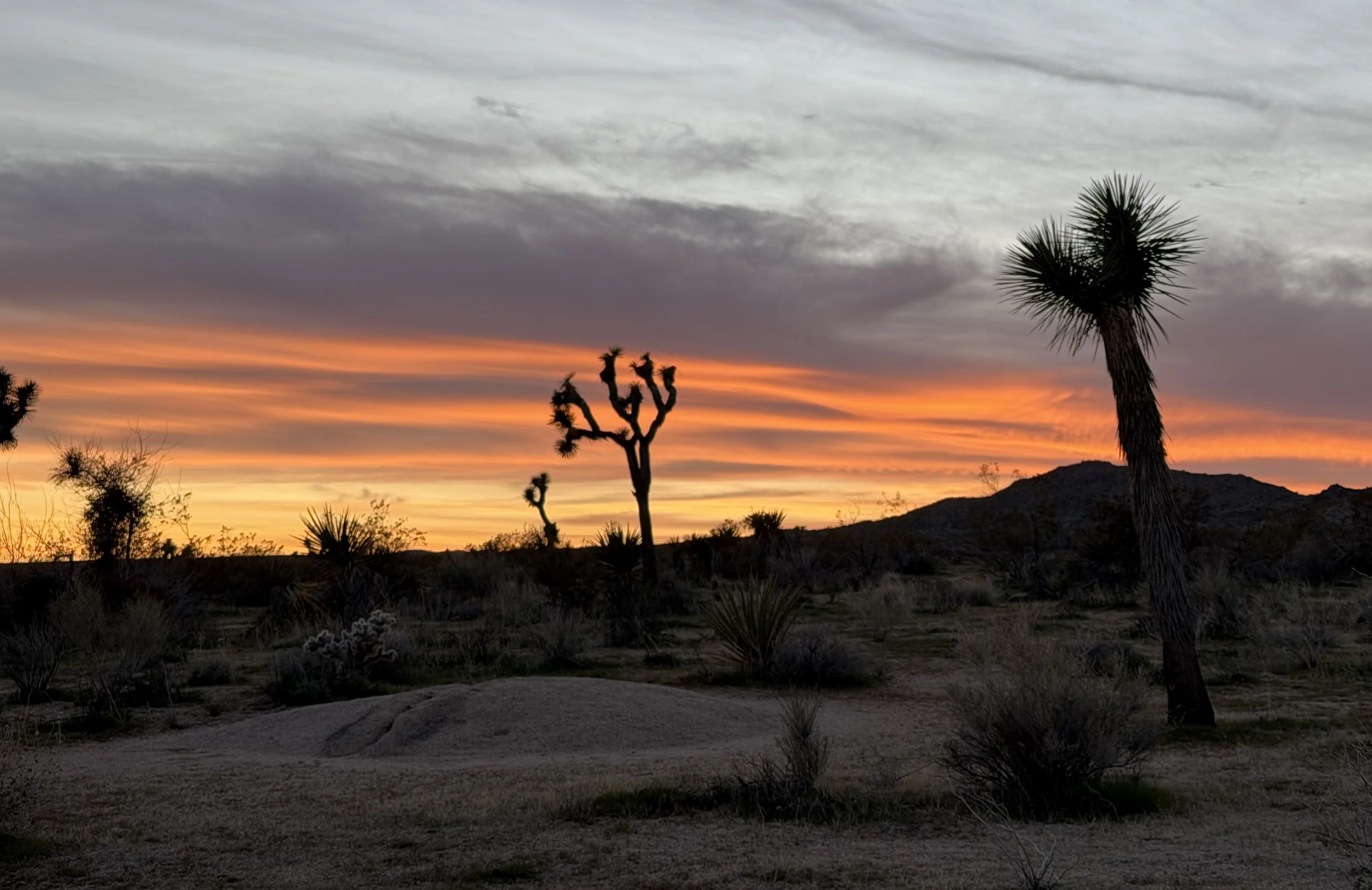
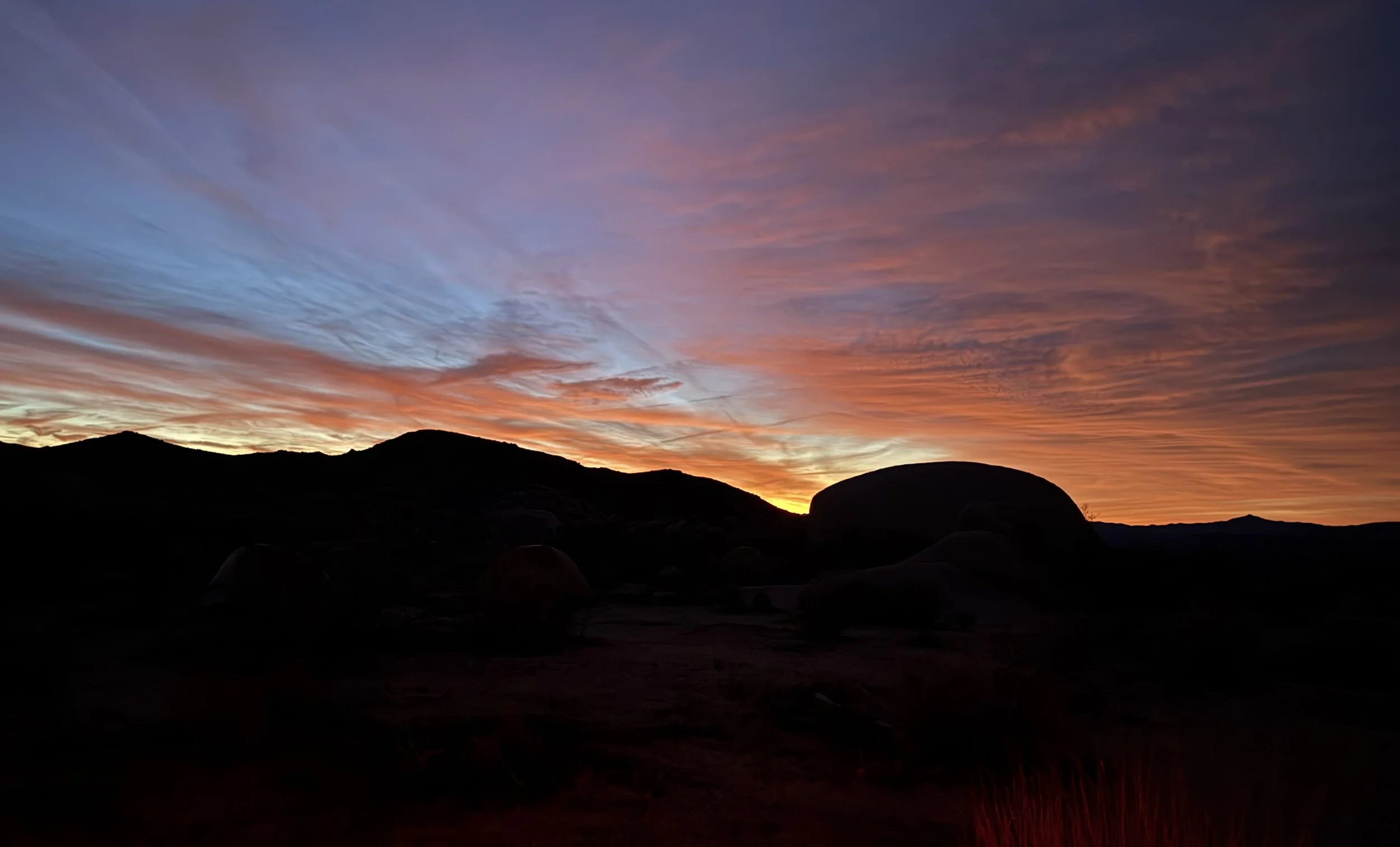
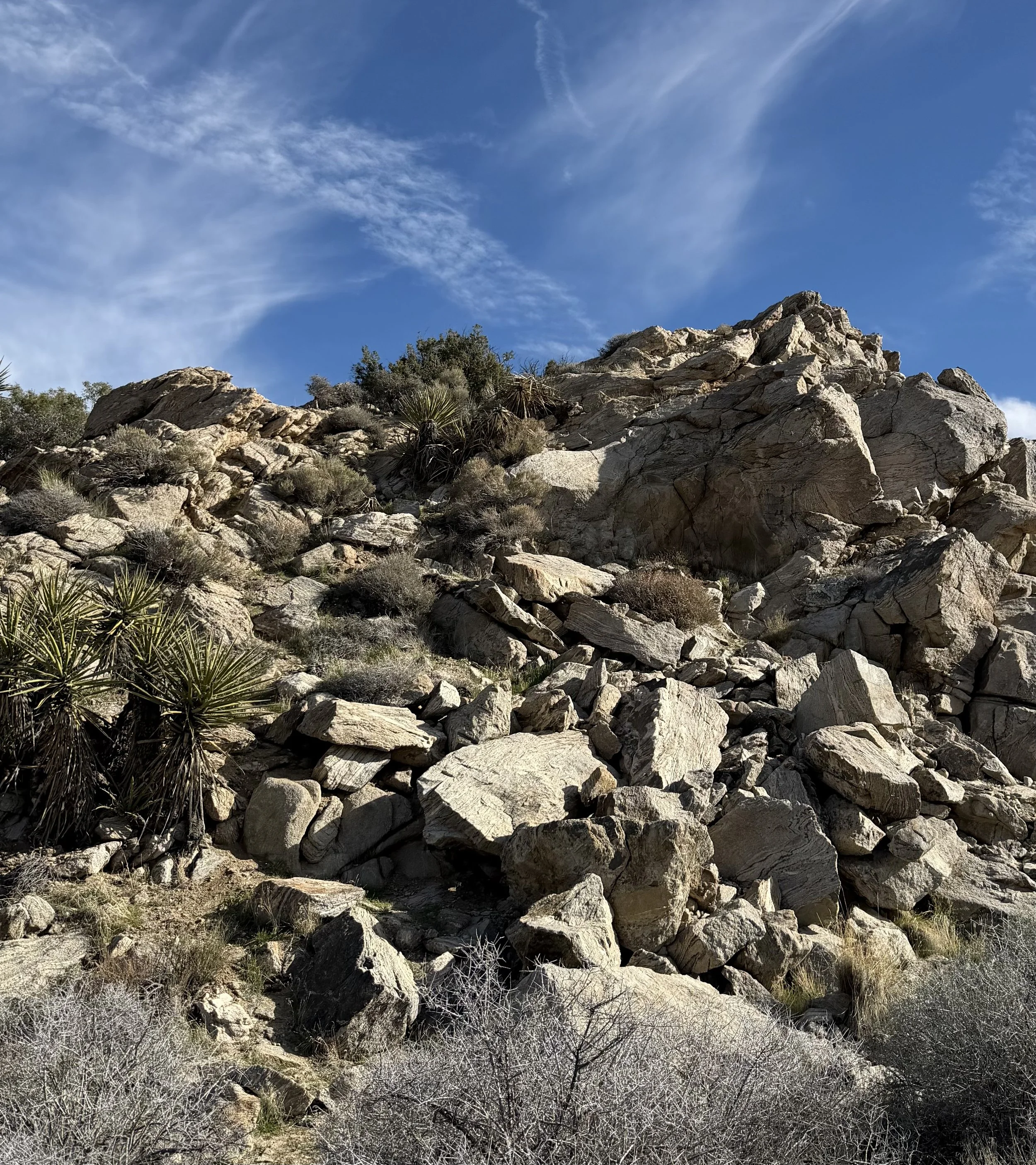
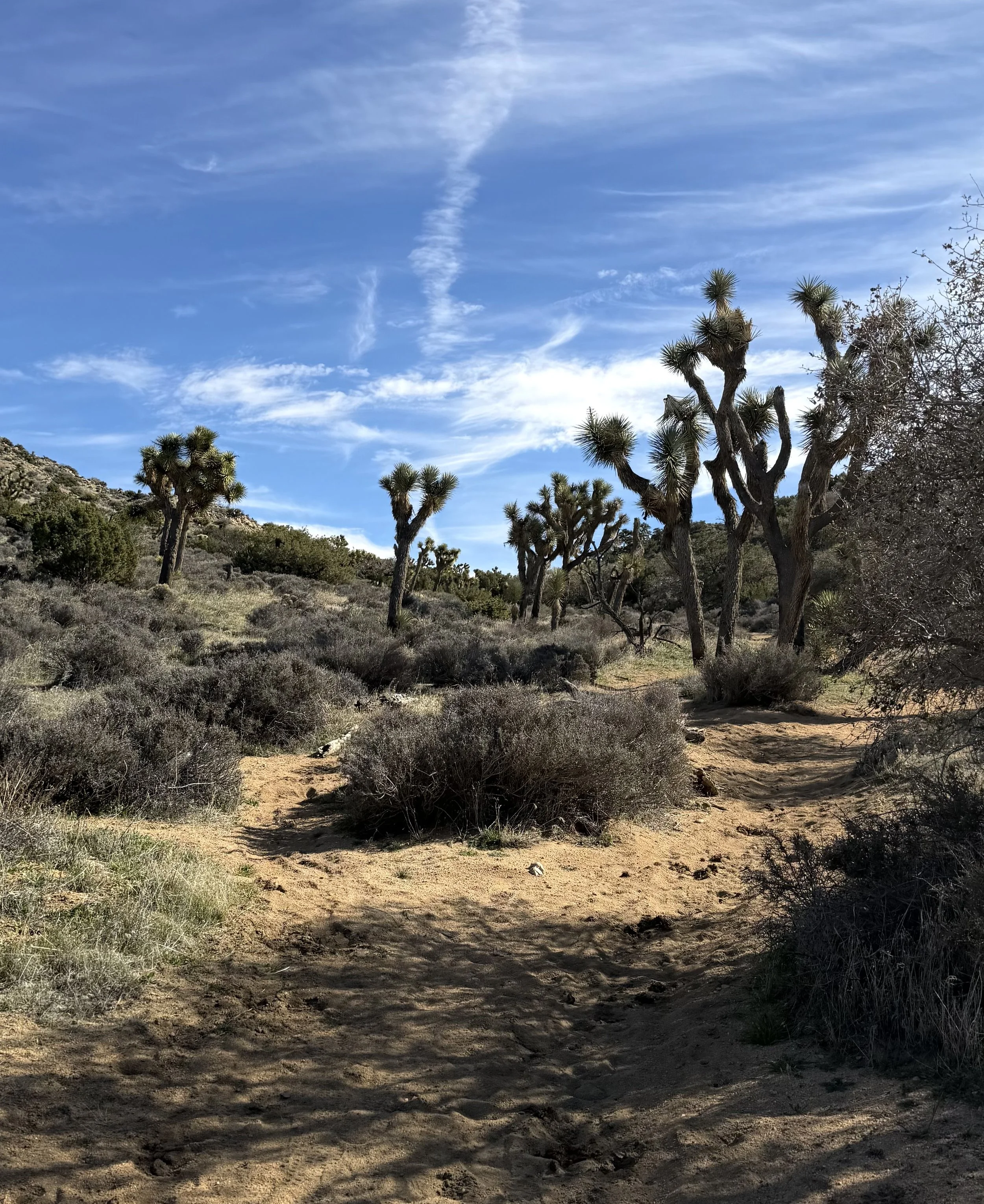
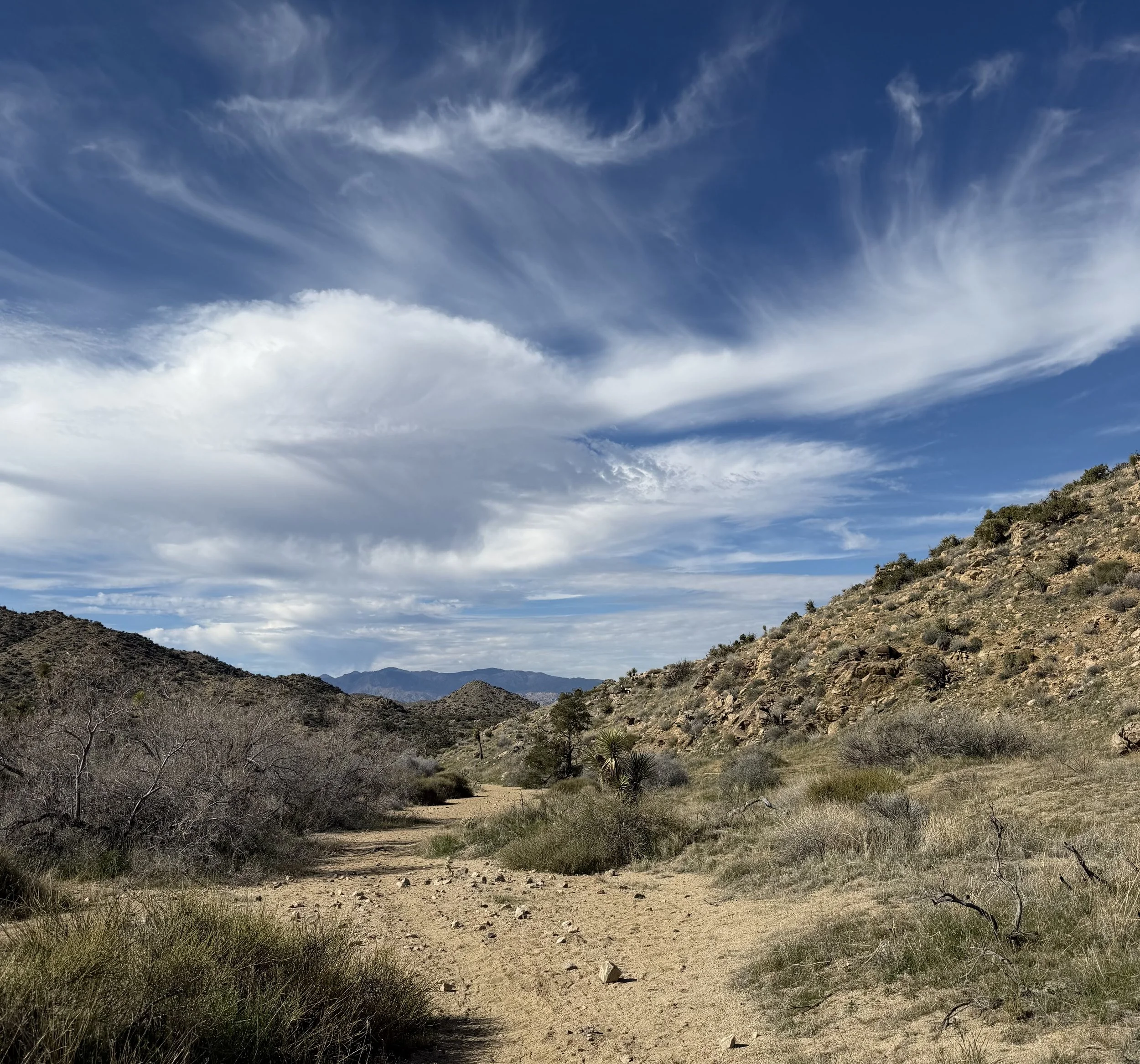
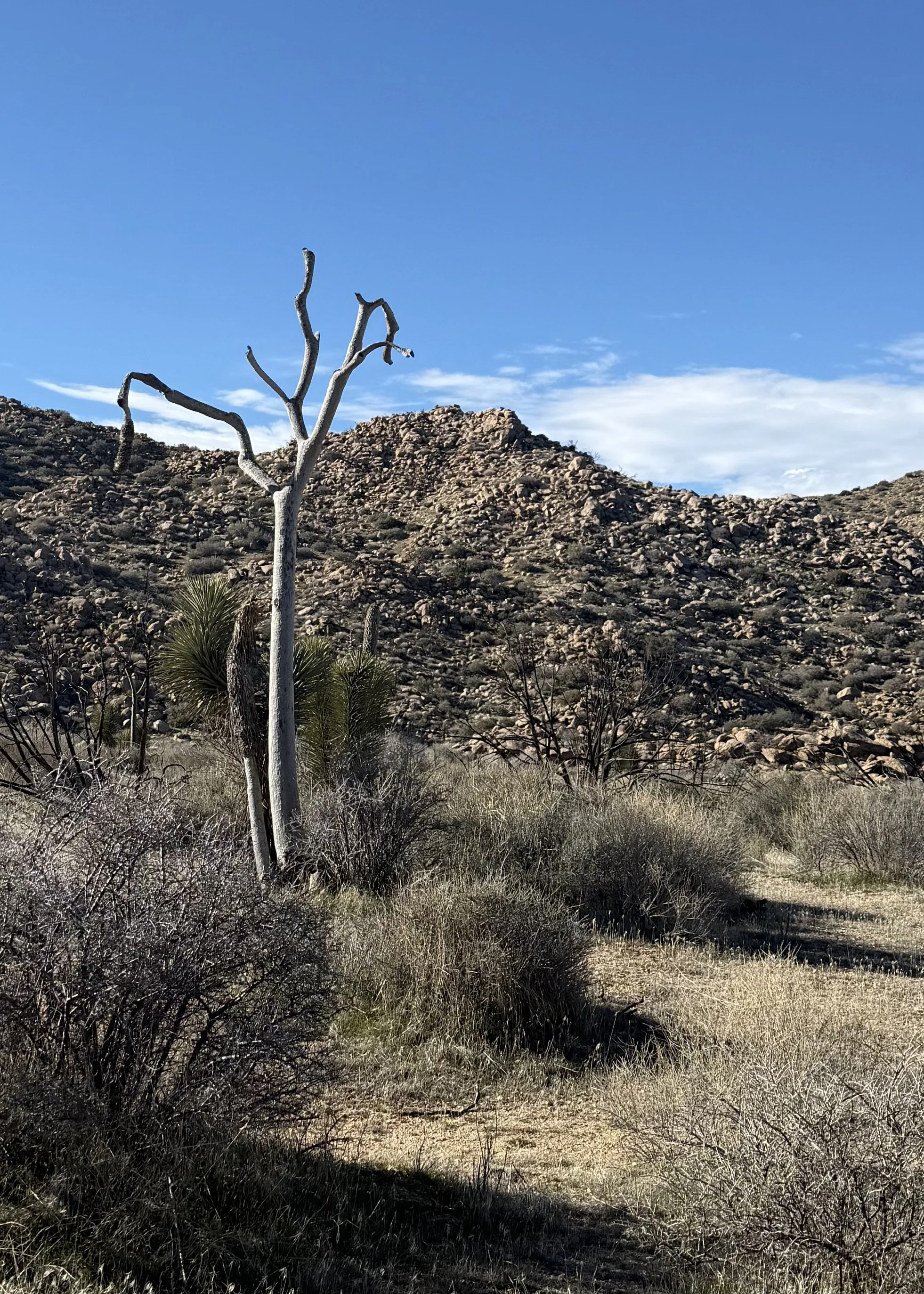
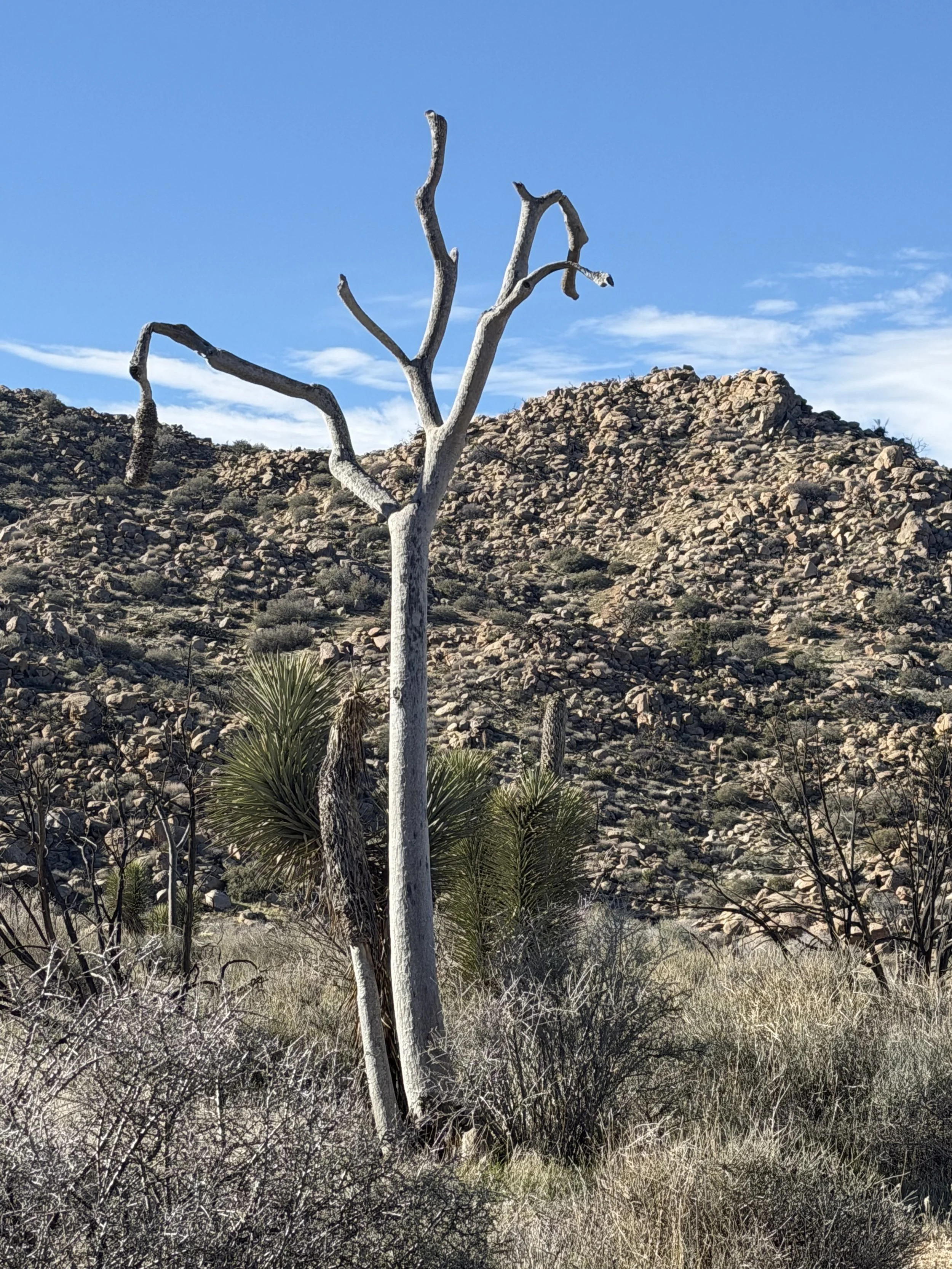
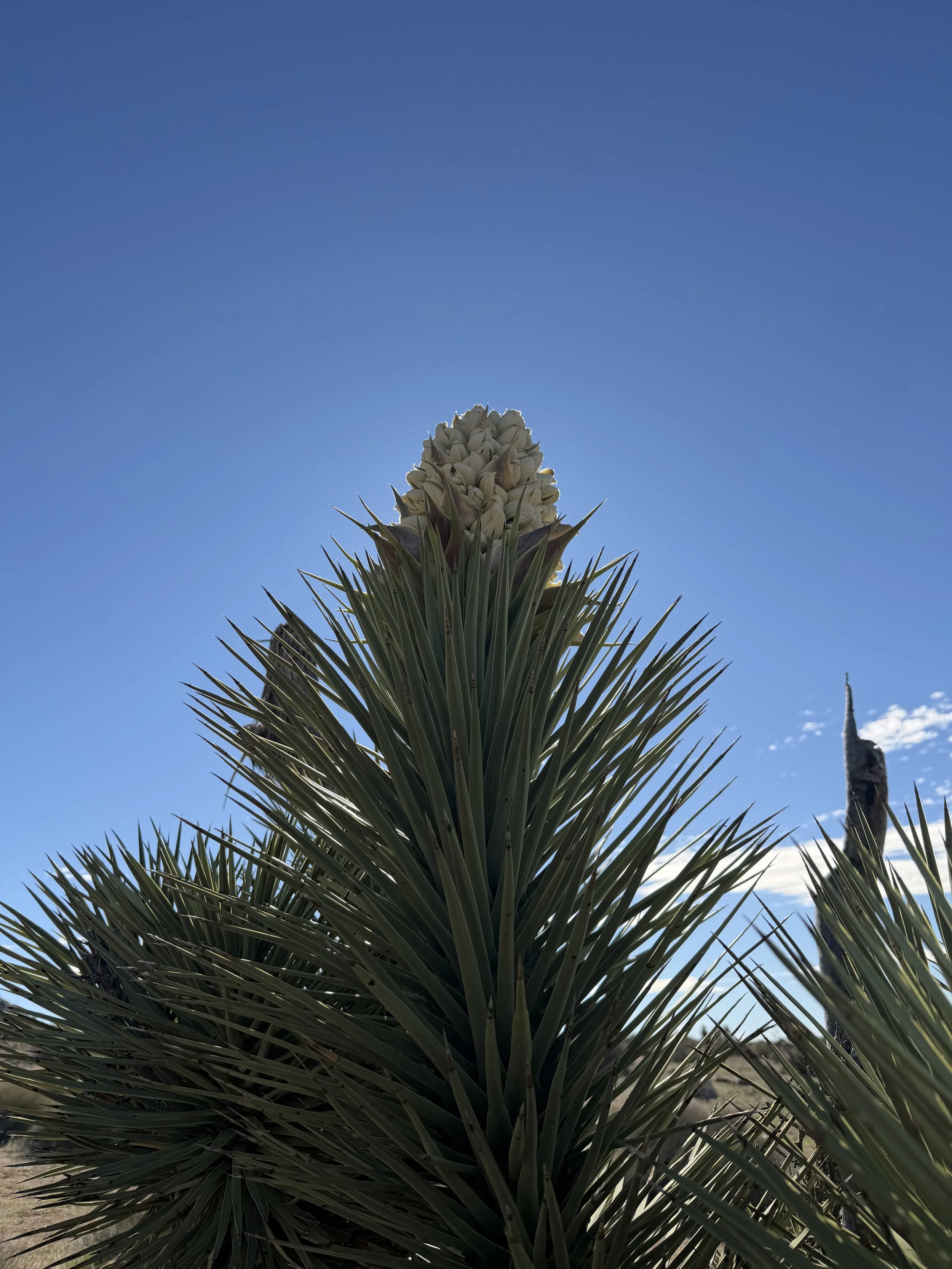
It was a day of journeying up ridges, through volcanic rock and back into sandy desert. It was a day of dodging cacti and admiring birds and also a day of naming griefs. Griefs of family members who have died decades ago, who I still remember and miss. Grief of opportunities that I did not take. Grief of closed doors in order to follow other paths. Griefs internal and external. I would name the griefs that have compiled from living for over fifty decades. Then I would look at the fruit that was growing at the ends of the branches of the Joshua trees. I considered the seeds that would eventually emerge from the fruit and named ways that I have been influenced and impacted by members of my family. I named paths that I was able to take because of decisions that I had made. I named the fruits small and germinating as well as those fruits that were giving me hope and promise. It was a day of loss and a day of hope, and through this practice I began to really notice the trees. I began to take note where they would grow, which were mature and which were still in their adolescence. I began to notice and know the trees and the land.
This was a practice that I only fully engaged in for one day, but it did give me a deeper awareness to the land. Each day I marveled at how much the flora and the landscape changed. Each day I was in awe at the diversity that we found throughout the hike. In the end of the four days it was clear to me how I was still just passing through. I could have spent multiple days in each area, taken time to really know each micro-biome that the desert holds. I could go back and visit in different seasons to have an even deeper sense of the land. And still, I would not fully know the land. Yet I feel that for four days I was able to get a good sense of what the Joshua Tree National Park had to offer.
I would argue that this is one of the values of backpacking. We cannot hurry through the land. We cannot miss the slight and great changes in elevation, the loose sand and the coarse gravel beneath our feet. We cannot miss the windy ridges and the open desert. We take our time walking through and experiencing the land.
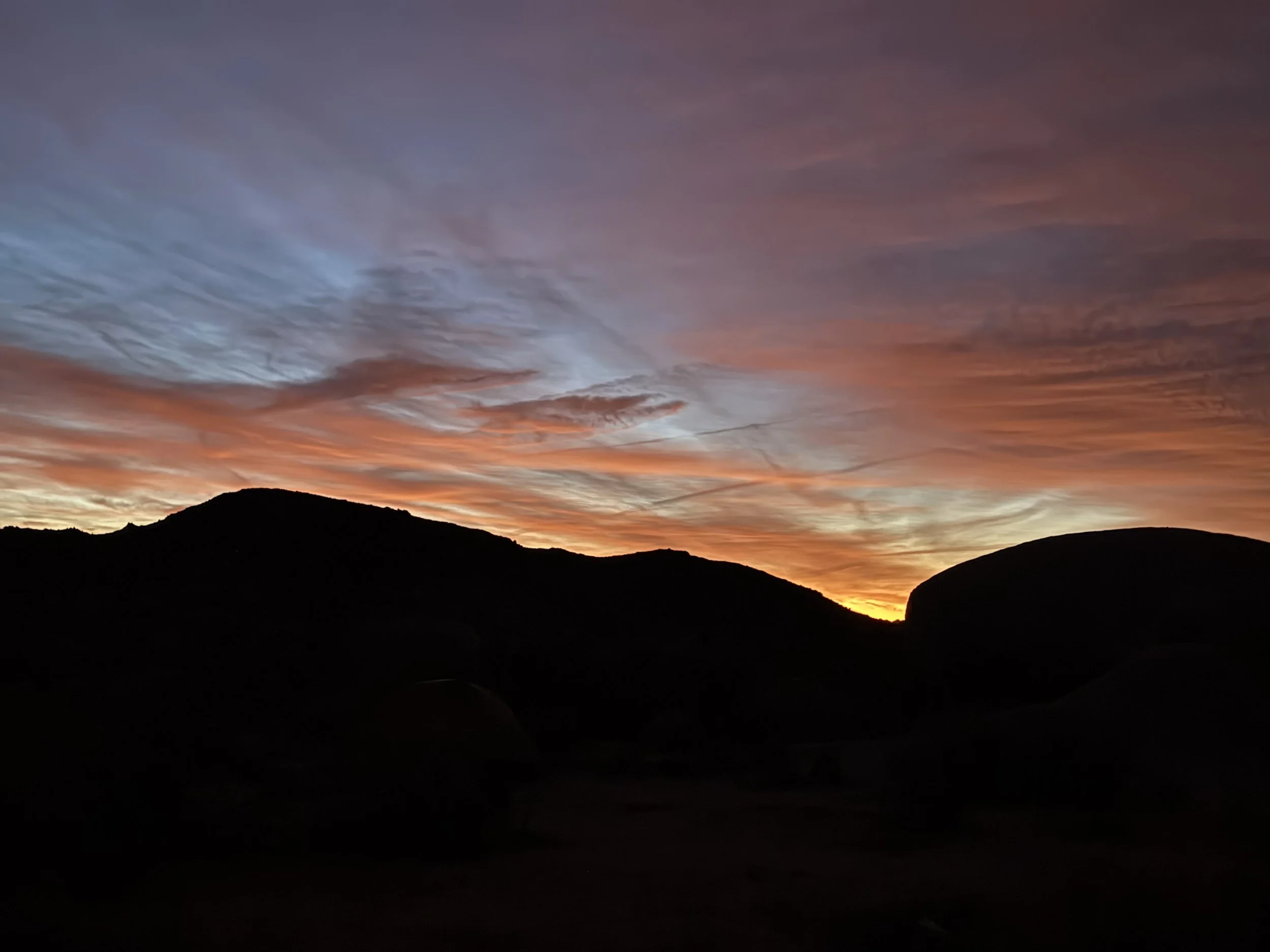
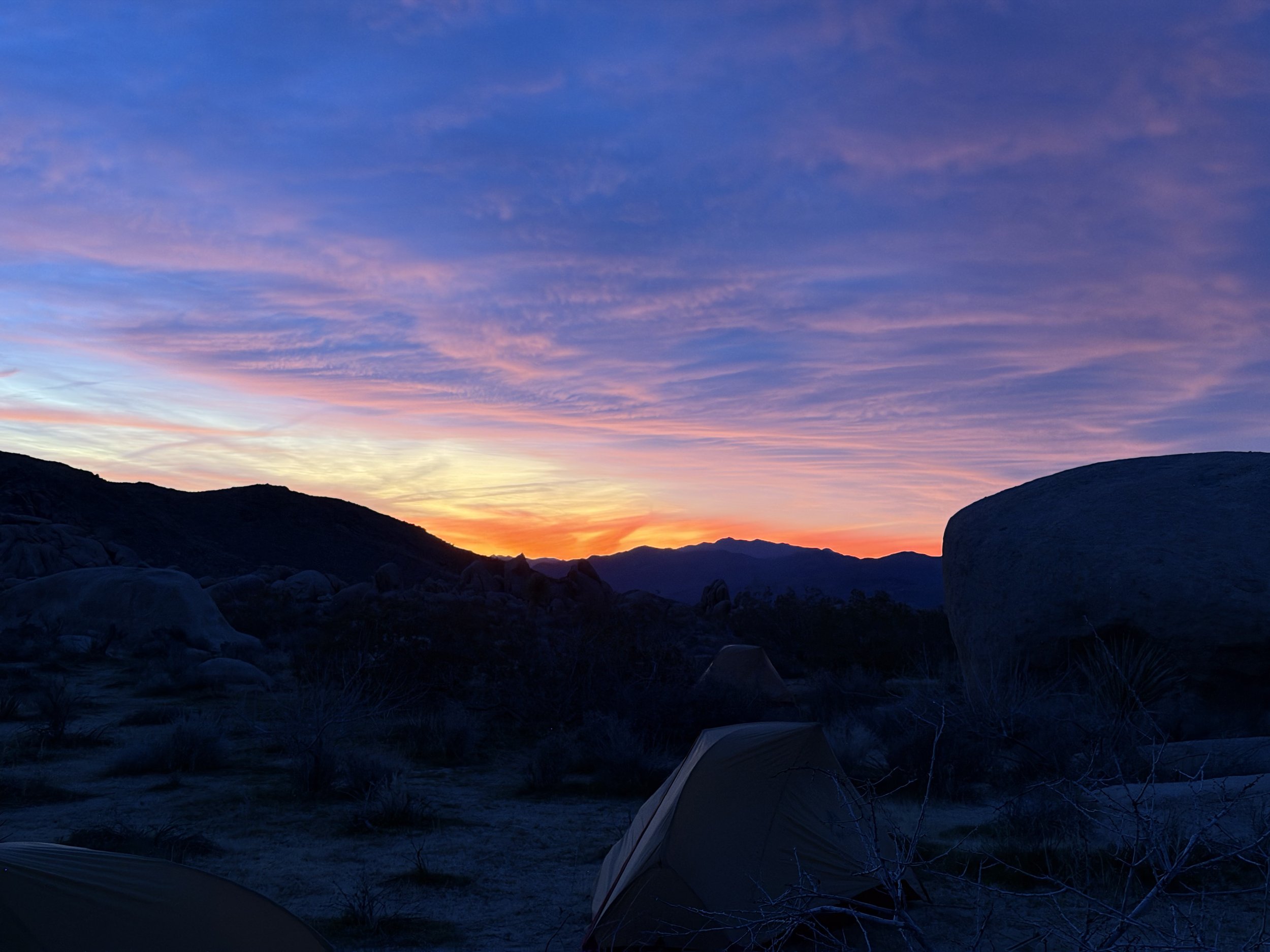
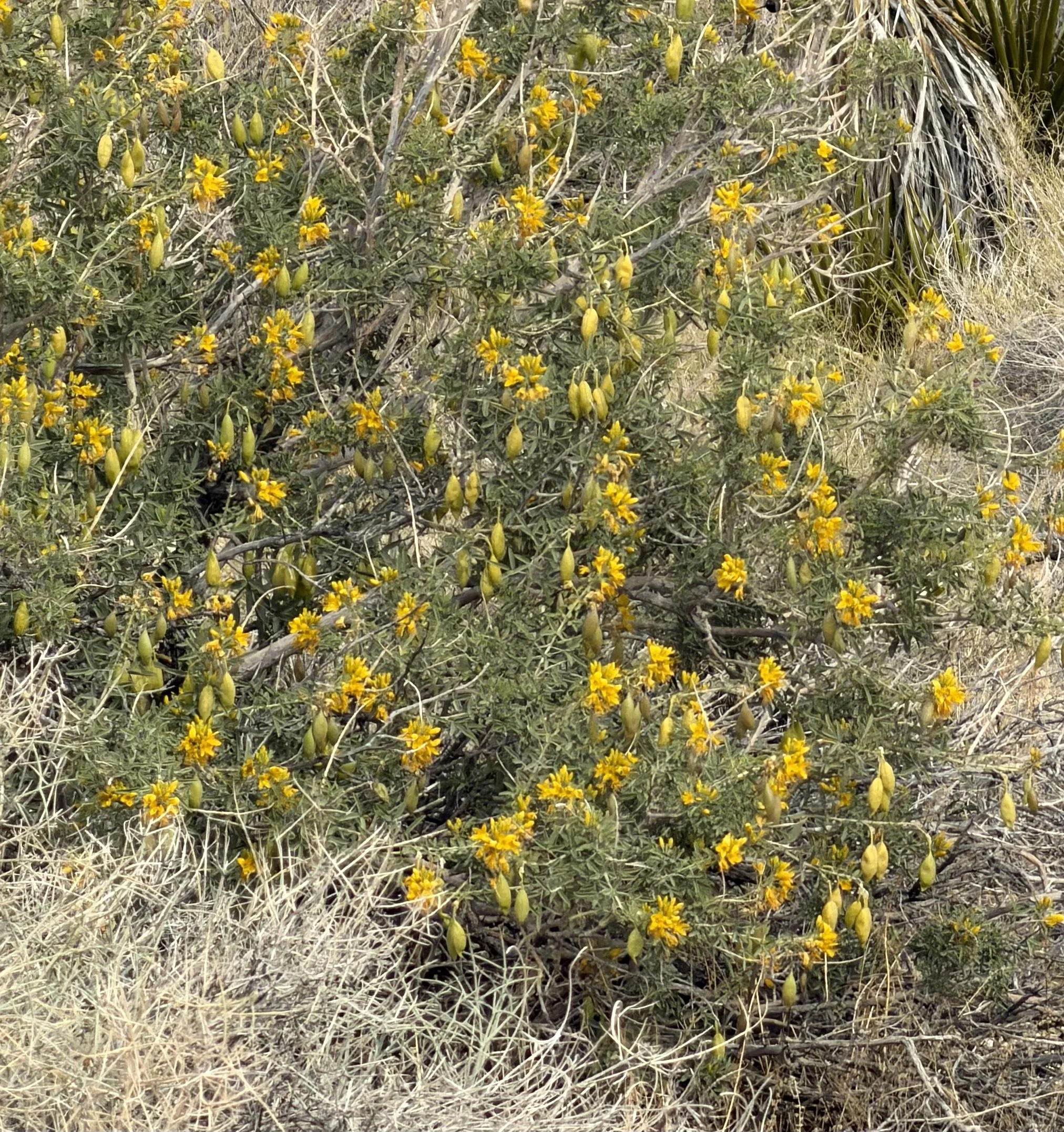
It was not just being in the land, but engaging, being informed, building a relationship with the land through an active practice that helped me to know it. I am humble enough to know that I will never have a full and deep knowledge of the land. Much like a person, we never really know our partners, our friends, our family. Yet with commitment, time, and being deliberate we can gain a deeper knowledge. A deeper knowledge of the land. A deeper know a partner in our life.