A Trip Report from August, 2026
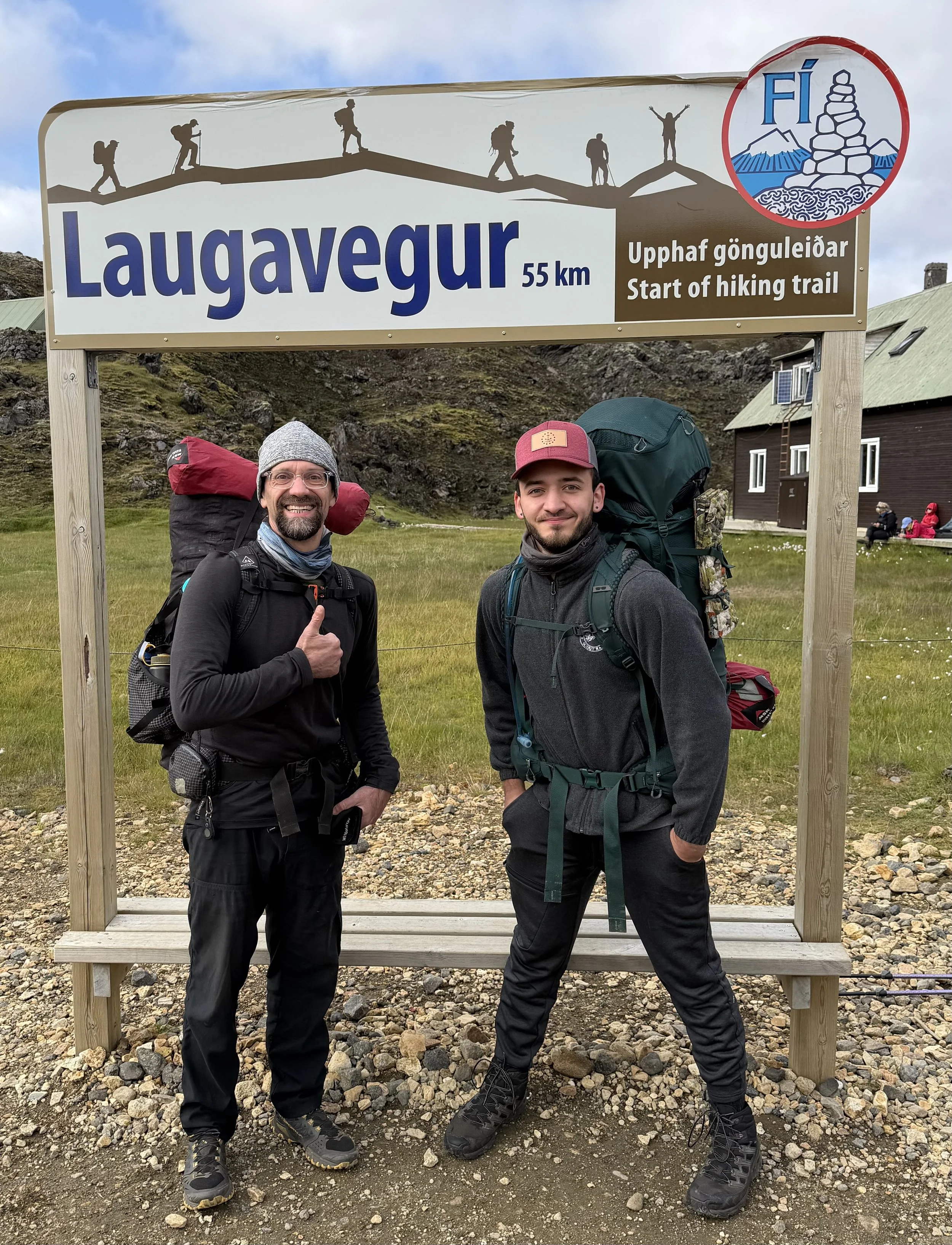
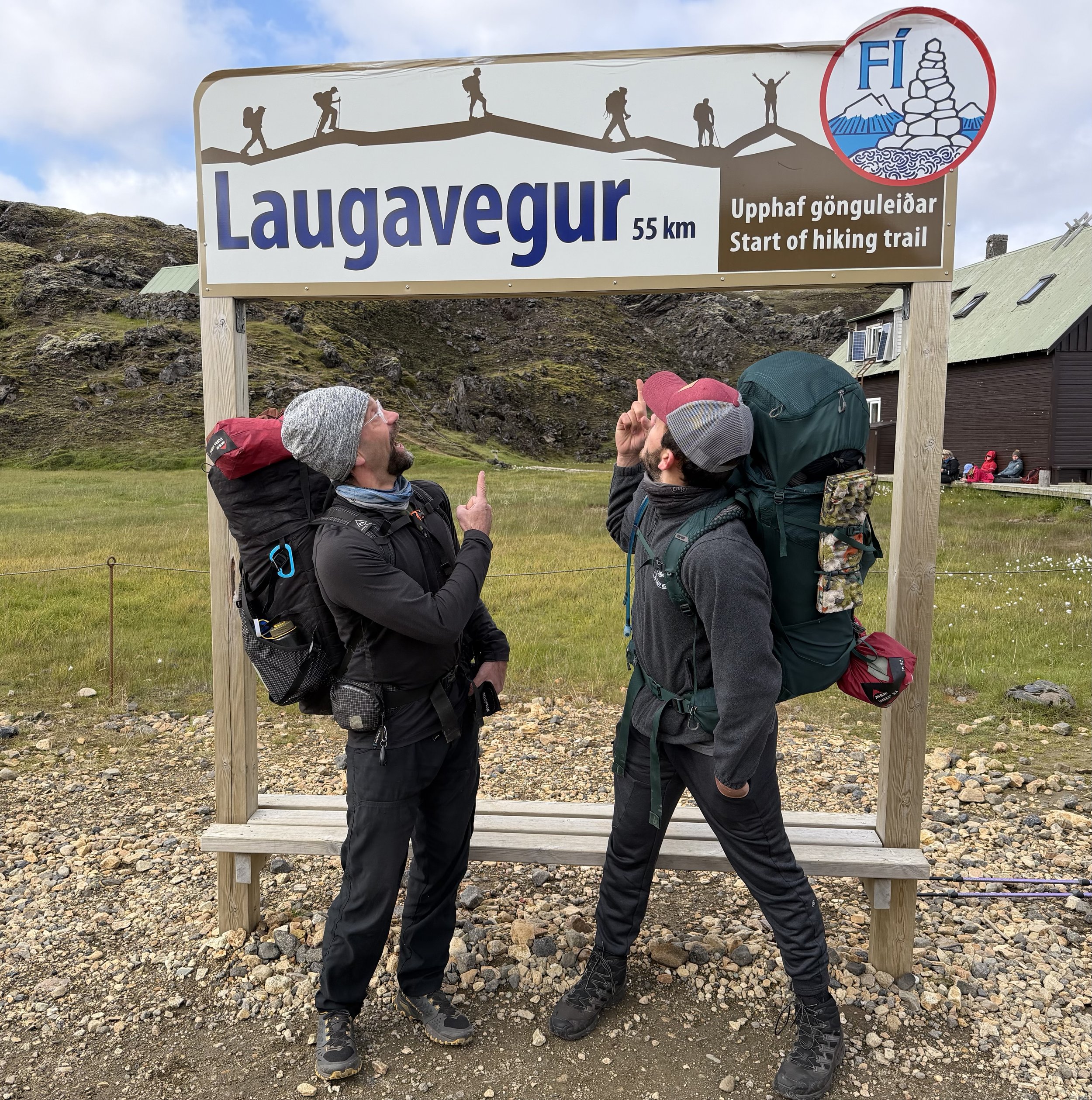
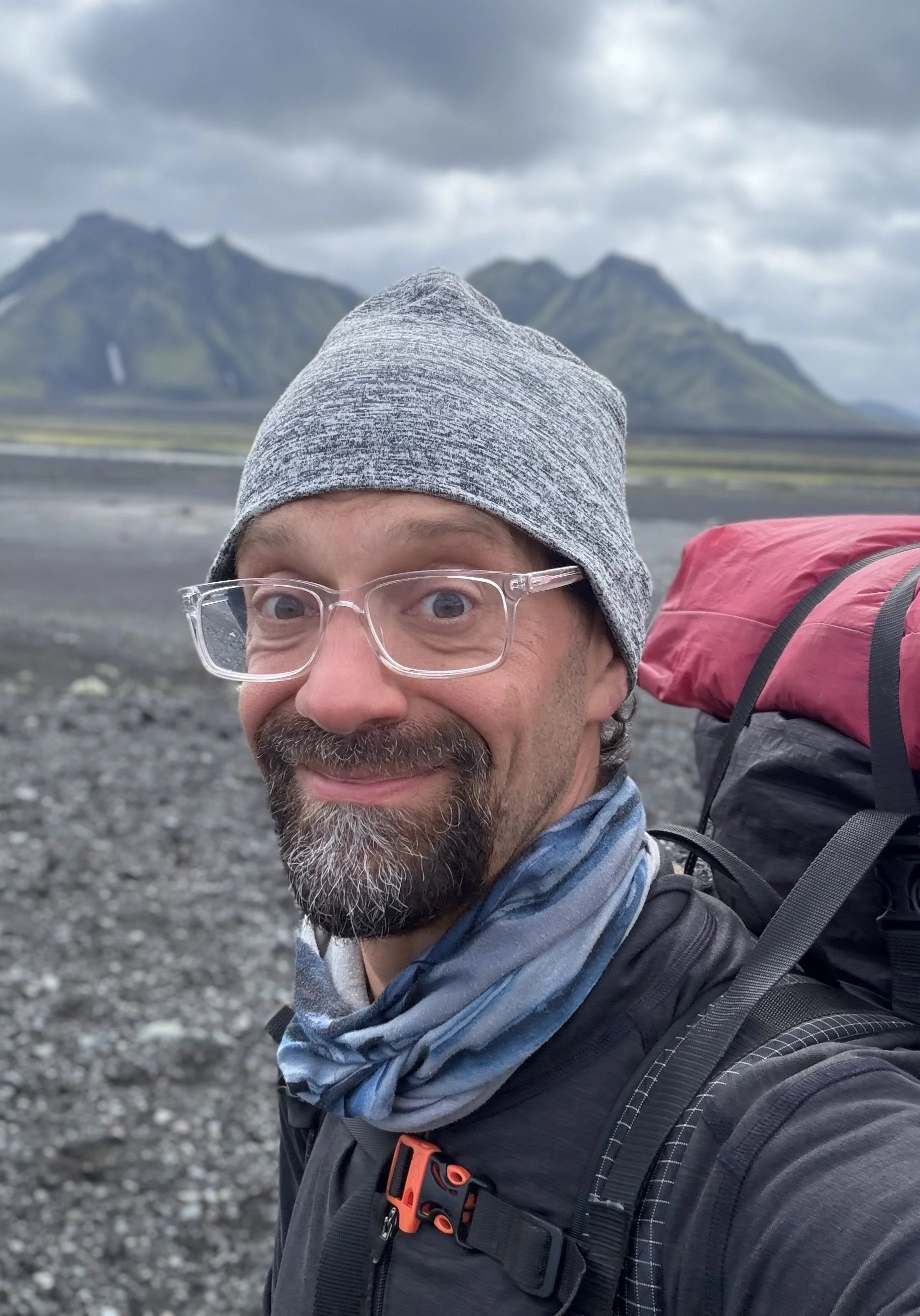
The Laugavegur and Fimmvörðuháls Trails offers 50 miles (80 kilometers) of wonder through the southern highlands of Iceland. I have been to Iceland a number of times, but this was my first opportunity to spend four days backpacking. In my time in Iceland I have come to see the landscape in the winter, fall, spring, and summer. I have gotten used to lava fields, dormant volcanos, fjords, and mountains shaped by volcanic activity and carved by glaciers. I have especially gotten used to a lack of trees. Iceland used to be about 40% forested, but after the Vikings settled and used the trees for building and for heat, the forests were depleted. A combination of the harsh climate and the ever-present grazing sheep make it difficult for the forests to return. Now only about 10% of the country is forest and those are small and young. The joke is that if you ever get lost in a forest in Iceland you only have to stand up and you will find your way out.
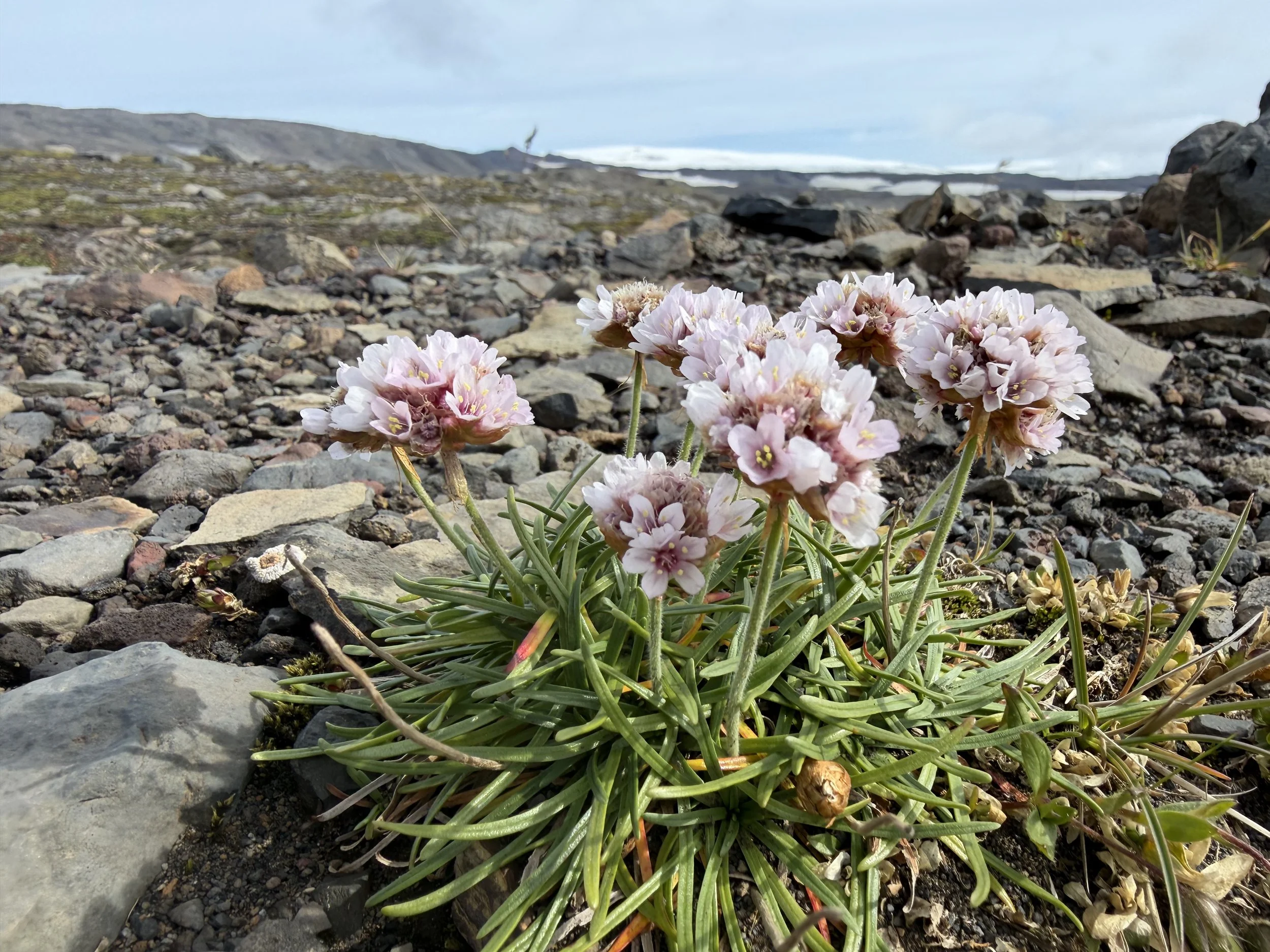
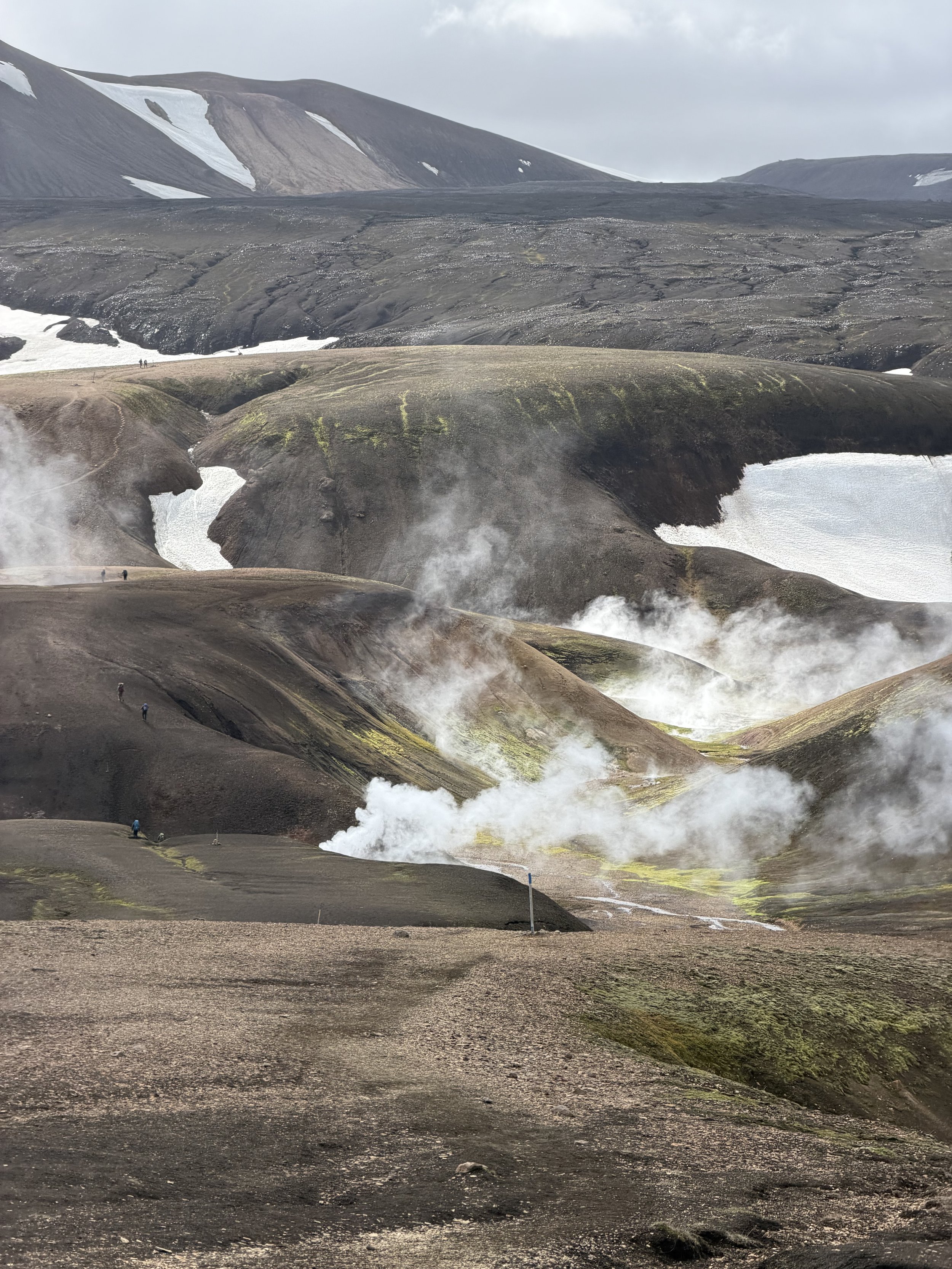
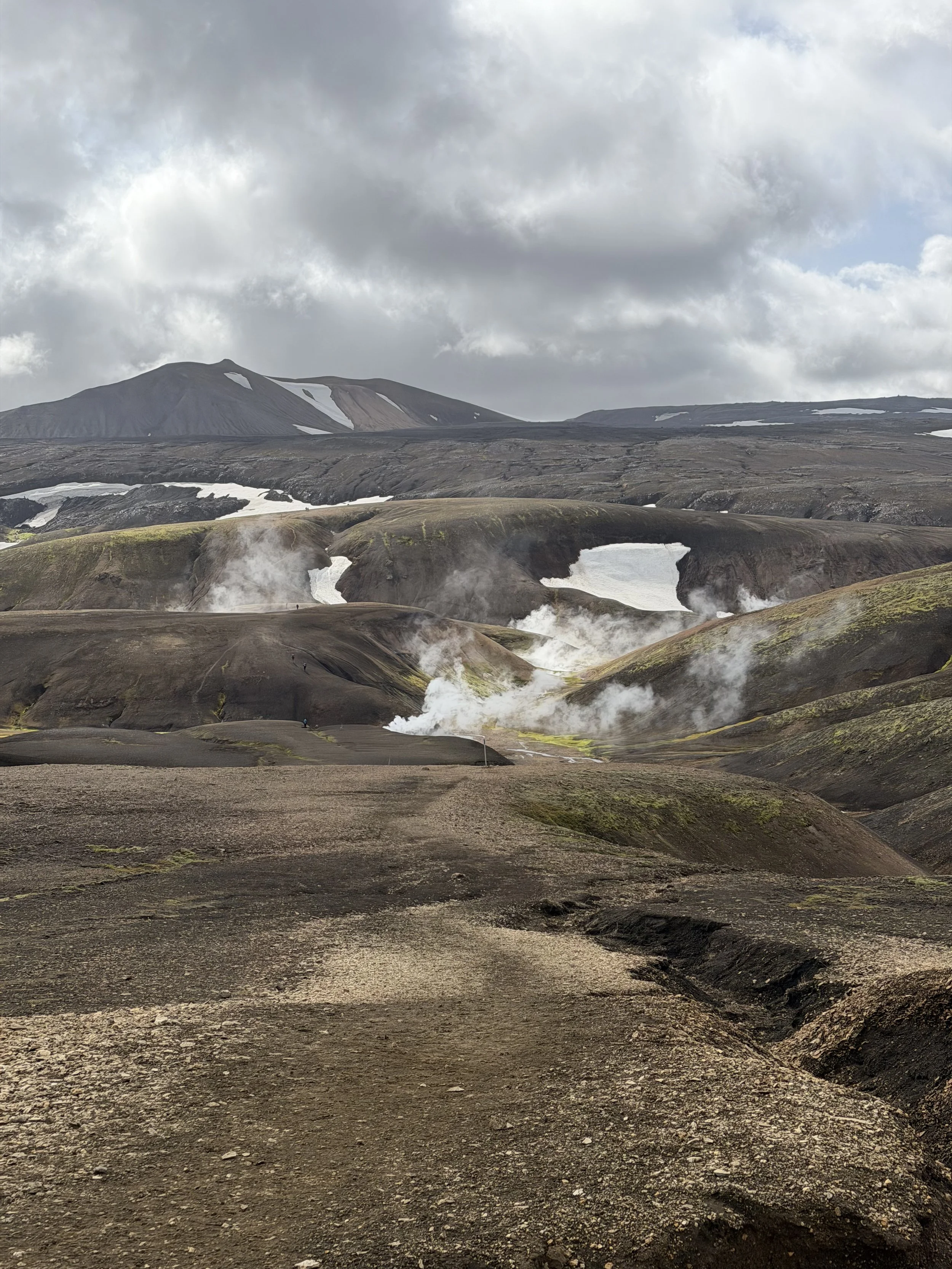
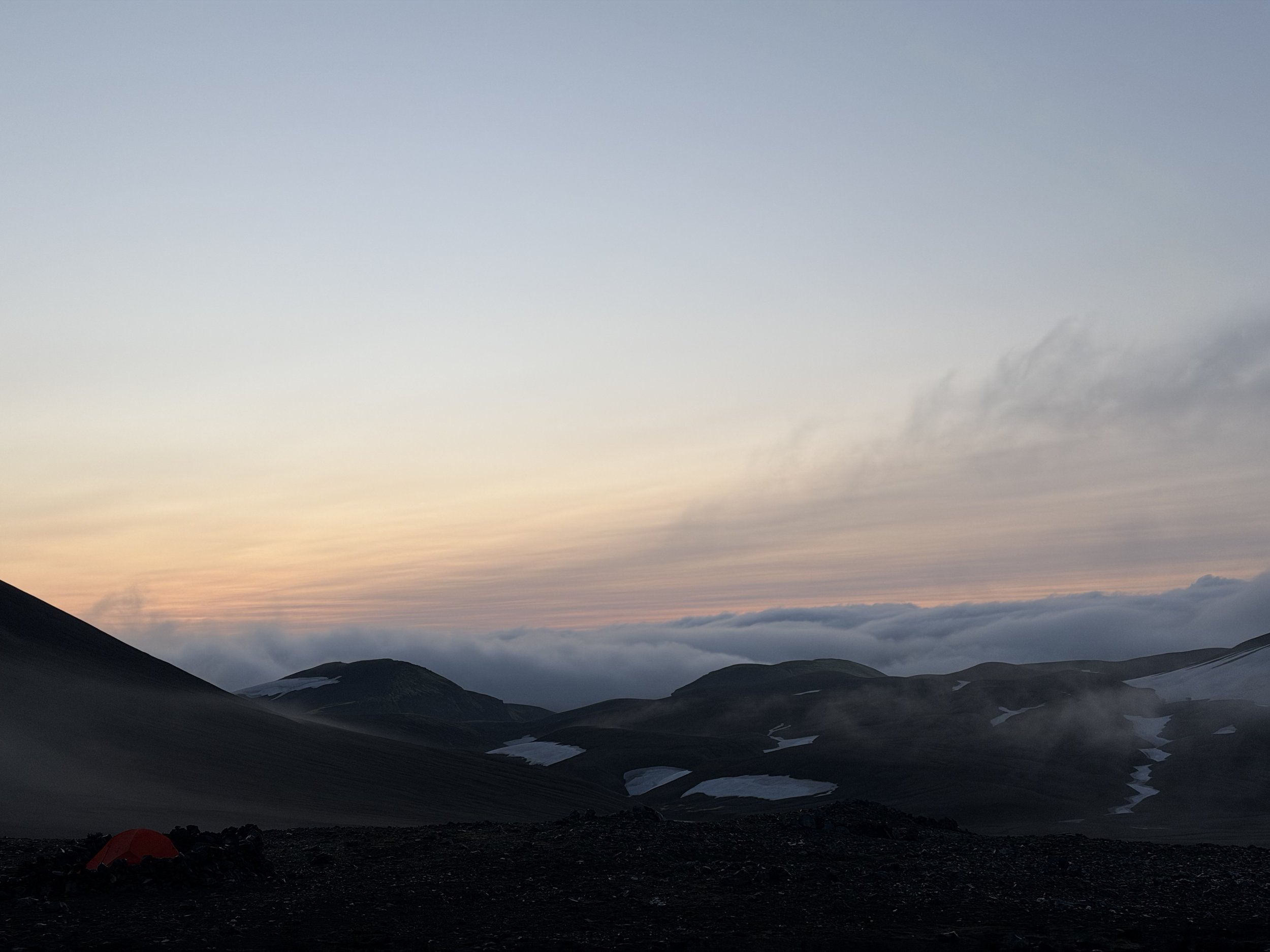
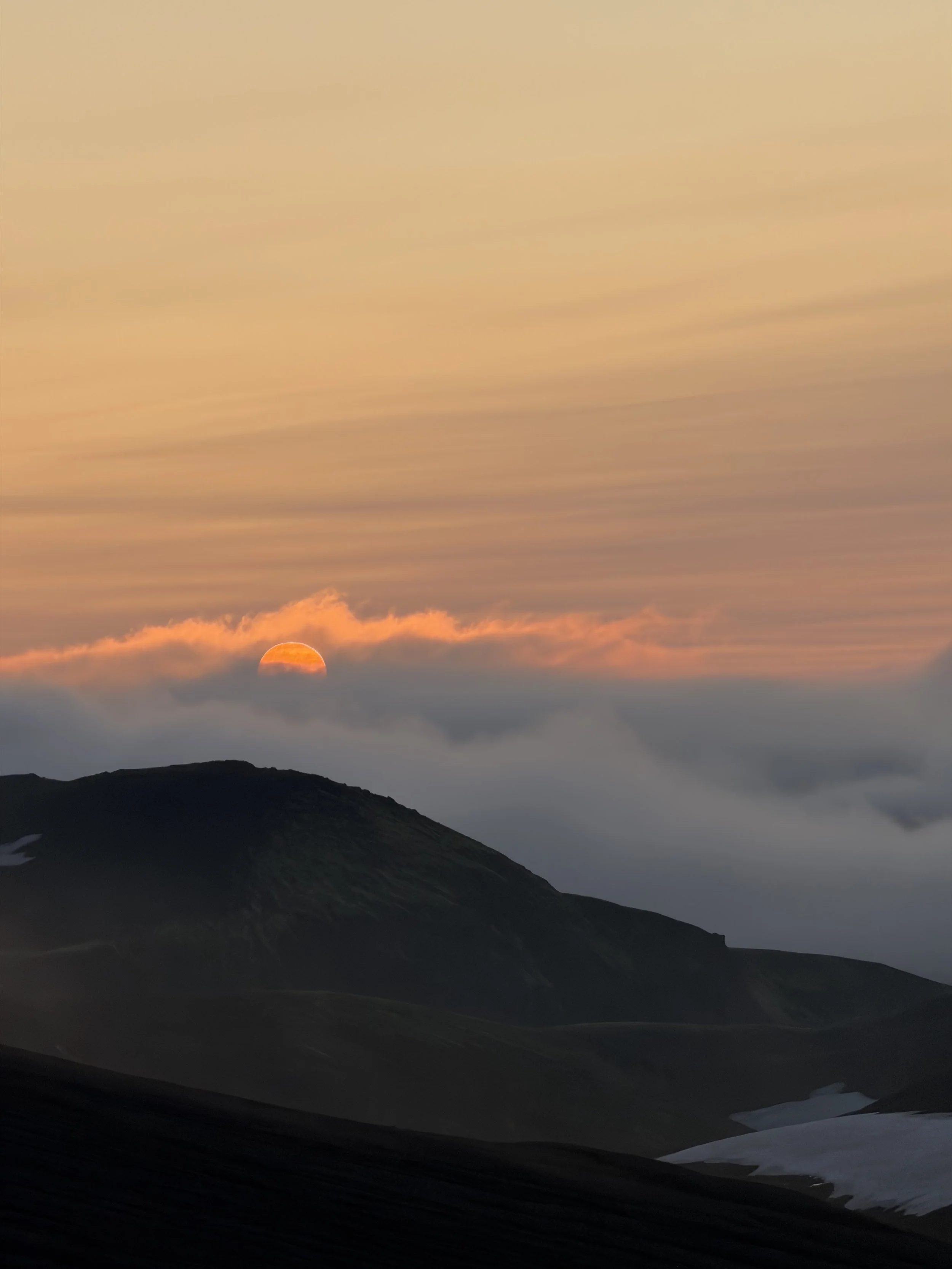
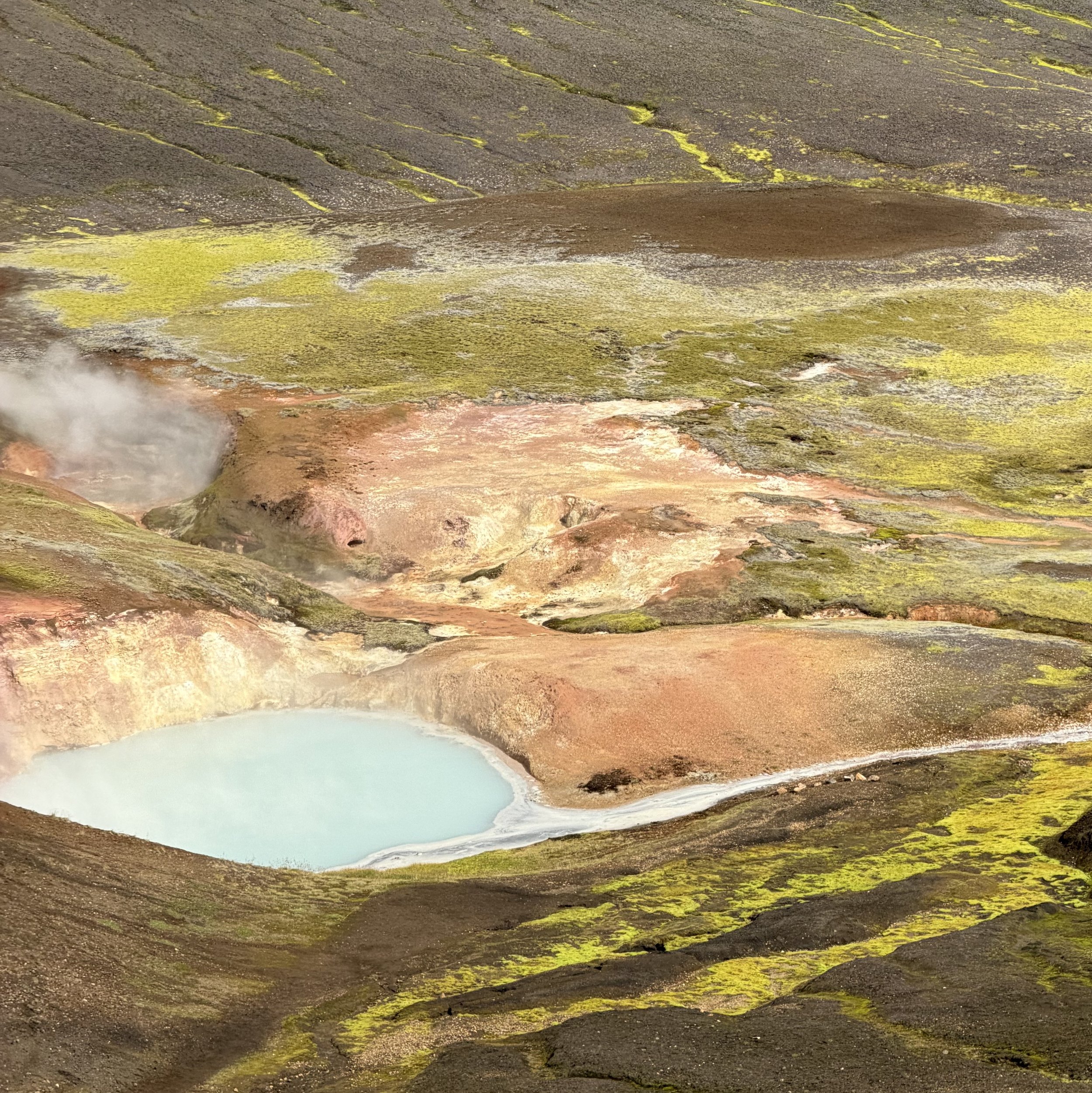
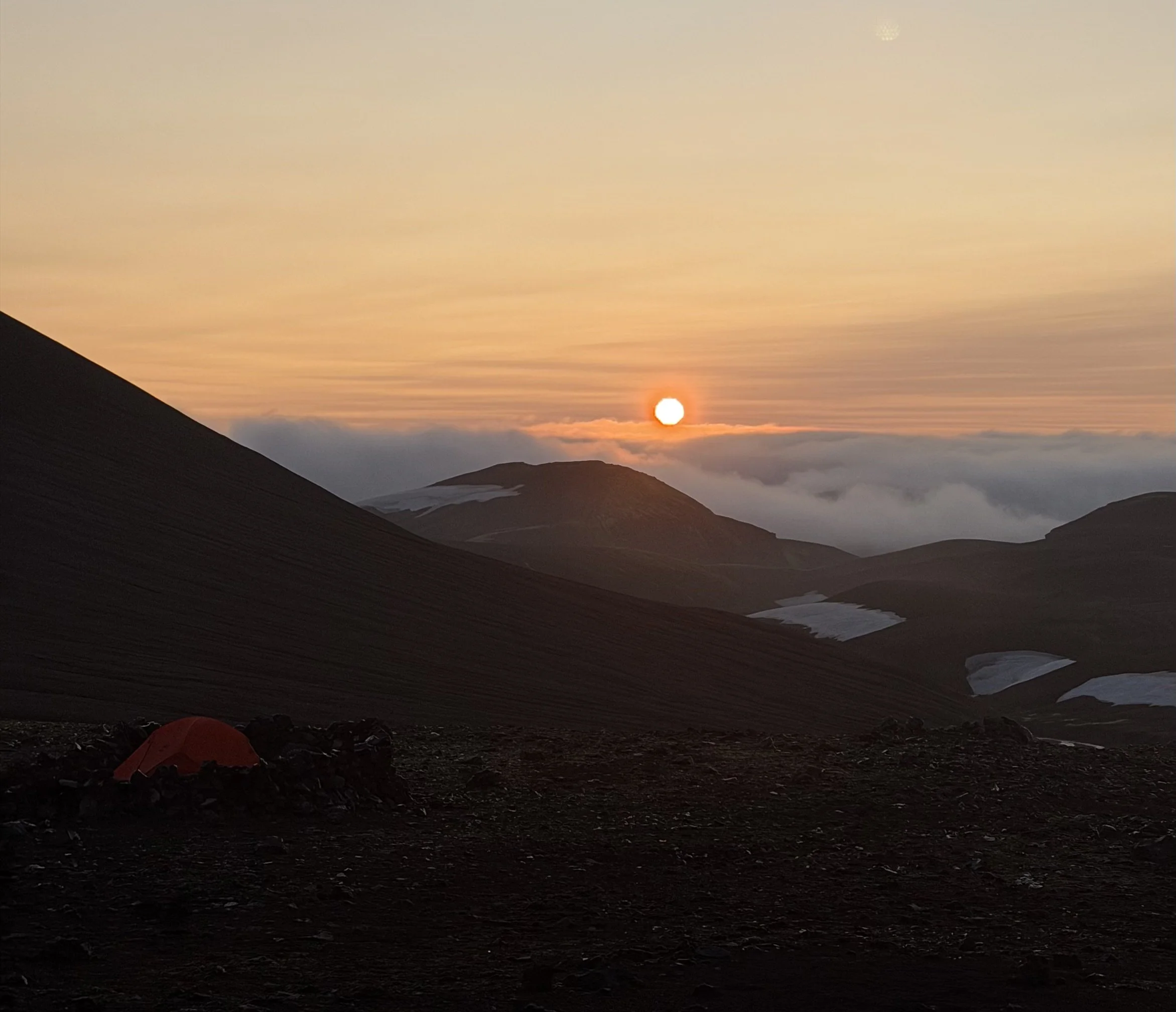
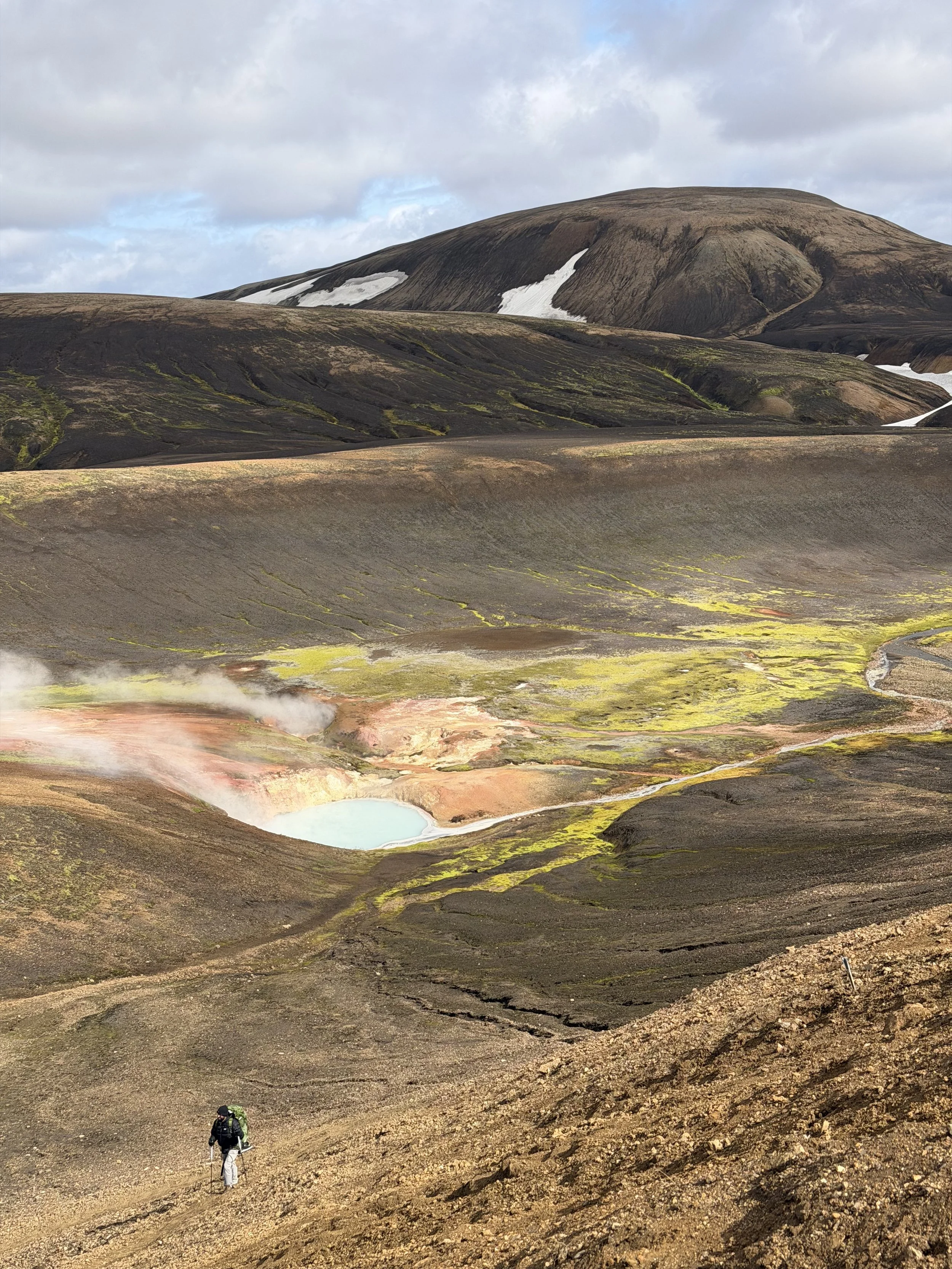
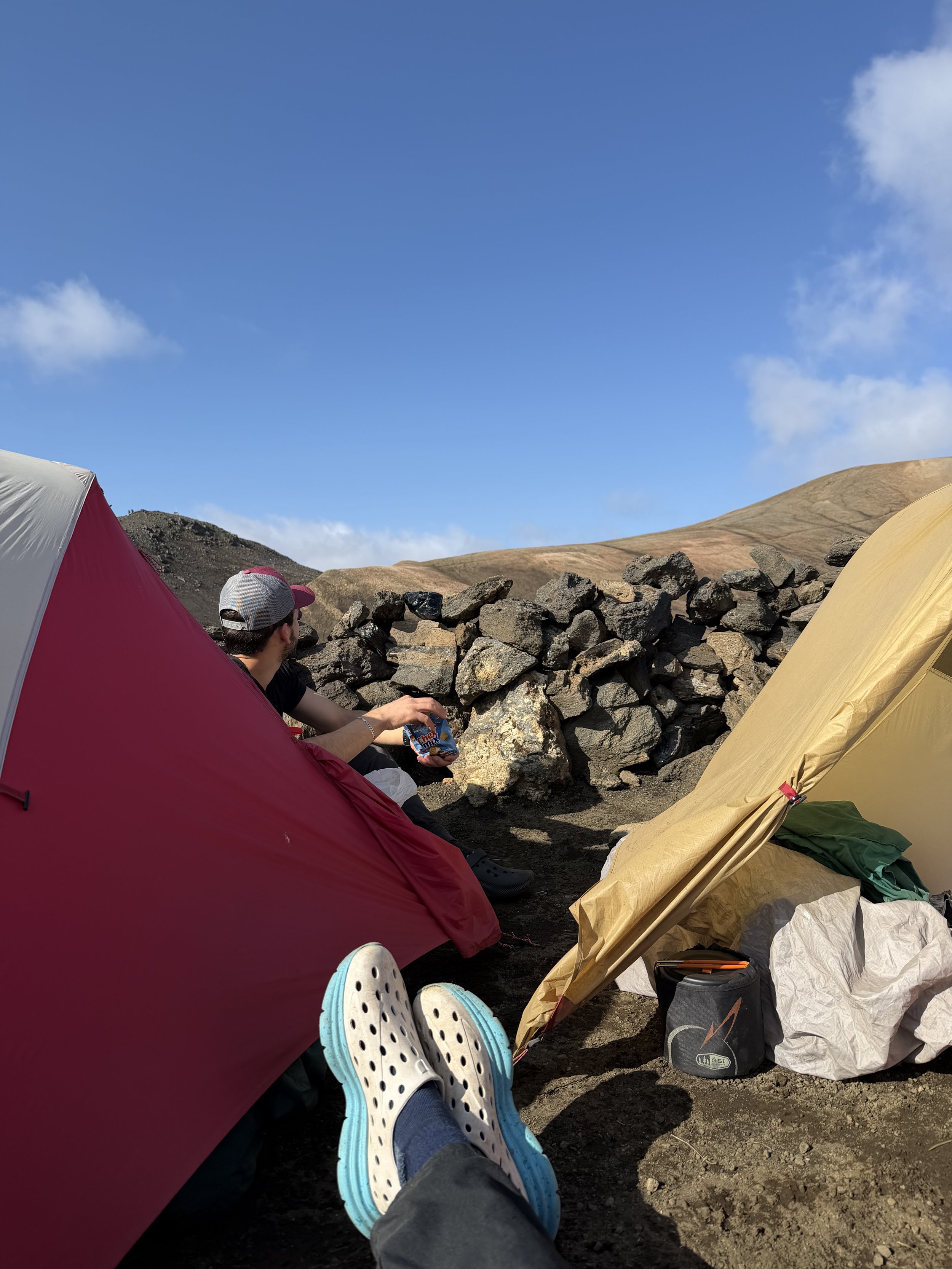
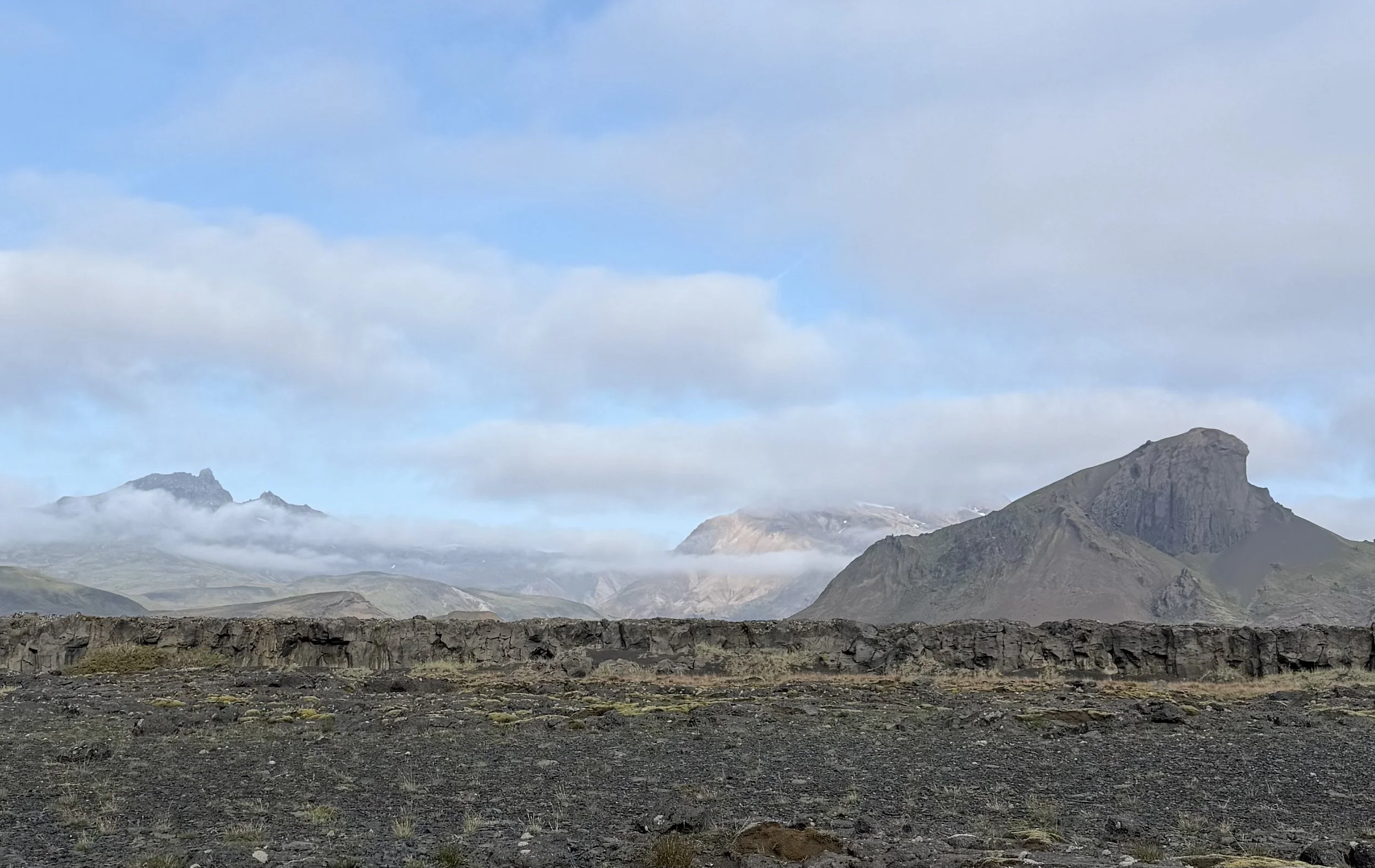
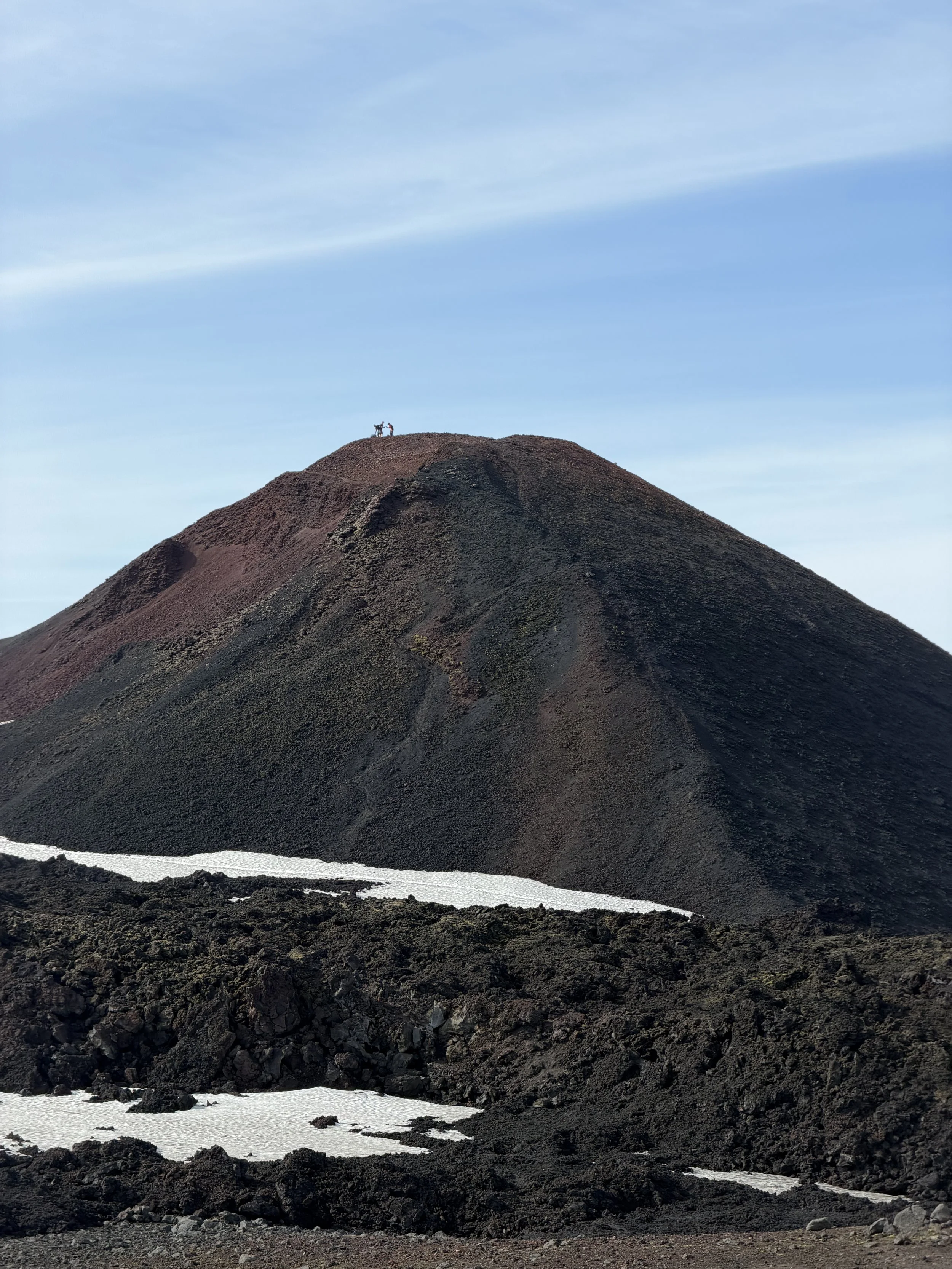
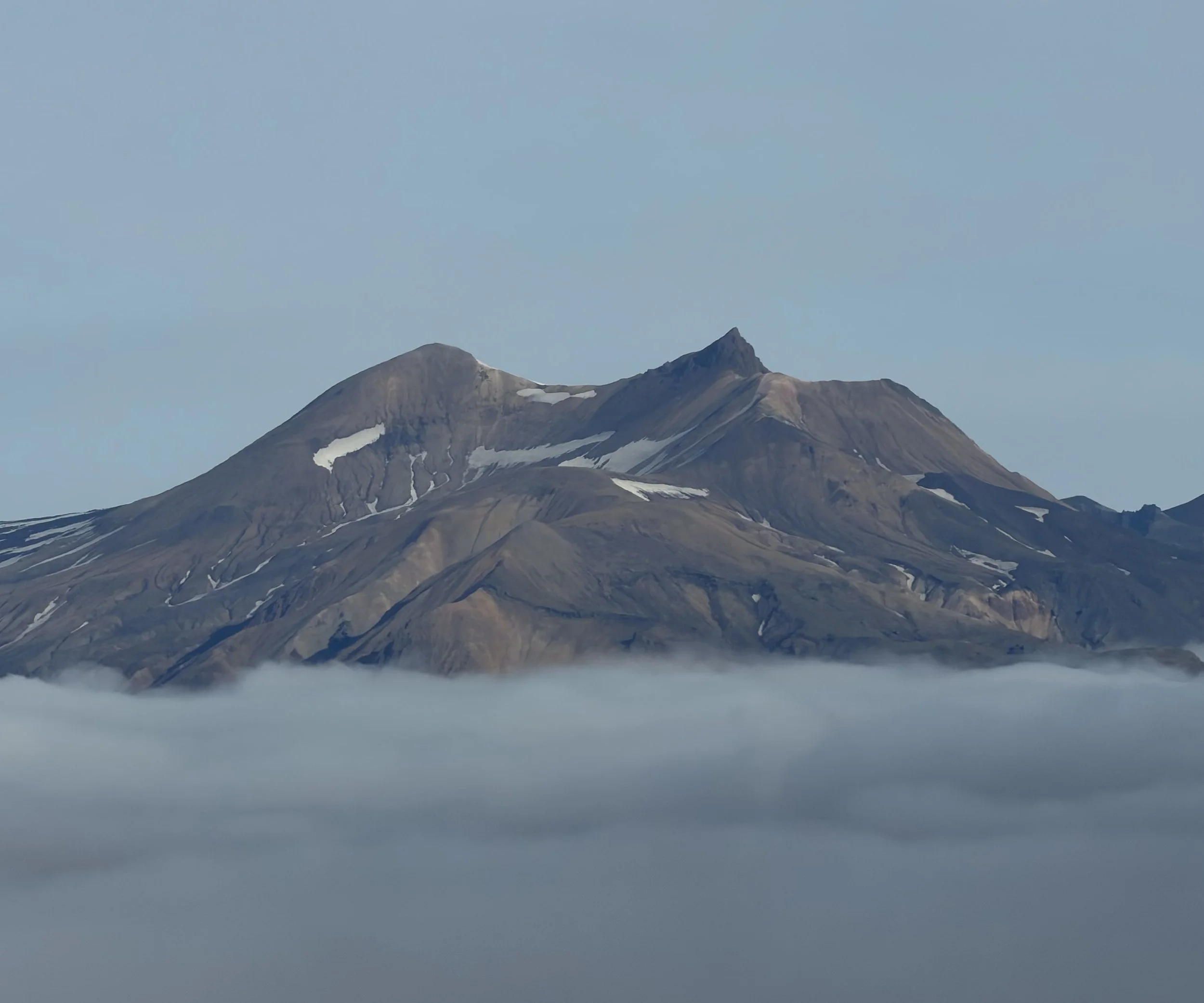
With this in mind, I did not expect to go through a forest on the trails that I was backpacking. I was in the highlands, in an area that was barren and windy and cold. I was not going to be hiking through an area that was hospitable to the trees. The northern terminus of the trail (Landmannalaugar) was an area with a good deal of thermal activity making it difficult for anything to grow. The rainbow-colored mountains were magnificent, but not a place where trees could flourish. This was the beginning of the hike and was what I expected. I camped at a high point on the trail, surrounded by volcanic rock and obsidian and able to see for miles because of the lack of trees. I could see the puffs of steam emerging from beyond the hills offering more thermal activity that was on the trail before us for the next day and promising a lack of trees.
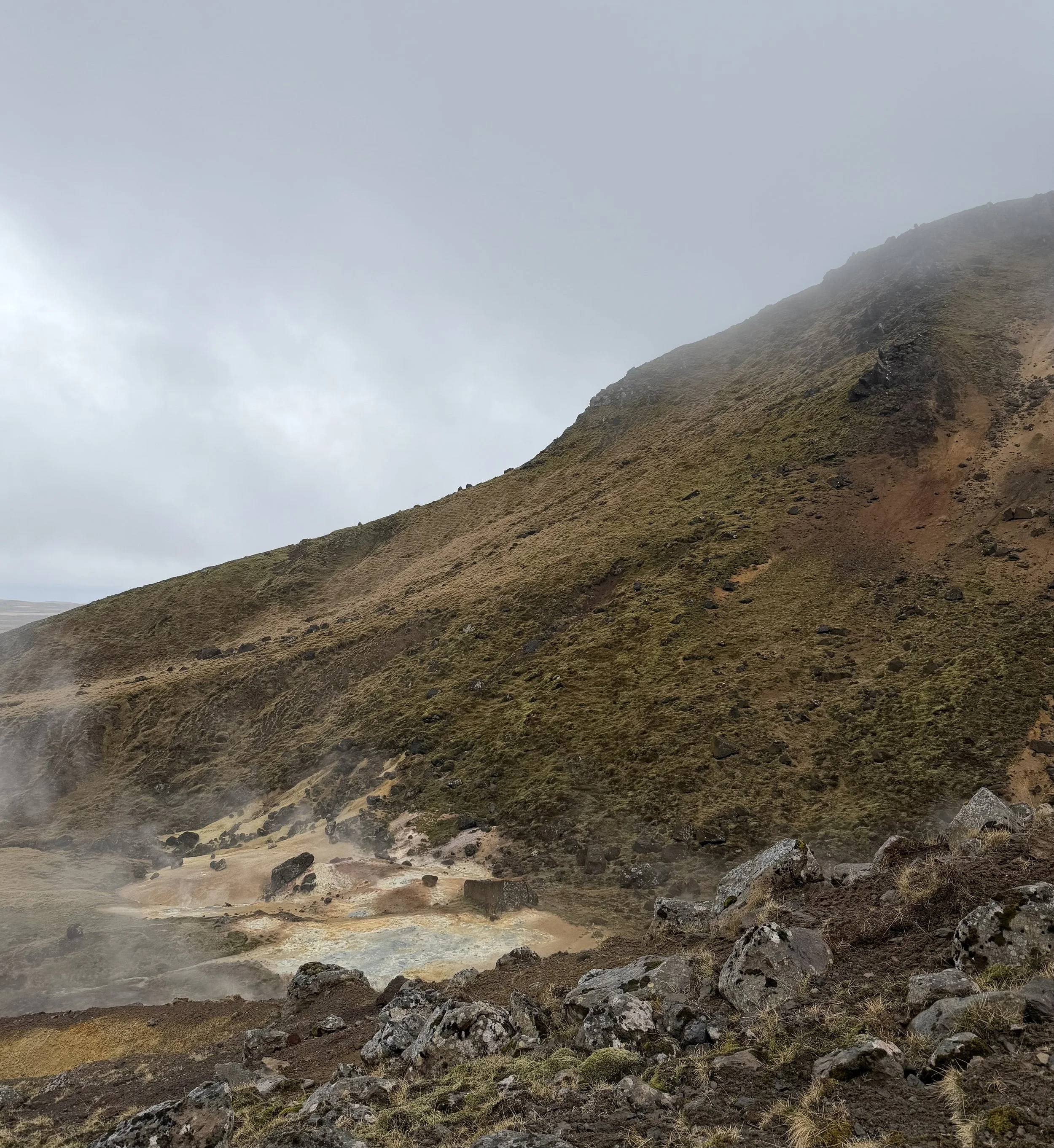
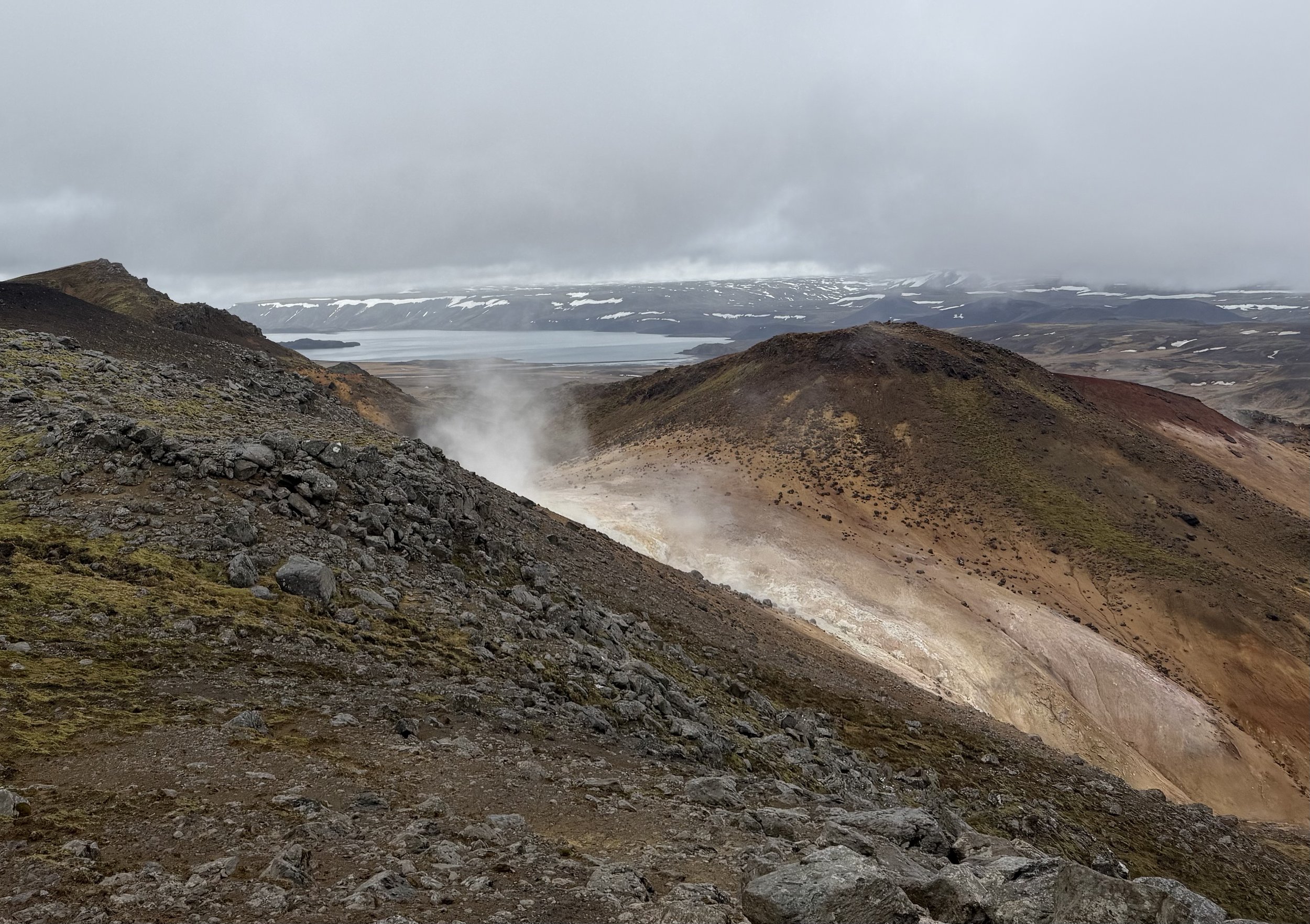
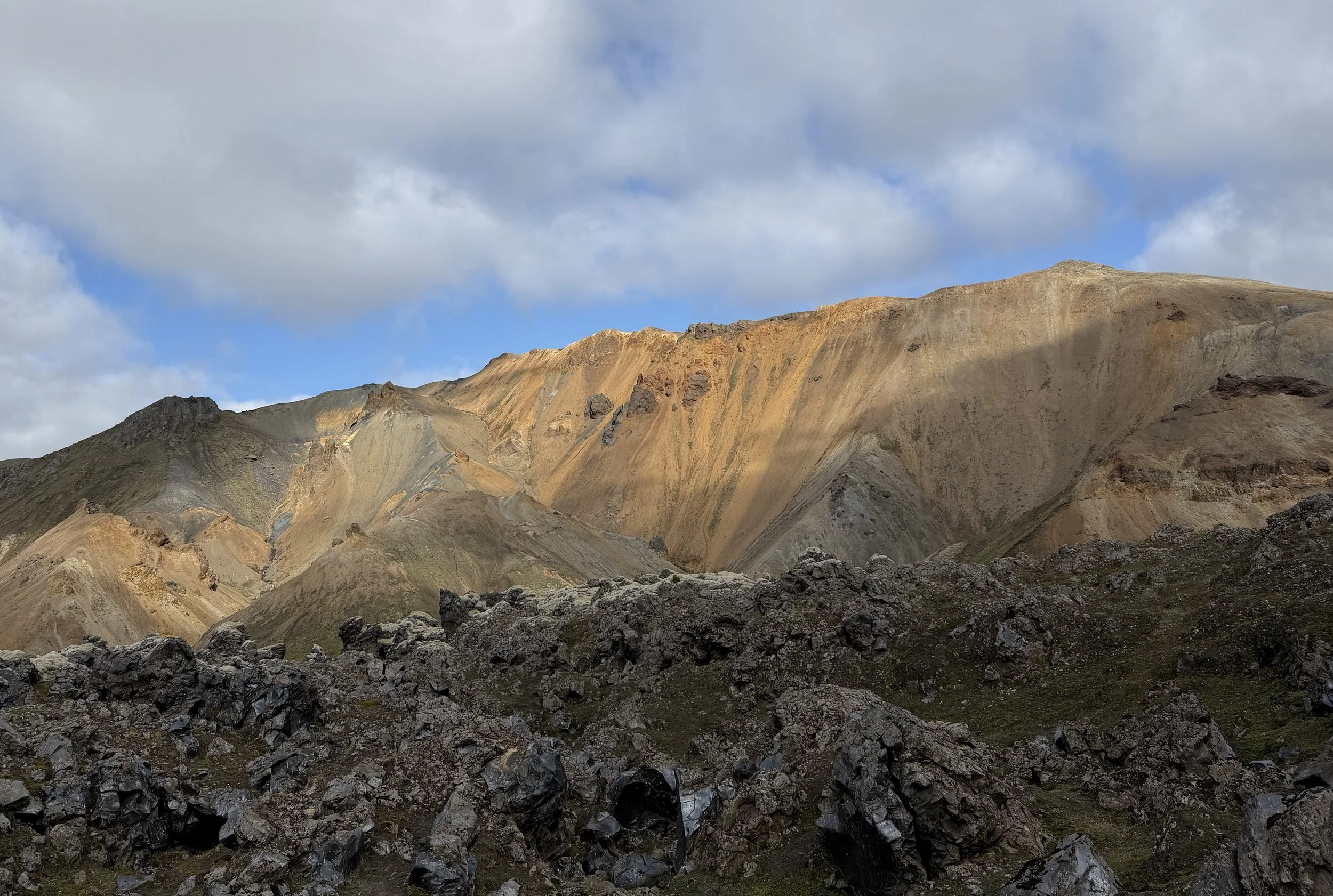
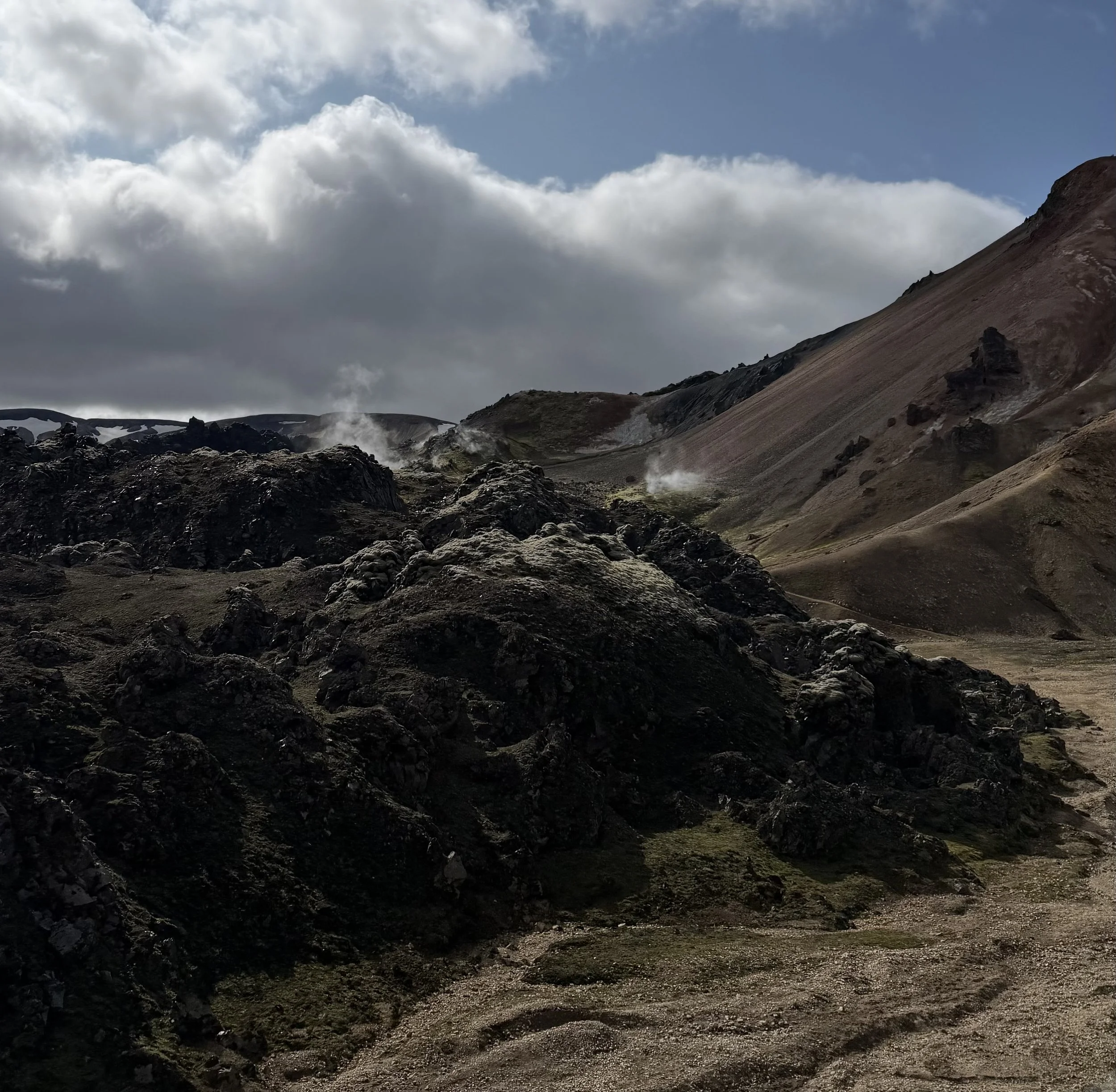
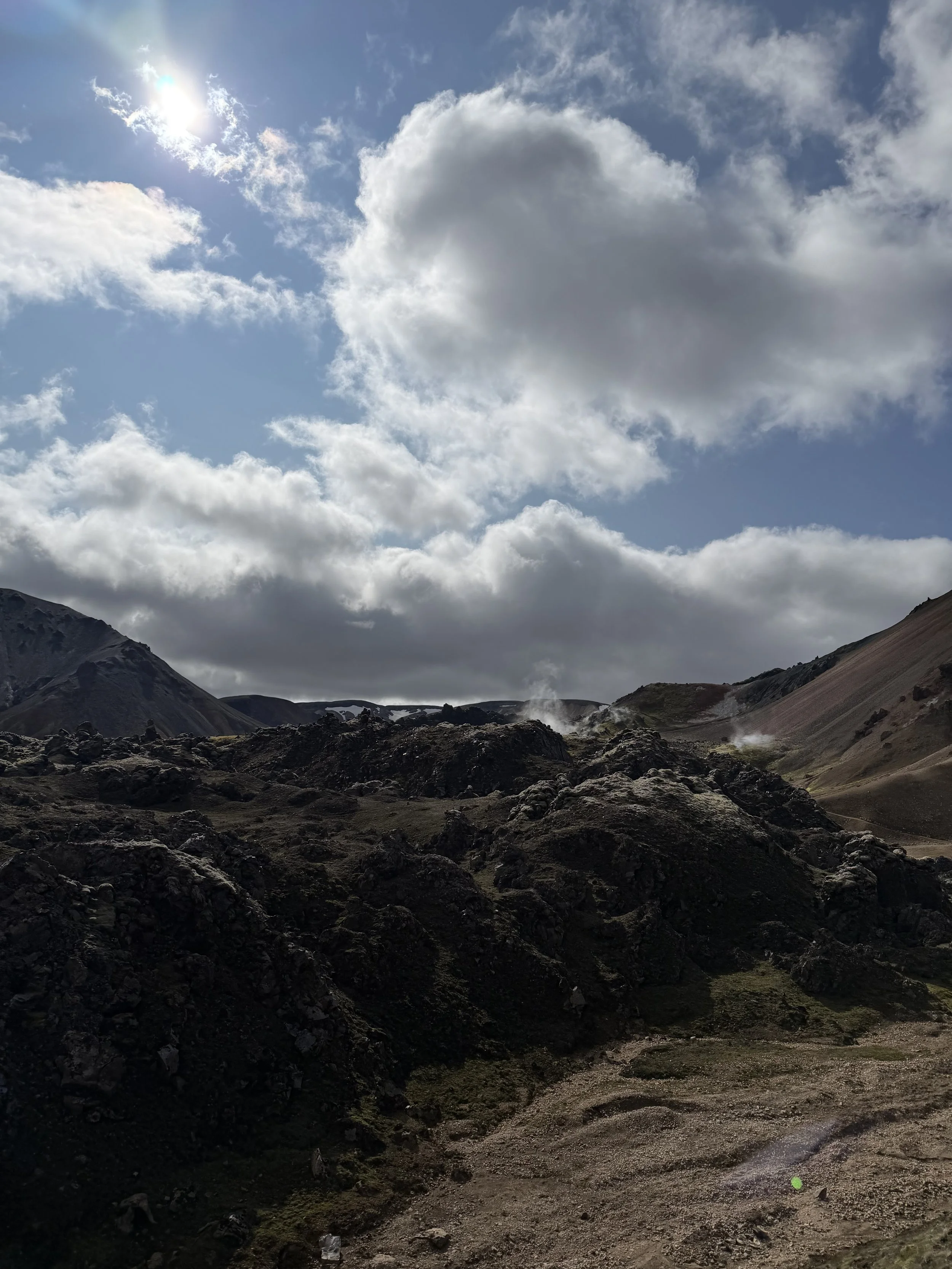
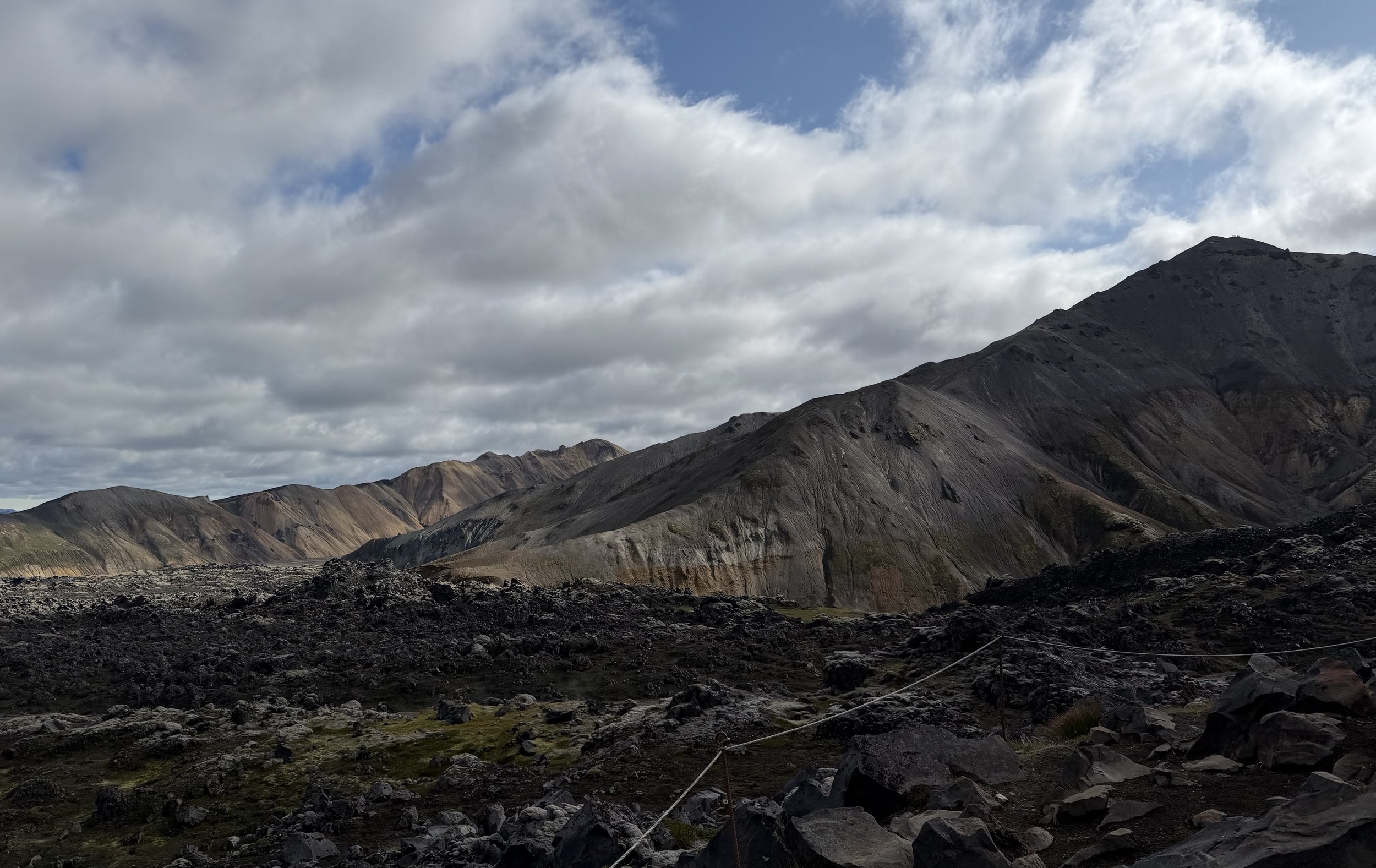
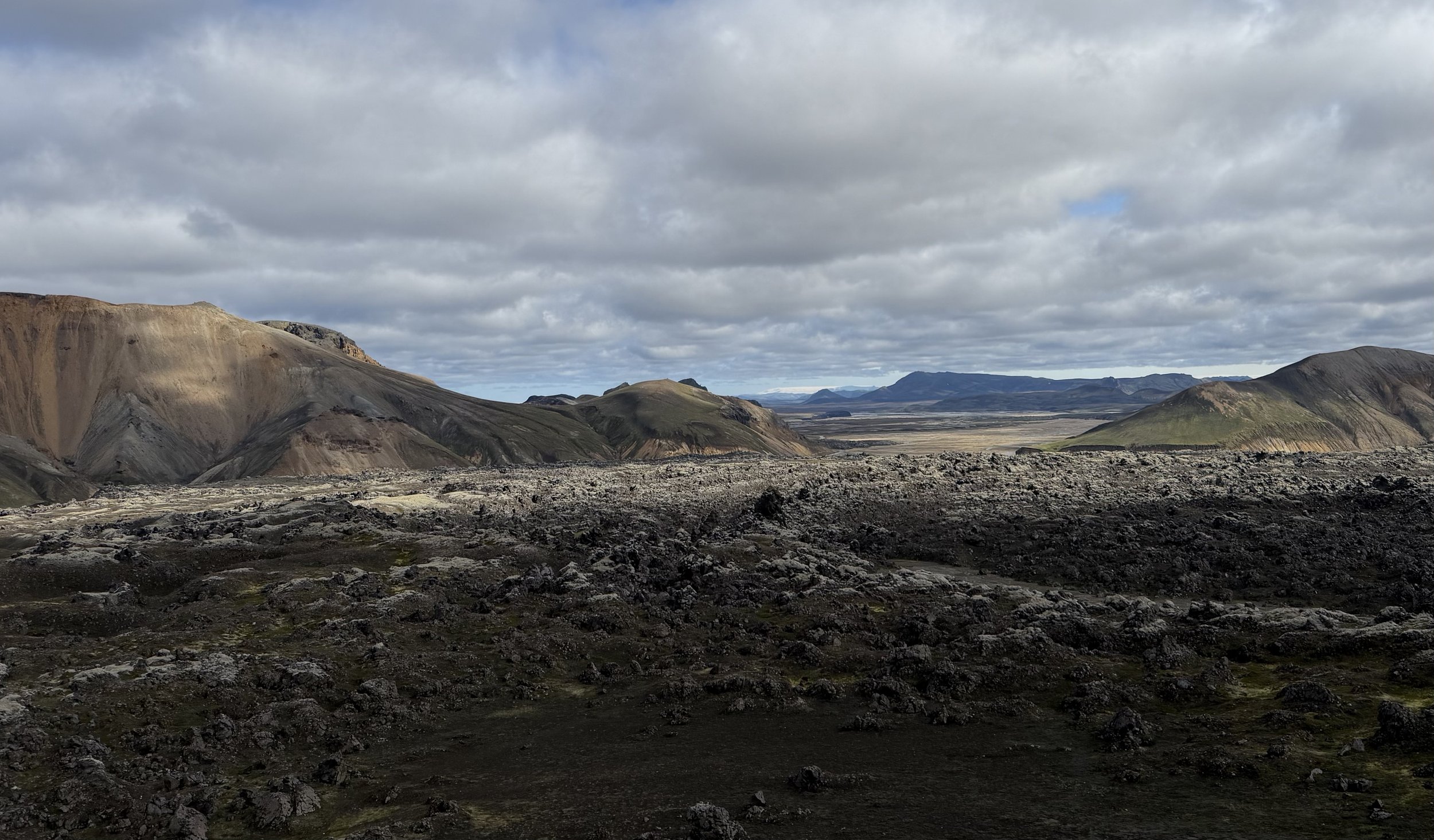
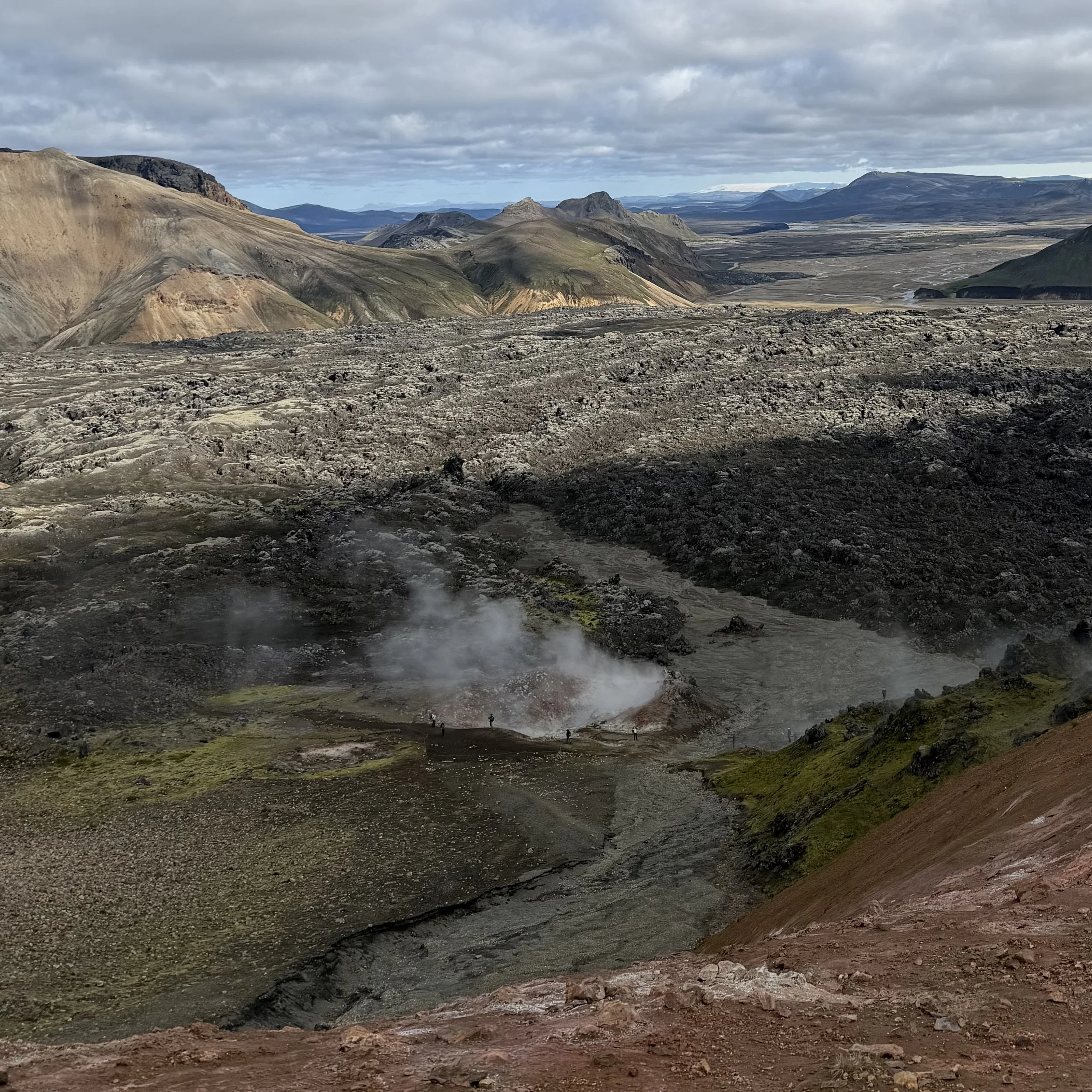
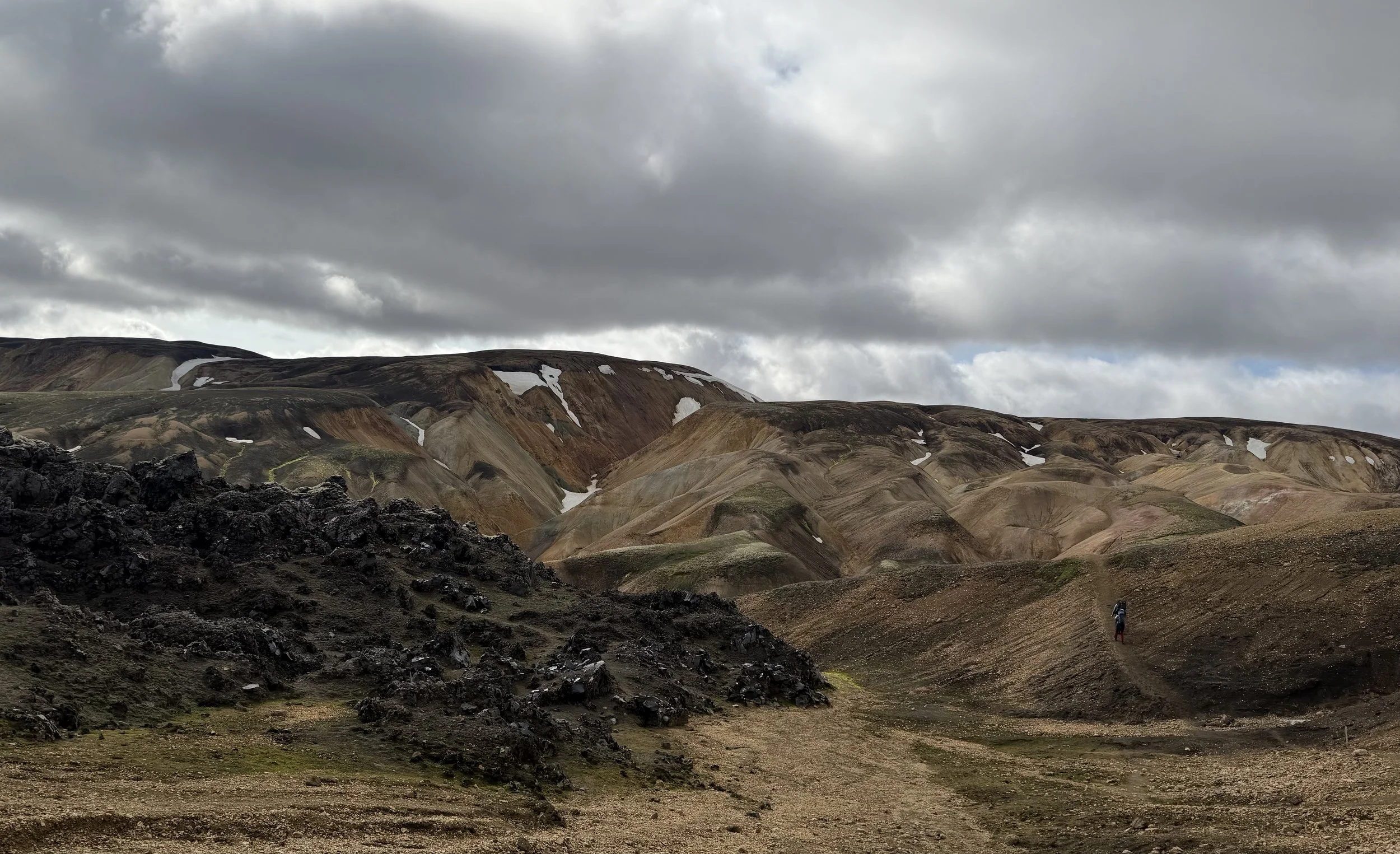
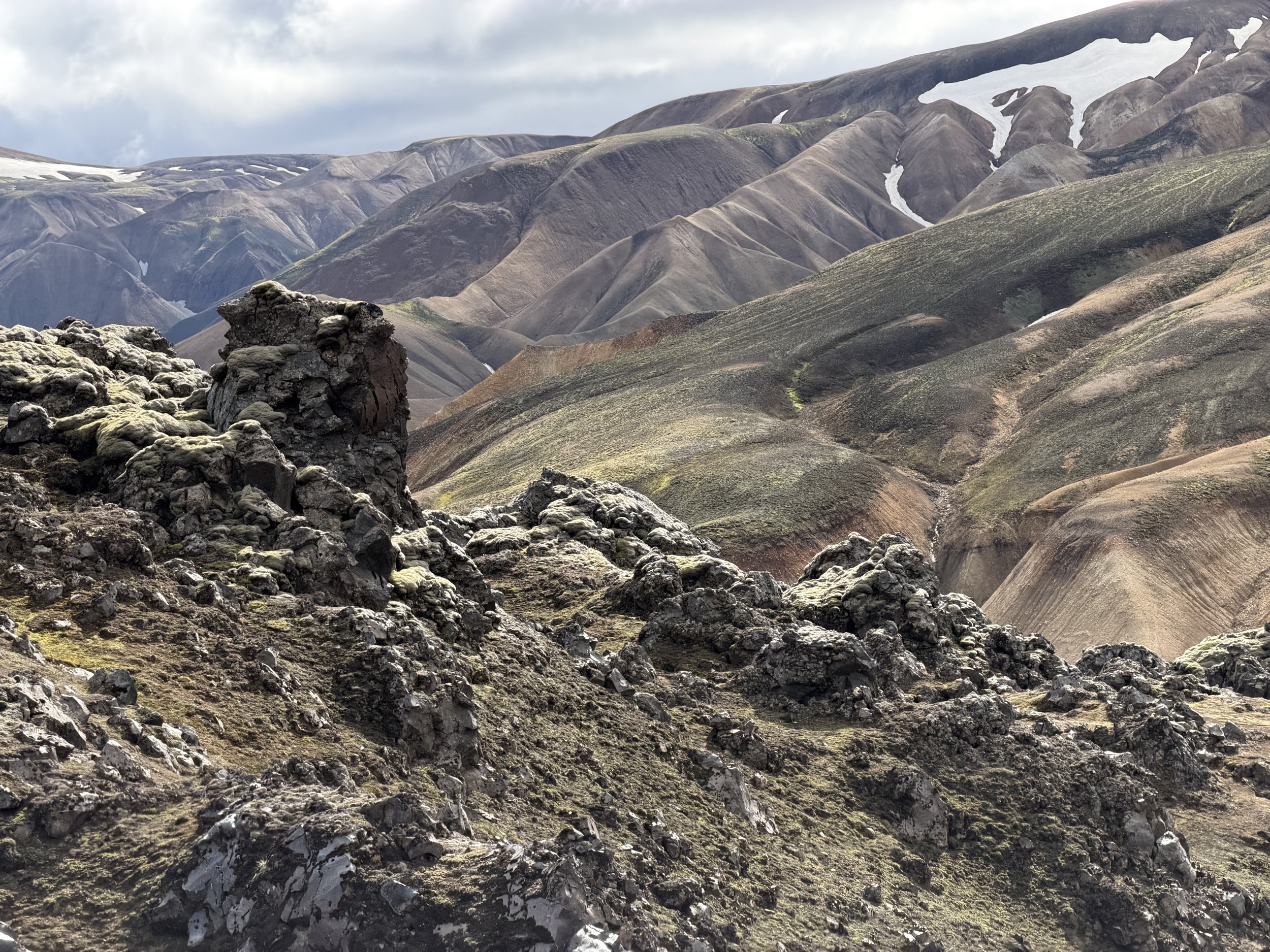
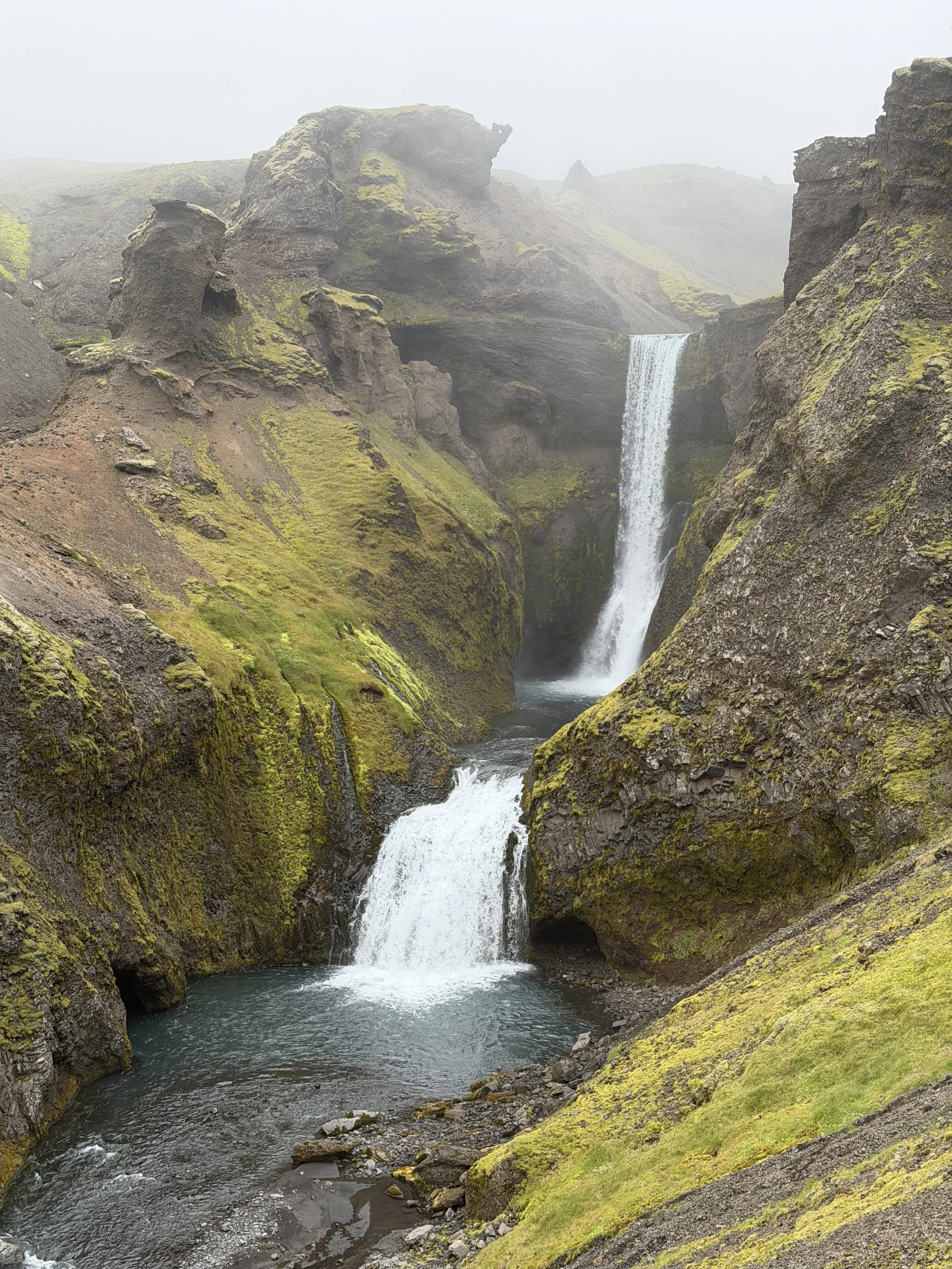
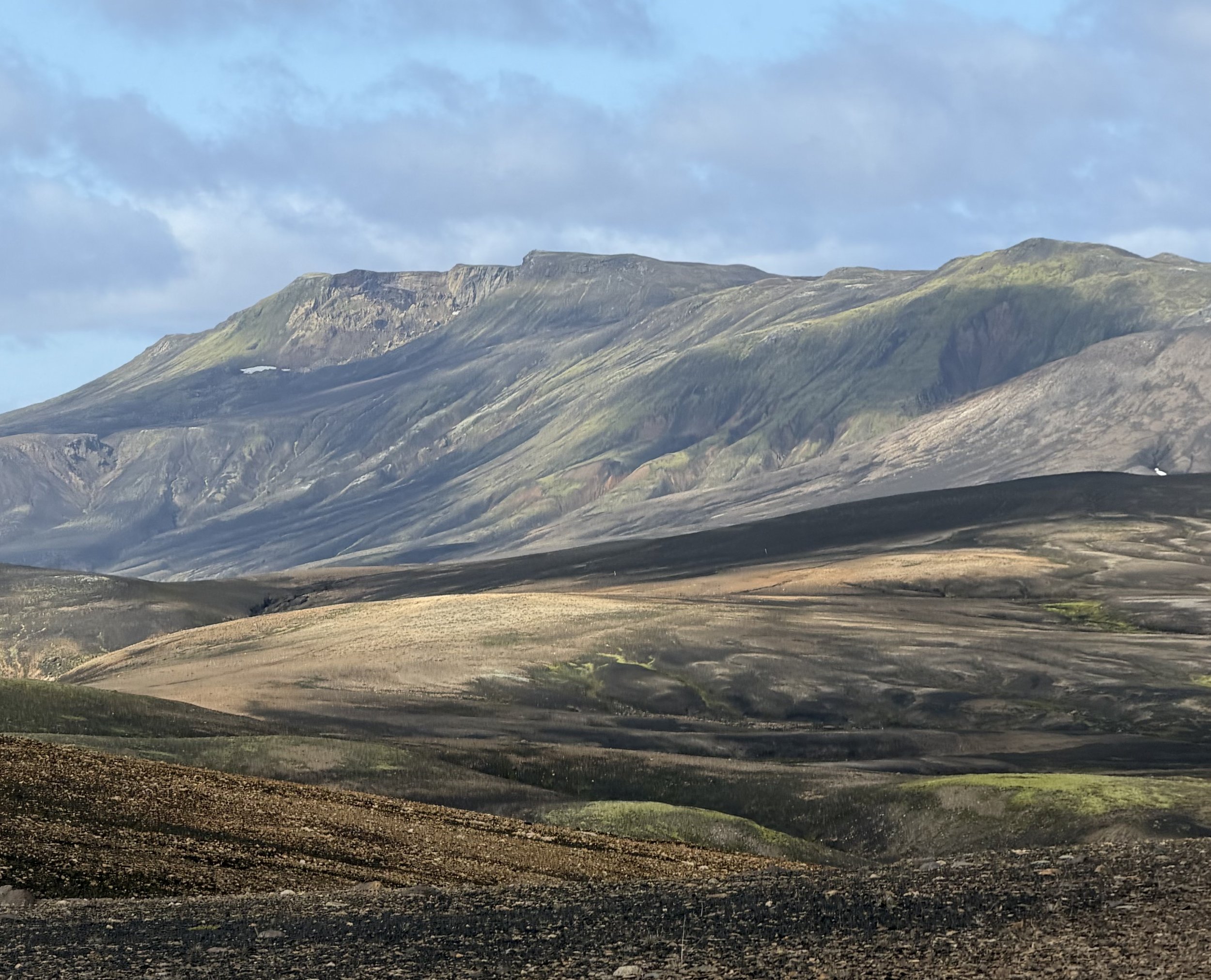
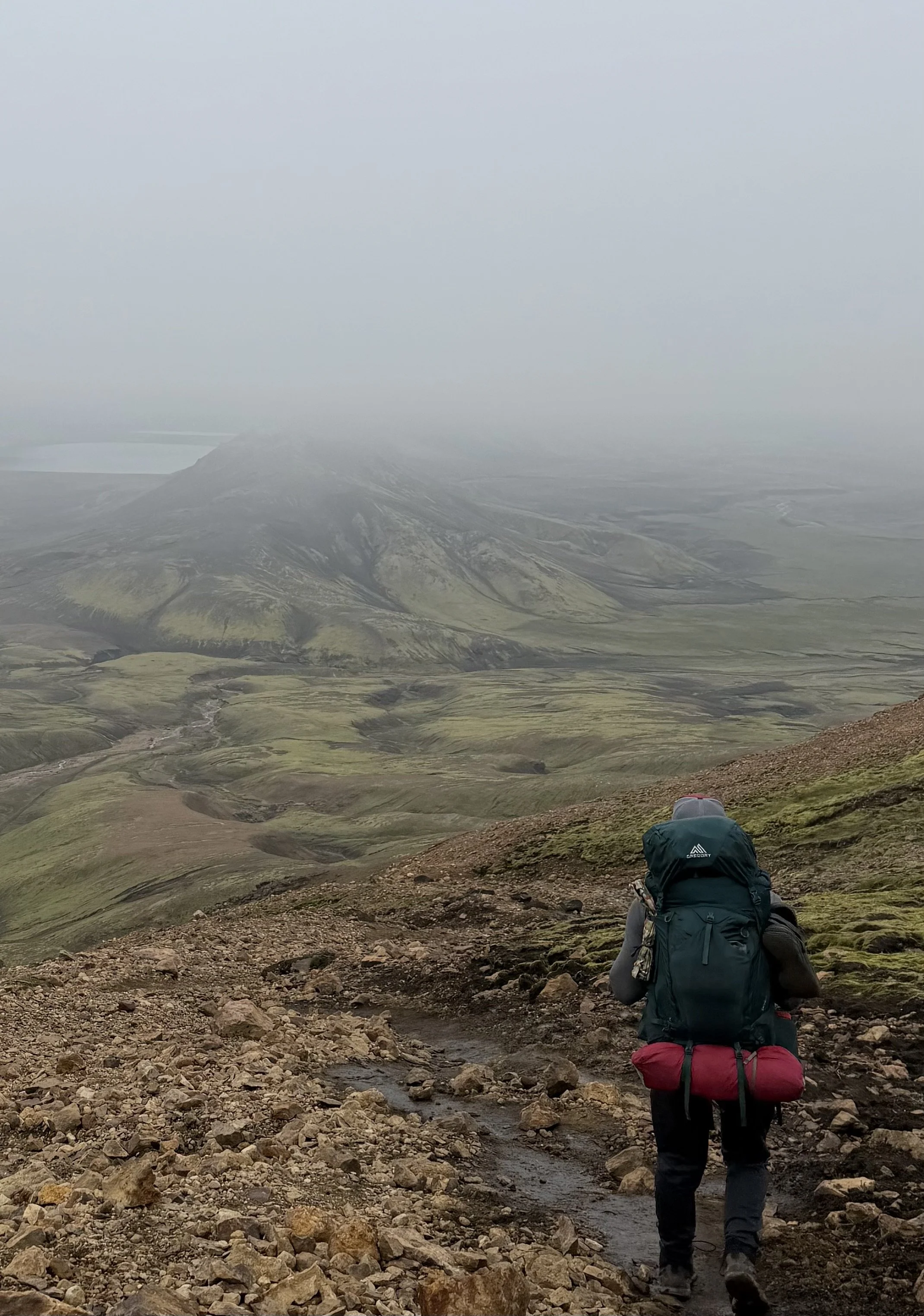
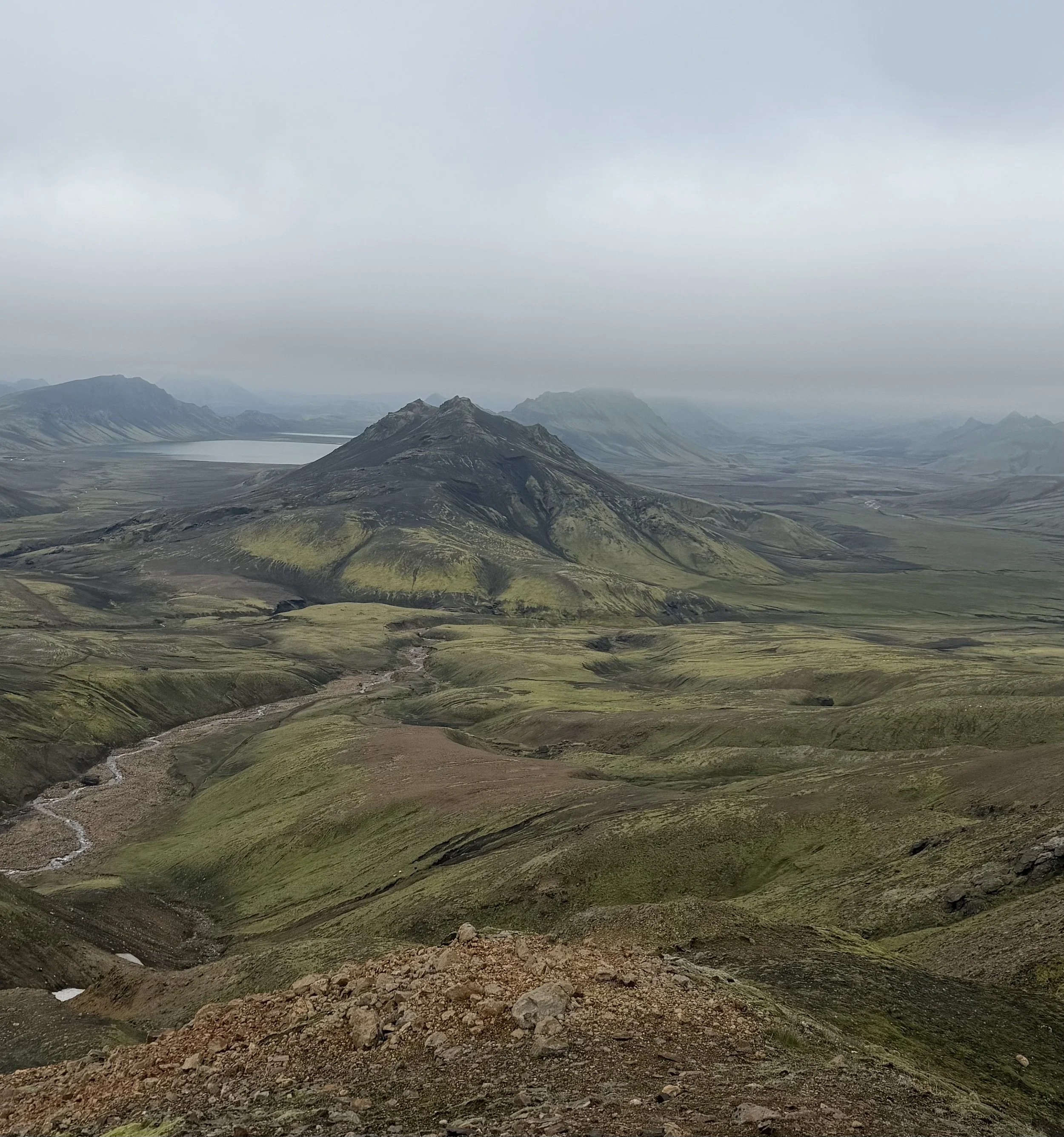
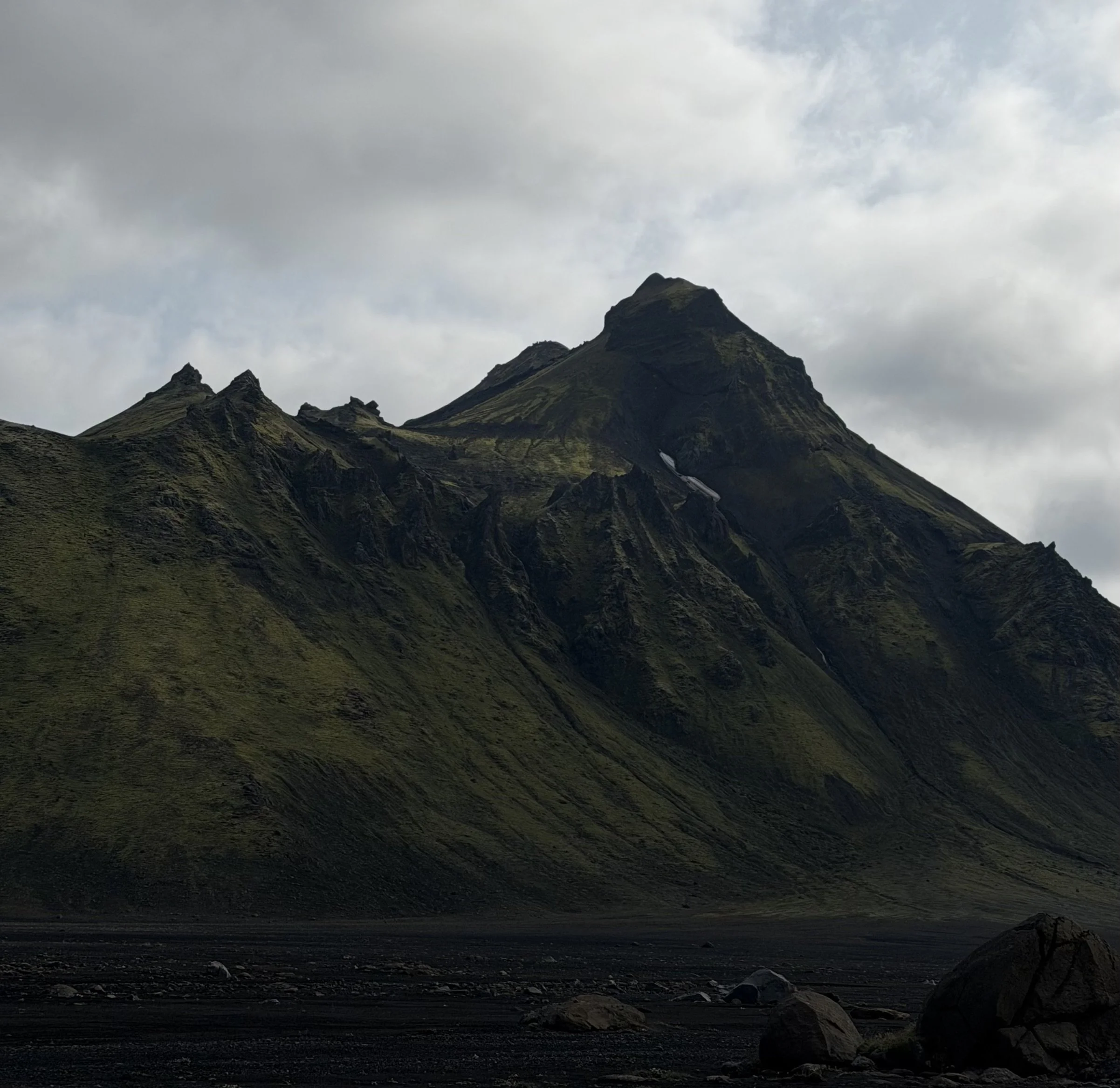
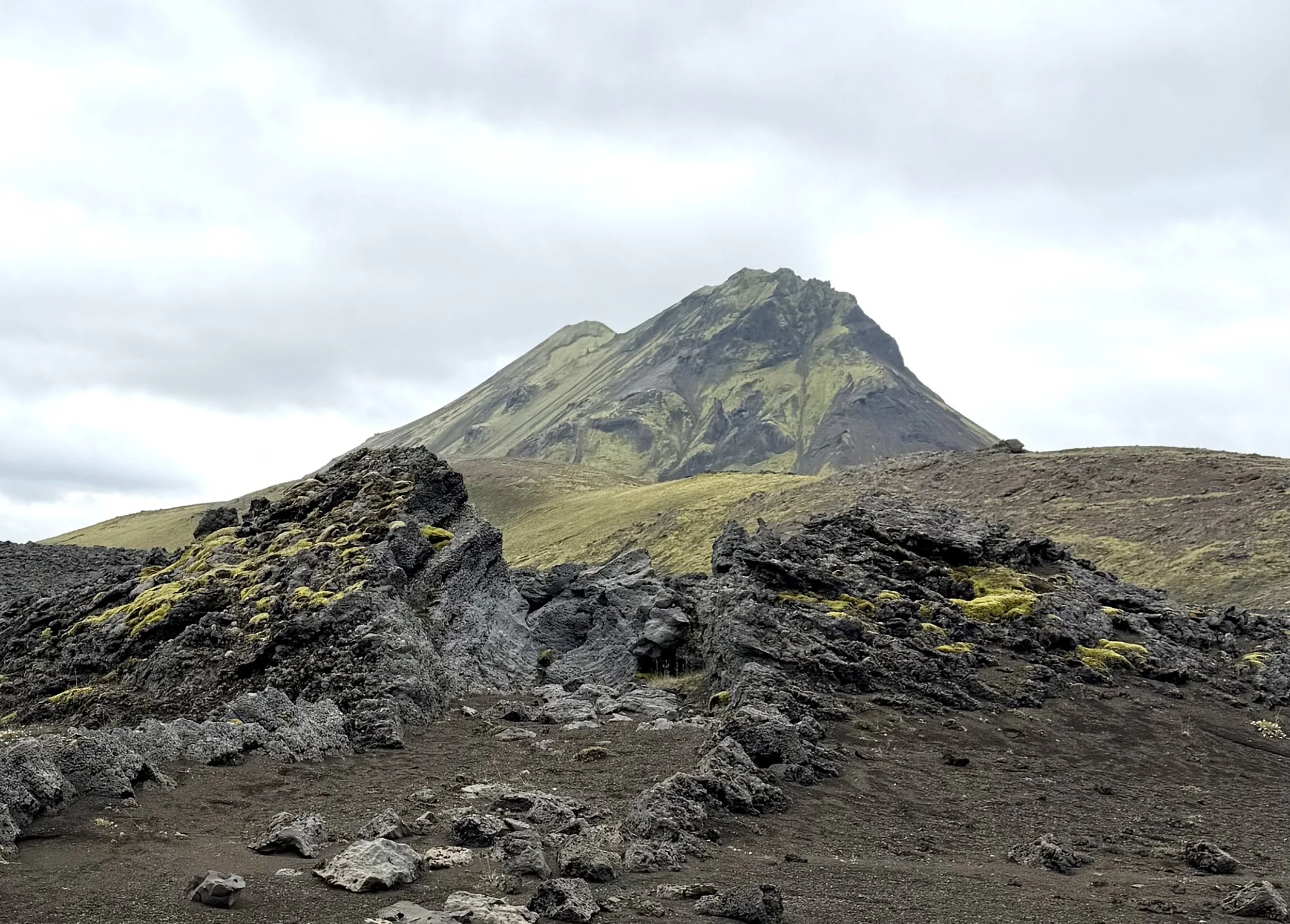
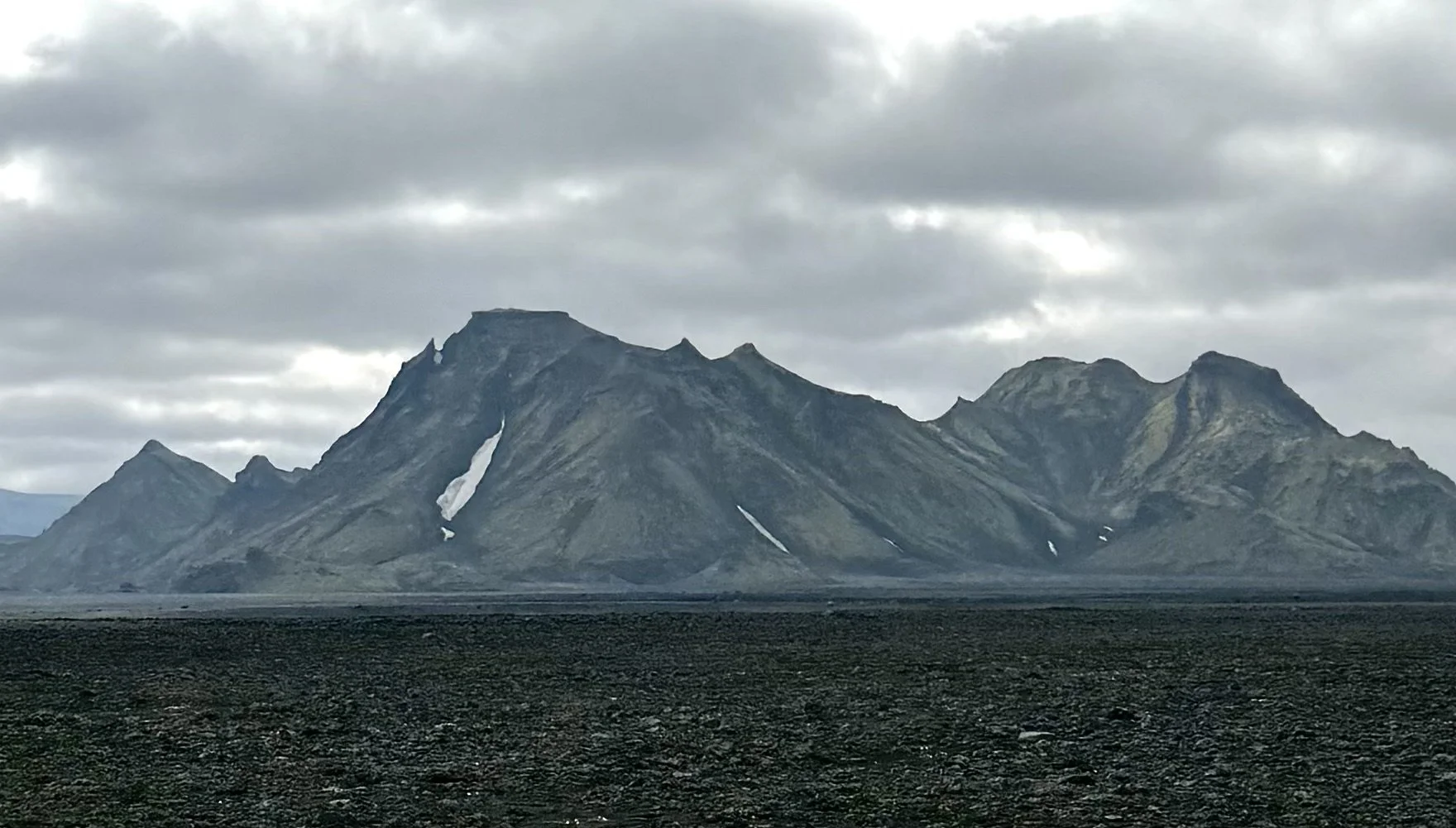
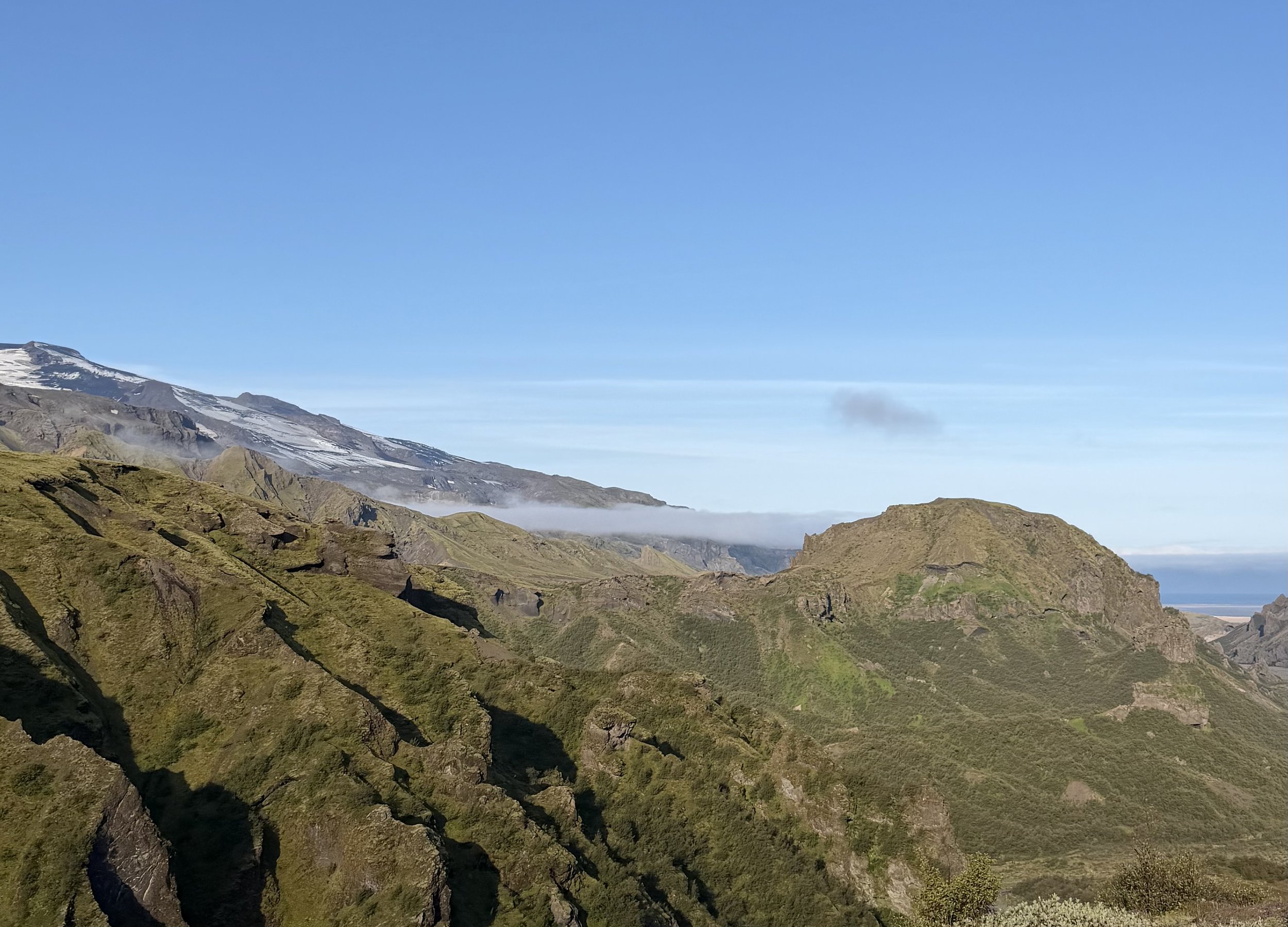
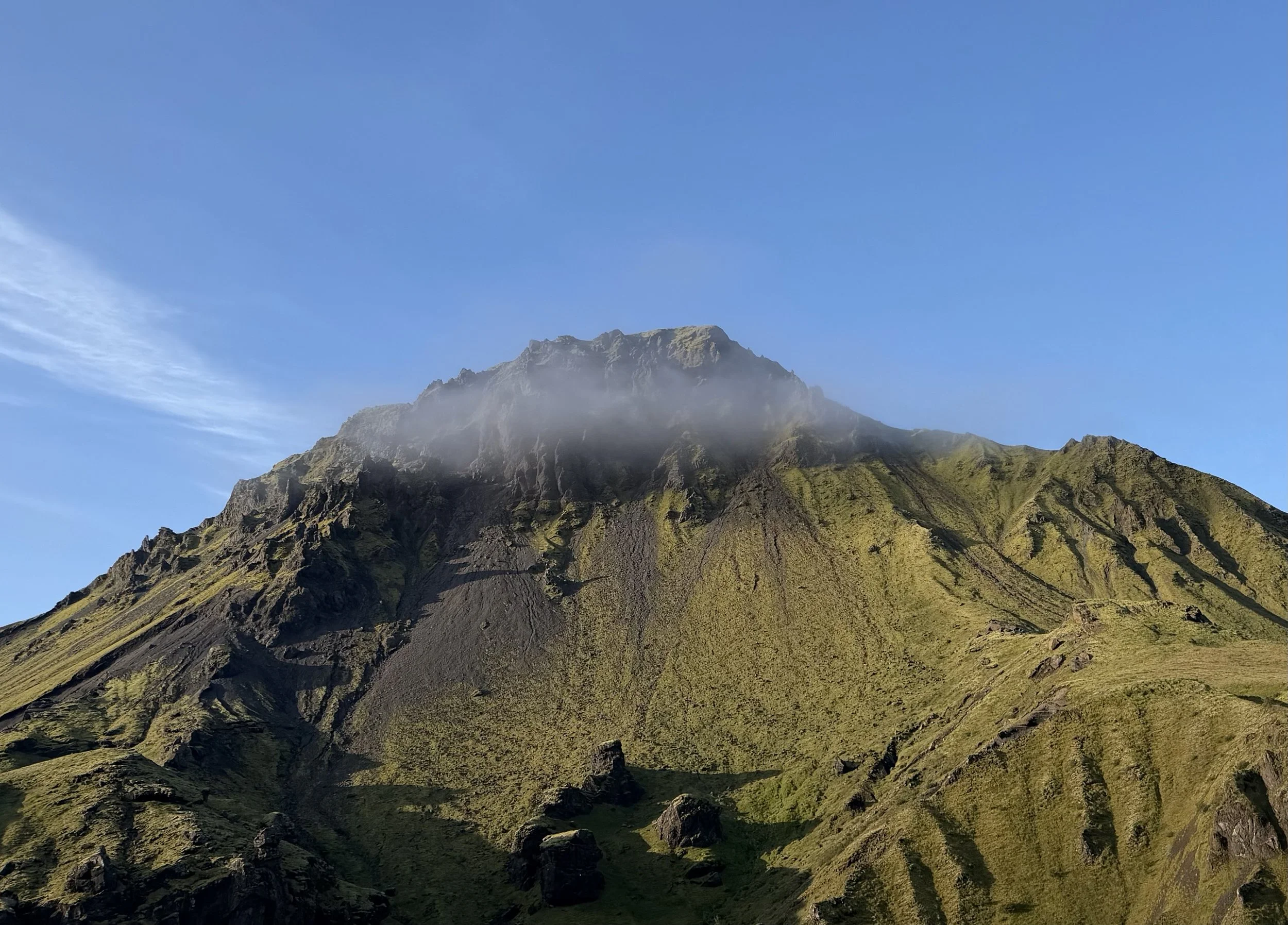
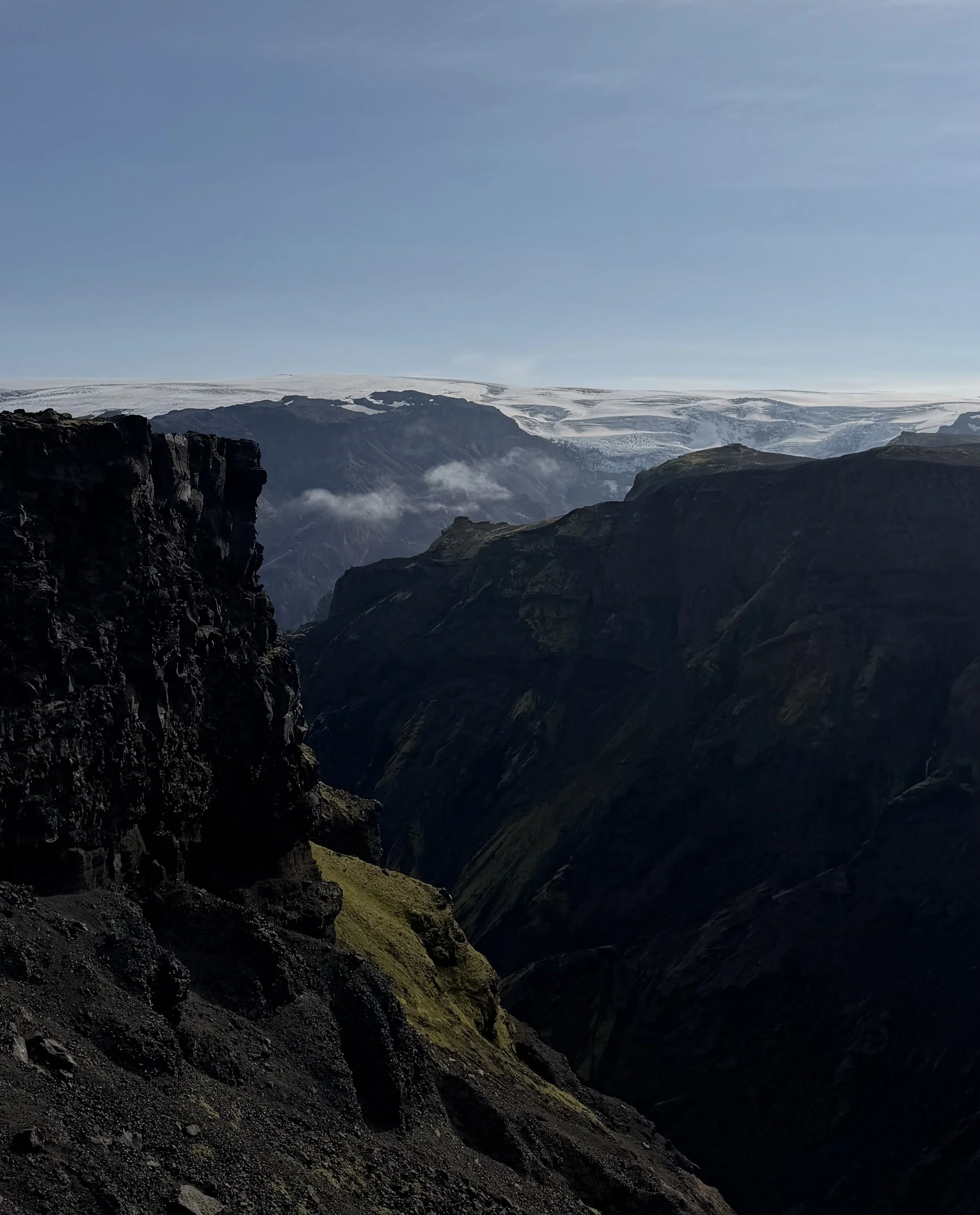
The landscape progressed from brown and red gravel with splashes of bright-green growth around the thermal springs to a stark valley of emerald green and black. The trail took us from the high point into a valley where the glacial waters invited more growth. Mountains towered over the volcanic fields covered with green moss and streaks of black volcanic scree. We walked through a gravel lava field surrounded by towering mountains, able to see for miles and miles as we walked. That night we camped, surrounded by more mountains, lots of people also hiking the trail, still, no trees.
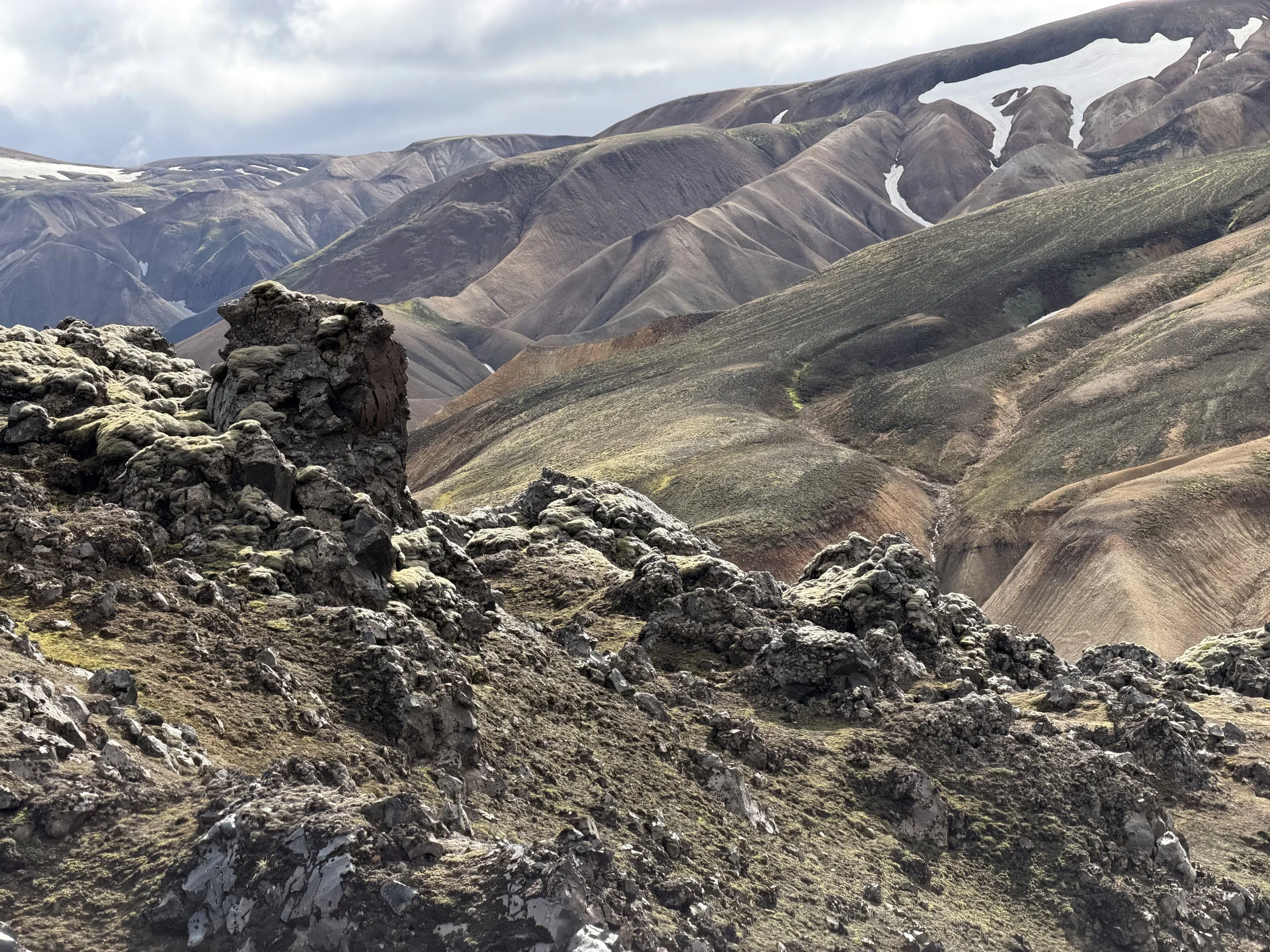
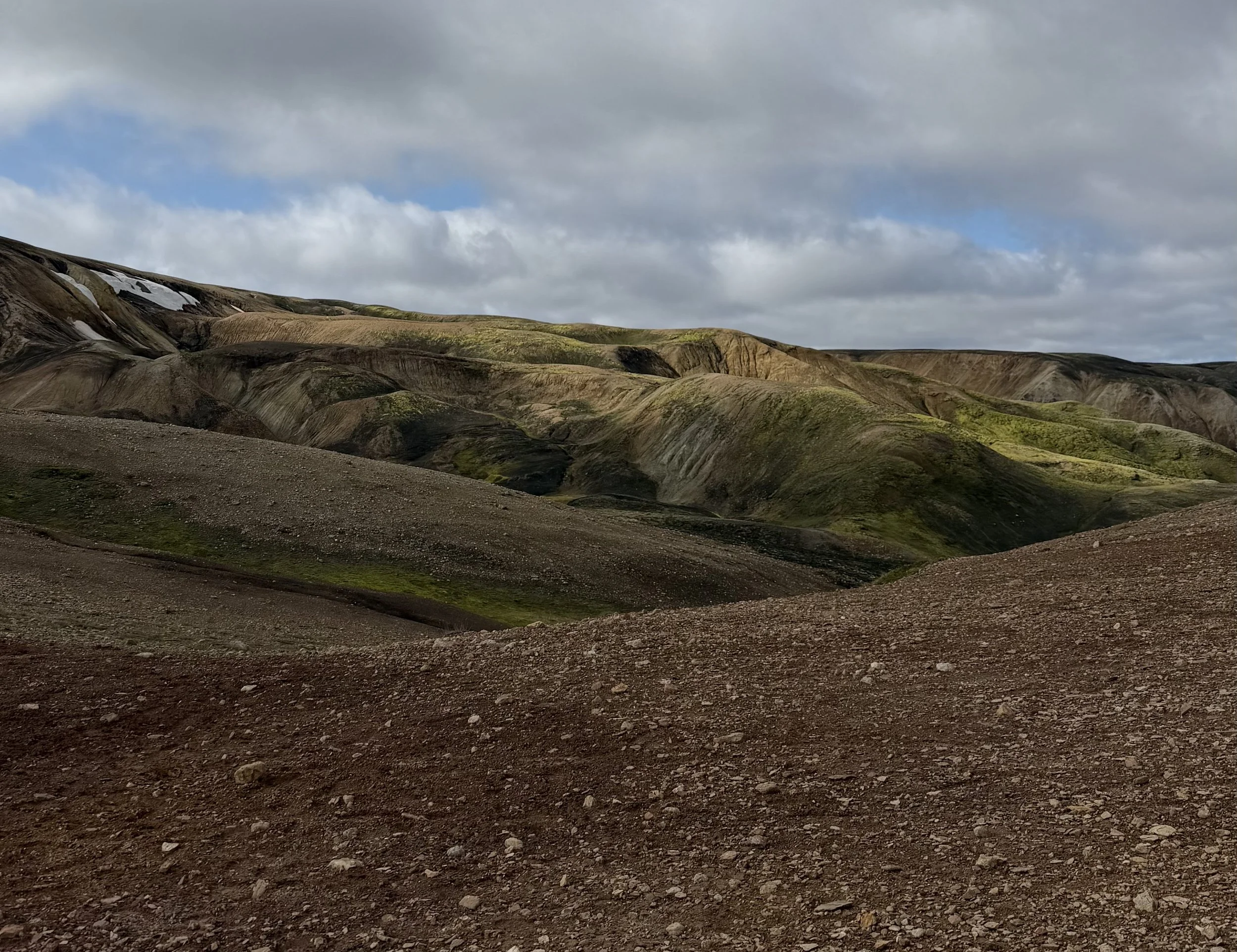
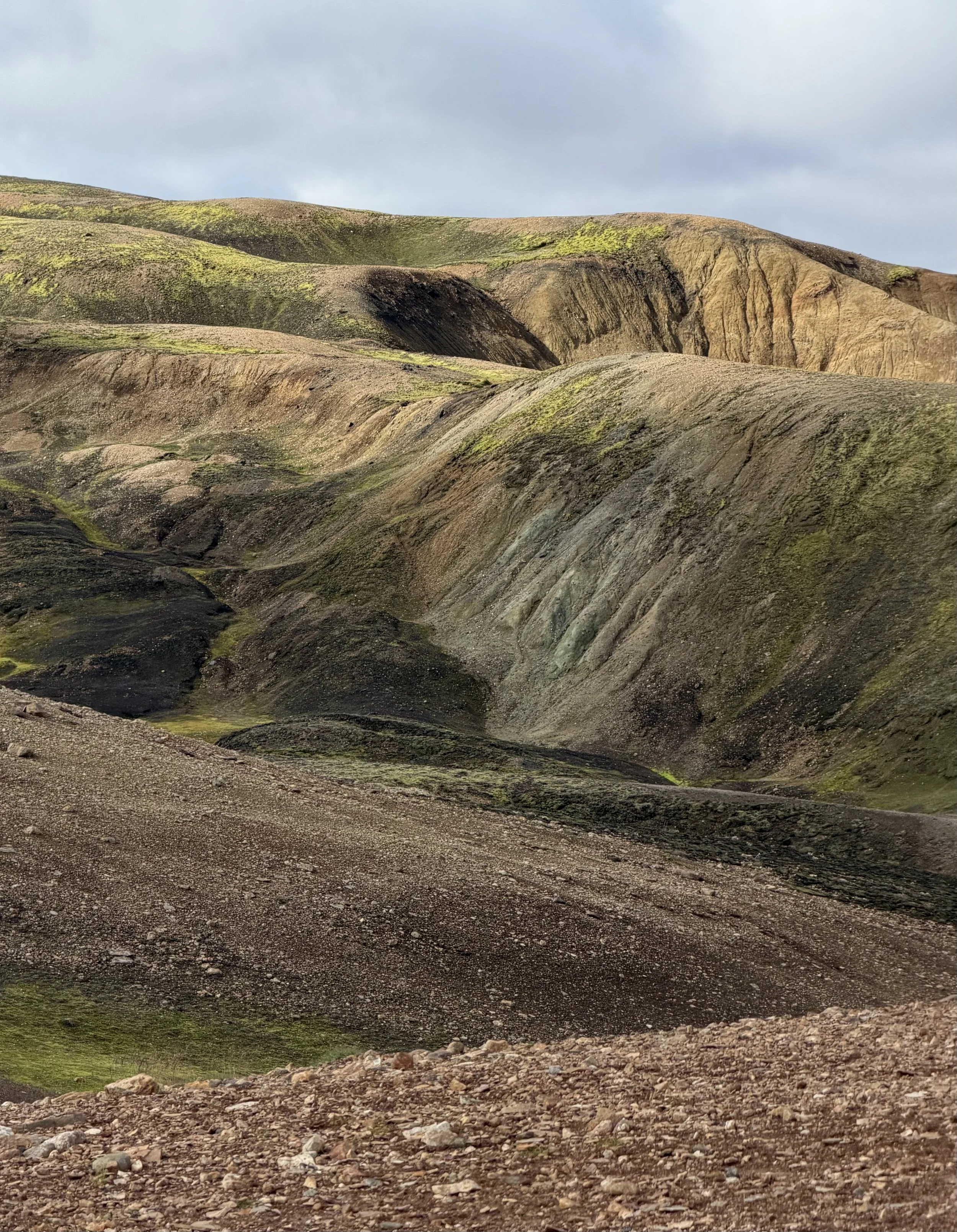
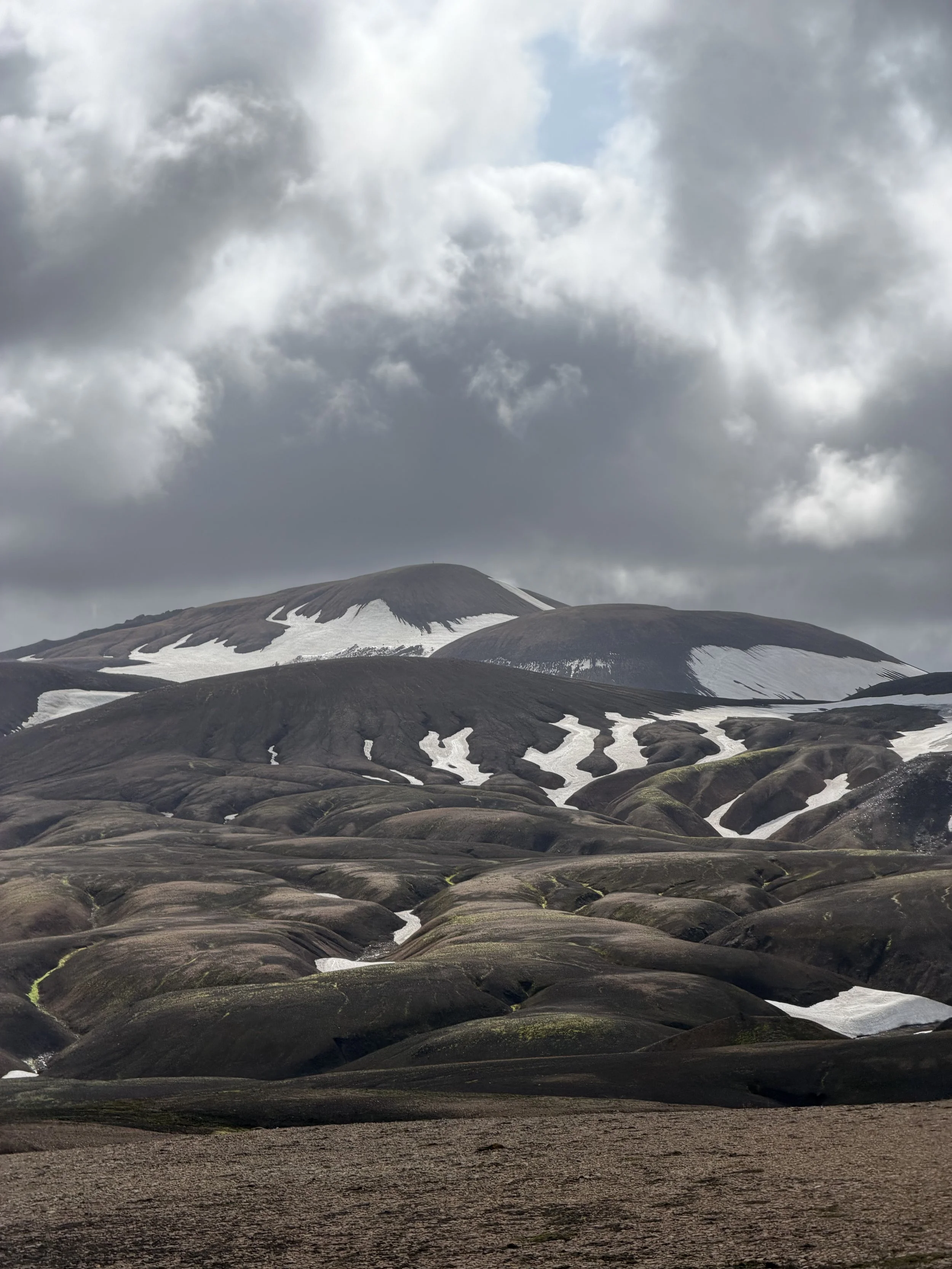
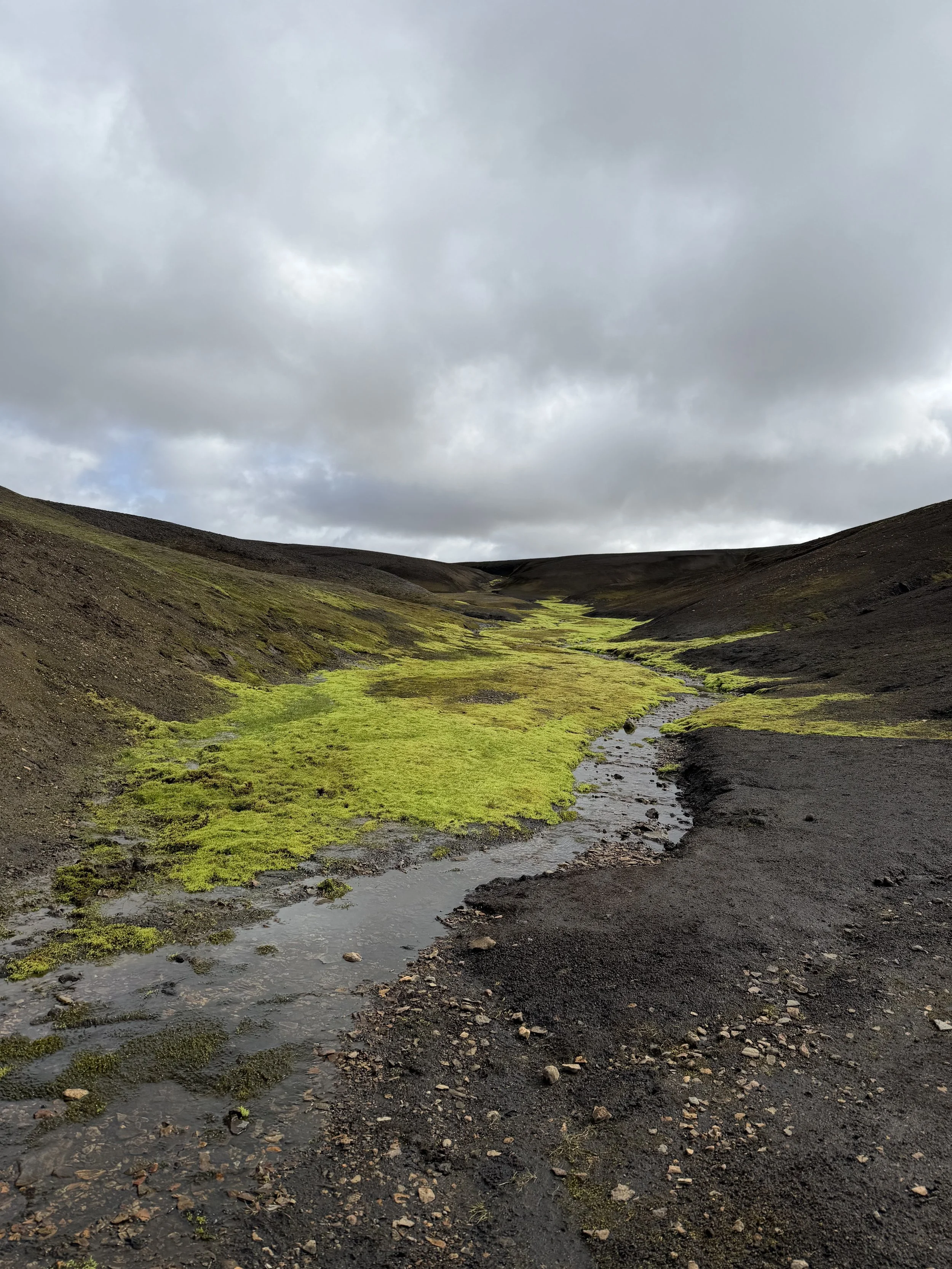
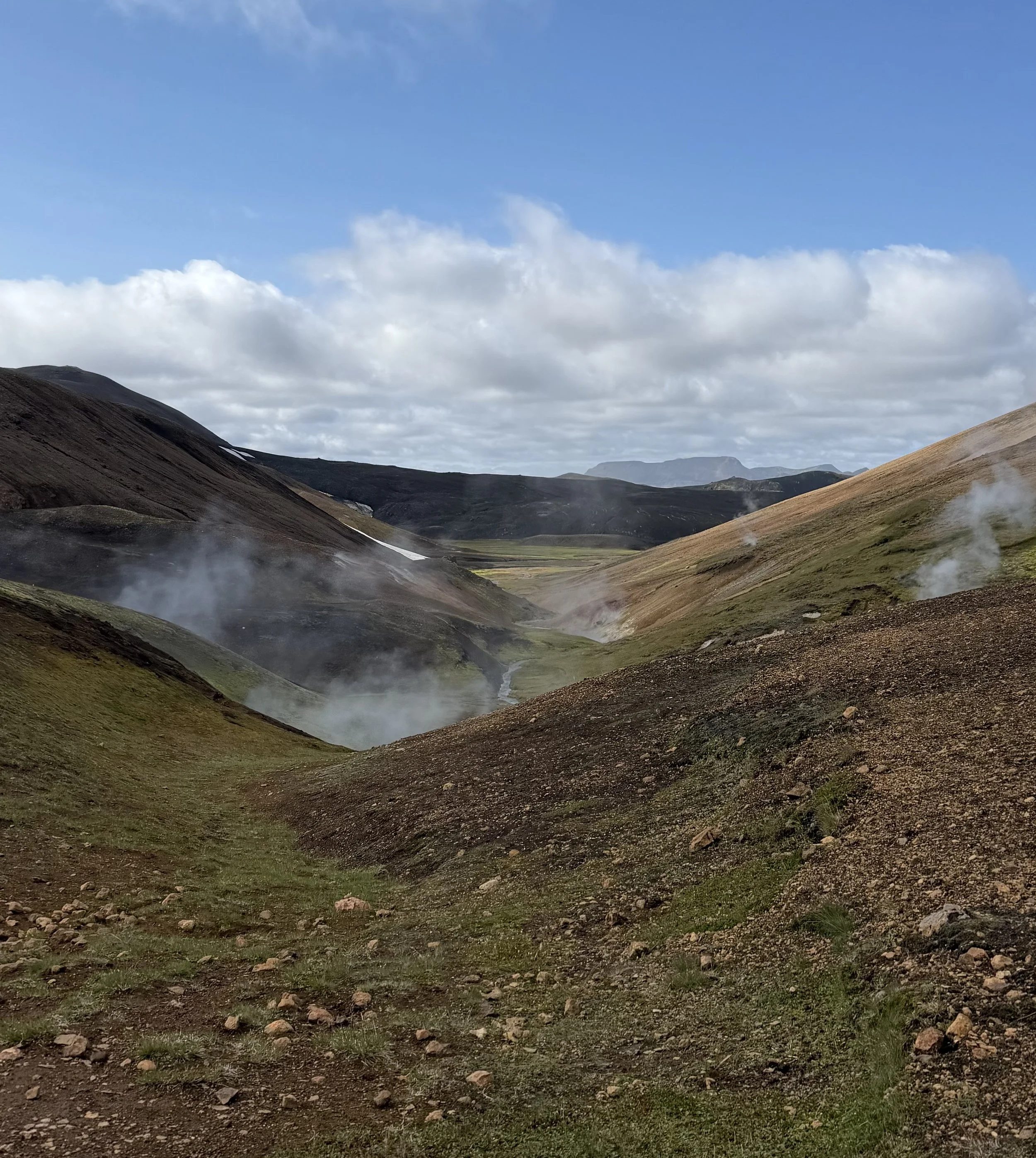
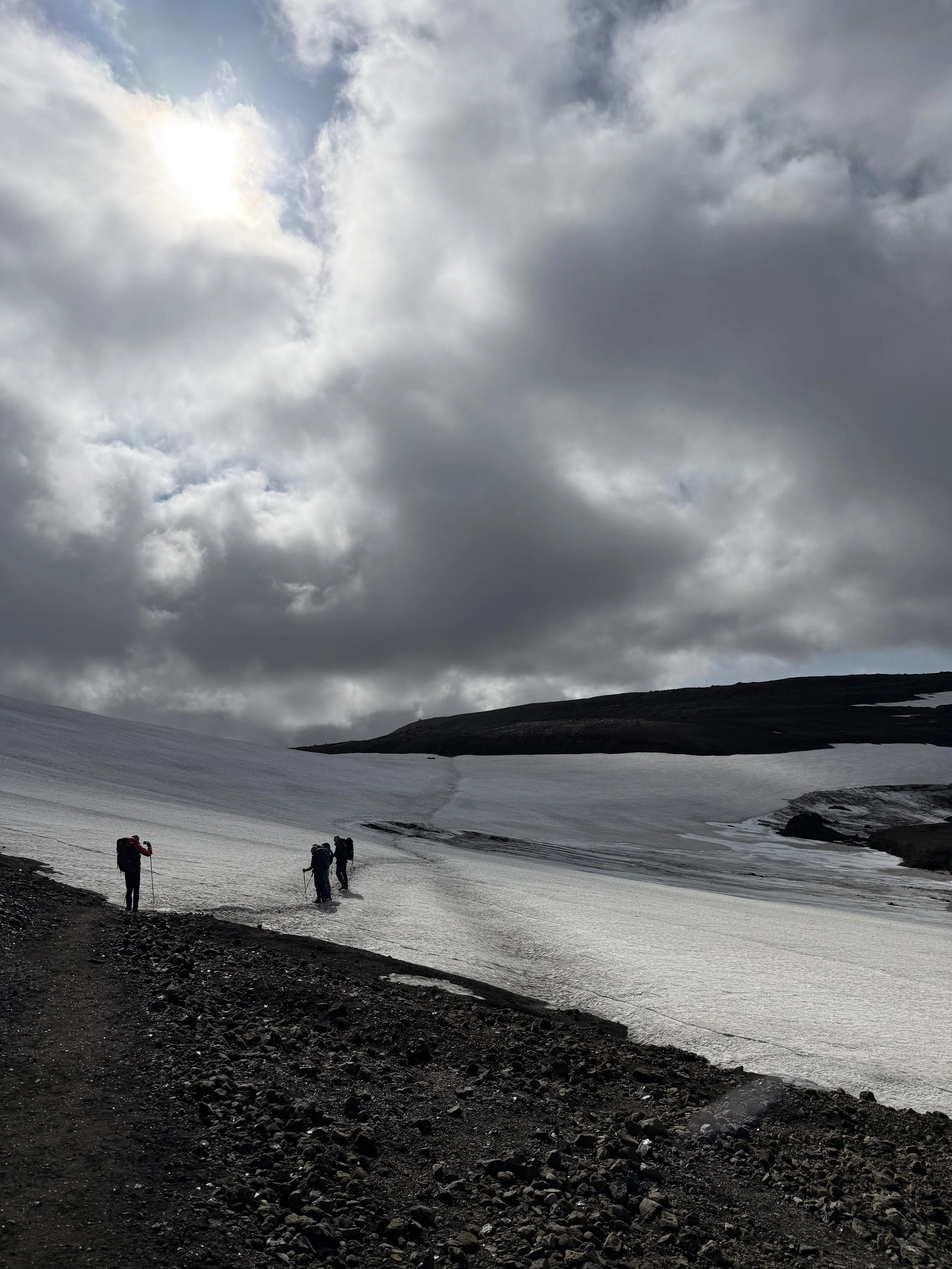
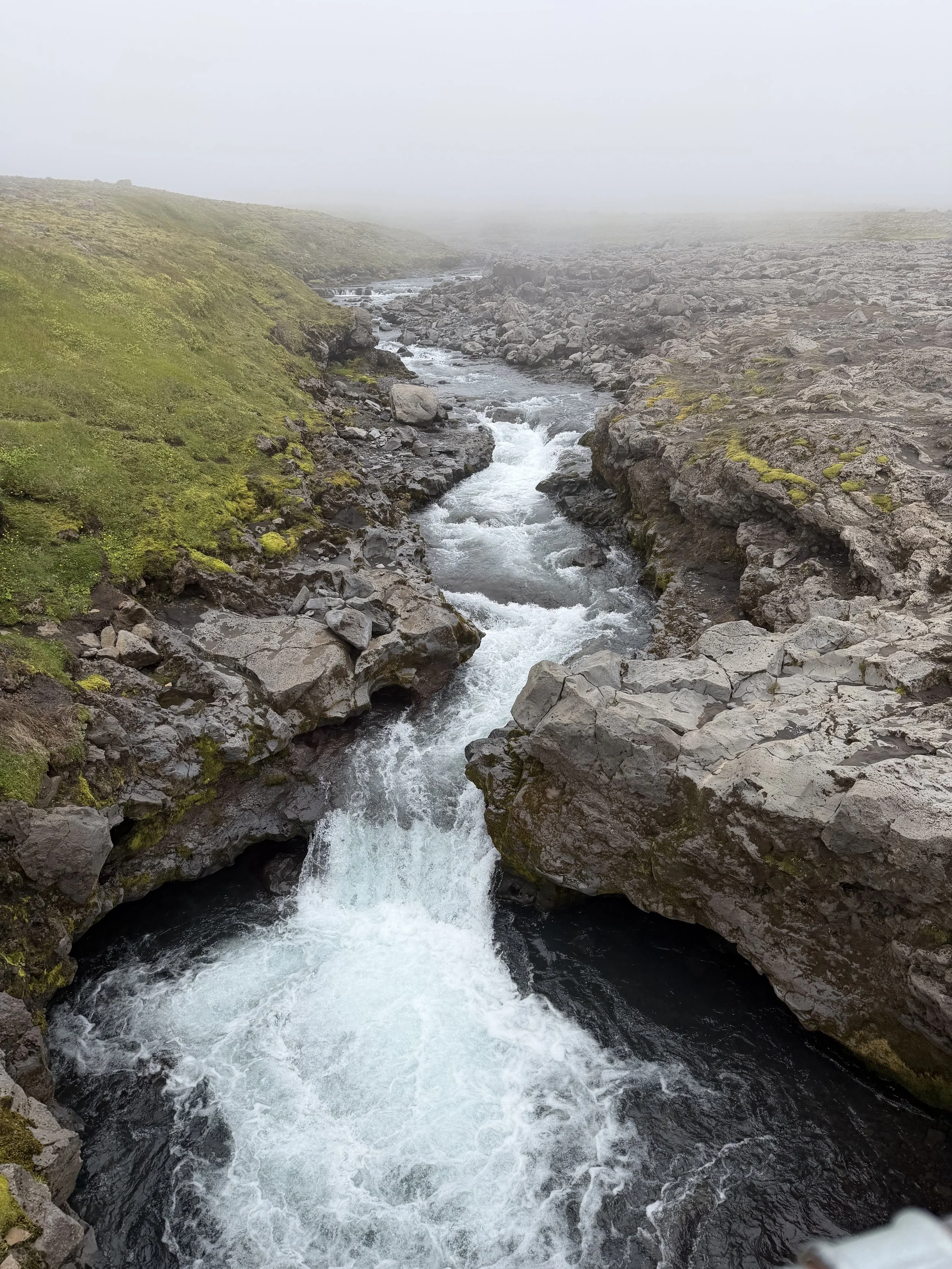
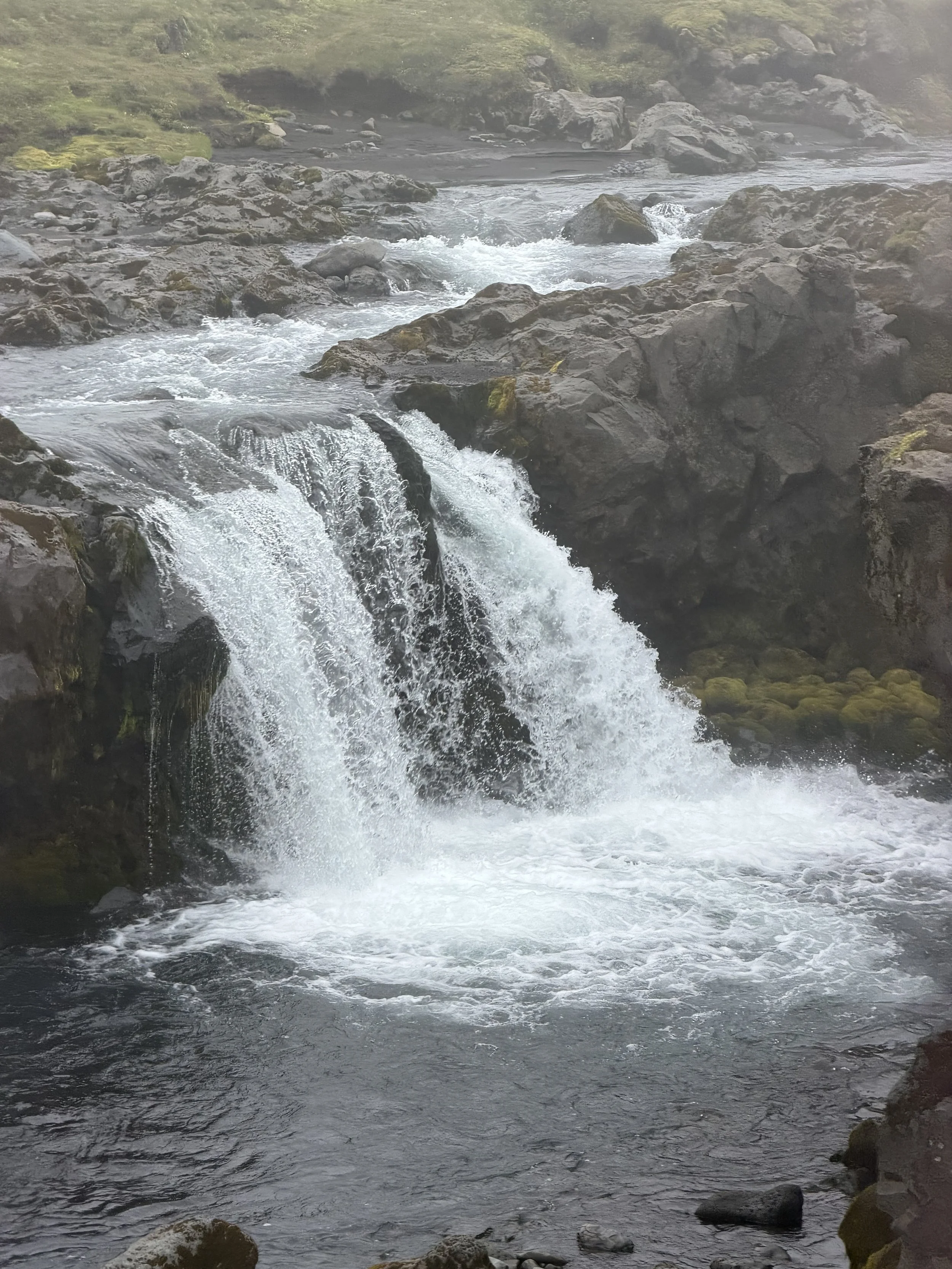
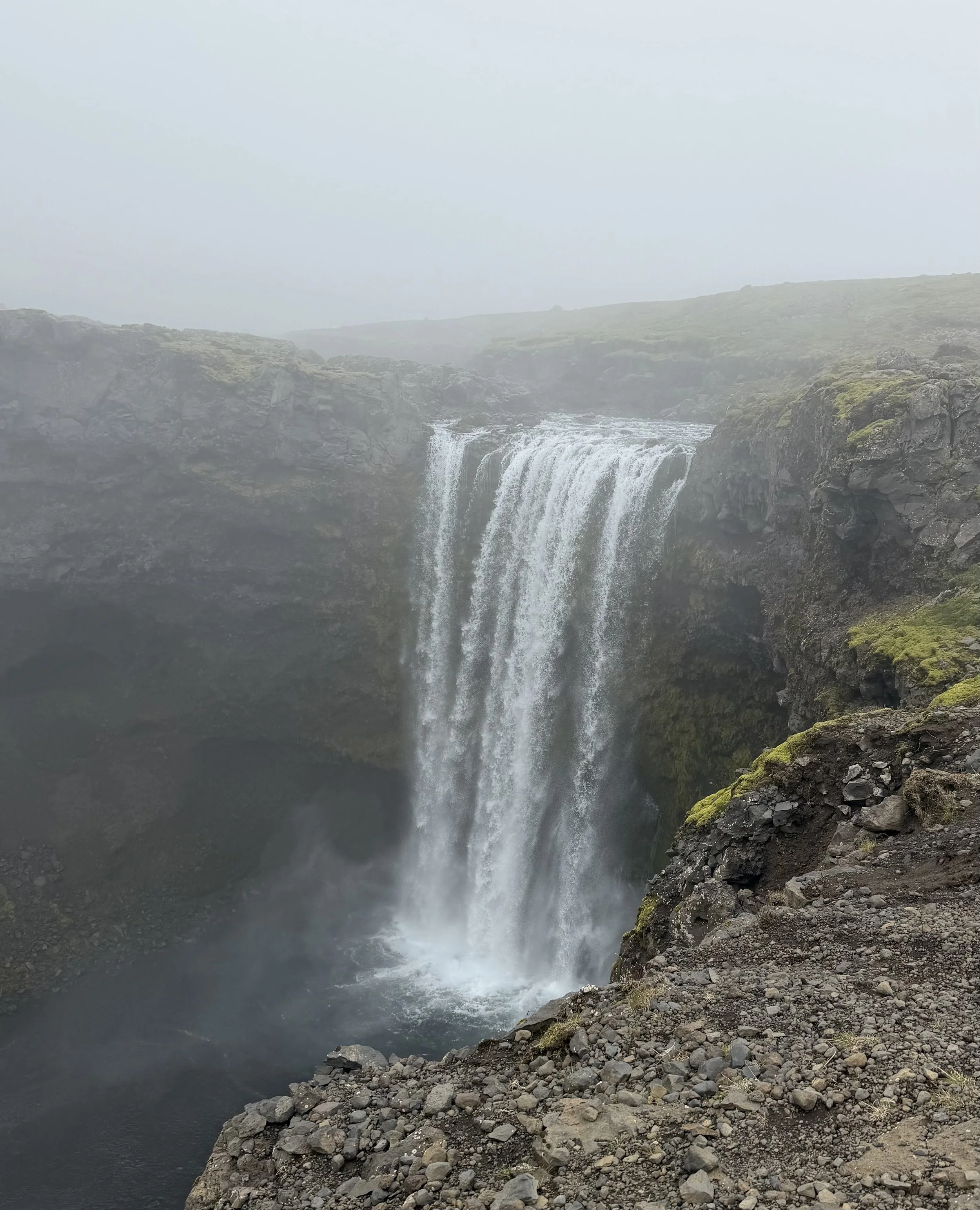
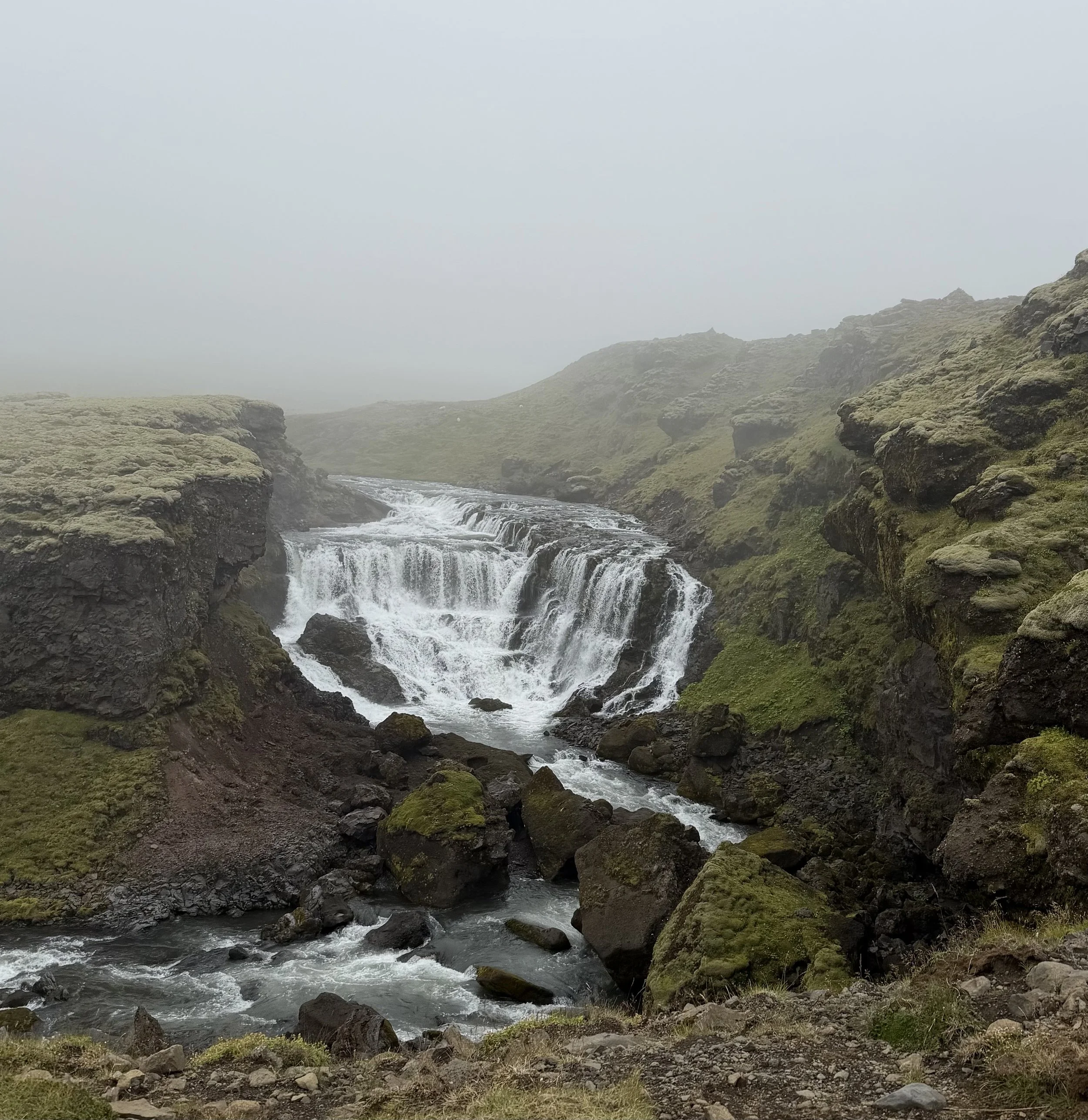
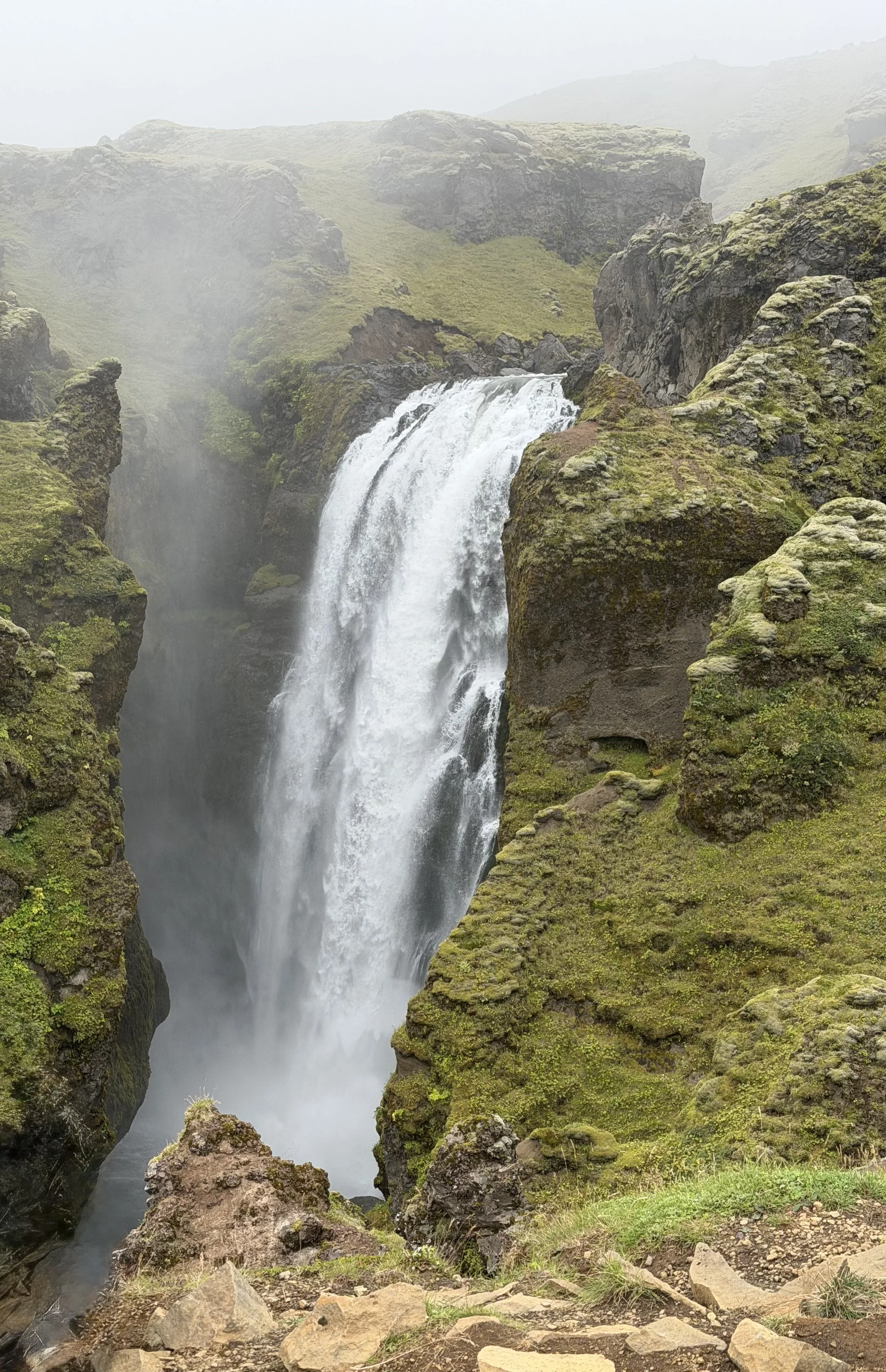
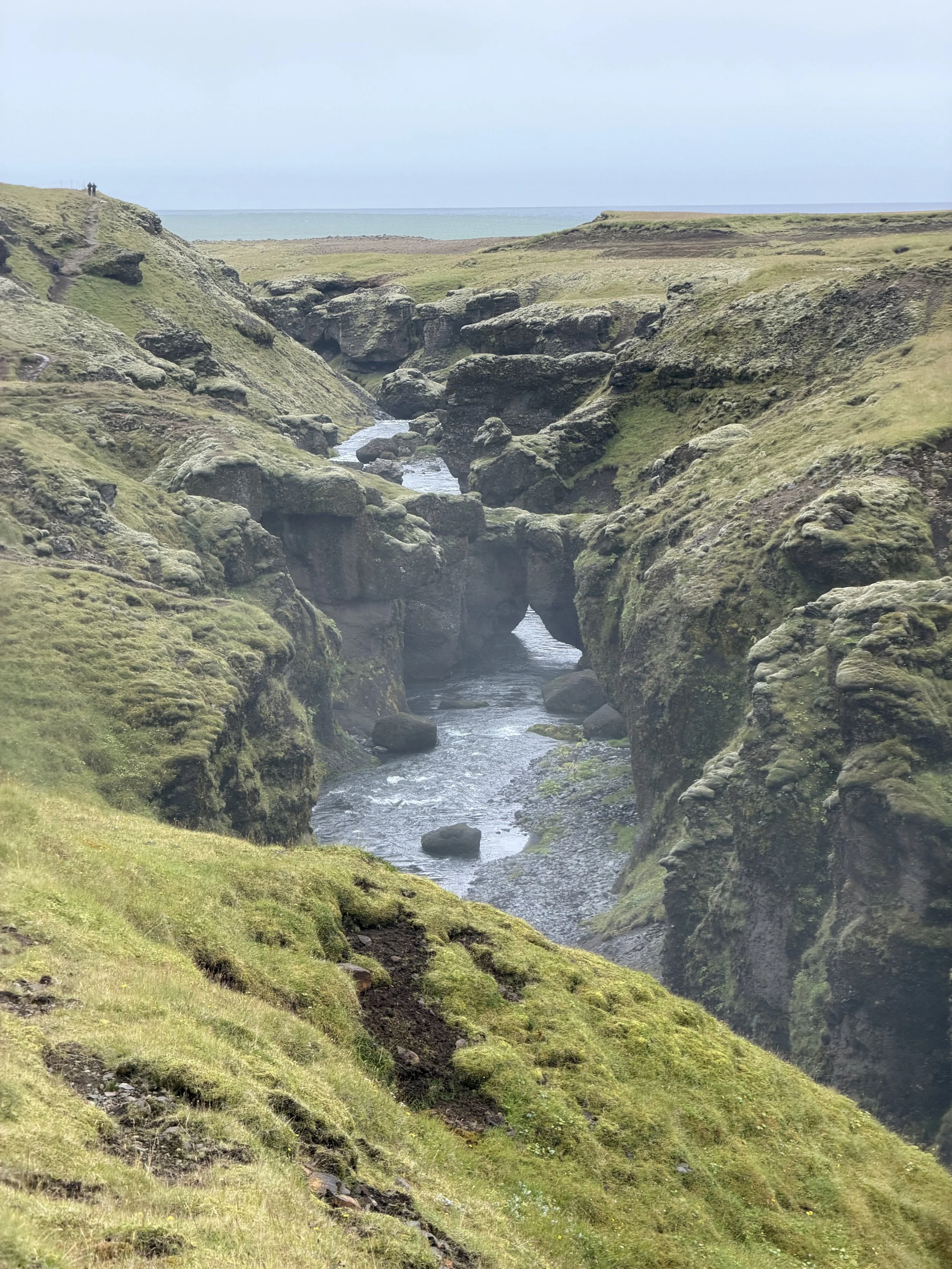
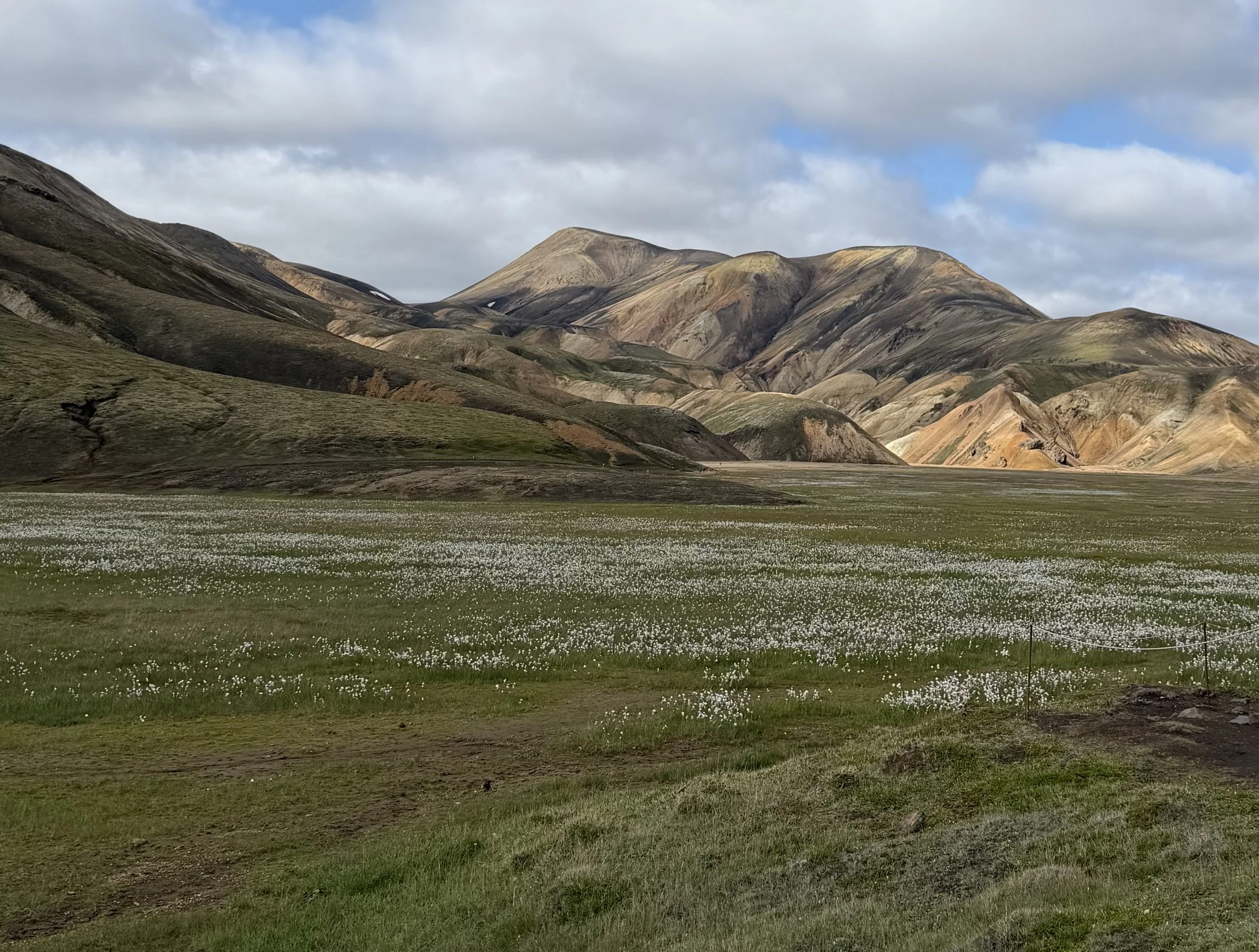
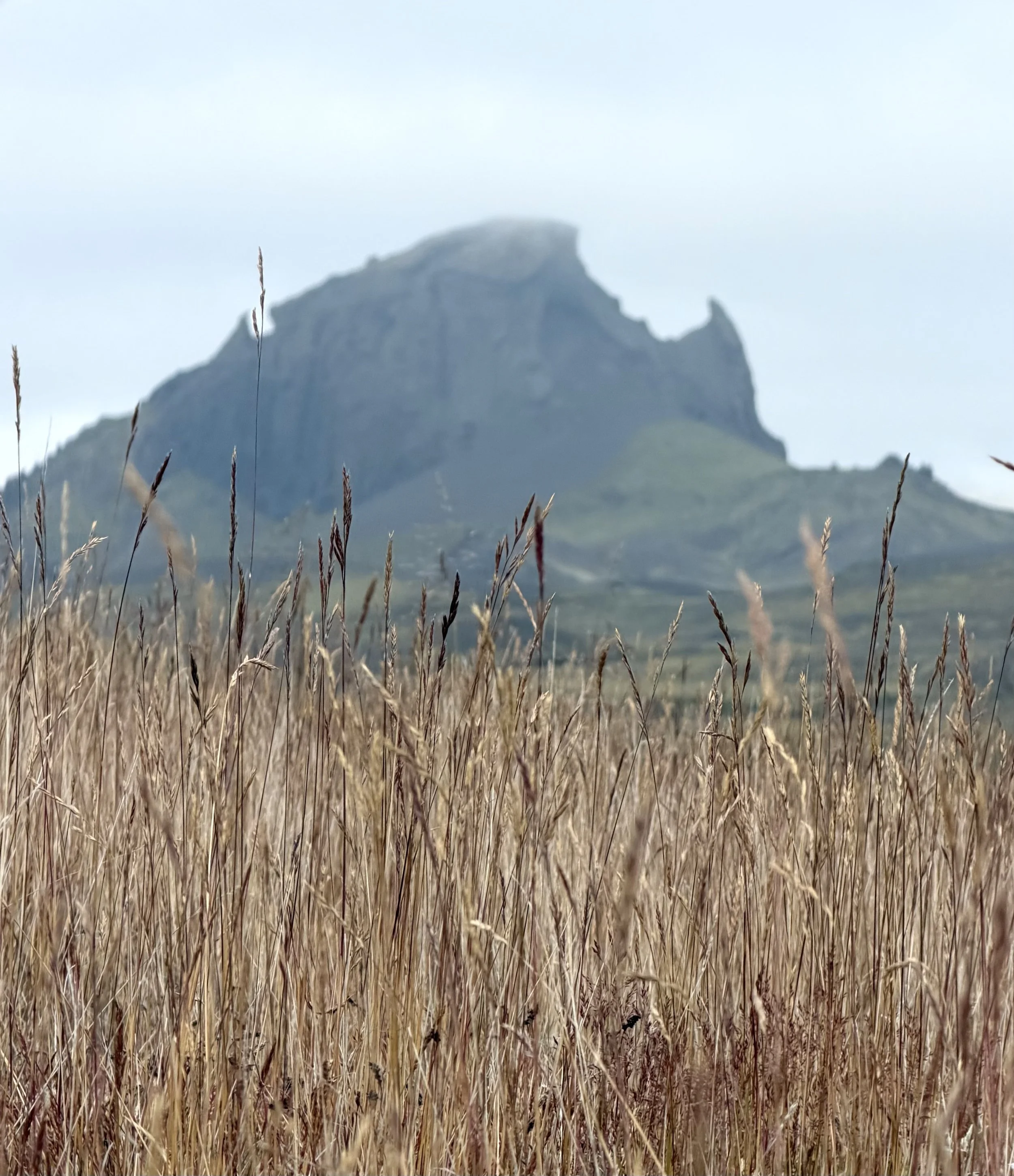
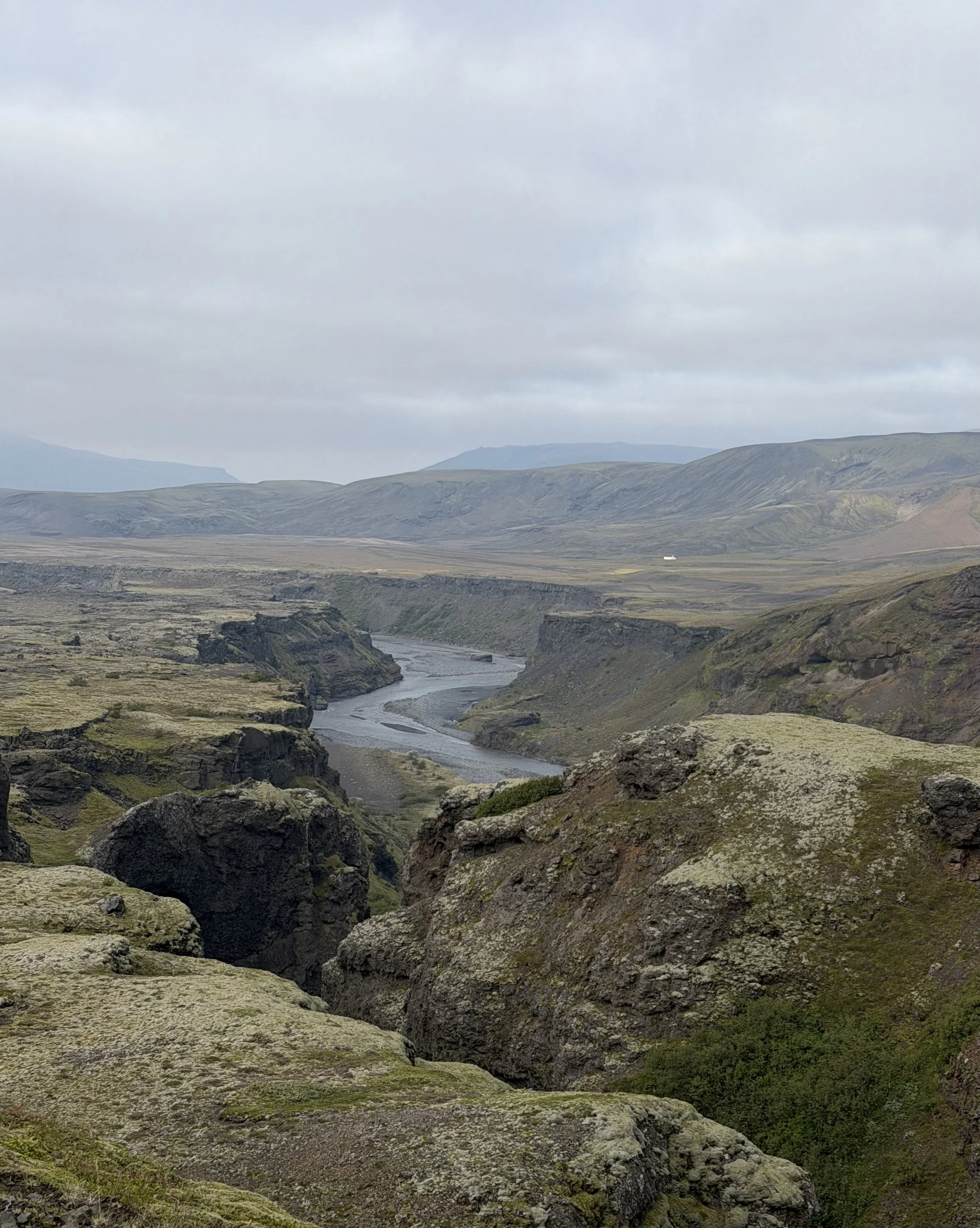
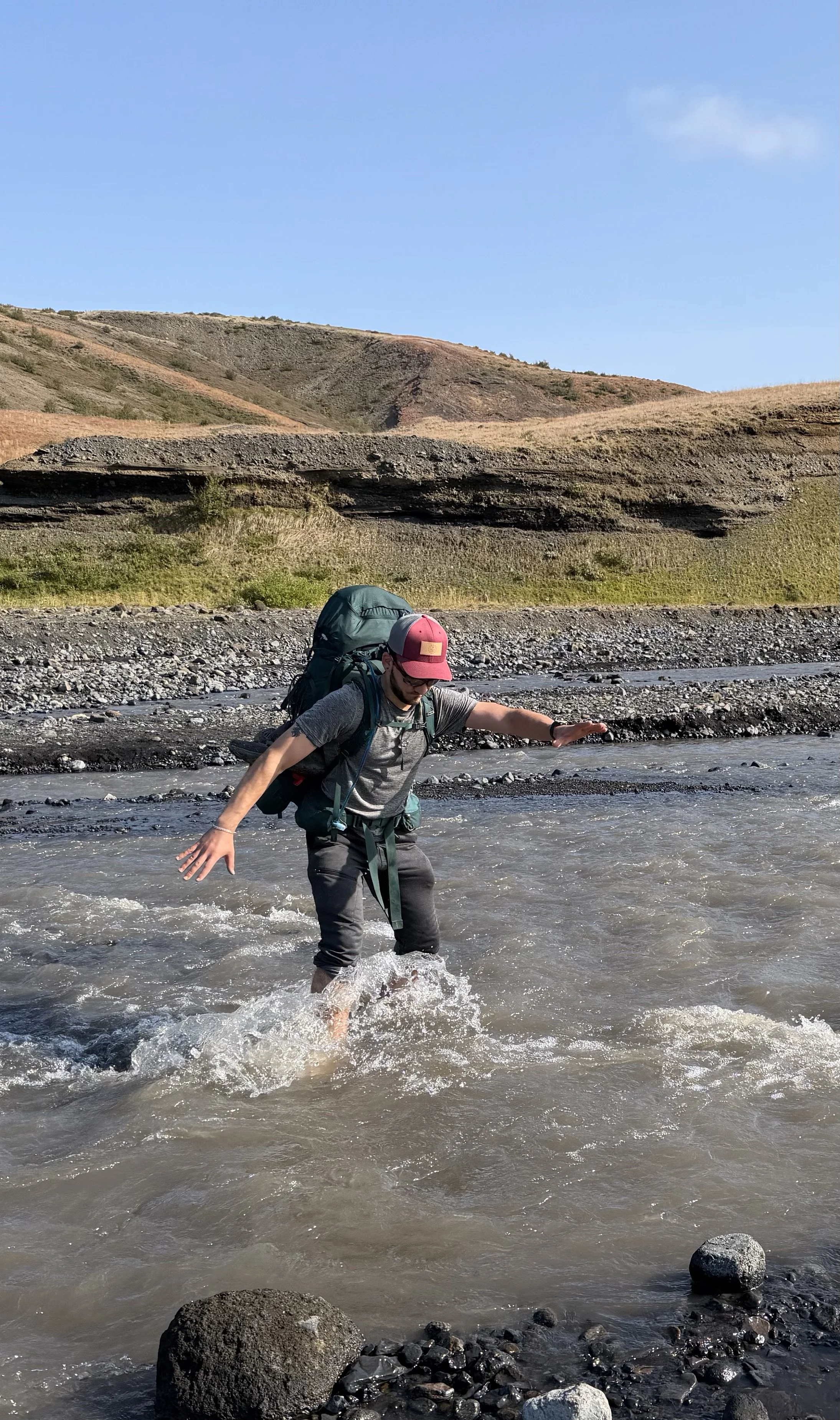
The next day we witnessed the power of glacial waters going over, around, and alongside canyons carved into volcanic rock. A couple of times we had to cross those powerful, cold waters with a bridge or on foot. The landscape changed with more growth, bushes, tall grass, and other shrubbery as we drew closer to the coast. But still, no trees.
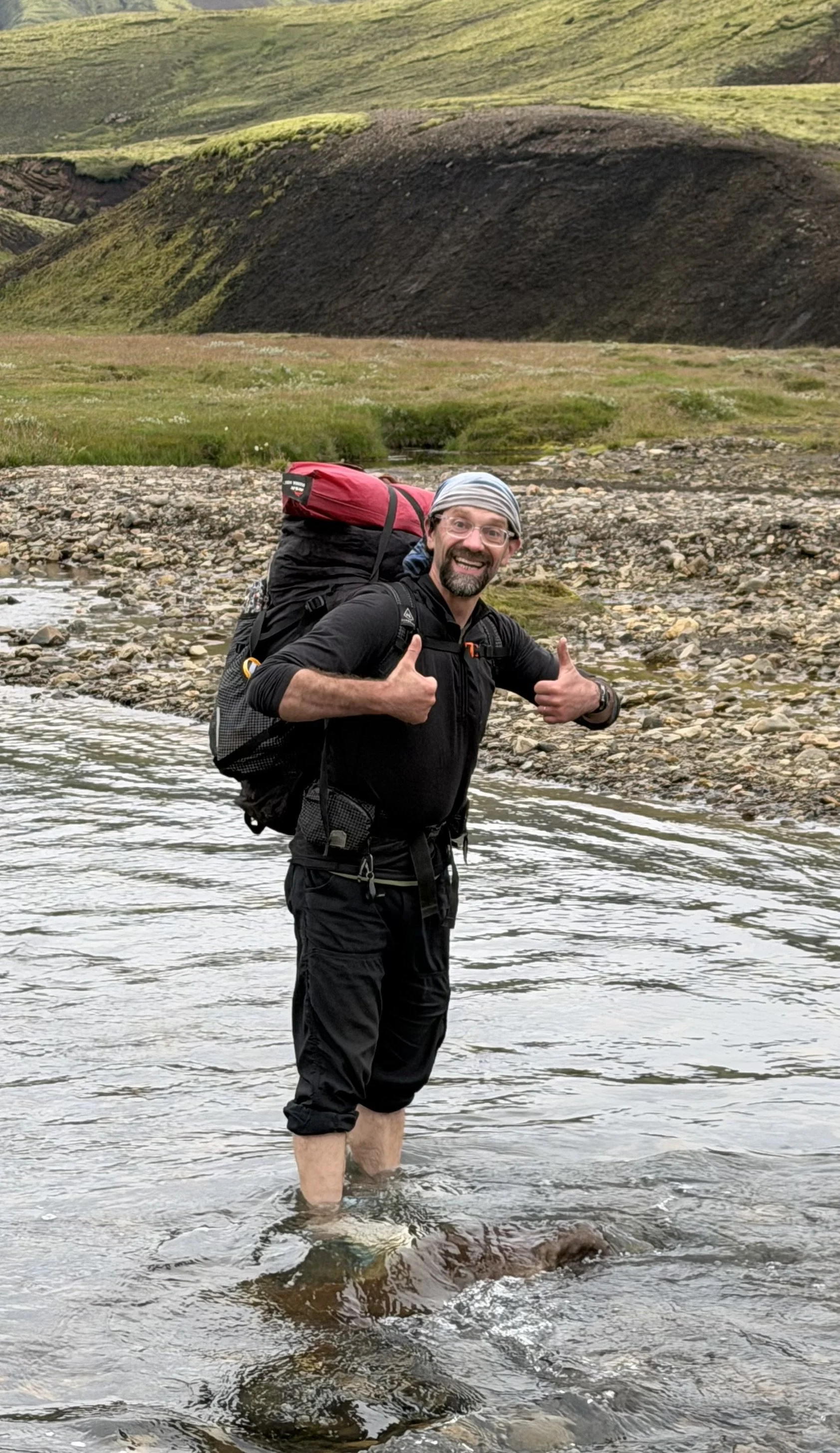
After our second and last crossing for the day we entered into a completely new and different landscape. Trees! Not just one or two, but an actual, real forest. Birch trees invied us into a space of shade and lush green hues. We entered into a green tunnel created by birch and lined with horsetail undergrowth. The change in landscape was instant. One side of the river was volcanic residue carved by the glacial waters and the other was an Edenic forest. We had entered Þórsmörk.
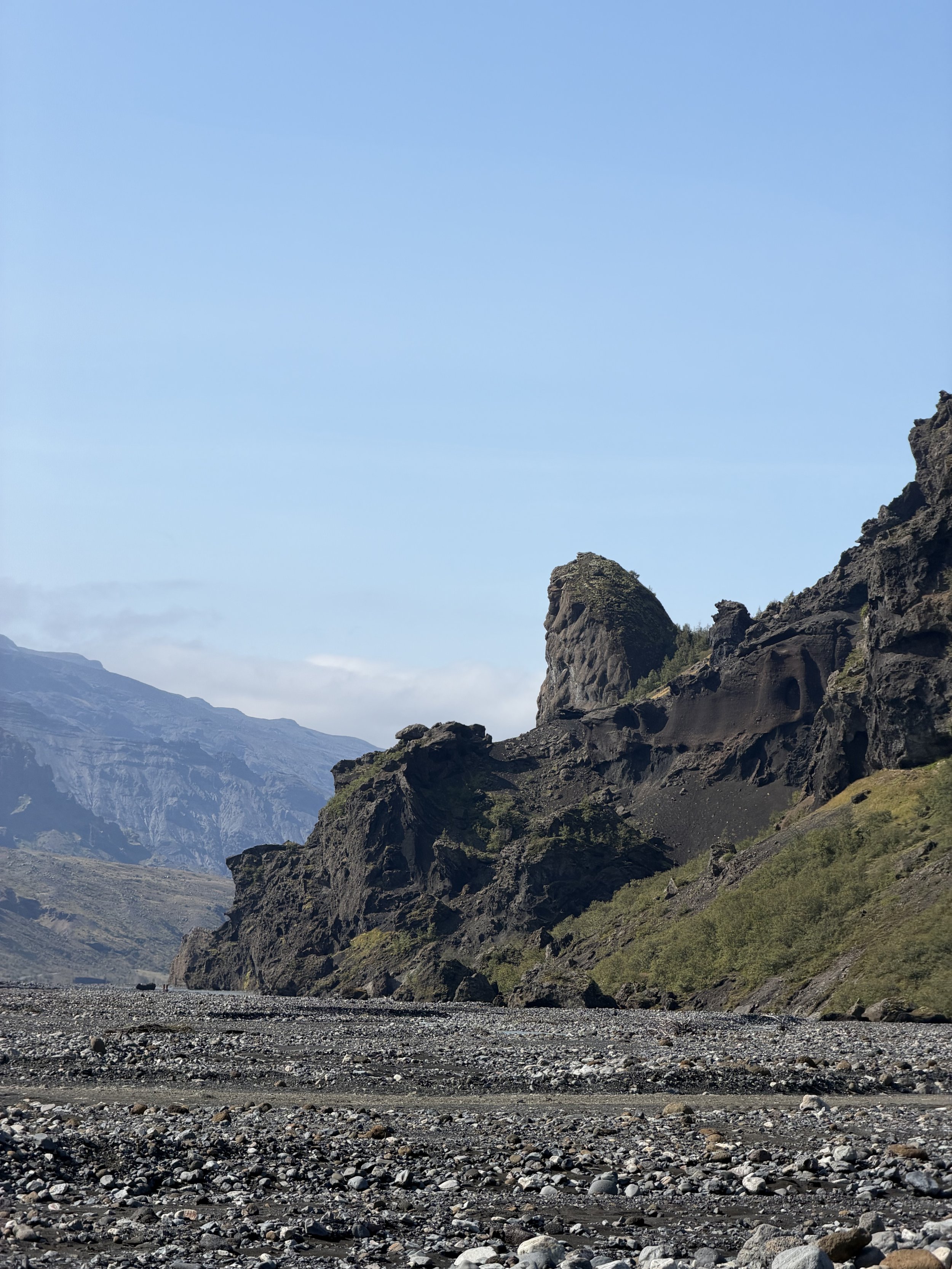
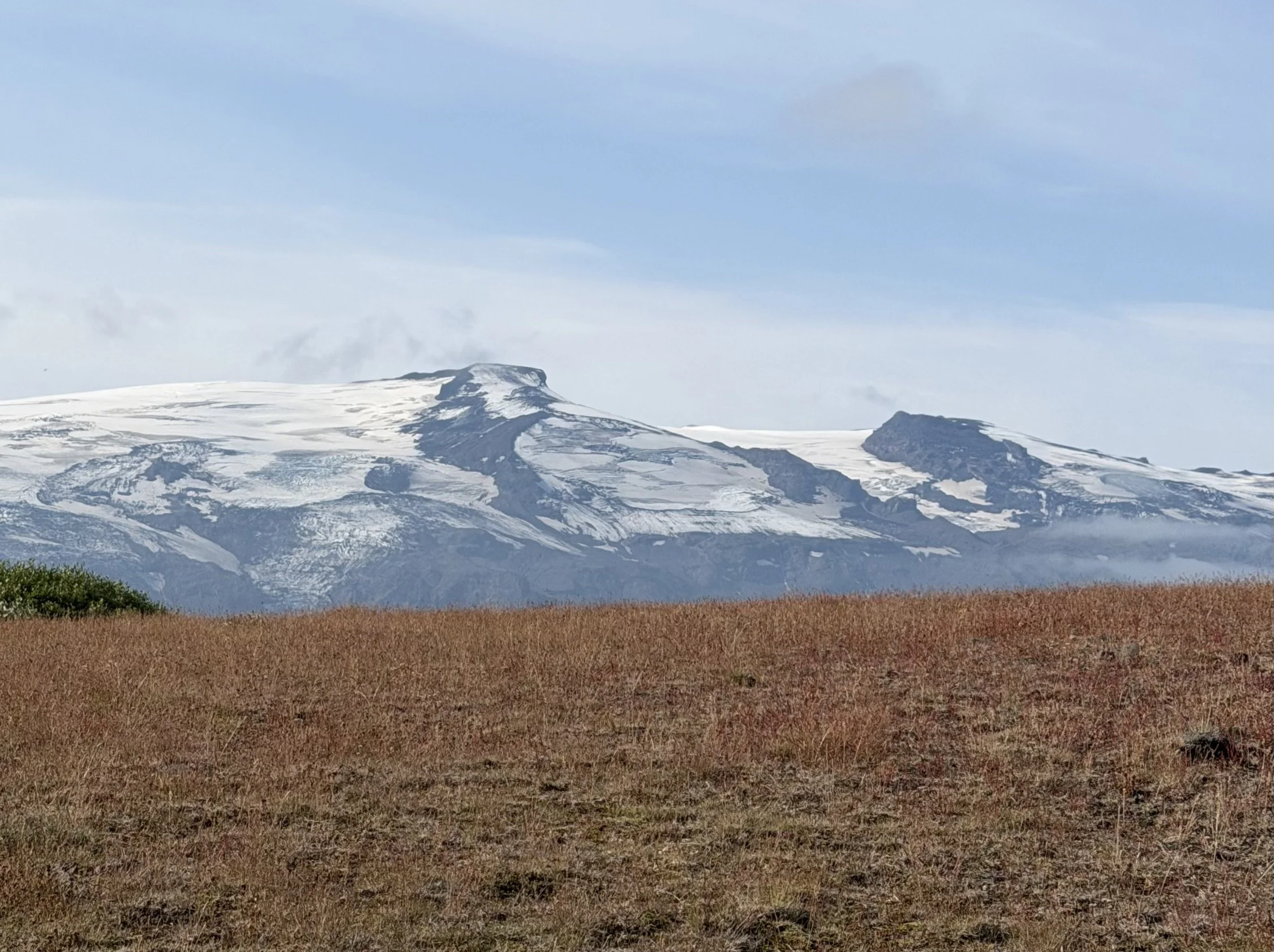
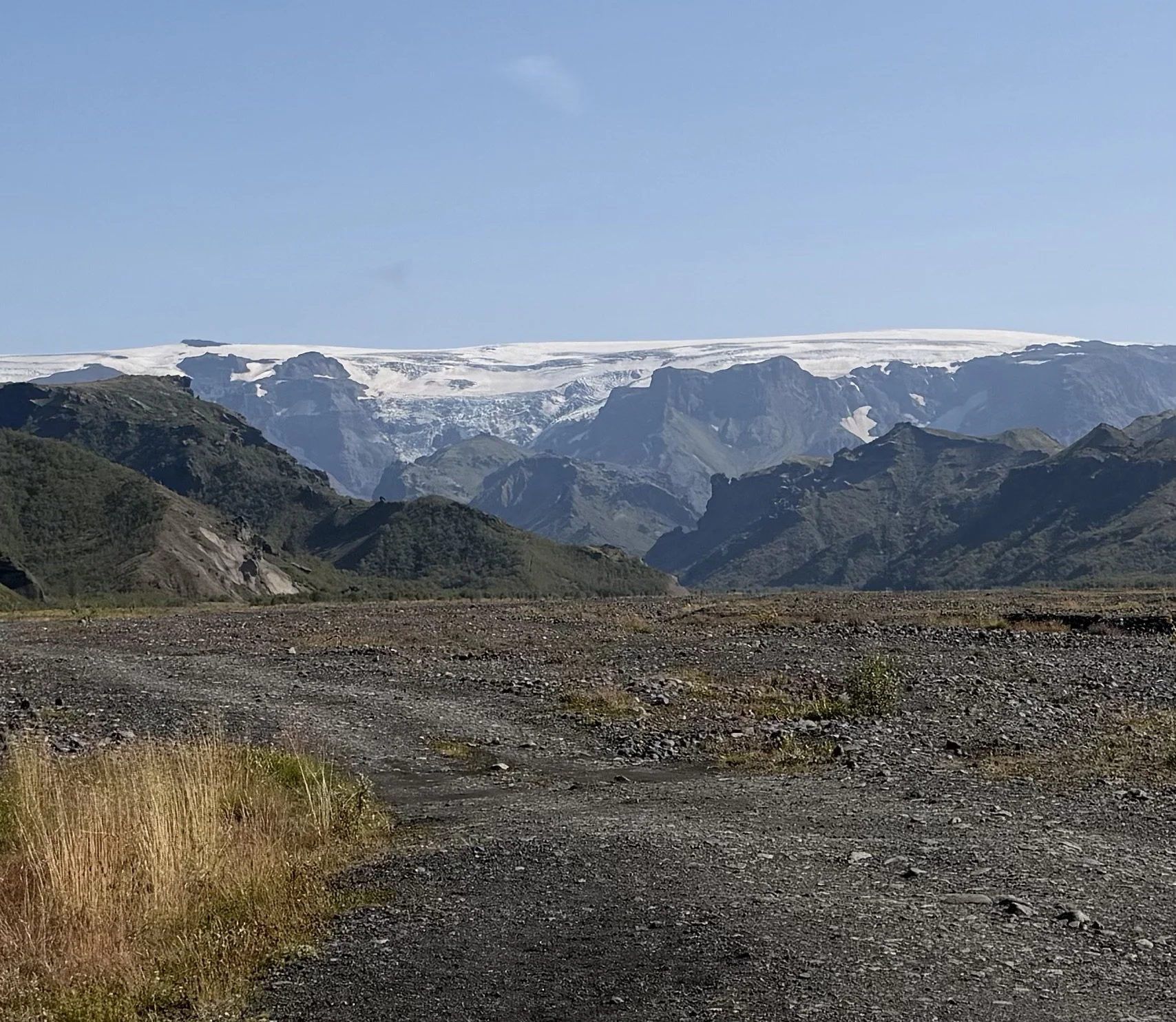
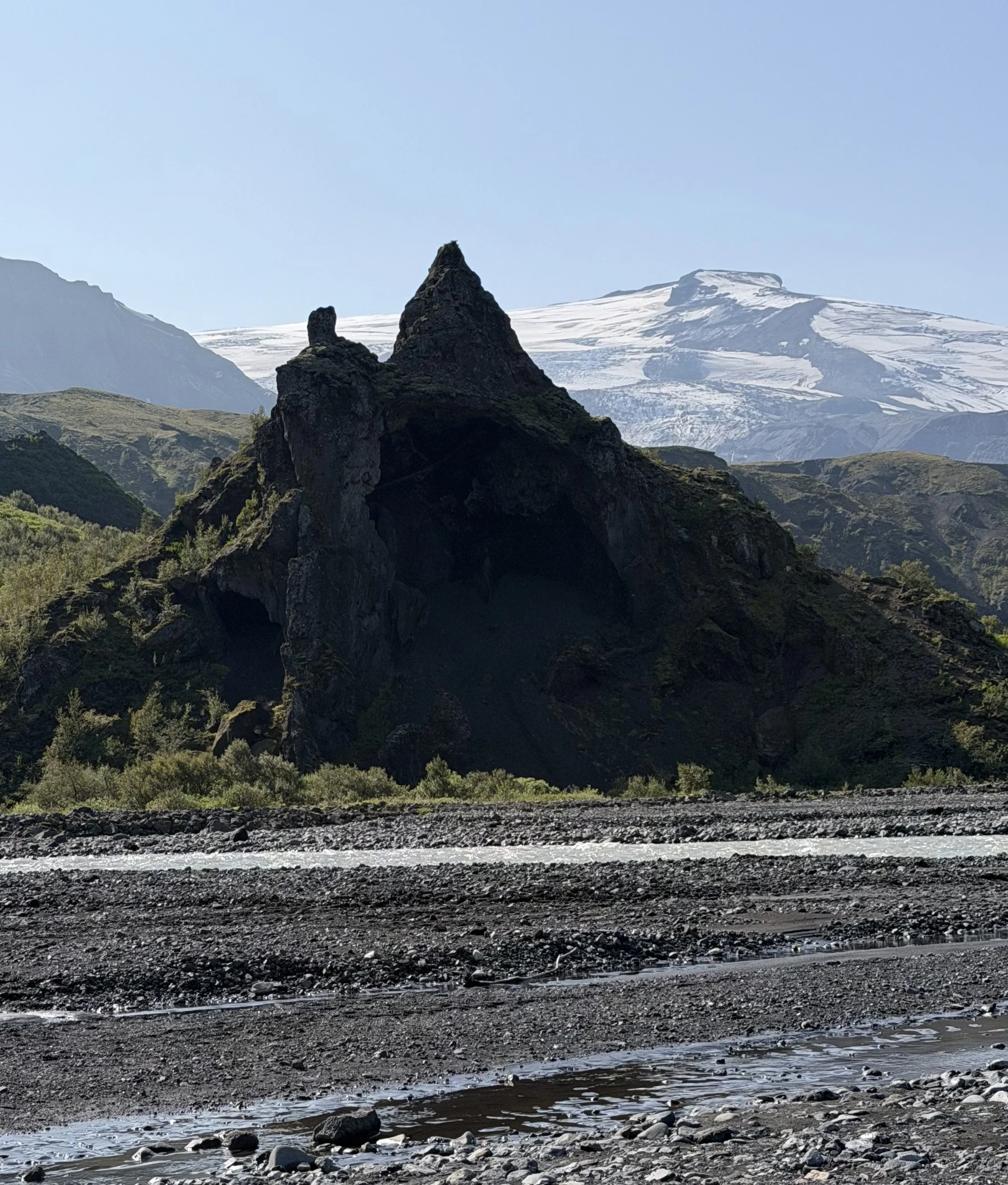
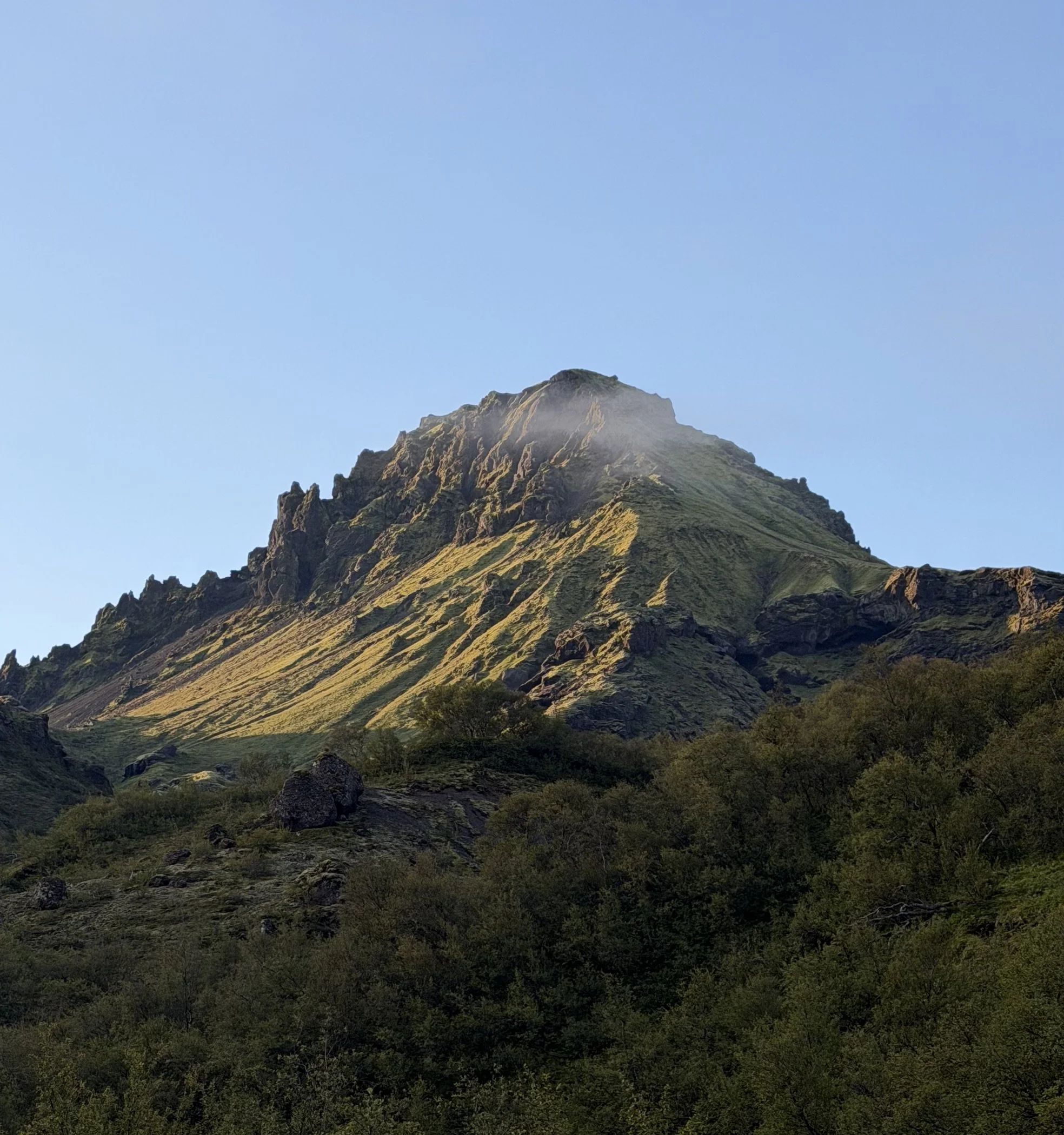
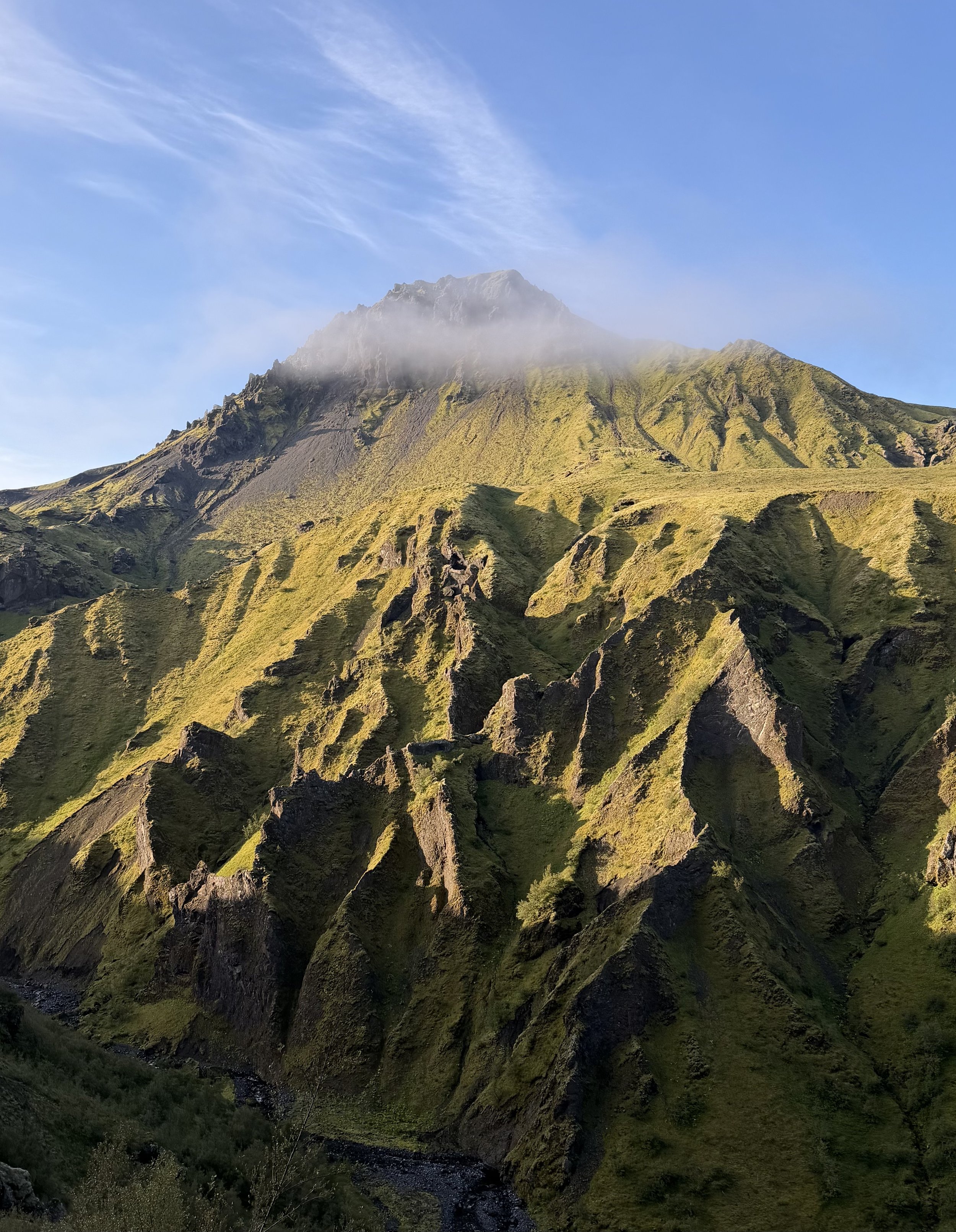
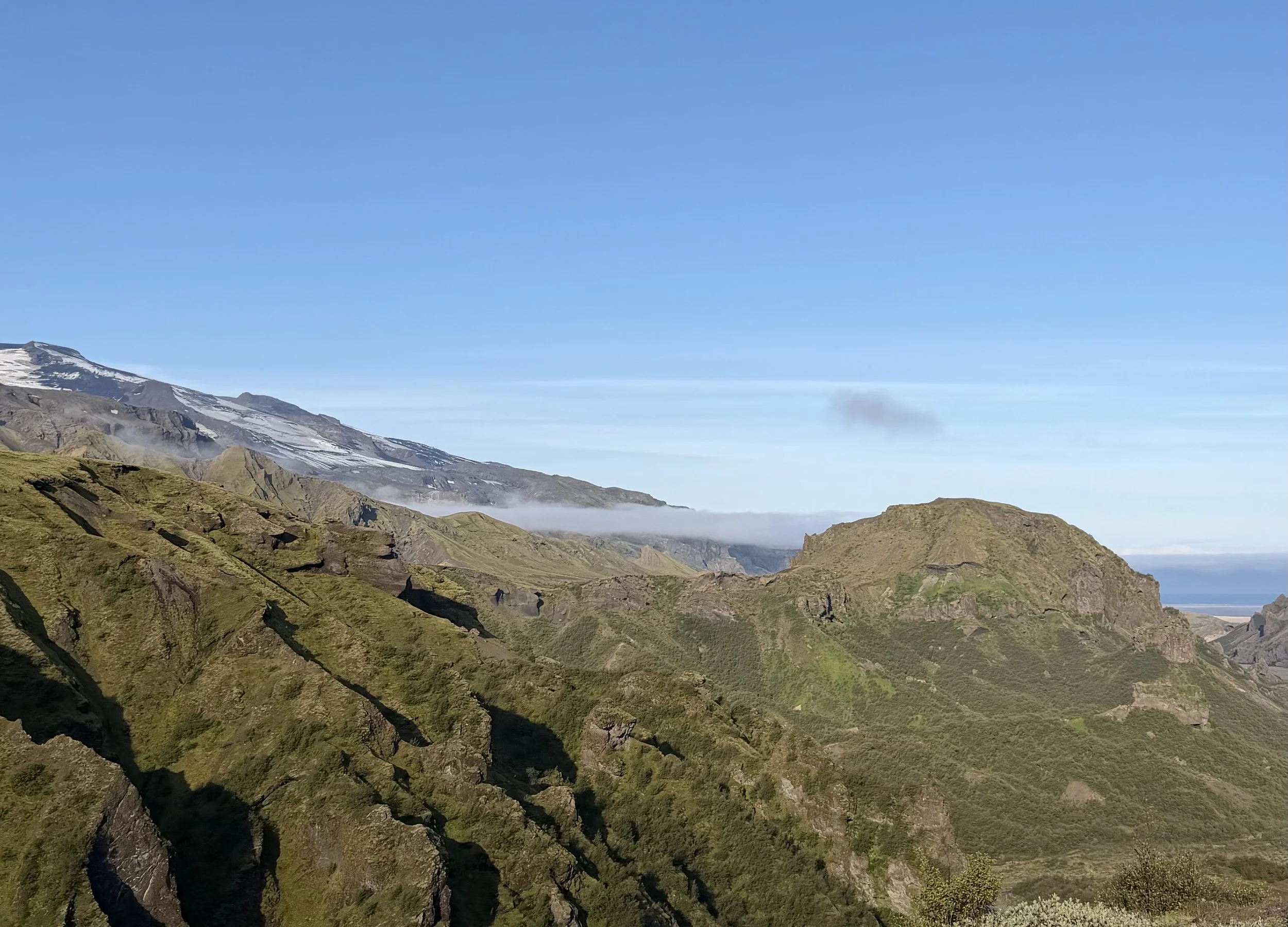
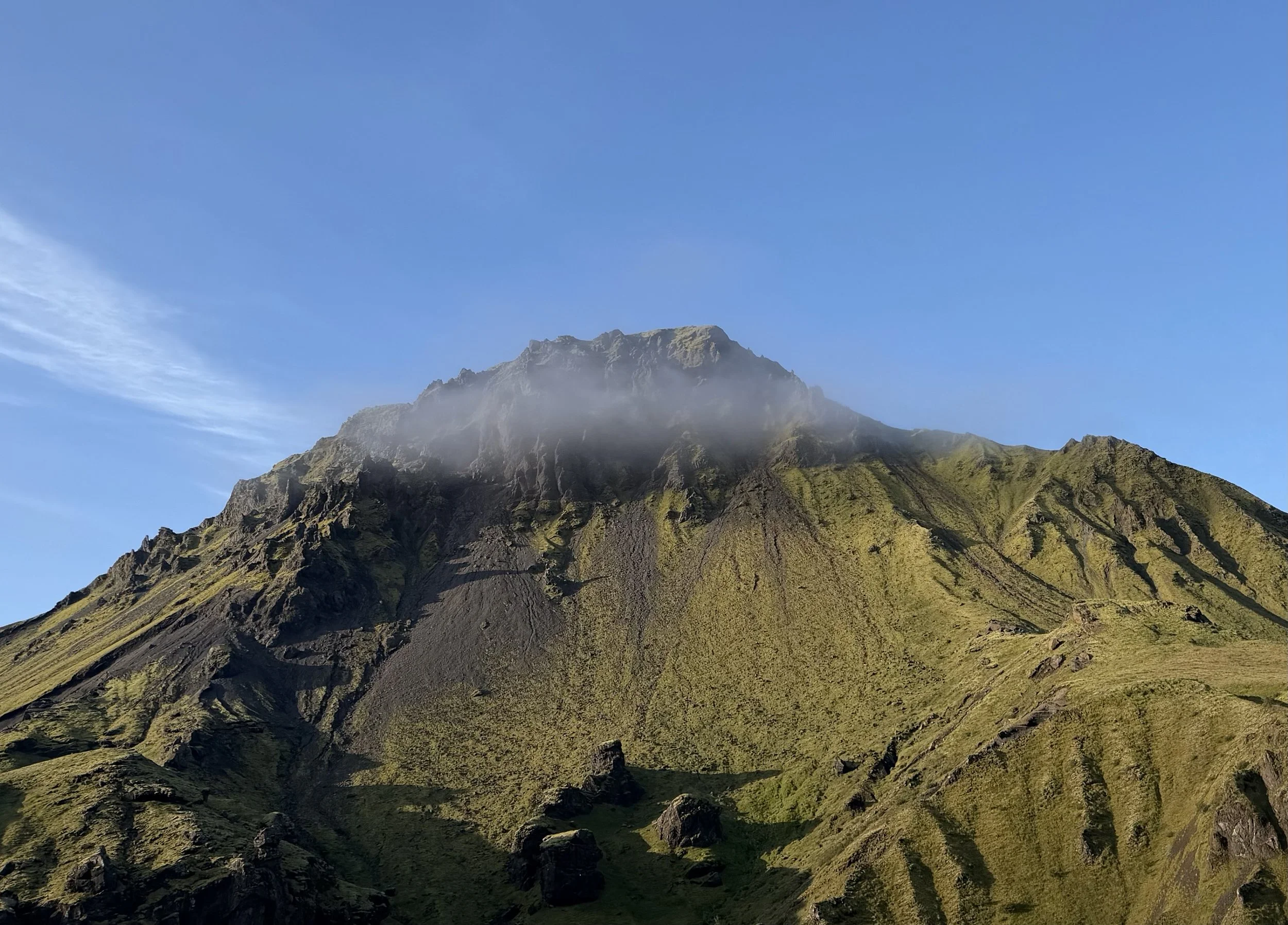
Þórsmörk is a mountain ridge and a space that was created by the government and landowners in the 1920s to set the land aside for trees and other vegetation to grow. No grazing sheep, no developing buildings, just nurturing the growth of trees. The results were obvious.
I have been in a number of forests. I have been in the hardwood forests of the Adirondacks and White Mountains in the northeast, the cedar and redwood forests of the northwest, the ponderosa trees of the southwest and have camped and hiked through many other groves and forests. I know what it is like to be surrounded by ancient, towering giants. Walking amongst trees that are centuries old is awe-inspiring. The Þórsmörk forest did not have this effect. It is a very young forest with young trees sprawling and twisting, still finding their way up to the sky. The undergrowth is full of life as multiple species compete to get the sunlight. Compared to many of the great forests in the United States it is underwhelming. And yet after days of walking among the geo-thermal activity, among the moss and volcanic rock, the trees were magnificent. They offered shade and filled the air with the small of verdant, green life. I enjoyed seeing the branches reach and bend in many directions. I noted the multiple birds sitting among the leaves, singing and calling out to each other. The sound of the wind through the leaves was something that I did not realize I missed until I heard it again. It was good to be among the trees.
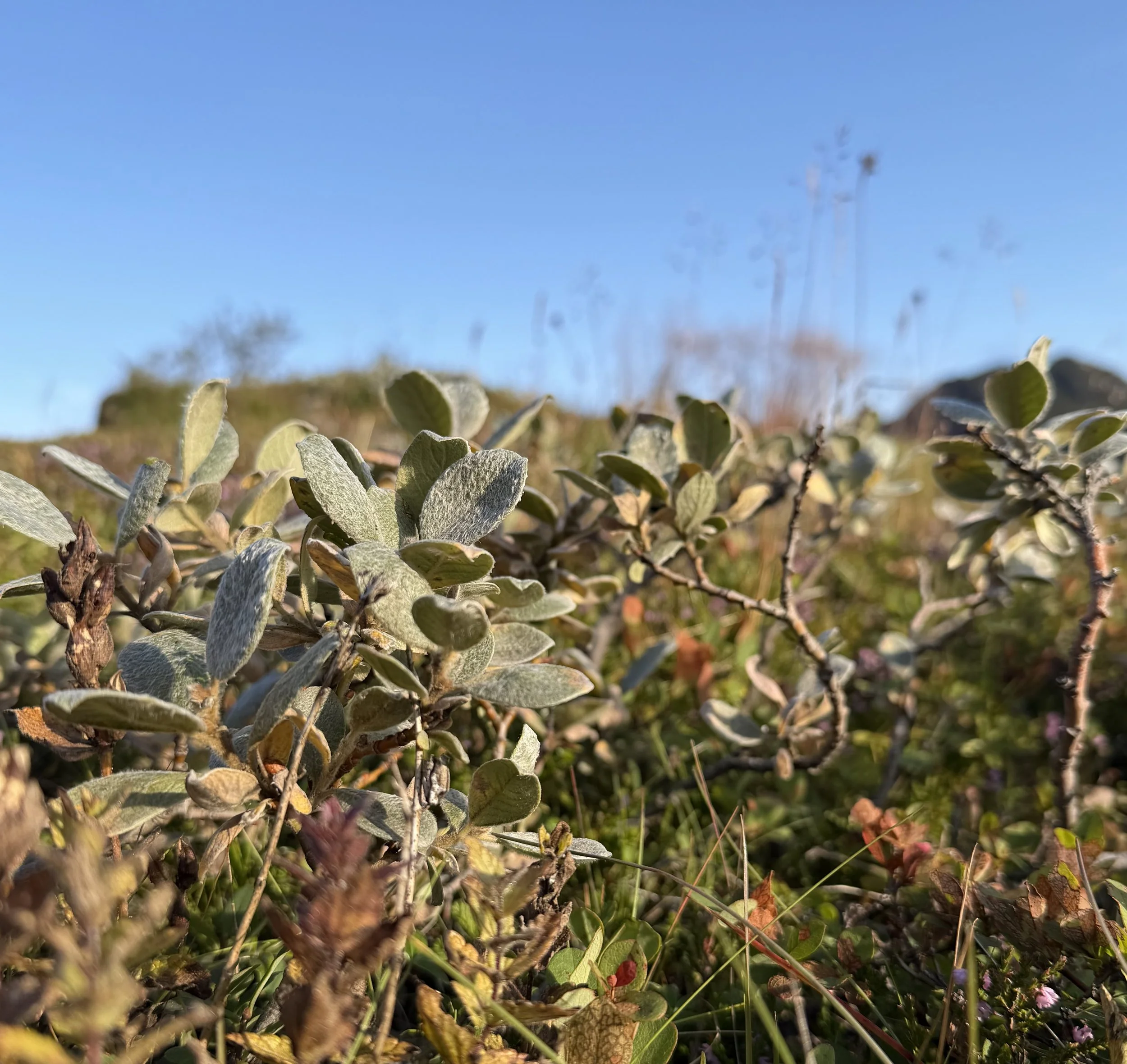
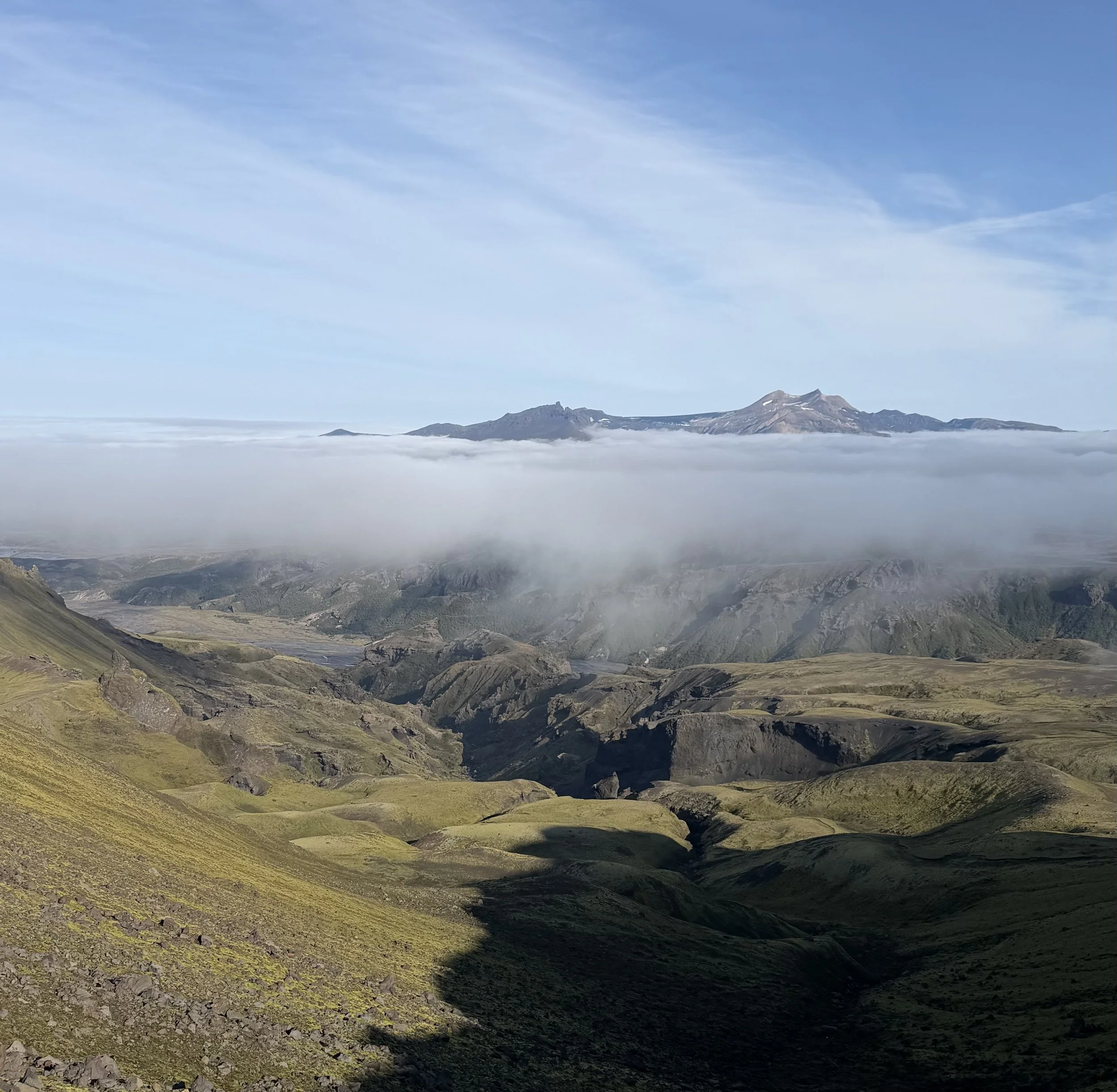
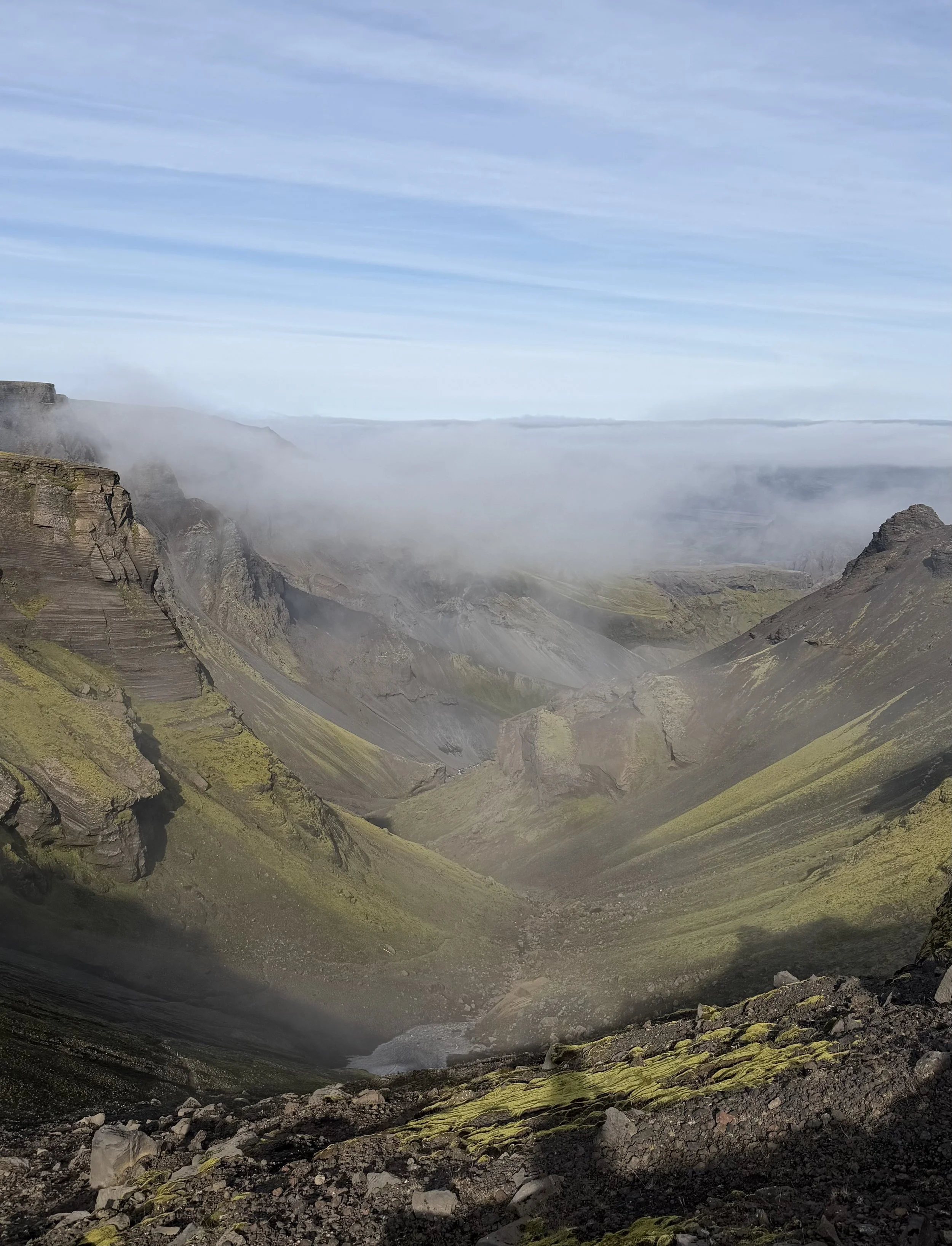
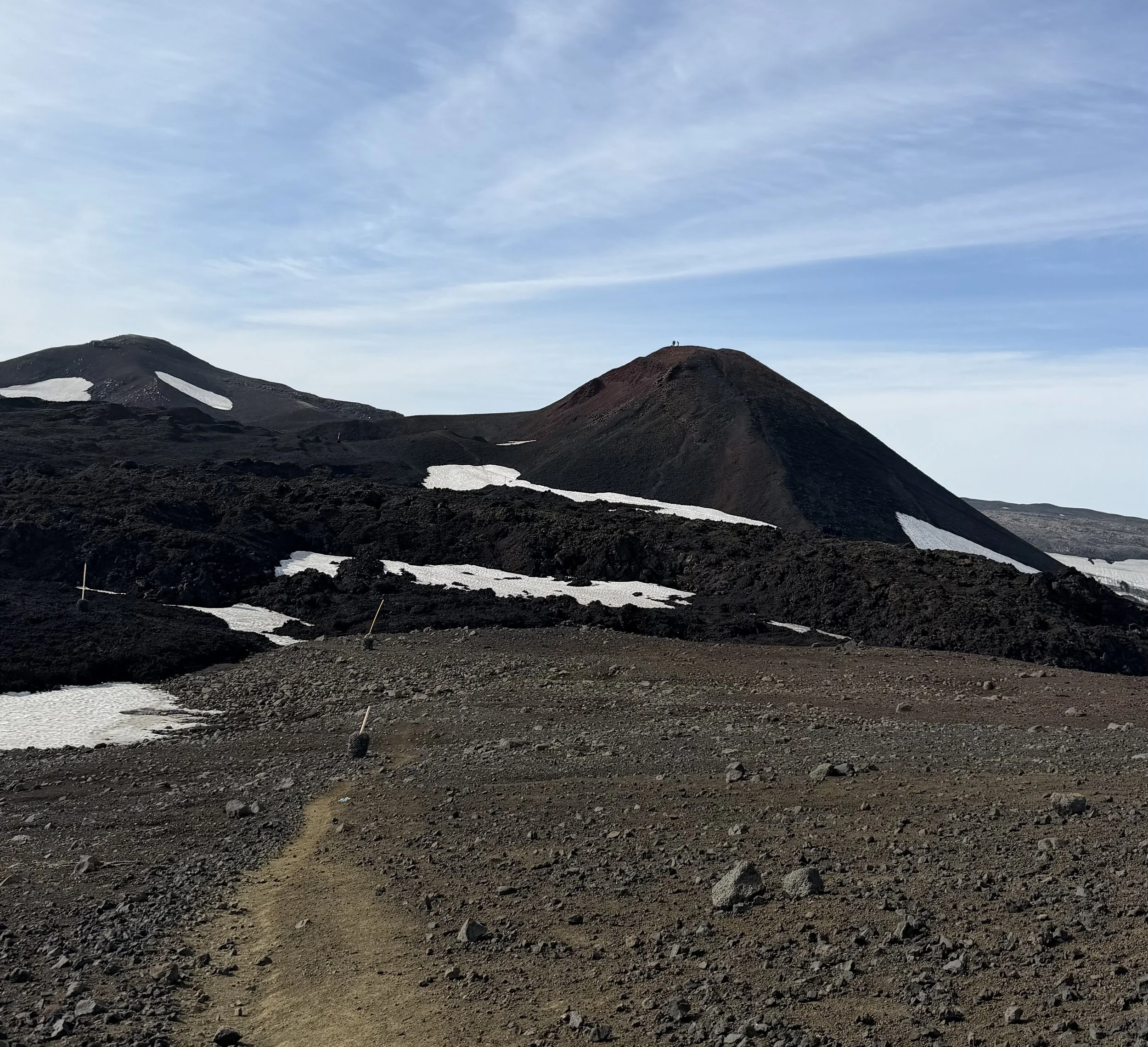
A gathering of trees growing and flourishing together is an amazing thing. It really was beautiful, and I was led to wonder about human involvement and the environment and could only assume that it must have been a lot of work to help this forest regrow. Grazing was not allowed. Trees were planted and tended. Small trees pushed through the cold snow and high winds. And people waited. And waited. And waited for the forest to emerge. I enjoyed a patch of blueberries as I pondered the miracle of the existence of this forest.
I have a slim amount of experience with Icelandic forests. A year ago, I was able to help out in the northern town of Siglufjörður with their budding forest. It is much smaller than Þórsmörk, only about 5.5 hectors (13.6 acres) and was started in the 1950s. It is primarily a collection of white pines that have grown to an adolescent size and is still surrounded by fencing to keep the sheep out. One town over to the east is Ólafsfjöður which for the past decade or less has the makings of a forest. There are a handful of trees struggling to survive and some fencing to keep the sheep at bay. I spent a day in Ólafsfjöður, chasing sheep away, digging holes for fencing, and trying to build supports for the saplings that were struggling to survive in the wind. In comparison to these other two town forests, Þórsmörk is an amazing forest.
It is amazing because these trees did not grow back with ease. It took work, coordination, space, and caring. The work I have done in the northern forests in Iceland has helped me to realize what slow and careful work is required as well as a lot of patience. To restore what was lost is not easy to do.
I have spent enough time backpacking in the desert to know better than to hold onto a chauvinism towards the trees and forests. Anything tree-related is wonderful and magical but is not the pinnacle of a wilderness experience. I don’t know if I could say any particular aspect of a wilderness landscape is the apex of one’s experience. It is all context related. Yet among the many things that I took from my backpacking trek through Iceland was a deep appreciation of trees and the forest. Any kind of forest. After two and a half days of open landscape there was a relief I found when I was surrounded by the trees.
The trees in Iceland were cut without much thought about what the landscape may look like five hundred or a thousand years later. I imagine that we can say the same about many other places that were de-forested. As a species, we tend to see a resource or an opportunity and we take it not thinking about future repercussions. This is not a new insight. The insight that I’m sitting with after my hike and the continued experiences that I have had in the forested wilderness is how difficult it is to bring back something once it is lost. To bring back a forest, especially in a harsh and somewhat hostile environment, takes time, energy, and attention. In places where growth may be quick and easy the challenge often is in encouraging and inviting the right kind of growth. Sometimes an invasive species takes the place of what could benefit the environment (see the willows and tamarisks in the canyons of Utah or the lupin in Iceland). It takes time to bring back, to repair what was lost if it can be repaired at all. It takes deliberate work and attention to find life and growth again.
Beyond the wilderness, I have found this to be the case with many landscapes in my life. I have gotten in arguments with friends and family. I have said things that I know cut and destroy. I have left scars in the landscape of the relationship and have received scars. So often I would rather return to that landscape without any effort to heal and renew or restore. I would rather look at the changed relationship and just accept that this is what now exists and that we will never get back to what once was. It can be easier to just walk away. After all, the work, the careful, slow, deliberate work to really repair and to allow the growth that once was there will cost something, will demand something, and may be more that I can give. And maybe I have grown accustomed to the new life without those relationships.
I will remember the feeling of entering Þórsmörk. I will remember how refreshing it was to be surrounded by trees, to be wondering in a young forest after a number of days in the lava fields and glacial landscapes. I will remember the sense that in that space there was a glimpse of what once was and could be. There was still a lot of work to do in the efforts of reforestation, but what had been done was noticed.
I don’t think it is Pollyannaish to say that the same can happen with the relationships that we find. The ones among our family and friends, those in our nation and across nations can always benefit from the deliberate work, the pruning and grooming. The tending and the care. Even if the growth is slow and small, the joy and blessing of being among the growth, among the trees, we be noticed and celebrated. It is easy to destroy but difficult to regrow. Not rebuild but regrow. To allow the natural growth, to encourage the natural growth that is striving to occur. Perhaps, with work, it can happen. And every little bit of growth in the midst of a barren landscape will be a joy.